

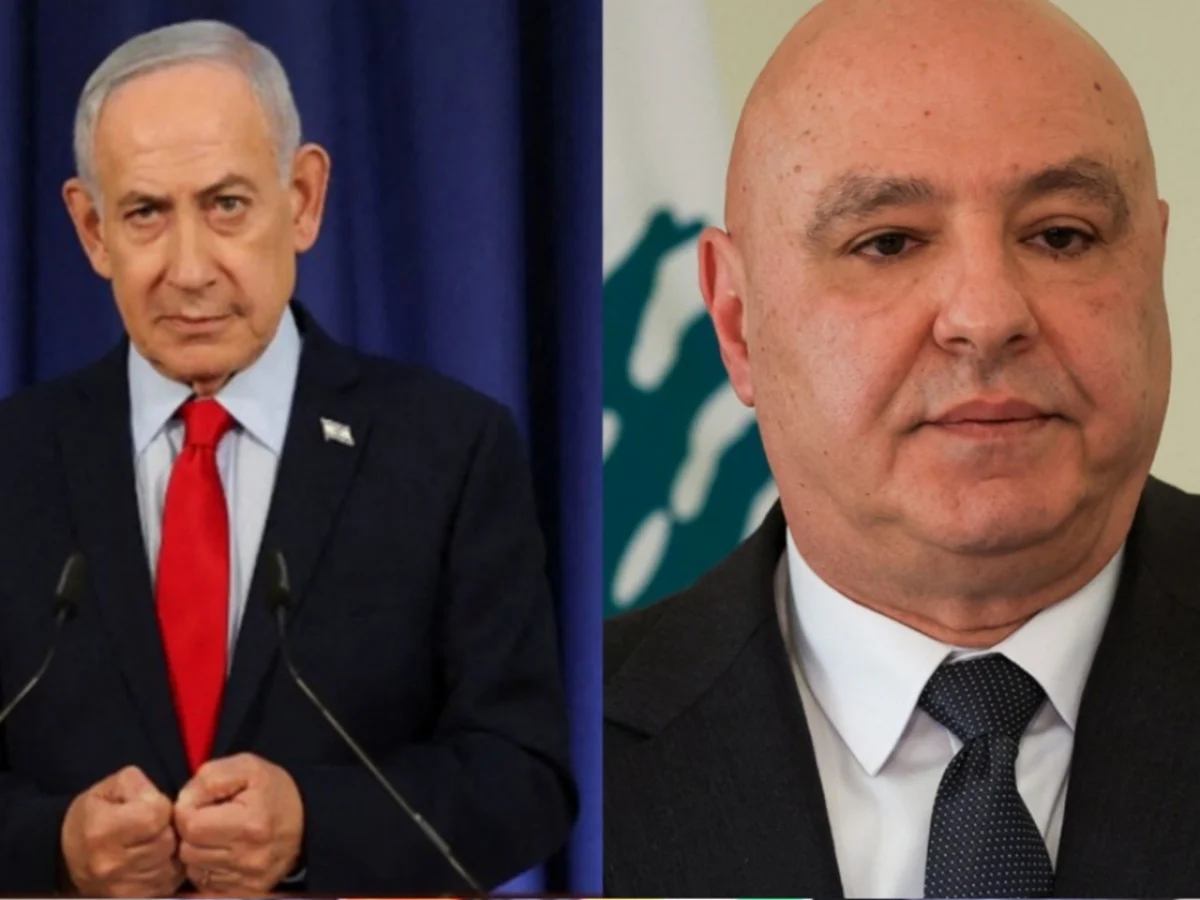
Washington D.C. – In a significant diplomatic undertaking, the United States is currently hosting Israeli and Lebanese officials in Washington for three days of crucial negotiations aimed at consolidating a fragile ceasefire and paving the way for lasting peace and security between the two historically adversarial nations. This rare direct engagement, facilitated by Washington, underscores a renewed commitment to de-escalation in a volatile Middle East.
The talks, which commenced this week, are designed to enable Israel and Lebanon to negotiate as sovereign states, a format emphasized by U.S. officials as critical for genuine progress. The ambitious agenda seeks to transcend decades of animosity and move towards a comprehensive peace and security agreement, ultimately striving to "end the cycle of violence for good."
Leading the U.S. delegation are Counsellor Dan Holler and Assistant Secretary of Defense for International Security Affairs Dan Zimmerman, highlighting the dual military and political dimensions of the discussions. The structured format of the meetings—beginning with a joint military and political session, followed by a dedicated military session, and concluding with a political round—reflects the complex layers of security concerns and political grievances that need to be addressed.
The high-stakes summit comes on the heels of intensive preparatory diplomacy, including direct calls from U.S. Secretary of State Marco Rubio to Israeli Prime Minister Benjamin Netanyahu and Lebanese President Joseph Aoun. These discussions were instrumental in solidifying the existing ceasefire and setting the stage for the Washington talks. Furthermore, in a concrete step towards preventing renewed hostilities, the U.S. launched a CENTCOM monitoring mechanism for real-time updates on fighting in Lebanon, a move intended to build confidence and ensure adherence to the cessation of hostilities.
Main Facts
Historic Diplomatic Push in Washington
The convening of Israeli and Lebanese representatives in Washington for direct negotiations marks a pivotal moment in the long and often fraught relationship between the two states. This three-day summit, hosted by the United States, represents a concentrated effort to bridge deep-seated divisions and foster a path towards stability. The U.S. State Department has explicitly stated its role as an "enabler," facilitating dialogue between two sovereign nations rather than imposing solutions, thereby aiming for agreements that are mutually beneficial and sustainable.
The core objective of these talks is multifaceted: to reinforce the existing ceasefire, prevent any relapse into conflict, and progressively build momentum towards a broader and more comprehensive peace and security arrangement. The U.S. officials involved, Counsellor Dan Holler and Assistant Secretary of Defense for International Security Affairs Dan Zimmerman, bring a blend of diplomatic and security expertise to the table, underscoring the necessity of addressing both political reconciliation and tangible security guarantees. Their leadership signifies the comprehensive approach Washington is taking, recognizing that enduring peace requires addressing both the symptoms and root causes of conflict. The presence of top Israeli and Lebanese officials in the U.S. capital for an extended period signals a serious commitment from both sides, despite the historical mistrust and the complex internal and regional pressures each nation faces.
)
The Elusive Peace Between Adversaries
Israel and Lebanon have been technically in a state of war since the 1948 Arab-Israeli conflict, never having signed a formal peace treaty. Their shared border, often referred to as the Blue Line, remains one of the Middle East’s most volatile frontiers, marked by intermittent clashes, cross-border incursions, and a persistent underlying tension. Past attempts at comprehensive peace have faltered, often due to a combination of intractable political issues, the influence of non-state actors, and regional geopolitical dynamics. The 2006 Lebanon War stands as a stark reminder of the devastating consequences of unresolved conflicts and the fragility of peace in the region.
The current talks aim to tackle these deeply entrenched issues, with U.S. officials stressing the overarching goal of "ending the cycle of violence for good." This aspiration acknowledges the historical pattern of conflict and aims to establish mechanisms and agreements that can break this cycle, fostering an environment where peace and security can genuinely take root. The emphasis on negotiating as "sovereign states" is crucial, as it validates the legitimacy and independence of both parties in shaping their future relationship, an important aspect given Lebanon’s complex internal political landscape and Israel’s security imperatives.
Chronology
Pre-Talk Diplomacy and Preparations
The groundwork for the Washington talks was laid through a series of intensive diplomatic maneuvers orchestrated by the United States. A critical precursor to the summit was the direct engagement by U.S. Secretary of State Marco Rubio with the highest echelons of leadership in both Israel and Lebanon. Secretary Rubio held separate, extensive discussions with Israeli Prime Minister Benjamin Netanyahu and Lebanese President Joseph Aoun. These high-level conversations were not merely courtesy calls but strategic dialogues focused on two primary objectives: first, to solidify the existing, albeit tenuous, ceasefire that has been in place, preventing any immediate escalation that could derail future talks; and second, to meticulously plan the framework and agenda for the upcoming negotiations in Washington. The success of these preliminary discussions underscored a mutual, albeit cautious, willingness from both sides to engage in a diplomatic process.

In a tangible demonstration of its commitment to de-escalation and as a confidence-building measure, the U.S. also announced the establishment of a CENTCOM monitoring mechanism. This system is designed to provide real-time updates on any fighting or security incidents occurring along the Israel-Lebanon border. The objective is twofold: to enhance transparency and accountability regarding border activities, and to offer a rapid response capability to mitigate potential escalations before they spiral out of control. This monitoring mechanism serves as a practical tool to support the ceasefire and create a more stable environment conducive to productive negotiations. The official announcement of the talks by the U.S. State Department, referencing IANS reports, solidified the international community’s awareness of this critical diplomatic push.
The Washington Agenda Unfolds
The three-day negotiations in Washington are structured with a clear, progressive agenda designed to address both immediate security concerns and broader political aspirations. The talks are set to commence with a joint military-political session, a format that acknowledges the inseparable nature of security and political considerations in the Israel-Lebanon context. This initial session aims to establish a shared understanding of the current situation, identify key areas of concern, and set the tone for the subsequent, more specialized discussions.
Following this joint opening, the agenda transitions to a dedicated military session. This segment is expected to delve into technical security issues, border demarcation, ceasefire enforcement mechanisms, and perhaps discussions around potential demilitarized zones or troop deployments. The involvement of military officials from both sides, alongside their U.S. counterparts, underscores the gravity of these security discussions. It is in this session that concrete measures to prevent future hostilities and enhance border stability are likely to be explored in detail.
)
The summit will conclude with a political closing round. This final session is anticipated to synthesize the progress made in the military discussions, address outstanding political issues, and potentially lay the groundwork for future diplomatic engagements. The ultimate goal, as articulated by a State Department official, is to "build momentum for a broader settlement" and to move "towards a comprehensive peace and security agreement." This structured approach reflects a deliberate strategy by the U.S. facilitators to tackle the complex layers of the conflict systematically, ensuring that both security and political dimensions are thoroughly addressed.
Parallel Diplomatic Tracks: US-Iran in Switzerland
Adding another layer of complexity and regional interconnectedness, the Israel-Lebanon talks are unfolding against the backdrop of concurrent U.S.-Iran negotiations in Switzerland. While distinct, the outcomes of these separate discussions could have significant ripple effects across the Middle East, including on the Israel-Lebanon dynamic. The first round of U.S.-Iran talks, mediated by Qatar and Pakistan, recently concluded with a provisional agreement on a 60-day roadmap towards a final deal.
Key outcomes reported from these Switzerland talks include the U.S. waiving Iranian oil sanctions until August 21st, a move intended to provide economic relief to Iran and incentivize further cooperation. Iran, in turn, has reportedly seen the release of some frozen assets, further easing economic pressures. Crucially for regional stability, both sides agreed to establish a Lebanon de-confliction cell, a mechanism designed to prevent unintended military engagements and improve communication in a region where proxy conflicts often play out. Additionally, a Strait of Hormuz communication line was set up, aiming to keep vital shipping lanes open and reduce the risk of maritime incidents.
)
Reports also indicated that Iran agreed to IAEA inspections, though Tehran subsequently denied that nuclear talks were held in this round, emphasizing that the focus was on regional de-escalation and economic matters. Technical teams are expected to continue negotiations in Switzerland with the ambitious goal of reaching a final agreement within 60 days. The existence of these parallel talks highlights the interconnected nature of Middle Eastern security. Progress in U.S.-Iran relations, particularly concerning regional de-escalation and confidence-building measures, could indirectly foster a more conducive environment for Israeli-Lebanese peace. Conversely, any breakdown in the U.S.-Iran dialogue could heighten regional tensions, potentially complicating the already delicate Washington summit.
Supporting Data
Historical Context of Israel-Lebanon Relations
The relationship between Israel and Lebanon is deeply rooted in the broader Arab-Israeli conflict, marked by periods of overt warfare and prolonged instability. Since 1948, the two nations have been in a de jure state of war. The early years saw the influx of Palestinian refugees into Lebanon following the 1948 war, creating demographic and political pressures that contributed to Lebanon’s internal fragility. The Lebanese Civil War (1975-1990) further complicated the situation, with various external actors, including Israel and Syria, becoming deeply involved. Israel launched major invasions into Lebanon in 1978 and 1982, the latter leading to a prolonged occupation of southern Lebanon until 2000. These interventions were primarily aimed at confronting Palestinian Liberation Organization (PLO) forces and later Hezbollah, which emerged as a powerful, Iran-backed Shiite militia and political party.
The 2006 Lebanon War, also known as the Second Lebanon War, was a 34-day conflict between Israel and Hezbollah, resulting in significant casualties and destruction on both sides. This conflict led to UN Security Council Resolution 1701, which called for a full cessation of hostilities, the withdrawal of Israeli forces from Lebanon, and the deployment of the Lebanese Armed Forces (LAF) and UNIFIL (United Nations Interim Force in Lebanon) to secure the border area. While Resolution 1701 established a fragile peace, underlying tensions and unresolved issues persist, including disputes over maritime borders and the continued presence of Hezbollah’s armed wing south of the Litani River, which Israel views as a direct threat. The current talks represent a rare opportunity for direct, high-level engagement, bypassing the usual reliance on UN or third-party mediation, which underscores their potential significance.
)
The Role of Key International Actors
The United States has historically played a central, albeit complex, role in Middle East diplomacy. Its long-standing alliances with Israel and its efforts to stabilize Lebanon have often placed it in a delicate balancing act. Washington’s current facilitation of these talks reflects its enduring interest in regional stability, preventing a wider conflict, and countering the influence of actors deemed destabilizing. Beyond the U.S., other international powers closely monitor and sometimes influence the dynamics between Israel and Lebanon. France, with its historical ties to Lebanon, often plays a diplomatic role, advocating for Lebanese sovereignty and stability. Saudi Arabia and other Gulf states have also provided financial and political support to various factions in Lebanon, reflecting their broader regional rivalries, particularly with Iran.
Iran’s influence, primarily through its support for Hezbollah, is a critical factor in any discussion of Israel-Lebanon relations. Hezbollah’s dual role as a political party and a heavily armed militia complicates the Lebanese government’s ability to act independently on certain security matters. Any comprehensive peace agreement would inevitably need to navigate this internal Lebanese dynamic. The international community, through organizations like the UN, has consistently called for the full implementation of existing resolutions, particularly Resolution 1701, which mandates the disarming of all non-state actors in Lebanon. The current talks, therefore, are not just bilateral but are influenced by a broader web of regional and international interests and power dynamics.
The Geopolitical Landscape of the Eastern Mediterranean
The Eastern Mediterranean has emerged as a region of significant geopolitical interest, largely due to the discovery of substantial offshore natural gas reserves. Both Israel and Lebanon have claims to potential gas fields in their disputed maritime territories, creating both a point of contention and a potential incentive for cooperation. Resolving maritime border disputes could unlock vast economic opportunities for both nations, particularly for Lebanon, which is grappling with an unprecedented economic crisis. The demarcation of maritime boundaries, a topic that has seen previous rounds of indirect talks, is therefore a critical component of any broader peace and security discussion.
)
Beyond energy, the Eastern Mediterranean is a strategic waterway for global trade and military movements. Stability along the Israel-Lebanon border is intrinsically linked to the broader security of this region, impacting shipping lanes, energy infrastructure, and regional alliances. The ongoing tensions and potential for conflict pose risks to all these elements. A comprehensive peace agreement, therefore, could not only de-escalate a flashpoint but also contribute to a more secure and economically vibrant Eastern Mediterranean, benefiting various regional and international stakeholders. The talks thus carry implications far beyond the immediate bilateral relationship, touching upon energy security, trade, and regional stability.
Official Responses
Statements from the US State Department
The U.S. State Department has been the primary source of official information regarding the Washington talks, framing them as a crucial step towards long-term stability. A State Department official, as reported by IANS, explicitly stated that the U.S. side aims to "consolidate the ceasefire and advancing what American officials described as a broader effort to secure lasting peace and security between the two countries." The emphasis on "lasting peace" and "ending the cycle of violence for good" underscores the ambitious nature of these negotiations, moving beyond temporary ceasefires to seek fundamental shifts in the relationship.
The official further detailed the structured format of the talks, beginning with a "joint military and political session, then a military session, then a political closing round," indicating a methodical approach to addressing the multifaceted nature of the conflict. The U.S. representatives, Counsellor Dan Holler and Assistant Secretary of Defense for International Security Affairs Dan Zimmerman, have been highlighted as central figures in guiding these discussions, reflecting the U.S.’s commitment at a high level. The consistent message from Washington is one of enabling two sovereign states to negotiate their future, rather than imposing a solution, thereby aiming for a more robust and mutually agreed-upon outcome.
)
Reactions from Israeli Officials
While specific direct quotes from Israeli officials regarding the ongoing Washington talks were not immediately available in the provided text, Israel’s historical stance on its northern border offers insight into its likely negotiating position. For Israel, the primary concern will undoubtedly be security. Israeli Prime Minister Benjamin Netanyahu’s government has consistently emphasized the need for robust security guarantees against threats emanating from Lebanon, particularly from Hezbollah. Any agreement would likely require explicit commitments regarding the disarmament of non-state actors, respect for Israel’s sovereignty, and a verifiable mechanism to prevent cross-border attacks.
Economically, Israel might see potential benefits in a stable northern border, possibly opening avenues for cooperation in areas like maritime gas exploration, though security concerns would likely take precedence. Israeli officials would also be keen on ensuring that any deal does not embolden or legitimize groups hostile to Israel. The Israeli delegation’s participation signals a willingness to explore diplomatic avenues, but always with an unwavering focus on its national security interests and the protection of its citizens from threats along its northern frontier.
Lebanese Perspectives and Internal Challenges
Lebanon’s delegation approaches these talks from a position of profound internal challenges, including a crippling economic crisis, political paralysis, and the significant influence of Hezbollah. For Lebanese officials, the negotiations would prioritize the full assertion of Lebanese sovereignty over its internationally recognized borders, including any disputed maritime territories. The talks offer an opportunity to secure international recognition for its territorial claims and potentially unlock resources vital for its economic recovery.
)
However, any agreement reached would need to navigate the delicate internal political balance within Lebanon. Hezbollah, as a powerful political and military force, holds considerable sway and its stance on relations with Israel would be critical. While the official Lebanese government seeks stability and economic relief, the actions and demands of non-state actors often complicate its ability to negotiate and implement agreements. Therefore, the Lebanese delegation’s objective would be to secure a deal that respects its sovereignty, provides security, and ideally, contributes to its economic stability, while also managing the expectations and concerns of its diverse internal political landscape.
International Community’s Stance
The international community, broadly speaking, has expressed consistent support for efforts to de-escalate tensions and foster peace between Israel and Lebanon. Organizations such as the United Nations have long maintained peacekeeping forces (UNIFIL) along the Blue Line, underscoring the global interest in preventing conflict in the region. The current U.S.-hosted talks are likely to be welcomed by most international actors as a positive development, offering a rare opportunity for direct dialogue.
Many nations would view successful negotiations as a step towards greater regional stability, potentially reducing the risk of a wider conflict that could have far-reaching geopolitical and economic consequences. However, there will also be a recognition of the inherent difficulties and the long road ahead. The international community would likely stress the importance of adhering to existing international resolutions, ensuring the sovereignty and territorial integrity of both nations, and promoting mechanisms for lasting peace and security.
)
Implications
Potential for De-escalation and Regional Stability
The successful culmination of these Washington talks could usher in an unprecedented era of de-escalation along one of the Middle East’s most volatile frontiers. By establishing clearer lines of communication, solidifying ceasefire mechanisms, and potentially resolving long-standing border disputes, the risk of accidental or intentional military confrontations could be significantly reduced. The U.S.-launched CENTCOM monitoring mechanism, providing real-time updates, is a tangible step towards building confidence and transparency, which are crucial for preventing misunderstandings that often lead to escalation. A stable Israel-Lebanon border would have positive ripple effects across the region, potentially encouraging other diplomatic efforts and reducing the overall temperature of Middle Eastern politics. It could signal a shift towards a more pragmatic approach to conflict resolution, moving away from cycles of violence towards sustained dialogue and cooperation.
Economic Opportunities and Challenges
For Lebanon, grappling with one of the worst economic crises in modern history, a durable peace agreement could unlock critical economic opportunities. Resolution of maritime border disputes, particularly concerning potential offshore natural gas fields, could pave the way for energy exploration and revenue generation, providing a much-needed lifeline to its struggling economy. A stable security environment would also be essential for attracting foreign investment and tourism, sectors vital for Lebanon’s recovery. International aid and development assistance, often contingent on political stability, could also flow more readily into the country.
For Israel, a secure northern border could free up resources currently dedicated to defense and allow for increased investment in its northern regions. While the immediate economic benefits might be less dramatic than for Lebanon, long-term stability always contributes to a nation’s prosperity. However, the economic challenges for Lebanon remain immense, and a peace deal alone will not solve them. It would, however, create a more conducive environment for addressing these deep-seated issues with greater international support.
)
The Role of Non-State Actors and Internal Dynamics
One of the most significant implications, and indeed challenges, of any potential agreement between Israel and Lebanon lies in the role of non-state actors, primarily Hezbollah. As a powerful armed group deeply integrated into Lebanon’s political fabric, Hezbollah’s stance on any peace deal is paramount. Its ideology is fundamentally opposed to Israel, and any agreement that could be perceived as normalizing relations might face strong internal resistance from the group and its allies. The talks will test the Lebanese government’s capacity to assert its sovereign authority over security matters, especially regarding the disarmament of non-state actors, as mandated by UN Resolution 1701. A successful outcome might require a delicate internal balancing act within Lebanon, potentially leading to a re-evaluation of Hezbollah’s role or a shift in its operational mandate. Conversely, if Hezbollah perceives the agreement as a threat, it could undermine the peace process or even lead to renewed internal instability in Lebanon.
Broader US Middle East Strategy
These Israel-Lebanon talks are a critical component of the broader U.S. strategy in the Middle East. By facilitating dialogue and promoting stability, Washington aims to reinforce its position as a key diplomatic player, capable of mediating complex regional conflicts. The effort aligns with U.S. goals of countering destabilizing influences, particularly those associated with Iran, and strengthening its allies. The parallel U.S.-Iran talks in Switzerland further underscore this comprehensive approach, where stability in one area (e.g., U.S.-Iran relations) is seen as potentially influencing dynamics in another (e.g., Israel-Lebanon). A successful outcome in Washington would be a significant diplomatic win for the Biden administration, demonstrating its capacity to foster peace and de-escalation in a region often characterized by intractable conflicts. It could also set a precedent for future diplomatic engagements in other regional flashpoints.
The Long Road Ahead: Obstacles and Hopes
While the Washington summit represents a momentous step, the road to a comprehensive and lasting peace between Israel and Lebanon remains long and fraught with obstacles. Decades of animosity, deep-seated mistrust, unresolved territorial disputes, and the complex internal political dynamics in both nations—particularly the role of Hezbollah in Lebanon—present formidable challenges. The initial three-day talks are likely just the beginning of a prolonged process of negotiation, requiring sustained diplomatic engagement, flexibility from both sides, and unwavering international support.
)
However, the very fact that these direct, high-level talks are taking place offers a glimmer of hope. The commitment from both nations to engage, facilitated by the U.S., suggests a recognition that the status quo of "no peace, no war" is unsustainable. The potential benefits of peace—enhanced security, economic prosperity, and regional stability—are powerful incentives. While skepticism is warranted given the history, the current diplomatic push provides a crucial opportunity to break the cycle of violence and build a foundation for a more peaceful future in the Eastern Mediterranean. More details will undoubtedly emerge as these historic negotiations unfold in Washington.
