

The Indian two-wheeler landscape, long dominated by internal combustion engines (ICE), is currently witnessing a tectonic shift toward electrification. While startups like Ola Electric and Ather Energy have led the charge in the mass-market scooter segment, the "Big Four" Japanese manufacturers—Honda, Yamaha, Suzuki, and Kawasaki—have traditionally been more cautious. However, a recent development from Honda Motorcycles and Scooters India (HMSI) has sent ripples through the industry. The patenting of the Honda WN7, a premium high-performance electric motorcycle, marks a significant moment in the company’s evolving strategy for the Indian market.
This move comes at a curious time. Honda recently faced hurdles with its initial electric ambitions in India, specifically regarding the Activa E and QC1 projects. Yet, the filing of patents for a machine as sophisticated as the WN7 suggests that while the company may have "pulled the plug" on certain mass-market projects temporarily, its long-term vision for premium electric mobility remains very much alive.
Main Facts: A Glimpse into Honda’s Electric Future
The Honda WN7 is not merely a conceptual exercise; it is a production-ready sports electric motorcycle that represents the pinnacle of Honda’s current EV technology. The motorcycle is the direct descendant of the "EV Fun" concept, which garnered significant attention at global trade shows.

Design and Aesthetics
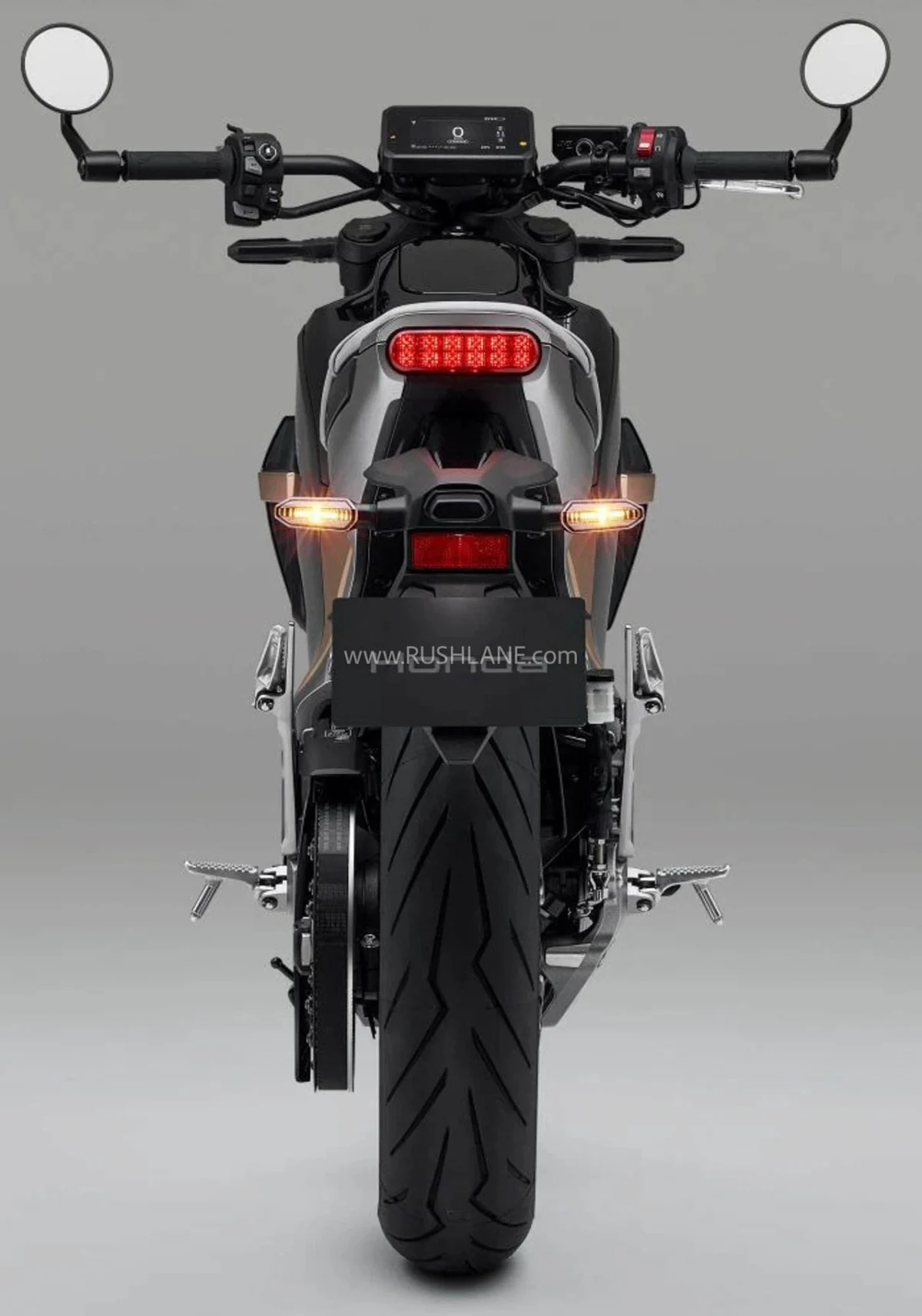
The WN7 is a masterclass in minimalist, futuristic design. Its aesthetic is defined by a "robotic" front fascia, featuring a wide LED Daytime Running Light (DRL) and vertically stacked headlights that give it an aggressive, modern stance. A standout feature is the single-piece body element that flows over the frame and battery compartment, cleverly mimicking the silhouette of a traditional fuel tank to maintain a familiar "naked bike" profile.
Furthermore, the motorcycle utilizes a monocoque subframe and a single-sided swingarm. This design choice is both functional and aesthetic; by housing the drive system and rear disc brake on one side, Honda has achieved an exceptionally "clean" look on the right profile of the bike. The inclusion of bar-end circular mirrors and a wide handlebar emphasizes its "Naked" (N) streetfighter DNA.
The W-N-7 Nomenclature
Honda’s naming convention for this model is deeply symbolic of its development philosophy:

- W: Signifies the development concept "Be The Wind," focusing on aerodynamics and the sensation of fluid movement.
- N: Stands for "Naked," referring to the streetfighter styling without fairings.
- 7: Represents the performance category, placing it in the upper echelon of electric motorcycles.
Chronology: From Concept to Patent
The journey of the WN7 has been rapid, reflecting the accelerating pace of EV development within Honda’s global R&D centers.
- November 2024: Honda showcases the EV Fun Concept at international forums. The concept was designed to prove that electric motorcycles could offer the same emotional engagement and "fun-to-ride" factor as high-displacement ICE bikes.
- September 2025: Honda officially unveils the production-spec version, christened the WN7. The motorcycle transitions from a showpiece to a retail-ready product.
- Early 2026: The WN7 wins the prestigious Gold Award at the iF Design Award 2026. This was a landmark achievement, marking the first time a Honda product received the top honor in this specific design category.
- May 2026: News breaks of the WN7 being patented in India. This filing sparks immediate speculation regarding a potential launch in the subcontinent, despite Honda’s previous reticence in the local EV space.
Supporting Data: Performance and Technical Specifications
The WN7 is designed to compete with 600cc middleweight ICE motorcycles, a segment known for balancing everyday usability with spirited performance.
Powertrain and Performance
- Motor: A mid-mounted single electric motor.
- Peak Power: 50.4 kW (equivalent to approximately 67.5 bhp).
- Peak Torque: 100 Nm, available instantaneously from zero RPM.
- Weight: 217 kg, which is comparable to many middleweight sport-touring motorcycles.
Battery and Range
The WN7 is powered by a 9.3 kWh battery pack. While this is large for a motorcycle, the high performance of the motor means the range is optimized for "fun" rather than long-distance touring.

- Range: 130 km on a single charge (under standard testing conditions).
- Charging Port: Equipped with a CCS2 (Combined Charging System) port, the global standard for fast charging.
- Charging Speed: The WN7 can charge from 20% to 80% State of Charge (SOC) in under 30 minutes using a compatible fast charger.
Technology and Hardware
- Display: A 5-inch full-color TFT instrument cluster.
- Connectivity: Full smartphone integration with navigation, vehicle diagnostics, and OTA (Over-the-Air) update capabilities.
- Suspension/Braking: Premium hardware including USD (Upside Down) front forks and a rear monoshock, paired with high-performance disc brakes and dual-channel ABS.
Official Responses and Market Context
While HMSI has not released an official statement regarding a specific launch date for the WN7 in India, the patent filing serves as a crucial piece of evidence for their regional strategy. In the world of automotive manufacturing, patents often serve two purposes: preparation for a commercial launch or Intellectual Property (IP) protection.
The IP Protection Exercise
Historically, Honda has patented several models in India—such as the Airblade scooter—that never reached the showroom floor. By patenting the WN7, Honda ensures that its unique design elements and technological innovations (like the specific motor-swingarm integration) are legally protected in one of the world’s largest two-wheeler markets. This prevents local competitors from "borrowing" design cues.
The "Activa E" Context
HMSI’s relationship with EVs in India has been complicated. The company initially planned to enter the market with electric versions of its legendary Activa (Activa E) and the QC1. However, these plans were reportedly delayed or scaled back as the company recalibrated its approach to battery swapping, charging infrastructure, and the high cost of localization. The patenting of the WN7 suggests that Honda might be considering a "top-down" approach—introducing a premium halo product to build brand prestige before tackling the cutthroat mass market.

Implications: What This Means for the Indian Market
The potential arrival (or even the mere existence) of the WN7 in Honda’s Indian portfolio has several far-reaching implications for the industry.
1. The Rise of the "Electric Superbike"
Currently, the Indian electric motorcycle market is polarized. On one end, there are commuter-focused bikes from Revolt and Tork. On the other, there is the Ultraviolette F77, which currently stands as India’s only high-performance electric offering. The WN7 would occupy a space even higher than the F77, bringing Japanese reliability and engineering to the premium EV segment.
2. Pricing and Positioning
In the United Kingdom, the WN7 is priced at GBP 12,999, which translates to approximately INR 16.74 lakh. If Honda were to bring the bike to India as a CBU (Completely Built Unit), import duties would push that price well beyond INR 20 lakh. At that price point, the WN7 would be a niche product for early adopters and collectors, rather than a volume seller.

3. Infrastructure Demands
The WN7’s reliance on CCS2 fast charging highlights a gap in India’s current infrastructure. While car charging networks are expanding, most electric two-wheelers in India use proprietary or slower AC charging connectors. A bike like the WN7 would require Honda to invest in, or partner with, high-speed charging networks to make the 130 km range viable for enthusiasts.
4. Signaling a Shift in HMSI’s DNA
For decades, Honda in India has been synonymous with "reliability" and "fuel efficiency." The WN7 represents a shift toward "performance" and "innovation." Even if the bike remains a patent on paper for the next few years, it serves as a technological "north star" for HMSI, indicating that the company is ready to compete in a post-ICE world.
Conclusion
The patenting of the Honda WN7 in India is a sophisticated chess move. It protects Honda’s award-winning design while keeping the door open for a future where the Indian consumer is ready for a 67 bhp electric streetfighter. While the high price tag and current infrastructure limitations make an immediate launch unlikely, the WN7 proves that Honda is not "out of the race." Instead, they are waiting for the right moment to transition from the reliability of the Activa to the high-voltage thrill of the "Be The Wind" philosophy. For the Indian enthusiast, the WN7 is a sign that the future of motorcycling will not just be silent—it will be incredibly fast.
