

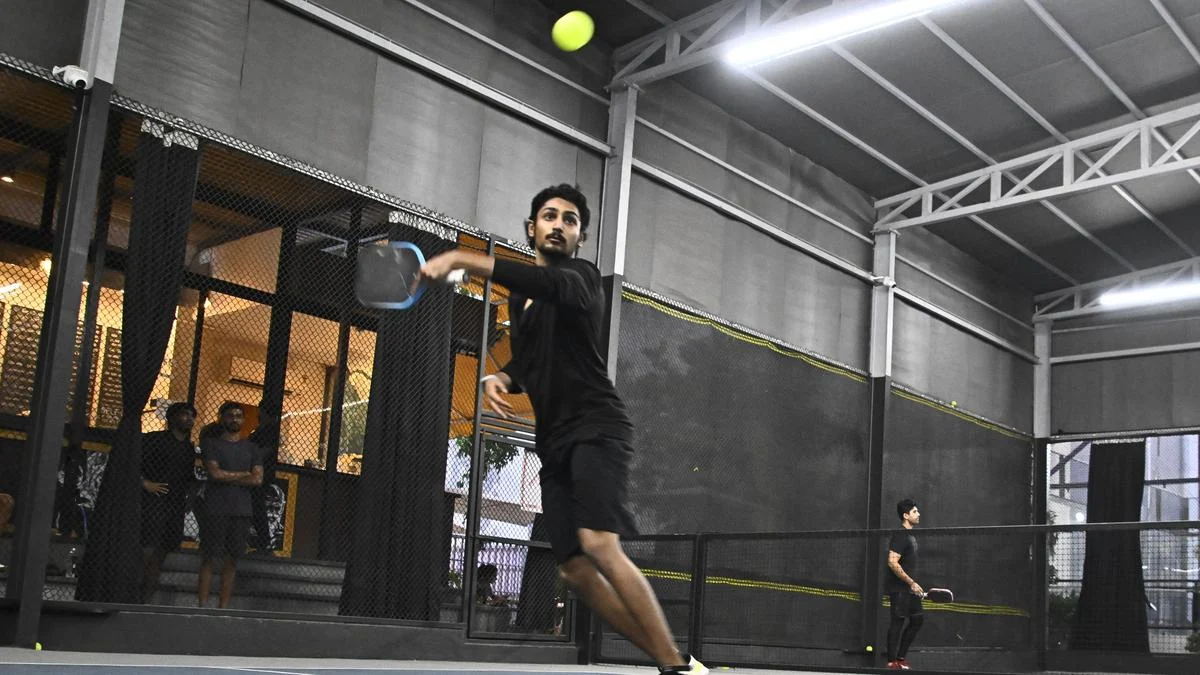
Hyderabad is experiencing a seismic shift in its recreational landscape, with pickleball emerging as the city’s newest sporting obsession. What began as a niche, social activity has rapidly transformed into a thriving community, drawing in a diverse array of players from IT professionals to seasoned athletes. Weekday evenings at Hyderabad’s dedicated pickleball courts are now a testament to this surge, pulsating with the distinctive rhythmic "snap" of plastic balls and the synchronized movements of paddles.
The burgeoning popularity of pickleball in Hyderabad is undeniable. Once a scarcity, pickleball courts are now readily available across various localities, signaling a significant expansion of the sport’s footprint. "There were only 8 to 10 courts in the city previously," remarks Dorlodhu Pradeep, a part-time coach at Hyderabad Paddle Park. "Now, you can find courts in different neighborhoods, catering to the growing demand." This expansion has created vibrant hubs of activity, with Jubilee Hills standing out as a prime example, boasting facilities like Hyderabad Paddle Park and The Kitchen, which consistently attract significant evening crowds. In parallel, Madhapur’s Ayyappa Society has become a favoured destination for IT professionals, thanks to the popular Pickle Yard. Gandipet’s Cross Court Sports offers a more expansive sports campus experience, while other frequently visited spots include Dink N Dash and the Pullela Gopichand Academy, further solidifying pickleball’s presence in the city’s sporting consciousness.
The shift towards indoor, air-conditioned courts has not only provided a much-needed respite from Hyderabad’s often-intense heat but has also contributed to the sport’s perceived premium status. This move indoors has made the sport more accessible year-round, further fueling its growth and appeal.
What is Pickleball? A Fusion of Familiarity and Novelty
At its core, pickleball is a paddle sport that masterfully blends elements from tennis, badminton, and table tennis. Played on a court that mirrors the dimensions of a badminton doubles court, it is considerably smaller than a standard tennis court. Players wield solid paddles, a departure from the strung rackets of tennis, and engage with a perforated plastic ball. This unique ball’s characteristic unpredictability after a bounce is a defining feature of the game. A key rule across most formats dictates that the ball must bounce once before volleys are permitted, adding a strategic layer to gameplay. Scoring is typically reserved for the serving side, further emphasizing the importance of serving prowess and tactical rallies.
Doubles play reigns supreme in Hyderabad, with four players efficiently sharing a court. This format, coupled with the sport’s inherently simple structure, makes it exceptionally well-suited for social engagement and group play.

The origins of the name "pickleball" are as varied as the players themselves, with two prominent theories circulating widely. One popular narrative attributes the name to a dog named Pickles, while another traces its etymology to the "pickle boat" in rowing, a term for a crew formed from leftover members of other teams. Both explanations are frequently discussed in online forums and within the growing pickleball community, adding a touch of intrigue to the sport’s identity.
The Rise of Pickleball in Hyderabad: A Digital Spark and Corporate Embrace
The seeds of Hyderabad’s pickleball revolution were largely sown through the pervasive influence of short-form video content on social media platforms. These engaging snippets offered a glimpse into the sport’s dynamic nature, quickly capturing the attention of a digitally connected populace. Simultaneously, corporate groups, actively seeking innovative and engaging team-building activities, found themselves drawn to pickleball’s accessible yet challenging gameplay. This dual approach – organic online discovery and targeted corporate engagement – proved to be a potent combination in introducing and embedding pickleball within the city’s leisure culture.
Many early adopters discovered that pickleball, while appearing deceptively simple at first glance, possesses a surprising depth of strategy and skill. Darla Jyotirmayi, a finance professional from Nanakramguda, recounts her initial encounter with the sport. "We kept seeing it online and finally decided to try it," she explains. "Though it seemed simple at first, we discovered it wasn’t." This initial underestimation of the game’s complexities became a recurring theme among newcomers.
Similarly, Garikapati Madhavi, an engineer from Kukatpally, experienced a similar realization during her first foray into the sport. "Online videos never show how hard it is to judge the bounce," she admits. "You think you know where it will go, and then you miss it completely." This gap between perceived simplicity and the actual learning curve has, paradoxically, become a significant driver of the sport’s growth. The challenge of mastering these nuances encourages players to return, refine their techniques, and delve deeper into the strategic intricacies of pickleball.
A Diverse Playing Field: Who is Embracing the Game?
An evening spent observing the pickleball courts across Hyderabad reveals a remarkably diverse cross-section of the city’s population. The players represent a spectrum of athletic backgrounds and motivations, from novices taking their first tentative swings to seasoned athletes seeking a new challenge. Corporate teams, often participating as part of team-building initiatives, are a common sight, as are IT professionals who transition directly from their demanding workdays to the courts. Even teenagers with established tennis backgrounds are engaging with pickleball, bringing a competitive edge and a keen focus to their gameplay.

Gaurav Jha, a digital marketer from Madhapur’s Ayyappa Society, first encountered pickleball during a corporate outing. "My boss explained the rules and I just joined," he recalls. Like many, he initially struggled to connect with the game’s nuances. "I struggled to connect with it," he admits, highlighting the initial learning curve. It took him several matches, approximately five to six, to feel comfortable and begin to truly appreciate the sport.
Chandravela Yash, a competitive tennis player from KPHB, makes a considerable commute, traveling between 30 to 50 minutes to play at The Kitchen in Jubilee Hills. While his tennis background provided a quicker adaptation, he remains mindful of the sport’s unique challenges. "Tennis helped me adjust," he notes, "But the ‘dink’ shot is the hardest shot, and consistency truly matters."
At the more dedicated end of the spectrum is Kannur Gopi from Begumpet. A regular at The Kitchen, Gopi has rapidly progressed from casual play to participating in competitive tournaments within a year. His commitment is reflected in his significant investment in the sport. He estimates spending upwards of ₹40,000 annually on court bookings, equipment, and shared costs. His high-performance carbon fibre paddles, costing around ₹6,000, require replacement every three to four months due to the intensity of his play. "Most other sports are cheaper," he acknowledges, "But once you start, it is hard to stop." This sentiment encapsulates the addictive nature of pickleball, drawing players in with its engaging gameplay and fostering a dedicated community.
The Financial Investment: Understanding the Costs of Pickleball
The financial commitment to pickleball in Hyderabad can vary significantly, influenced by venue choice and playing times. Smaller, more basic facilities may offer court rentals at approximately ₹700 per hour. However, premium indoor venues, which are increasingly popular due to their climate-controlled environments and enhanced amenities, command higher rates. Hyderabad Paddle Park, for instance, charges around ₹1,500 per hour for court time, while The Kitchen is priced at approximately ₹1,600 per hour.
Beyond court fees, equipment represents another substantial expenditure. Entry-level paddles can be acquired for ₹1,500 to ₹2,000, while advanced carbon fibre paddles, favored by more serious players, come with a higher price tag. While the typical session involves four players sharing a court, which effectively reduces the individual cost per person, it necessitates coordination among players or a willingness to join existing rotating groups. This communal aspect of cost-sharing further contributes to the sport’s social appeal.

Navigating the Learning Curve: Tips for Aspiring Pickleballers
The intricacies of pickleball extend beyond its fundamental rules, presenting a unique learning curve for newcomers. Experienced players often differentiate between indoor and outdoor balls, noting that indoor balls tend to be slower and lighter, while outdoor balls are faster and heavier. Neither behaves as intuitively as one might expect for beginners.
A significant initial hurdle for many is mastering wrist control. Small technical errors in wrist movement can have a more pronounced impact on consistency than sheer power. The constant lateral movement inherent in the game also necessitates appropriate footwear. Court shoes are strongly recommended to provide stability and reduce the risk of ankle strains, which can be exacerbated by the use of standard running shoes.
Dorlodhu Pradeep, the coach at Hyderabad Paddle Park, emphasizes a universal principle applicable to all sports and fitness routines: proper warm-up. "Most injuries happen when players skip warm-ups," he states. "People only take it seriously after they get hurt." He highlights that dedicated focus on correcting wrist movement alone can dramatically transform a beginner’s game and improve their overall performance.
For newcomers, the initial adjustment period typically spans two to three sessions for those with prior racket sport experience, and longer for those without. A deeper understanding and appreciation of the game’s nuances and strategies typically develop over weeks of consistent play.
Ultimately, pickleball sessions in Hyderabad are evolving beyond mere sporting activities; they are transforming into vibrant community gatherings, centered around the shared passion for the game on the court. This evolution signifies the sport’s deep integration into the city’s social fabric, promising continued growth and engagement for years to come.
