

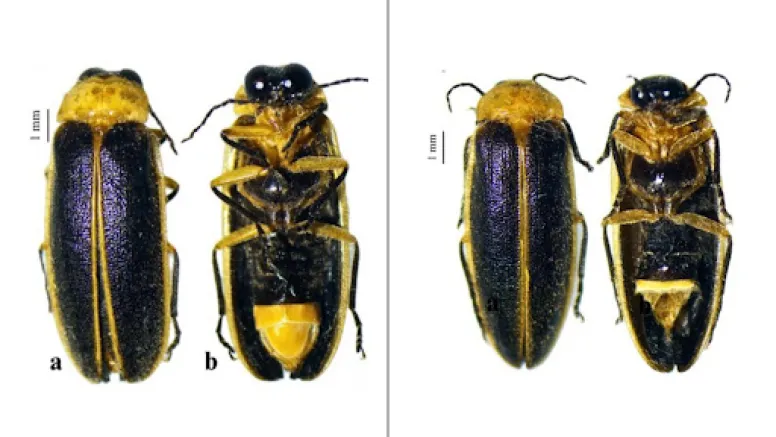
MAWSYNRAM, MEGHALAYA — In the mist-shrouded peaks of the East Khasi Hills, where the heavens release more rain than anywhere else on the planet, a new light has emerged from the shadows of the forest floor. A collaborative team of researchers from Northeast India has announced the discovery of a new species of firefly, Pygoluciola mawsynram, named after the iconic village of Mawsynram.
This discovery, documented in mid-2026, represents a significant milestone for Indian entomology. It marks only the fifth species of the Pygoluciola genus to be recorded in India and the 29th globally. More importantly, it highlights a resurgence in the study of bioluminescent beetles in a region that has, according to experts, been overlooked by the scientific community for over a century.
The Main Facts: A Luminous Addition to India’s Biodiversity
The discovery of Pygoluciola mawsynram was the result of a rigorous joint effort between scientists from Assam Don Bosco University and Debraj Roy College. The species is a member of the Lampyridae family, known popularly as fireflies, which utilize bioluminescence to attract mates or prey.
While India is globally recognized as a megadiverse country, its invertebrate populations—specifically fireflies—have lacked a comprehensive taxonomic update since the British colonial era. The identification of P. mawsynram serves as a vital data point in filling this "taxonomic vacuum."
Key Characteristics of Pygoluciola mawsynram:
- Physical Appearance: The species is distinguished by an orange-yellow pronotum (the plate-like structure covering the thorax) and striking black wing covers (elytra) bordered by thin yellow margins.
- Habitat: It thrives in the moist grasslands and semi-evergreen forests of the East Khasi Hills, typically found near slow-flowing water sources.
- Behavior: The insects exhibit a specific rhythmic yellowish flash, primarily active during the twilight hours between 6:00 pm and 9:00 pm.
- Biological Significance: The species is believed to have aquatic or semi-aquatic larvae, making its life cycle inextricably linked to the high-moisture environment of the Meghalayan plateau.
Chronology of the Discovery: From the Field to the Laboratory
The journey to identifying Pygoluciola mawsynram began in the pre-monsoon window of May 2024. This timing was critical; the researchers sought to observe the insects before the torrential rains of June and July made the terrain impassable and altered the fireflies’ mating patterns.

Phase 1: Field Surveys (May 2024)
The research team conducted extensive treks through the rugged terrain of Mawsynram. The methodology involved "active searching" during the peak hours of bioluminescent activity. By navigating the periphery of waterfalls and slow-moving streams, the team captured several specimens. Initial field observations noted that the flashing patterns of these fireflies differed slightly from known species in the region, prompting a more detailed investigation.
Phase 2: Morphological Analysis
Back in the laboratory, the specimens underwent "traditional morphology" assessments. This involves the use of high-powered microscopy to examine the minute physical structures of the insect. The team focused on the abdominal segments and the reproductive organs, which are often the "fingerprints" of insect species.
Phase 3: DNA Barcoding (2025-2026)
To confirm the discovery beyond a doubt, the team utilized DNA barcoding—a method that uses a short genetic marker in an organism’s DNA to identify it as belonging to a particular species. This molecular analysis allowed the researchers to compare the genetic signature of the Mawsynram firefly with global databases. The results confirmed that while it shared a common ancestor with Pygoluciola ambita (found in Indonesia), it was genetically distinct.
Phase 4: Formal Publication and Naming
By July 2026, the findings were peer-reviewed and published. The choice of the name Pygoluciola mawsynram was intentional, serving a dual purpose: to anchor the species to its geographical origin and to pay homage to the local Khasi community.
Supporting Data: Distinguishing the New Species
The scientific validity of P. mawsynram rests on specific anatomical nuances that separate it from its closest relatives. In the world of entomology, the "aedeagus" (the male reproductive organ) is the primary diagnostic tool for species separation in beetles.

Comparative Morphology
The researchers compared P. mawsynram primarily with Pygoluciola ambita. While the two share similar coloration, the Indian species possesses a unique "reflexed" or folded margin on its sixth abdominal segment. Under the microscope, the aedeagus of P. mawsynram showed a broad base that tapers into a thin, wavy membrane—a structural configuration never before documented in the Pygoluciola genus.
Environmental Data
Mawsynram receives an average annual rainfall of over 11,800 millimeters. The research team collected data suggesting that the firefly’s lifecycle is synchronized with this extreme humidity. The moisture-rich soil and the abundance of mosses near the waterfalls provide the ideal substrate for the larvae, which are suspected to be predatory, feeding on small snails or other soft-bodied invertebrates found in the damp leaf litter.
Official Responses and Scientific Perspectives
The discovery has drawn praise from the international scientific community and local conservationists.
Dr. Rahul Sarma, one of the lead researchers, emphasized the neglect of Indian fireflies in modern science. "For over a hundred years, the fireflies of the Indian subcontinent were a forgotten chapter in entomology," Dr. Sarma stated. "This discovery proves that our hotspots—especially the Northeast—are harboring secrets that we are only beginning to light up."
Representatives from the Meghalaya Biodiversity Board welcomed the news, noting that the discovery adds further weight to the argument for the "Sacred Groves" conservation model. "The Khasi people have protected these forests for generations through traditional laws," a spokesperson said. "The fact that a new species was found in these very lands is a testament to the success of community-led conservation."

However, some experts expressed a note of caution. "While we celebrate P. mawsynram, we must recognize that many such species may be blinking out before they are even discovered," warned an ecologist specializing in Himalayan biodiversity. "Habitat fragmentation and changes in water tables due to climate change are immediate threats."
Implications: Conservation, Ecology, and the "River-Linking" Threat
The discovery of Pygoluciola mawsynram carries implications that extend far beyond the borders of Meghalaya. It serves as a "bio-indicator" for the health of the region’s aquatic ecosystems.
The Vulnerability of Aquatic Larvae
Because the larvae of this genus are often aquatic or semi-aquatic, they are highly sensitive to water pollution and changes in flow dynamics. This makes the species particularly vulnerable to large-scale infrastructure projects.
The Shadow of the National River Linking Project (NRLP)
While not directly impacting Mawsynram’s immediate waterfalls yet, the broader National River Linking Project remains a point of concern for researchers. The NRLP aims to connect isolated river basins through a massive network of canals. Scientists warn that such interventions could:
- Introduce Invasive Species: Canals act as highways for invasive predatory fish and plants that could decimate the native larvae of species like P. mawsynram.
- Alter Micro-Climates: Changes in water distribution can lower local humidity levels, which are essential for the survival of fireflies in the East Khasi Hills.
- Fragment Habitats: The construction of canals and dams can isolate populations, leading to a "genetic bottleneck" that makes species more susceptible to disease and extinction.
Cultural Conservation: The Khasi Legacy
The discovery also brings to the forefront the importance of the "Law Kyntang" or Sacred Groves. In Meghalaya, these are patches of forest where cutting trees or harming wildlife is strictly forbidden by traditional belief. The research team noted that the presence of P. mawsynram in these areas highlights how traditional ecological knowledge (TEK) can be more effective than modern top-down conservation strategies. By naming the firefly after the village, the scientists hope to instill a sense of pride and stewardship among the local youth, ensuring the "yellow flashes" of Mawsynram continue for generations.

Conclusion: A Call for Continued Exploration
The identification of Pygoluciola mawsynram is more than just the addition of a name to a taxonomic list. It is a reminder that in the age of satellite imagery and global mapping, the natural world still holds profound mysteries in its smallest corners.
As the sun sets over the wettest place on Earth, and the first yellowish glimmers appear near the slow-flowing streams of the East Khasi Hills, science has a new reason to look closer. The challenge now lies in ensuring that the environment which birthed this species—defined by its pure water and ancient forests—remains intact against the pressures of modern development. For Pygoluciola mawsynram, the light is on, but the clock is ticking.
