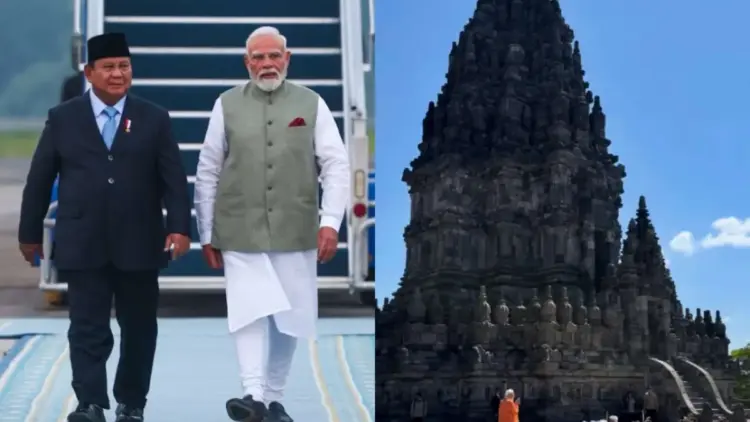
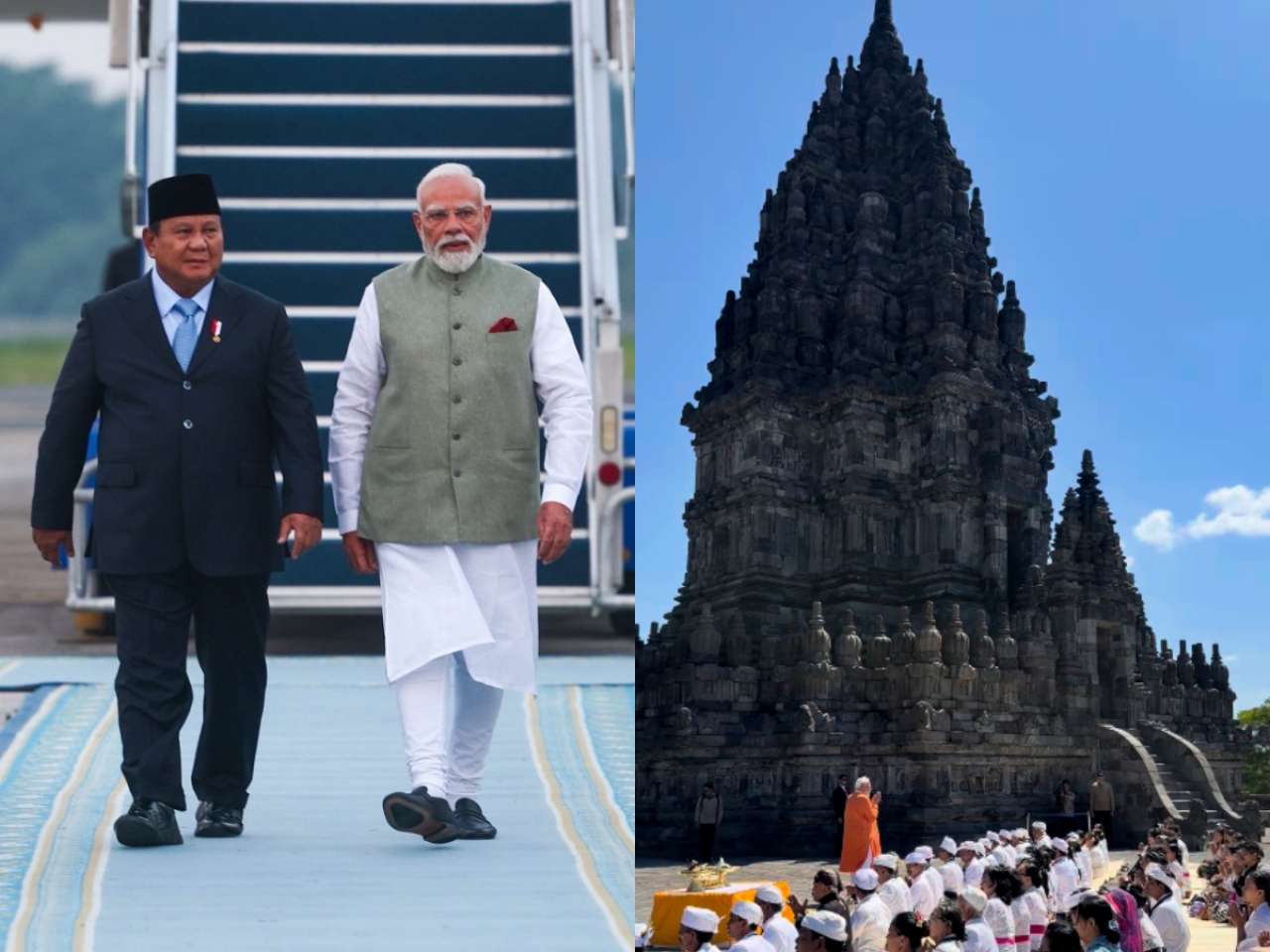
Yogyakarta, Indonesia – During his recent state visit to Indonesia, Prime Minister Narendra Modi paid a significant visit to the majestic Prambanan Temple complex, a UNESCO World Heritage Site that stands as a profound testament to the centuries-old cultural and spiritual connections between India and Indonesia. The visit, more than a mere ceremonial stop, served to illuminate the deep historical linkages and shared heritage that continue to bind these two vibrant nations, despite Indonesia being the world’s most populous Muslim-majority country.
The presence of Prime Minister Modi at this ancient Hindu sanctuary, located near the cultural heartland of Yogyakarta in Central Java, underscored a mutual commitment to preserving and celebrating a shared past. Discussions during the visit also hinted at potential collaborations in the conservation of this invaluable heritage site, further solidifying the diplomatic and cultural rapport between India and Indonesia.
A Glimpse into Indonesia’s Rich Hindu Past
Prambanan is not merely a historical landmark; it is a powerful symbol of Indonesia’s multifaceted religious and cultural tapestry. As the largest Hindu temple complex in Indonesia and one of the most significant in Southeast Asia, it ranks second only to Cambodia’s Angkor Wat in regional prominence. Its sheer scale and architectural grandeur speak volumes about the advanced civilization that flourished in ancient Java.
The construction of Prambanan dates back to the 9th and 10th centuries, commissioned during the reign of the Sanjaya dynasty of the Mataram Kingdom. It was conceived as a tribute to the Hindu Trimurti – Lord Shiva, Lord Vishnu, and Lord Brahma – the principal deities of Hinduism, representing creation, preservation, and destruction, respectively. The architectural brilliance and spiritual significance of Prambanan are often juxtaposed with the nearby Borobudur Temple, which represents Indonesia’s equally rich Buddhist heritage. Together, these two monumental sites offer an unparalleled window into the diverse religious landscape and sophisticated cultural achievements of ancient Java.

In recognition of its profound historical, artistic, and architectural value, UNESCO designated the Prambanan Temple Compound as a World Heritage Site in 1991. This esteemed status highlights its universal importance and the global responsibility to protect and cherish this ancient marvel for future generations.
Architectural Grandeur and Spiritual Significance
The immediate impression upon encountering Prambanan is its striking verticality, characterized by towering spires that pierce the Javanese sky. The main complex is meticulously organized, featuring three principal temples dedicated to Shiva, Vishnu, and Brahma. The central and tallest of these, the Shiva temple, stands at an imposing height of approximately 47 meters, a testament to the engineering prowess of its builders.

Within the sanctum of the Shiva temple, visitors are greeted by exquisite statues of Lord Shiva, his consort Goddess Durga, their son Lord Ganesha, and the revered sage Agastya. The layout of the temples adheres to traditional Hindu cosmological principles, arranged in a precise square formation, symbolizing the cosmic order and the interconnectedness of the universe.
Originally, the Prambanan complex boasted an impressive array of around 240 temples, spread across an expansive area of nearly 40 hectares. While time and natural forces have reduced many of the smaller structures to ruins, the principal shrines have undergone meticulous restoration, allowing visitors to experience their former glory. The ongoing efforts to reconstruct and preserve the smaller temples further illustrate the enduring commitment to understanding and safeguarding this historical treasure.

The Ramayana Etched in Stone: A Timeless Narrative
Beyond its architectural magnificence, Prambanan is celebrated for its intricate stone carvings, which serve as a visual chronicle of the Ramayana, one of Hinduism’s most revered epics. The bas-reliefs adorning the temple walls narrate the epic journey of Lord Rama, his exile, the abduction of Sita by the demon king Ravana, and the eventual victory of good over evil. Traditionally, visitors are guided to circumambulate the temple in a clockwise direction, immersing themselves in the unfolding narrative etched in stone.
These detailed carvings are not merely decorative; they represent a profound fusion of Indian cultural influences with the distinctive artistic sensibilities of Java. This unique blend is a hallmark of the syncretic cultural development that characterized ancient Indonesia.

The legacy of the Ramayana at Prambanan extends beyond its static carvings. The temple complex continues to be a vibrant venue for spectacular open-air Ramayana ballet performances. These captivating shows, featuring traditional dance, music, and theatre, are staged against the evocative backdrop of the illuminated temple ruins, creating an unforgettable cultural experience that bridges the past and the present.
The Legend of Princess Roro Jonggrang: A Tale of Love, Deception, and Transformation
Prambanan is inextricably linked to a captivating Javanese legend that adds a layer of myth and mystique to its historical significance. The tale revolves around Princess Roro Jonggrang, who, according to folklore, agreed to marry the formidable warrior Bandung Bondowoso on the condition that he erect 1,000 temples in a single night. Driven by his love for the princess, Bandung Bondowoso, with the aid of supernatural forces, embarked on this seemingly impossible task.

As dawn approached and the final temple was nearing completion, the princess, fearing the union and desperate to thwart the prince’s success, resorted to a clever ruse. She instructed the villagers to ignite fires and pound rice, mimicking the sounds of early morning activity. Deceived into believing that the night had ended, the spirits assisting Bandung Bondowoso vanished, leaving the task unfinished.
Enraged by what he perceived as deceit, Bandung Bondowoso, in his fury, cursed Princess Roro Jonggrang, transforming her into stone. Local tradition holds that the statue of Goddess Durga enshrined within the Shiva temple is, in fact, the petrified form of the princess. While historians generally regard this narrative as folklore, it underscores the deep cultural resonance and enduring storytelling embedded within the fabric of Indonesian heritage.

From Ancient Ruins to a Resilient World Heritage Site
Following significant political shifts in the 10th century, Prambanan, like many ancient structures, began to fall into disrepair. The ravages of time, compounded by volcanic eruptions, earthquakes, and prolonged neglect, led to the gradual decay of many structures, with numerous edifices becoming buried beneath layers of volcanic ash and dense vegetation.
The site lay largely forgotten until its rediscovery in the 19th century, marking the beginning of concerted restoration efforts. Despite setbacks, such as the devastating Yogyakarta earthquake in 2006, which caused considerable damage, continuous restoration projects have been instrumental in preserving this monumental site. These ongoing endeavors reflect a profound dedication to maintaining its structural integrity and historical authenticity.

Today, while the painstaking process of rebuilding many of the smaller temples continues, the main shrines stand restored, a testament to human perseverance and dedication. Prambanan remains one of Indonesia’s most significant tourist attractions, drawing visitors from around the globe who come to marvel at its architectural splendor and immerse themselves in its rich historical narrative.
A Living Symbol of Indonesia’s Enduring Hindu Heritage
Even in contemporary Indonesia, a nation with a predominantly Muslim population, the echoes of Hindu traditions continue to resonate deeply within its history and culture. The influence of Hinduism first began to permeate the Indonesian archipelago over 1,500 years ago, primarily through vibrant trade routes and extensive cultural exchanges with India.

This historical interaction laid the groundwork for the rise of numerous influential Hindu and Hindu-Buddhist kingdoms that once held sway over vast regions of Java, Sumatra, and Bali. These powerful dynasties left behind an indelible legacy in the form of magnificent temples, ancient inscriptions, and enduring cultural practices. While Bali today stands as the primary bastion of Hinduism in Indonesia, monuments like Prambanan serve as crucial custodians of the nation’s rich Hindu past, ensuring that its historical and spiritual contributions are never forgotten.
Prime Minister Modi’s visit to Prambanan served as a powerful reminder of this shared heritage, reinforcing the notion that cultural diplomacy can be a potent force in fostering stronger international relations. The enduring presence of Hindu art, architecture, and philosophy in Indonesia, epitomized by Prambanan, is a vibrant testament to the deep and lasting connections that have shaped the cultural landscape of both nations for millennia. The ongoing dialogue and potential collaboration on heritage conservation further signal a commitment to nurturing these bonds for generations to come.