

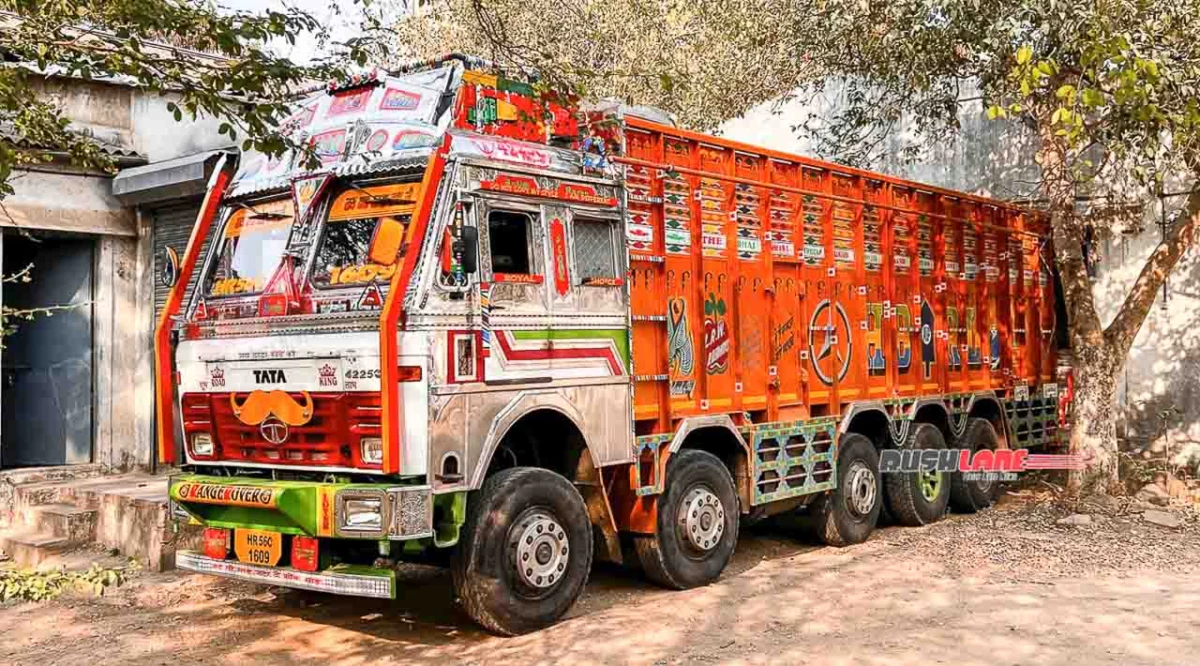
The Indian commercial vehicle (CV) industry has commenced the 2026-27 financial year on a remarkably strong footing, defying typical post-fiscal year-end slowdowns to record its best-ever performance for the month of April. According to the latest retail data released by the Federation of Automobile Dealers Associations (FADA), the segment witnessed a double-digit year-on-year (YoY) growth, signaling robust health in the nation’s industrial and logistical backbones.
Main Facts: A Record-Breaking April for Indian Logistics
In April 2026, the commercial vehicle segment recorded total retail sales of 99,339 units. This figure represents a significant 15.02% growth compared to the 86,364 units retailed in April 2025. While the industry experienced a slight month-on-month (MoM) contraction of 3.12%—falling from the 1,02,536 units sold in March 2026—this dip was widely anticipated by market analysts. March typically sees a surge in registrations as businesses rush to utilize depreciation benefits and OEMs push to meet annual targets before the financial year closes.
The narrative of April 2026 is one of consolidation and dominance. Three major players—Tata Motors, Mahindra & Mahindra, and Ashok Leyland—continued to exert an iron grip on the market. Together, these "Big Three" accounted for nearly 80% of the total market share, leaving the remaining 20% to be contested by specialized players like VECV, Maruti Suzuki, and Daimler India.
Segmental Performance: The Rise of Medium Commercial Vehicles
A granular look at the data reveals that the growth was not uniform across all weight categories, reflecting specific shifts in the Indian economy:
- Medium Commercial Vehicles (MCV): This sub-segment emerged as the star performer, posting a stellar 27.07% growth. The surge in MCV demand is largely attributed to the strengthening of the "hub-and-spoke" logistics model and increased inter-city movement of perishable goods and e-commerce shipments.
- Light Commercial Vehicles (LCV): Registering a 17.76% growth, LCVs continue to benefit from the "last-mile delivery" boom. As urbanization spreads into Tier-2 and Tier-3 cities, the demand for small trucks to navigate narrow streets remains insatiable.
- Heavy Commercial Vehicles (HCV): The heavy-duty segment grew by a modest but stable 8.27%. This growth is closely tied to the government’s continued capital expenditure on national highways, bridges, and mining projects.
- Others: This miscellaneous category saw a decline of 8.25%, likely due to a shift in buyer preference toward standardized, OEM-built specialized vehicles.
Chronology: From Year-End Peak to Sustainable Growth
To understand the April 2026 numbers, one must look at the trajectory of the preceding quarter. The final quarter of FY 2025-26 (January–March 2026) saw an aggressive push by manufacturers to clear inventory and capitalize on infrastructure project deadlines.
- March 2026: The industry peaked at over 1.02 lakh units. This was fueled by corporate fleet renewals and a preemptive move by buyers to avoid potential price hikes associated with new safety regulations slated for mid-2026.
- April 2026: As the new financial year dawned, the industry braced for a "cooldown." However, the cooldown was much milder than in previous decades. The 15% YoY growth suggests that the demand is no longer just seasonal but structural. The transition from March to April showed that while retail momentum slowed slightly (-3.12%), the baseline of demand has shifted upward.
Supporting Data: The Fuel and Manufacturer Breakdown
The Energy Mix: Diesel Remains King, EVs Gain a Foothold
Despite the global push for green energy, the Indian CV heartland remains firmly tethered to diesel. The fuel-wise breakup for April 2026 provides a telling picture of the energy transition:
- Diesel: Dominates with an 82.34% market share. Its energy density and the established refueling infrastructure make it the only viable choice for long-haul HCVs.
- CNG/LPG: Accounted for 12.08% of sales. This is primarily concentrated in the LCV and SCV (Small Commercial Vehicle) segments within NCR and other green corridors.
- Petrol/Ethanol: Held a 3.28% share, mostly in the sub-one-ton delivery van segment.
- Electric Vehicles (EV): Penetration stood at 2.26%. While the percentage seems small, it represents a significant volume increase compared to two years ago, driven by electric buses and intra-city delivery fleets.
- Hybrid: Remained a niche experiment at 0.04%.
OEM Leaderboard: Winners and Losers
Tata Motors maintained its crown, retailing 36,891 units. This was a 20.31% YoY increase, and more impressively, a 1.40% MoM growth, bucking the industry’s downward MoM trend. Tata’s diverse portfolio, ranging from the Ace to the Prima range, allowed it to capture 37.14% of the total market.
Mahindra & Mahindra secured the second position with 24,308 units. While they enjoyed a 15.07% YoY growth, they suffered a 9.63% MoM decline. Mahindra’s strength remains the 2-to-3.5-ton pickup segment, which is highly sensitive to rural demand and agricultural cycles.
Ashok Leyland rounded out the top three with 17,821 units. The Chennai-based manufacturer saw a 12.15% YoY growth. However, its market share dipped slightly to 17.94% from its March levels, indicating stiff competition in the heavy-duty tipper and tractor-trailer segments.
VE Commercial Vehicles (VECV), the Volvo-Eicher joint venture, outperformed many peers with an 18.26% YoY growth and an 8.25% MoM improvement, selling 9,111 units. Their focus on fuel-efficient engines and advanced telematics is clearly resonating with fleet operators.
Force Motors was the notable outlier, reporting a staggering 42.05% decline in sales (2,113 units vs. 3,646 units in April 2025). This sharp drop is attributed to a restructuring of their product portfolio and temporary supply chain bottlenecks in their ambulance and school bus segments.
Official Responses and Industry Sentiment
While official statements from individual OEMs remained cautiously optimistic, the Federation of Automobile Dealers Associations (FADA) provided a balanced perspective on the month’s performance.

In an internal briefing, industry analysts noted that the record-breaking April is a "testament to the resilience of the Indian economy." However, they also warned of "emerging headwinds." Dealers across the country have reported that while enquiries remain high, the conversion rate is being slightly hampered by stricter financing norms and a rise in interest rates for commercial loans.
"The growth in the MCV and LCV segments is a direct reflection of the consumer economy’s strength," said a senior industry consultant. "However, the HCV segment is currently in a ‘wait-and-watch’ mode as large-scale contractors assess the impact of fluctuating steel prices and bitumen costs on their project margins."
There is also a growing consensus among manufacturers that the "replacement demand" cycle is currently at its peak. Many fleets that were aged during the pandemic years (2020-2022) are finally being replaced with newer, BS-VI Phase II compliant vehicles that offer better uptime and lower Total Cost of Ownership (TCO).
Implications: What Lies Ahead for the CV Sector?
The April 2026 performance sets a high bar for the rest of the year. Several factors will determine if this momentum can be sustained:
1. The Infrastructure Catalyst
The Indian government’s commitment to the Gati Shakti Master Plan remains the primary driver for the CV industry. As more kilometers of highways are added daily, the demand for high-tonnage multi-axle trucks and tippers is expected to remain robust. Furthermore, the push for "Smart Cities" is creating a secondary market for specialized municipal CVs.
2. Environmental Regulations and the EV Transition
With EV penetration at 2.26%, the industry is at a tipping point. The next 12 to 18 months will likely see the introduction of more electric small commercial vehicles (e-SCVs) as battery prices stabilize. If the government extends FAME-III or similar subsidy schemes, the 2.26% share could easily double by 2027.

3. The Climate Factor
One immediate concern for the industry is the rising temperature across the Indian subcontinent. Severe heatwaves in April and May tend to slow down construction activity and reduce the efficiency of logistics operations. If the summer of 2026 proves to be record-breaking in terms of heat, we may see a temporary dip in CV utilization rates, which could dampen retail sales in the subsequent months.
4. Supply Chain and Global Logistics
While the domestic market is booming, Indian CV manufacturers are still reliant on global supply chains for certain electronic components and specialized sensors. Any geopolitical instability affecting shipping routes could lead to extended waiting periods for high-end truck models.
Conclusion
The April 2026 retail sales data paints a picture of a mature, growing, and increasingly competitive Indian commercial vehicle market. With Tata, Mahindra, and Ashok Leyland leading the charge, the industry has proven its ability to sustain growth even after a high-volume month like March. As the year progresses, the focus will shift from sheer volume to technological integration, fuel efficiency, and the gradual greening of the Indian fleet. For now, the "Best-Ever April" title stands as a milestone in India’s journey toward becoming a global logistics powerhouse.
