The Indian two-wheeler industry demonstrated robust resilience and significant expansion in September 2026, marking a pivotal moment for the nation’s automotive sector. According to the latest retail and dispatch data, domestic sales soared to 24,63,103 units, representing a substantial 13.50% year-on-year (YoY) growth compared to the 21,70,100 units recorded in September 2025. This surge is not merely a statistical anomaly but a reflection of shifting consumer preferences, a strengthening rural economy, and the aggressive inventory buildup typically seen ahead of the festive season.
Perhaps more impressive is the month-on-month (MoM) trajectory. Compared to August 2026, which saw sales of 20,34,698 units, the industry witnessed a 21.05% jump in volumes. This double-digit growth across both YoY and MoM metrics underscores a market in high gear, driven primarily by a phenomenal performance in the scooter segment and the unwavering dominance of entry-level commuter motorcycles.
The Chronology of Growth: From Monsoon Recovery to Festive Fever
The journey to the September highs began with a steady recovery through the monsoon months of July and August. While the early part of the year faced inflationary pressures and fluctuating fuel prices, the late-third-quarter performance suggests a stabilization of the macro-economic environment.
By August 2026, manufacturers began ramping up production in anticipation of the Shradh period ending and the auspicious festive window opening. The transition from August to September saw a net addition of over 4.28 lakh units to the domestic market. This period is historically critical for Indian OEMs (Original Equipment Manufacturers), as it accounts for nearly 25-30% of annual sales. The 21.05% MoM increase indicates that dealerships across the country are heavily stocking up, fueled by optimistic consumer sentiment and attractive financing schemes.
Supporting Data: Analyzing the Top 10 Performance
The "Top 10" club continues to dictate the market’s direction, contributing 16,14,472 units in September 2026—up 11.97% from the 14,41,876 units sold in the same month last year. While the leaders remained largely consistent, the internal dynamics of this list reveal a story of varying fortunes.
The Unstoppable Leaders: Splendor and Activa
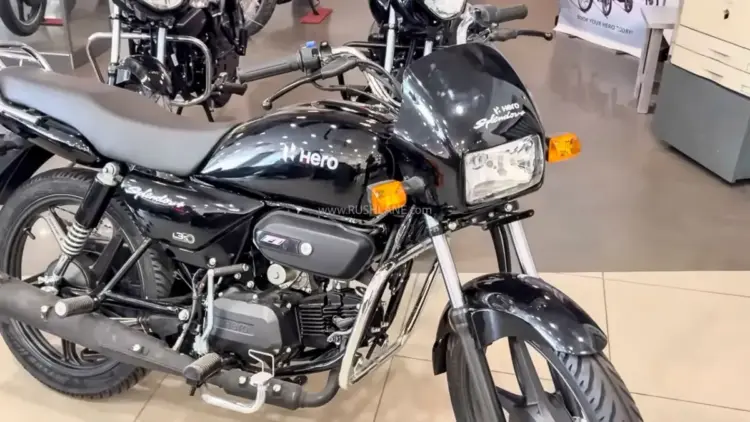
Hero MotoCorp’s Splendor remains the undisputed king of the Indian roads. With 4,31,279 units sold, it grew by 12.49% YoY. The Splendor alone accounts for over 26% of the total volumes generated by the top ten models, proving that the 100cc commuter segment remains the bedrock of Indian mobility.

However, the headline-grabber of the month was the Honda Activa. The scooter recorded a staggering 48.19% growth, moving from 2,37,716 units in September 2025 to 3,52,271 units in 2026. This gain of 1,14,555 units represents nearly two-thirds of the total net increase seen in the top ten list. The Activa’s performance highlights a massive shift toward automatic scooters, particularly in urban and semi-urban markets.
The Mid-Tier Stability and the Pulsar Slump
Honda Shine maintained its third-place position with 1,89,941 units, though its growth was a modest 2.64%. In contrast, the TVS Jupiter showed healthy momentum with an 8.87% increase, reaching 1,54,725 units.
The most notable decline in the top tier came from the Bajaj Pulsar series. Sales dropped by 12.51%, falling from 1,55,798 units in September 2025 to 1,36,313 units this year. This reduction of nearly 19,500 units suggests increasing competition in the sporty-commuter segment and perhaps a shift in consumer interest toward more premium offerings or electric alternatives within the same price bracket.
Premium and Niche Growth
The TVS Apache (+14.67%) and Royal Enfield Classic 350 (+16.90%) both posted strong double-digit gains. The Classic 350’s performance (47,286 units) is particularly significant as it indicates that the "premiumization" trend—where buyers opt for higher-displacement lifestyle motorcycles—is continuing unabated despite broader economic shifts.
Segment Breakdown: The "Year of the Scooter"
A granular look at the vehicle categories reveals that scooters are the primary engine of the domestic market’s growth.
- Motorcycles: While still the largest category with 14,12,010 units, motorcycles grew by a slim 2.79% YoY. This suggests a saturation point in certain rural markets or a migration of buyers toward scooters.
- Scooters: Domestic scooter sales hit an all-time high of 9,95,576 units, growing by a massive 34.07%. Scooters contributed approximately 86% of the total YoY volume increase for the entire industry. Their market share now stands at a formidable 40.42%.
- Mopeds: The TVS XL remains the sole torchbearer here, with 55,517 units sold, reflecting a 3.29% growth.
The rise of the scooter can be attributed to several factors: better road infrastructure in rural areas, an increasing number of women entering the workforce, and the sheer convenience of "twist-and-go" riding in congested urban traffic.

Global Footprint: Exports Reach New Heights
The "Make in India" initiative continues to pay dividends in the two-wheeler sector. Exports for September 2026 rose by 26.83% YoY, totaling 5,44,797 units.
Motorcycles remain the preferred export product, accounting for 4,65,163 units (+24.42%). However, the growth rate of scooter exports (+41.27%) is outpacing motorcycles, mirroring the domestic trend. While there was a slight 1.89% dip in exports compared to August 2026—largely due to logistical bottlenecks and shifting demand in African and Latin American markets—the overall trajectory for the year remains upward.
When combining domestic sales and exports, the total volume for September reached a staggering 30,07,900 units, a 15.70% increase YoY.
Quarterly Review: Q3 CY2026 Performance
The July–September quarter (Q3) of 2026 has been a landmark period. Domestic sales for the quarter crossed the 64-lakh mark (64,21,284 units), a 15.05% jump over Q3 2025.
- Motorcycles: 36,19,853 units (+7.40%)
- Scooters: 26,49,481 units (+27.44%)
- Mopeds: 1,51,950 units (+15.44%)
The quarterly data confirms that the scooter boom is not a one-month wonder but a sustained market shift. Total combined volumes (Domestic + Exports) for the quarter stood at 80,75,631 units, up 17.44% YoY.
Official Responses and Industry Sentiment
While individual corporate statements were focused on the upcoming Diwali season, industry analysts and spokespeople from the Society of Indian Automobile Manufacturers (SIAM) have pointed to several key drivers.

"The September numbers are a testament to the fundamental strength of the Indian consumer," noted a senior industry analyst. "We are seeing a ‘K-shaped’ recovery where the premium segment (like Royal Enfield) and the convenience segment (scooters) are growing rapidly, while the traditional 100cc-125cc motorcycle segment is seeing more tempered, steady growth."
Executives from Hero MotoCorp and Honda Motorcycle & Scooter India (HMSI) have expressed confidence that the momentum will carry through to the end of the calendar year. The focus for these OEMs has shifted toward "inventory management," ensuring that dealerships are not over-leveraged while still having enough stock to meet the peak festive demand in October and November.
Implications: What This Means for the Future
The September 2026 sales data carries several long-term implications for the Indian automotive landscape:
1. The Scooterization of India: With scooters nearing a 41% market share, manufacturers may pivot their R&D budgets further toward the scooter segment. We can expect more feature-rich, larger-displacement scooters (125cc-160cc) to dominate future launches.
2. Rural Resilience: The growth in Splendor and HF Deluxe sales (despite the latter’s slight dip) suggests that rural purchasing power is stable. A good monsoon in 2026 has likely provided the necessary liquidity for rural households to invest in personal mobility.
3. The Electric Shadow: While this report focuses on internal combustion engine (ICE) vehicles, the rapid growth in the scooter segment is also where the electric vehicle (EV) transition is most aggressive. The high growth in ICE scooters suggests that while EVs are gaining ground, the traditional petrol scooter still holds a massive sway over the average consumer due to charging infrastructure concerns.

4. Export Hub Status: The 26% growth in exports reinforces India’s position as a global manufacturing hub. As European and Southeast Asian markets look for cost-effective yet high-quality mobility solutions, Indian OEMs are well-positioned to fill the gap.
5. Competitive Pressure on Bajaj: The decline in Pulsar sales is a signal for Bajaj Auto to perhaps refresh its lineup or reconsider its pricing strategy in the face of stiff competition from the TVS Apache and the burgeoning 200cc+ segment.
Conclusion
September 2026 has set a high benchmark for the Indian two-wheeler industry. Crossing 30 lakh units in total monthly volume (Domestic + Exports) is a historic milestone that reflects a nation on the move. As the industry heads into the final quarter of the year, all eyes will be on whether this "scooter-led" rally can sustain its pace or if the traditional motorcycle will reclaim its lost growth momentum during the peak festive celebrations. For now, the mood in the industry is one of cautious optimism and high-octane performance.