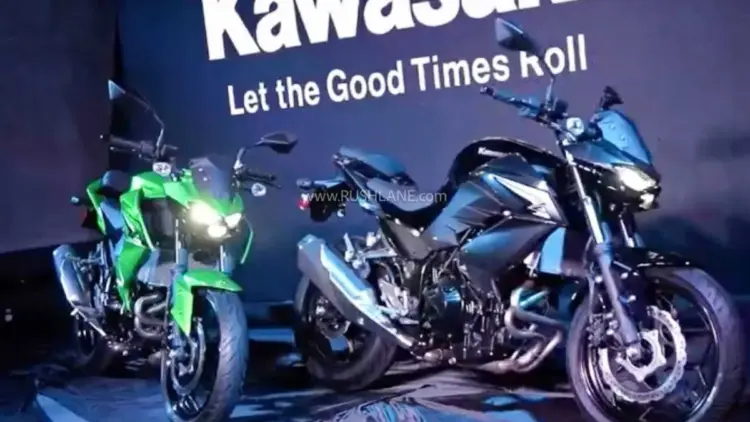
New Delhi, India – In a move that signals a significant expansion of its entry-level premium lineup, Kawasaki India has officially pulled the wraps off the highly anticipated Z300. This new "supernaked" motorcycle marks a strategic return to the sub-middleweight naked segment for the Japanese manufacturer, a space that has remained vacant in their Indian portfolio since the discontinuation of the Z250 years ago.
The reveal, orchestrated through Kawasaki India’s official social media channels following a private dealer showcase in Bengaluru, has set the stage for what many enthusiasts believe will be a disruptive entry in the 300cc-400cc category. Based on the venerable Ninja 300 platform, the Z300 promises to combine the mechanical reliability of a twin-cylinder powerhouse with the aggressive, "Sugomi"-inspired aesthetics that define Kawasaki’s larger Z-series motorcycles.
I. Main Facts: The "Sugomi" Spirit in a Compact Package
The Kawasaki Z300 is not merely a stripped-down Ninja; it is a dedicated streetfighter designed to offer a balance of performance, accessibility, and prestige. Here are the core facts surrounding the new reveal:
- Platform and Powertrain: The Z300 utilizes the same 296cc parallel-twin, liquid-cooled engine found in the Ninja 300. This high-revving motor is tuned to produce approximately 39 bhp and 26.1 Nm of peak torque, mated to a 6-speed gearbox with an assist and slipper clutch.
- Design Language: The motorcycle adopts Kawasaki’s signature "Sugomi" design philosophy. This involves a crouched, predatory stance, characterized by a low-slung headlamp cowl, a muscular fuel tank, and a minimalist tail section.
- Modernized Instrumentation: Breaking away from the aging semi-digital unit on the Ninja 300, the Z300 features a modern full-color TFT instrument cluster. This unit includes Bluetooth connectivity and integrated navigation, catering to the tech-savvy Indian demographic.
- Hardware Specifications: The bike retains several components from its faired sibling to keep costs competitive, including the diamond-type steel frame, RSU telescopic front forks, and a single-disc braking setup at both ends equipped with dual-channel ABS.
- Launch Timeline: Following the official reveal, bookings are scheduled to commence on October 19th, with a formal price announcement and market launch slated for October 20th.
II. Chronology: The Evolution of Kawasaki’s Small-Capacity Nakeds in India
To understand the importance of the Z300, one must look at Kawasaki’s historical trajectory in the Indian market.
The Z250 and the Bajaj Partnership Era
In the early 2010s, Kawasaki entered a technical and distribution partnership with Bajaj Auto. During this period, the Z250 was introduced via the Completely Knocked Down (CKD) route. While the Z250 was praised for its refinement and twin-cylinder smoothness, it struggled to gain mass-market traction due to a high price point and the rising dominance of single-cylinder rivals that offered more "bang for the buck."
The "Ninja-Only" Hiatus
After the Z250 was phased out and Kawasaki moved toward independent operations in India, the brand focused heavily on its supersport (Ninja) and adventure-touring (Versys) platforms. The Ninja 300 became the backbone of Kawasaki’s Indian sales, surviving multiple emission standard transitions (BS4 to BS6) thanks to high localization levels. However, the lack of a naked sibling meant that Kawasaki was missing out on the burgeoning streetfighter market.

The Bengaluru Reveal and Social Media Tease
The road to the Z300 began in earnest earlier this month when leaked images from a private dealer event in Bengaluru surfaced online. The event allowed dealers to get a first-hand look at the India-spec model. Sensing the mounting hype, Kawasaki India transitioned from a "quiet" reveal to a full-scale social media campaign, culminating in the official reveal video showcasing the bike in its signature Green and Black liveries.
III. Supporting Data: Technical Deep Dive and Comparison
The Z300 enters a market that is vastly different from the one the Z250 left. Today’s consumers demand a blend of multi-cylinder prestige and modern features.
The Parallel-Twin Advantage
The heart of the Z300 is its 296cc DOHC, 8-valve engine. Unlike the single-cylinder engines found in the KTM 390 Duke or the TVS Apache RTR 310, the Kawasaki twin offers a linear power delivery and a "screaming" top-end performance that remains vibration-free even at high speeds.
| Feature | Kawasaki Z300 (Expected) | KTM 390 Duke | Aprilia Tuono 457 |
|---|---|---|---|
| Engine Type | Parallel-Twin | Single-Cylinder | Parallel-Twin |
| Displacement | 296cc | 399cc | 457cc |
| Max Power | 39 bhp | 45.3 bhp | 47 bhp |
| Max Torque | 26.1 Nm | 39 Nm | 43.5 Nm |
| Weight (Kerb) | ~165-168 kg | 168 kg | ~175 kg |
| Instrument Cluster | Color TFT w/ Nav | Color TFT w/ Nav | Color TFT w/ Nav |
Weight and Ergonomics
One of the primary advantages of the Z300 over the Ninja 300 is the weight reduction. By removing the full fairing and associated brackets, the Z300 is expected to be roughly 3 to 5 kg lighter than the Ninja 300 (which weighs 170 kg). Furthermore, the wide, flat handlebar provides an upright riding posture, making it more suitable for urban commuting and long-distance touring than the clip-on-equipped Ninja.
Equipment Choices: A Mix of New and Old
While the addition of a TFT display is a significant upgrade, Kawasaki has made some conservative choices. The bike continues to use halogen turn indicators and traditional telescopic forks, whereas many competitors have moved to full LED lighting and sophisticated Upside-Down (USD) forks. These choices suggest that Kawasaki is aiming for an aggressive price point, prioritizing mechanical durability and engine refinement over high-end cycle parts.
IV. Official Responses and Market Positioning
Kawasaki India’s strategy with the Z300 appears to be one of "accessible premium." In their official communications, the company has emphasized the "Z" heritage, positioning the Z300 as the entry point into the "Supernaked" family that includes the legendary Z900 and the Z H2.

Dealer Sentiment
Reports from the Bengaluru dealer meet suggest high optimism. Dealers have noted that there is a specific segment of riders who find the Ninja 300 too committed (ergonomically) and the single-cylinder competitors too "uncivilized" in terms of engine vibration. The Z300 fills this niche perfectly.
Pricing Strategy
While official pricing will be revealed on October 20th, industry analysts expect the Z300 to be priced slightly below the Ninja 300, which currently retails at approximately Rs 3.43 lakh (ex-showroom). A price tag in the range of Rs 3.10 lakh to Rs 3.25 lakh would position it as a premium alternative to the KTM 390 Duke and a more affordable twin-cylinder option compared to the recently launched Aprilia RS 457 (and its upcoming Tuono sibling).
V. Implications: The Future of the 300cc Segment
The introduction of the Z300 has several long-term implications for the Indian motorcycling landscape:
1. The "Twin-Cylinder" Democratization
For years, the twin-cylinder experience was reserved for those with deep pockets. By localizing parts of the Z300 (following the Ninja 300’s blueprint), Kawasaki is making the multi-cylinder exhaust note and smooth power delivery accessible to a wider audience. This move may force other manufacturers to reconsider their single-cylinder-only strategies for the premium segment.
2. Strengthening the "Z" Brand
The Z900 is currently one of the best-selling middleweight nakeds in India. By introducing a Z300, Kawasaki creates a clear "ladder" for enthusiasts. A rider can start on a Z300 and naturally progress to a Z650 or Z900 as their skills and budget grow, ensuring long-term brand loyalty.
3. Competition in the Streetfighter Category
The Z300 will face stiff competition. The KTM 390 Duke remains the performance king in terms of power-to-weight ratio and electronics. The TVS Apache RTR 310 offers unparalleled features like ventilated seats and cornering ABS. However, the Kawasaki Z300 brings a level of mechanical "sophistication" and "big-bike feel" that single-cylinder bikes struggle to replicate.

4. Impact on the Used Market
The launch of a new, reasonably priced Z300 is likely to impact the resale value of older Ninja 300s and rare Z250s. It also provides a fresh option for those who were previously looking at the used market for a refined multi-cylinder experience.
Conclusion
The official reveal of the Kawasaki Z300 is a calculated move by Team Green to reclaim its territory in the Indian streetfighter market. By leveraging the proven reliability of the Ninja 300 engine and dressing it in the aggressive "Sugomi" attire, Kawasaki has created a motorcycle that appeals to both the heart and the head.
As bookings open on October 19th, all eyes will be on the price tag. If Kawasaki manages to price the Z300 competitively, it won’t just be adding a new model to its showroom; it will be setting the stage for a new era of multi-cylinder dominance in India’s entry-level premium segment. Enthusiasts and competitors alike now wait for October 20th, the day the "Z" truly returns to the Indian streets.