

Introduction: The Evolution of the Indian Middleweight Segment
The Indian motorcycle landscape has undergone a seismic shift over the last decade, transitioning from a market obsessed with fuel-efficient commuters to one that craves performance, prestige, and touring capabilities. Nowhere is this more evident than in the 350cc to 450cc segment. According to the latest retail data for May 2026, this category has solidified its position as the engine of growth for the premium two-wheeler industry.
In May 2026, the segment recorded a total sale of 1,10,725 units. When compared to the 83,687 units sold in May 2025, the industry witnessed a robust year-on-year (YoY) growth of 32.31%. While a month-on-month (MoM) decline of 6.97% from April’s 1,19,022 units suggests a seasonal cooling or a stabilization following high-volume festive dispatches, the long-term trajectory remains aggressively upward. This report provides a comprehensive breakdown of the players, the platforms, and the shifting consumer preferences defining the Indian middleweight motorcycle market.
1. Main Facts: The Dominance of the ‘Big Three’ and the Rise of New Platforms
The May 2026 data reveals a market that is simultaneously concentrated and diversifying. Royal Enfield remains the undisputed titan of the segment, but the aggressive expansion of the Bajaj Group (encompassing Triumph, KTM, and Husqvarna) and Honda’s steady refinement of its 350cc portfolio are creating a more competitive landscape.
Royal Enfield’s Iron Grip
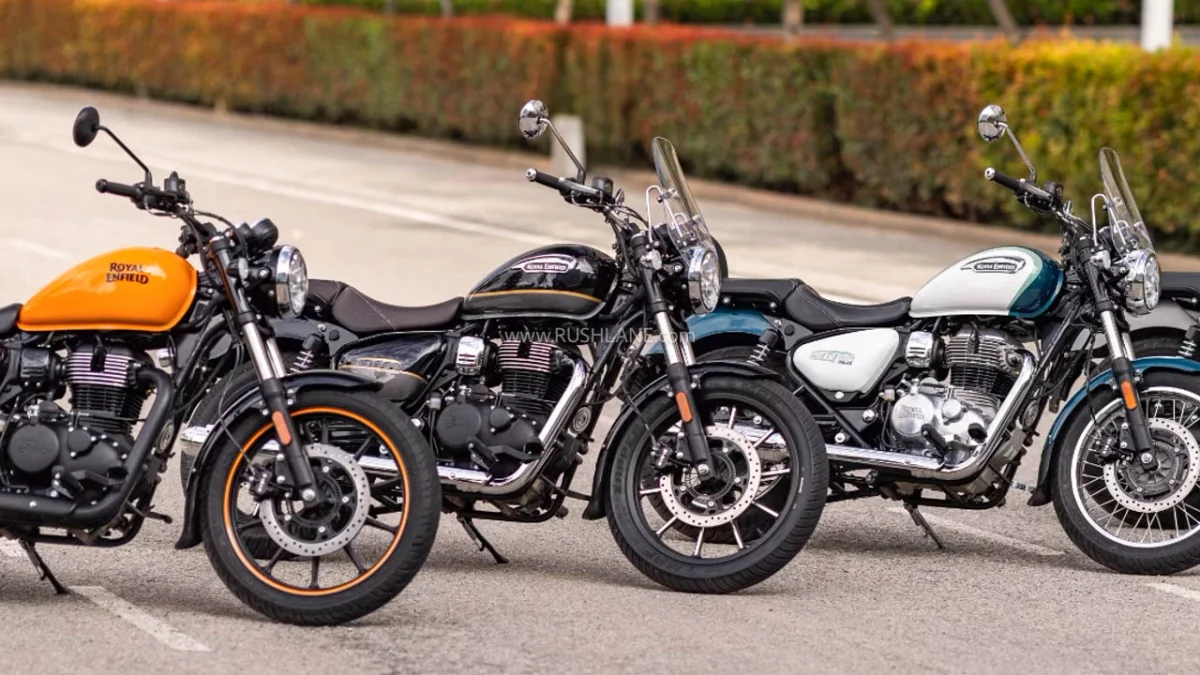
Royal Enfield continues to exert a level of market dominance rarely seen in competitive industries. Occupying five of the top eleven spots in the segment, the Chennai-based manufacturer retailed 90,028 motorcycles in May 2026. This translates to a staggering 81.31% market share.

The Classic 350 remains the crown jewel, moving 34,594 units and capturing nearly a third of the entire segment’s sales. It is followed closely by the Bullet 350 (23,372 units) and the Hunter 350 (20,418 units). The enduring appeal of the "J-Platform" engine—known for its refinement and torque-heavy character—continues to resonate with both urban commuters and long-distance tourers.
The Bajaj Group’s Strategic Pivot
The Bajaj Group has emerged as the clear silver medalist, leveraging its manufacturing prowess to support a multi-brand strategy. With a total of 8,603 units sold, the group saw a 72.23% YoY growth. A significant highlight is the Pulsar 350/400 lineup, which registered 1,523 units—a massive 205.21% increase over the previous year. This suggests that the Indian consumer is increasingly accepting the Pulsar brand in the premium space, moving beyond its traditional 150cc–220cc roots.
Honda’s Consistent Growth
Honda Motorcycle and Scooter India (HMSI) maintained its third-place position with 6,306 units. The CB350 and H’ness CB350 grew by 73.36% and 66.12% respectively. Honda’s strategy of offering a more "modern-classic" alternative to Royal Enfield, characterized by high-tech features like slipper clutches and Bluetooth connectivity, is clearly paying dividends in urban centers.
2. Chronology: From Niche to Mainstream (2024–2026)
To understand the May 2026 figures, one must look at the developments of the past 24 months.
- Mid-2024 to Early 2025: This period saw the "Platform Wars." Triumph and Bajaj launched the 400cc twins, while Harley-Davidson and Hero introduced the X440. These launches broke Royal Enfield’s monopoly on the "aspirational" tag in the 350cc+ space.
- Late 2025: Manufacturers began transitioning to updated engine architectures to meet tighter emission norms and consumer demands for better power-to-weight ratios. This is reflected in the May 2026 data, where older models like the KTM 390 and the original Triumph 400 range saw sharp declines (down 76.23% and significantly lower volumes respectively) as buyers shifted to the newer 350cc and 450cc platforms.
- May 2026: The market reaches a new equilibrium. The "new" platforms (KTM’s 350cc and Triumph’s 350cc) have officially taken over the mantle from their predecessors. The segment is no longer just about "cruisers" but now includes a healthy mix of scramblers, roadsters, and adventure tourers.
3. Supporting Data: A Deep Dive into the Numbers
The health of the segment is best understood through the lens of YoY growth versus MoM volatility.
Table 1: Top Performers by Model (May 2026)
| Model | Units Sold (May 2026) | YoY Growth (%) | Market Share (%) |
|---|---|---|---|
| RE Classic 350 | 34,594 | 22.10% | 31.24% |
| RE Bullet 350 | 23,372 | 18.45% | 21.11% |
| RE Hunter 350 | 20,418 | 15.30% | 18.44% |
| Jawa-Yezdi-BSA Range | 4,447 | 103.06% | 4.02% |
| Triumph 350 (New) | 4,348 | N/A (New) | 3.93% |
| Honda CB350 | 4,178 | 73.36% | 3.77% |
OEM Performance Analysis
While Royal Enfield owns the volume, the "growth story" belongs to the challengers.

- Classic Legends (Jawa-Yezdi-BSA): By retailing 4,447 units, they more than doubled their sales from the previous year. The resurgence of the BSA brand and the technical updates to the Jawa 350 engine have successfully lured enthusiasts looking for heritage with better performance.
- Hero-Harley Partnership: The X440 recorded 1,078 units, a 125.52% YoY increase. This indicates that the Harley-Davidson badge, when paired with Hero’s massive service network, is a potent combination for the Indian middle class.
- The Aprilia Factor: Aprilia’s entry into the localized performance segment with the RS 457 (232 units) and the Tuono 457 (31 units) shows a niche but growing interest in twin-cylinder European performance at a relatively accessible price point.
4. Official Perspectives and Industry Responses
While official statements from the OEMs for May 2026 emphasize optimism, there is an underlying tone of cautious adaptation.
Royal Enfield’s Strategy: Sources close to the company suggest that RE is not resting on its laurels. "Our dominance in the 350cc segment is a result of a decade of community building," a company representative noted. However, the internal focus is shifting toward the 450cc liquid-cooled Sherpa platform (found in the Himalayan and upcoming roadsters) to counter the high-tech offerings from Bajaj-Triumph.
Bajaj Group’s Outlook: Industry analysts point out that Bajaj is playing a "volume through variety" game. By offering KTM for racers, Triumph for classic enthusiasts, and Pulsar for the masses, they are surrounding Royal Enfield from all sides. A Bajaj spokesperson commented on the Pulsar 400’s success, stating, "The Indian rider is graduating. They want the Pulsar’s aggressive DNA but with the maturity of a 400cc engine."
The Honda Stance: Honda has traditionally been conservative, but the 70% YoY growth for the CB350 range has prompted a rethink. Rumors from the dealer network suggest that Honda is planning to expand its "BigWing" premium dealership footprint into Tier-2 and Tier-3 cities to better compete with RE’s ubiquitous presence.
5. Implications: What This Means for the Future
The May 2026 sales figures carry several long-term implications for the Indian automotive sector and the global motorcycling community.
1. The "Premiumization" of the Indian Market
The 32% YoY growth in the 350cc–450cc segment, occurring while the entry-level 100cc segment remains relatively stagnant, confirms that India’s "middle-class bulge" is spending more on lifestyle products. Motorcycles are no longer just tools for transport; they are symbols of identity and leisure.

2. India as a Global Export Hub
The success of the Triumph 350, KTM 350, and Harley X440—all manufactured in India—proves that Indian manufacturing has reached global quality standards. Most of these platforms are designed for global consumption, meaning the high domestic volumes in May 2026 provide the economies of scale needed to dominate export markets in Southeast Asia, Europe, and Latin America.
3. The Death of the "Simple" Air-Cooled Engine?
While the Classic 350 still leads, the massive growth percentages of the liquid-cooled Pulsars, Triumphs, and Aprilias suggest a shift. As infrastructure improves and highway speeds increase, the Indian consumer is beginning to prioritize sustained high-speed cruising and thermal management over old-school simplicity.
4. The Competition Gap
The data shows a "missing" player: Kawasaki recorded zero sales in this specific retail segment for May 2026. This highlights the difficulty for brands that rely solely on Completely Knocked Down (CKD) or Completely Built-Up (CBU) models. To survive in India’s 400cc space, heavy localization is no longer an option—it is a prerequisite.
Conclusion
The May 2026 sales report for the 350cc–450cc segment paints a picture of a vibrant, maturing market. Royal Enfield continues to hold the fort with legendary consistency, but the walls are being tested by a new generation of high-performance, high-tech motorcycles from Bajaj, Honda, and Hero. As the segment continues to grow at a rate of over 30% annually, the real winner is the Indian motorcyclist, who now enjoys a variety of choices that were unimaginable just five years ago. Whether it is the thrum of a Bullet or the high-revving scream of an Aprilia, the Indian road has never sounded more diverse.
