

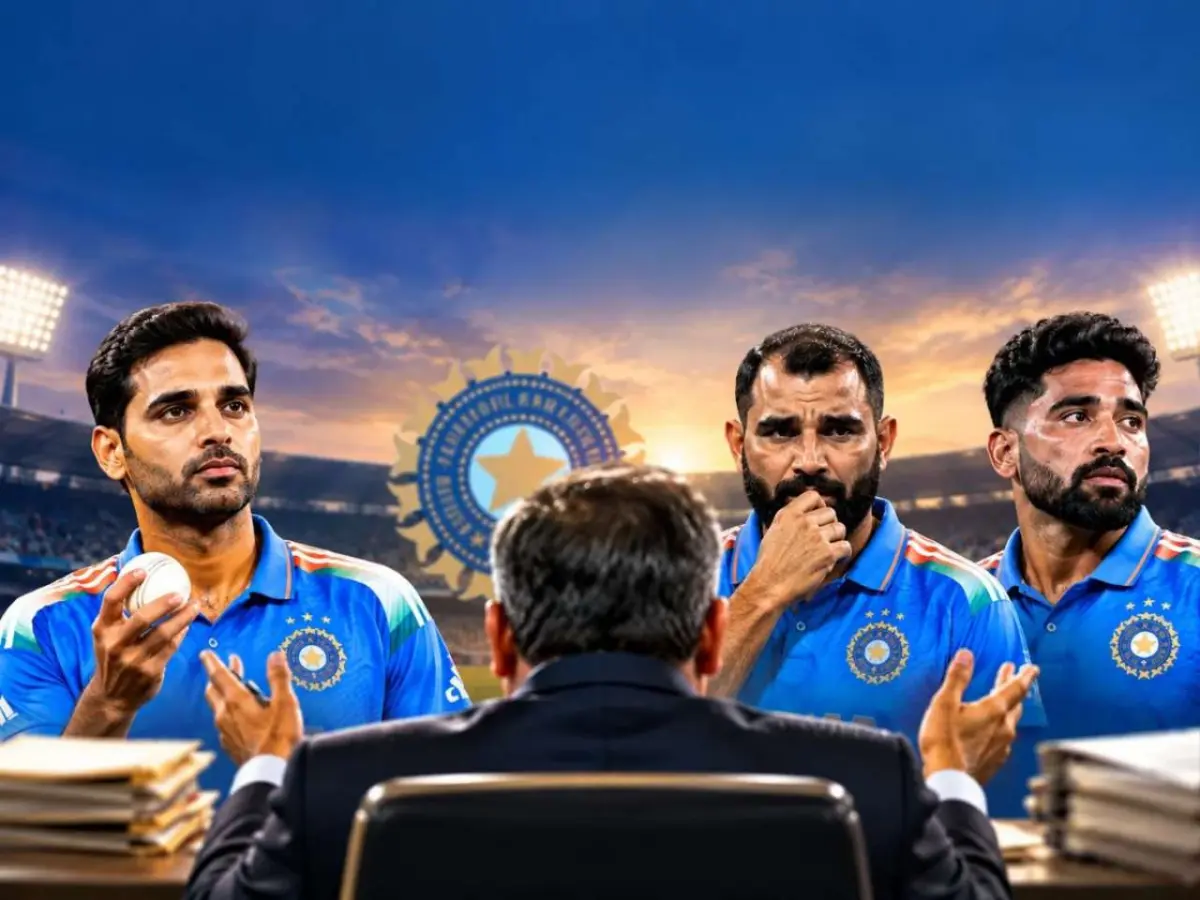
Mumbai, India – The intricate dance of selection in Indian cricket has once again taken center stage, following the surprise recall of veteran seamer Bhuvneshwar Kumar to the T20I squad for the upcoming series against New Zealand, commencing October 22nd. While his return is lauded by some as a necessary injection of experience, it has simultaneously cast a long shadow over the immediate futures of frontline pacers Mohammed Shami and Mohammed Siraj, sparking a fervent debate among former players and analysts alike. The fundamental question now reverberating through the cricketing corridors is blunt and profound: "Who are India’s second and third seamers?" This query, articulated by former India opener Wasim Jaffer, underscores the deepening uncertainty within the national team’s pace bowling hierarchy, particularly with the ODI World Cup 2027 in Africa looming large on the horizon.
The decision by the Board of Control for Cricket in India (BCCI) selectors has signaled a potential shift in strategy, hinting at an acknowledgment that the current fast-bowling arsenal might lack the desired conviction and depth for marquee tournaments. If Bhuvneshwar Kumar, renowned for his swing and control, can maintain his fitness, the prospect of him pairing with the formidable Jasprit Bumrah for the 2027 World Cup becomes a tantalizing, albeit distant, possibility. This strategic pivot, however, carries significant implications for a host of other talented pacers vying for a coveted spot in the national setup.
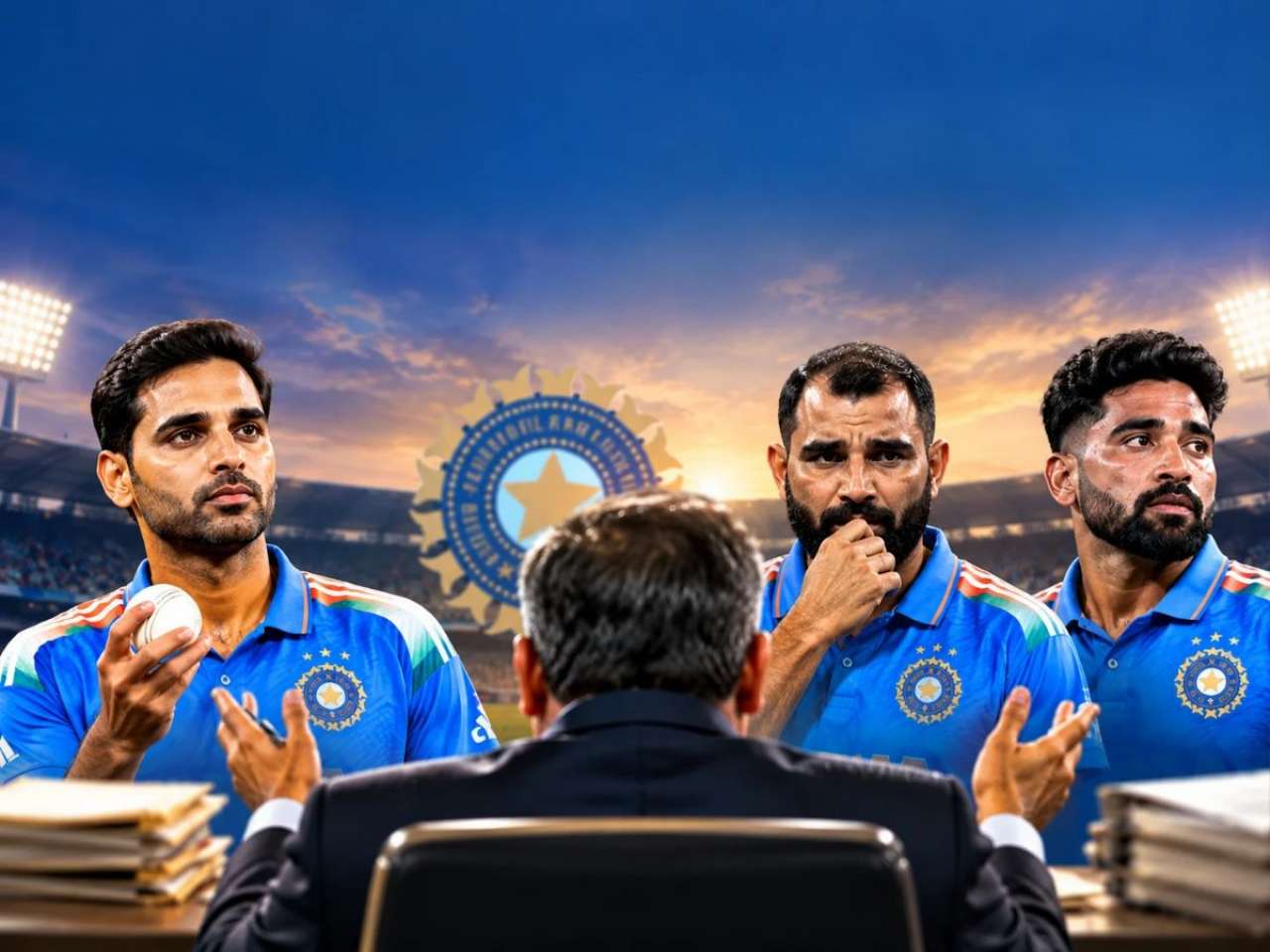
The Return of the Swing King: Bhuvneshwar Kumar’s Unexpected Recall
Bhuvneshwar Kumar’s return to the T20I fold marks a significant moment, given his recent absence from the national team. A bowler celebrated for his ability to swing the new ball both ways and deliver crucial yorkers in the death overs, Bhuvneshwar’s career has been punctuated by brilliant performances and frustrating injury layoffs. His experience, particularly in white-ball cricket, is undeniable, having played a pivotal role in numerous Indian victories over the past decade.
Sources close to the selection committee, as widely reported, suggest that the recall stems from a perceived lack of consistency and reliability among the current crop of fast bowlers. With the 2027 ODI World Cup in Africa earmarked as a long-term target, the selectors appear to be exploring all available options, including revisiting proven performers who might have been overlooked in recent times. The African conditions, often conducive to pace and swing, could potentially amplify Bhuvneshwar’s strengths, making him an attractive proposition if he can sustain his fitness and form.
)
Wasim Jaffer’s Resounding Endorsement
Former India opener Wasim Jaffer, a respected voice in cricketing circles, was quick to throw his weight behind the selectors’ decision, albeit with a touch of exasperation regarding Bhuvneshwar’s previous exclusion. Speaking on his YouTube channel, Jaffer articulated a sentiment shared by many purists: "Better late than never. He deserves this. Unko select karke koi meherbani nahi ki hai kisi ne (nobody has done a favour by selecting him). His performances have been there, and his fitness has been good. I am clueless as to why he was dropped earlier."
Jaffer’s strong endorsement highlights a critical aspect of team selection: the balance between nurturing young talent and valuing proven experience. He passionately argued against an age-centric approach, stating, "He’s always performed in the IPL and for Uttar Pradesh. So, why wasn’t he getting picked before? We need to look beyond age. Sure, we have young talents, but you can’t just ignore those who are performing well. When the pressure’s on, experience matters. An all-young squad just doesn’t cut it. You’ve got to mix experience with youth." This philosophy, advocating for a blend of seasoned campaigners and burgeoning stars, often forms the bedrock of successful international teams.

The Shami-Siraj Conundrum: A Question of Consistency and Opportunity
While Bhuvneshwar’s return has generated considerable discussion, it is the subsequent questions raised by Jaffer regarding Mohammed Shami and Mohammed Siraj that cut to the heart of India’s current pace bowling dilemma. Both Shami and Siraj have, at various points, been indispensable to India’s bowling attack across formats, yet their recent inclusion and consistent game time have become subjects of intense scrutiny.
Jaffer expressed profound concern over their sporadic opportunities, particularly Shami’s absence from the white-ball setup. "Shami should be picked, especially in the Test team. I don’t know about the ODI team, since we’ve tried out guys like Gurnoor Brar, Prasidh Krishna, and Nitish Reddy, but I still don’t think the management feels certain about the lineup. Siraj isn’t getting consistent game time either. I honestly don’t know who India’s second and third seamers are right now." This candid admission from a former international player underscores the perceived lack of clarity in India’s fast-bowling pecking order.
)
Mohammed Shami: The Underrated Workhorse
Mohammed Shami’s credentials, particularly in Test cricket, are beyond reproach. His ability to seam the ball off a good length, coupled with subtle swing and an aggressive mindset, has made him a tormentor of batsmen worldwide. With over 200 Test wickets at a commendable average, Shami has been a cornerstone of India’s formidable pace battery in the longest format. His recent performances, whenever given the opportunity, have consistently demonstrated his class and match-winning capabilities.
In ODIs, Shami has also been a potent weapon, particularly with his knack for breaking partnerships and his improved death bowling skills. His 195 ODI wickets from 105 matches, with an economy rate of around 5.6 and a strike rate of 26, highlight his effectiveness. Yet, despite these impressive numbers, he has often found himself on the sidelines in white-ball cricket, with selectors seemingly prioritizing younger, pacier options or those perceived to be better suited for specific T20 roles.
)
Jaffer’s plea for Shami’s inclusion in the ODI squad, especially with the World Cup in mind, is a testament to the belief in his enduring quality. "For me, Shami belongs in the ODI squad, with the World Cup so close. When you have someone of his quality, you need to play him. Bumrah, Shami, and Siraj would be my top three. I’d think about rebuilding after the World Cup," he asserted. This statement suggests a pragmatic approach, advocating for leveraging proven talent for immediate success before embarking on a more extensive rebuilding phase.
The starkness of Jaffer’s final warning regarding Shami’s Test career is particularly poignant: "I’d really like to see Shami make his comeback in Tests. I’ve been waiting for that for a while. When they announce the team, I’ll be watching out for Shami and Auqib Nabi. If Shami gets left out now, I think that’s the end of the road for him." Such a statement from a former teammate carries significant weight, implying that a sustained omission could effectively signal the end of a decorated international career for the veteran pacer.
)
Mohammed Siraj: The Aggressive Front-Runner
Mohammed Siraj, on the other hand, represents the more aggressive, wicket-taking option in India’s pace attack. His rise in international cricket has been meteoric, driven by raw pace, an attacking mindset, and an unwavering desire to perform. Siraj’s ability to generate swing at high speeds and his relentless pursuit of wickets have made him a vital asset, particularly in Test cricket and often in ODIs.
However, Siraj’s T20I career has been somewhat inconsistent, with occasional spells of brilliance interspersed with periods where he has struggled with economy rates. Despite showing glimpses of his potential, his regular inclusion in the playing XI, especially in the shortest format, hasn’t been a given. With 68 ODI wickets from 42 matches and a decent economy of 5.06, Siraj’s effectiveness in the 50-over format is clear. His T20I numbers, while showing a wicket-taking ability (24 wickets in 24 matches), also reflect an economy rate of over 9, which might be a point of concern for selectors in a format where control is paramount.
)
The question of Siraj’s "consistent game time" raised by Jaffer is pertinent. A bowler of his caliber thrives on rhythm and confidence, which are often built through continuous opportunities. His omission or rotation, therefore, could hinder his development and ability to cement a permanent spot across all formats.
Supporting Data: A Deeper Look at India’s Pace Options
The challenge for the BCCI selectors lies in navigating a crowded field of talented fast bowlers, each with unique strengths and weaknesses. Beyond the established trio of Bumrah, Shami, and Siraj, and the returning Bhuvneshwar, India has experimented with several other pacers, particularly in white-ball cricket.
)
- Jasprit Bumrah: The undisputed spearhead. His unique action, searing pace, deadly yorkers, and ability to bowl at any stage of an innings make him irreplaceable. Any discussion about India’s pace attack begins and ends with him. The focus is always on finding the best partners for him.
- Prasidh Krishna: A tall, hit-the-deck bowler who extracts bounce. He has shown promise in ODIs but has also been susceptible to injuries. His 25 wickets in 17 ODIs at an average of 23.92 indicate his potential, but consistency and fitness remain key.
- Umran Malik: Pure pace. The जम्मू and Kashmir speedster has impressed with his raw velocity but is still honing his control and variations. While exciting, his current economy rates in international cricket (over 7 in ODIs and T20Is) suggest he might be considered a long-term prospect rather than an immediate solution for critical roles.
- Arshdeep Singh: A left-arm pacer known for his death bowling skills and ability to swing the new ball. He has been a regular in T20Is, picking up 62 wickets in 44 matches at an economy of 8.6, but his ODI opportunities have been fewer (10 wickets in 6 matches). His left-arm angle offers a valuable variation.
- Mukesh Kumar: A consistent performer in domestic cricket, Mukesh has earned call-ups across formats. He relies on accuracy, subtle movement, and disciplined lines. While not express pace, his control and ability to hit good lengths make him a reliable option, particularly in Test cricket.
- Gurnoor Brar, Nitish Reddy, Auqib Nabi: These names, mentioned by Jaffer, represent the newer or lesser-known talents being tried out. Their inclusion in the discussion highlights the selectors’ ongoing search for viable alternatives and their willingness to experiment, even if it means a period of uncertainty.
The data reveals a clear trend: India possesses a wealth of fast-bowling talent, but a definitive "second" and "third" seamer, particularly in white-ball cricket, remains elusive. The selectors’ dilemma is compounded by the need to balance the demands of three formats, manage player workloads, and prepare for future global tournaments.
Official Responses and the Silence of the Selectors
Crucially, the original article and subsequent discussions have been largely devoid of direct official responses from the BCCI or the selection committee regarding these pressing questions. The decision to recall Bhuvneshwar and the implied concerns over the current crop have been inferred from reports and expert opinions like Jaffer’s, rather than explicit statements.
)
This silence, while typical of selection committees who prefer to let their decisions speak for themselves, inadvertently amplifies the speculation and the pressure. In the absence of clear communication, the cricketing fraternity, media, and fans are left to dissect every selection and omission, attempting to decipher the underlying strategy. Jaffer’s strong statements, therefore, serve as an unofficial but influential critique, forcing the discussion into the public domain and placing the onus on the selectors to clarify their vision.
The lack of a defined pecking order, especially for the crucial supporting roles to Bumrah, suggests either an ongoing trial-and-error phase or a deliberate strategy of keeping options open. However, as Jaffer pointed out, for major tournaments like the World Cup, a settled core unit often instills confidence and clarity. The implied official stance, therefore, appears to be one of cautious experimentation, with a leaning towards experienced campaigners when perceived vulnerabilities arise.
)
Implications for India’s Pace Attack and Future Tournaments
The recall of Bhuvneshwar Kumar and the subsequent debate have far-reaching implications for India’s pace attack, particularly with the 2027 ODI World Cup in Africa on the horizon.
Strategic Shift Towards Experience?
Jaffer’s emphasis on "mixing experience with youth" resonates deeply. The selectors’ decision to bring back Bhuvneshwar, a veteran, could signal a strategic shift away from an exclusive focus on youth, especially after recent performances that might have lacked the desired composure under pressure. In high-stakes tournaments, the ability of experienced players to handle crunch situations, adapt to varying conditions, and guide younger teammates often proves invaluable. If this indeed marks a trend, it could see more established players, even those nearing the twilight of their careers, being given another look if their form warrants it.
)
The Fate of Shami and Siraj
For Mohammed Shami, the current situation is critical. If he continues to be overlooked, particularly in ODIs, Jaffer’s grim prediction of "the end of the road" could tragically materialize. Shami’s consistent performances, especially in Tests, demand a clear pathway, and his exclusion from white-ball squads, despite his quality, raises questions about the selectors’ long-term plans for him. A player of his caliber deserves clarity on his role.
Mohammed Siraj’s trajectory also hangs in the balance. While undoubtedly talented, his quest for consistent game time across all formats is crucial for his development. If he struggles to nail down a regular spot, especially in T20Is, it could impede his progress and force him to specialize, potentially against his will. The competition for spots is fierce, and even a slight dip in form or a strategic shift can have significant consequences.
)
The 2027 World Cup Vision
The 2027 ODI World Cup in Africa presents a unique challenge. African pitches are historically known for their pace and bounce, making genuine fast bowlers and those who can exploit seam movement highly effective. The selectors’ focus on this tournament, three years out, suggests a long-term vision. The potential pairing of a fit Bhuvneshwar with Jasprit Bumrah offers a blend of swing, control, and pace. However, the success of this strategy hinges on Bhuvneshwar’s ability to remain injury-free and consistent over an extended period.
The search for the "second and third seamers" will intensify as the tournament approaches. India will need a diverse attack capable of performing in various match situations – taking wickets with the new ball, containing in the middle overs, and executing precise death bowling. This will require a pool of bowlers who are not only skilled but also resilient and adaptable. The ongoing experimentation with names like Prasidh Krishna, Umran Malik, and Arshdeep Singh, alongside the potential recall of others, indicates the breadth of options being considered.
)
The Role of Domestic and IPL Performances
Jaffer’s mention of Bhuvneshwar’s performances in the IPL and for Uttar Pradesh highlights the continued importance of domestic and franchise cricket in national selection. While international performances are paramount, consistent excellence in these leagues often serves as a strong indicator of form and fitness, providing a platform for players to push for national recognition. However, selectors must also balance IPL heroics with the demands and pressures of international cricket, ensuring that players are truly ready for the step up.
Conclusion: A Dynamic and Unpredictable Landscape
The Indian pace bowling landscape is currently a dynamic and, at times, unpredictable one. Bhuvneshwar Kumar’s return is a testament to the enduring value of experience and the selectors’ willingness to revisit proven talent. However, it simultaneously underscores the complex challenges facing Mohammed Shami and Mohammed Siraj, whose places in the pecking order appear less secure than they once were.
)
The fundamental question posed by Wasim Jaffer – "Who are India’s second and third seamers?" – remains unanswered, reflecting an ongoing period of assessment and strategic recalibration within the Indian camp. As the cricketing calendar progresses and the 2027 World Cup draws nearer, every selection, every performance, and every omission will be scrutinized. The decisions made in the coming months will not only shape the careers of individual fast bowlers but will also define the trajectory of India’s formidable pace attack for years to come, as they strive to forge a winning combination capable of conquering global challenges. The stage is set for a fascinating period of selection dilemmas and on-field battles, as India seeks to solidify its fast-bowling arsenal.
