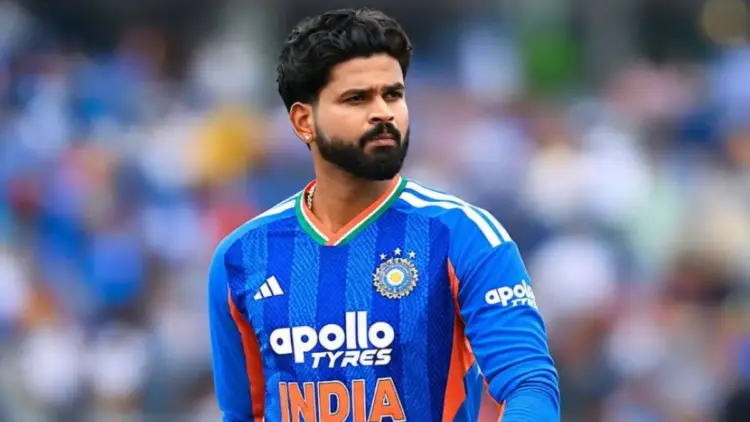
Auckland, New Zealand – October 30, 2026 – Indian cricket finds itself at a critical juncture following a stunning 87-run defeat to New Zealand in the fourth T20 International at Eden Park. What began as a promising tour, with India securing an unassailable 3-0 lead in the five-match series, abruptly descended into an unwanted all-time low. This historic loss not only marks India’s second-worst T20I defeat by run-margin but also casts a long, foreboding shadow over the captaincy of Shreyas Iyer, intensifying the pressure and raising profound questions about the team’s direction ahead of crucial upcoming fixtures.
While India wrestled with its demons, New Zealand etched their name into the record books with a performance that was as dominant as it was historic. Their monumental total of 259/7 stands as the highest T20I score ever recorded on New Zealand soil, the highest ever against India, and the Black Caps’ personal best in the format. The stark contrast between the two teams’ performances has ignited a fierce debate among fans and pundits alike, dissecting India’s vulnerabilities and the increasingly turbulent reign of their T20I skipper.
The Auckland Annihilation: A Chronological Account
The atmosphere preceding the fourth T20I was one of quiet confidence for the Indian contingent. Having clinched the series with three consecutive victories, the team seemed poised to experiment or further assert their dominance. However, what unfolded at Eden Park was a brutal reality check, orchestrated by a resurgent New Zealand side determined to salvage pride.
India’s Dominant Start to the Series
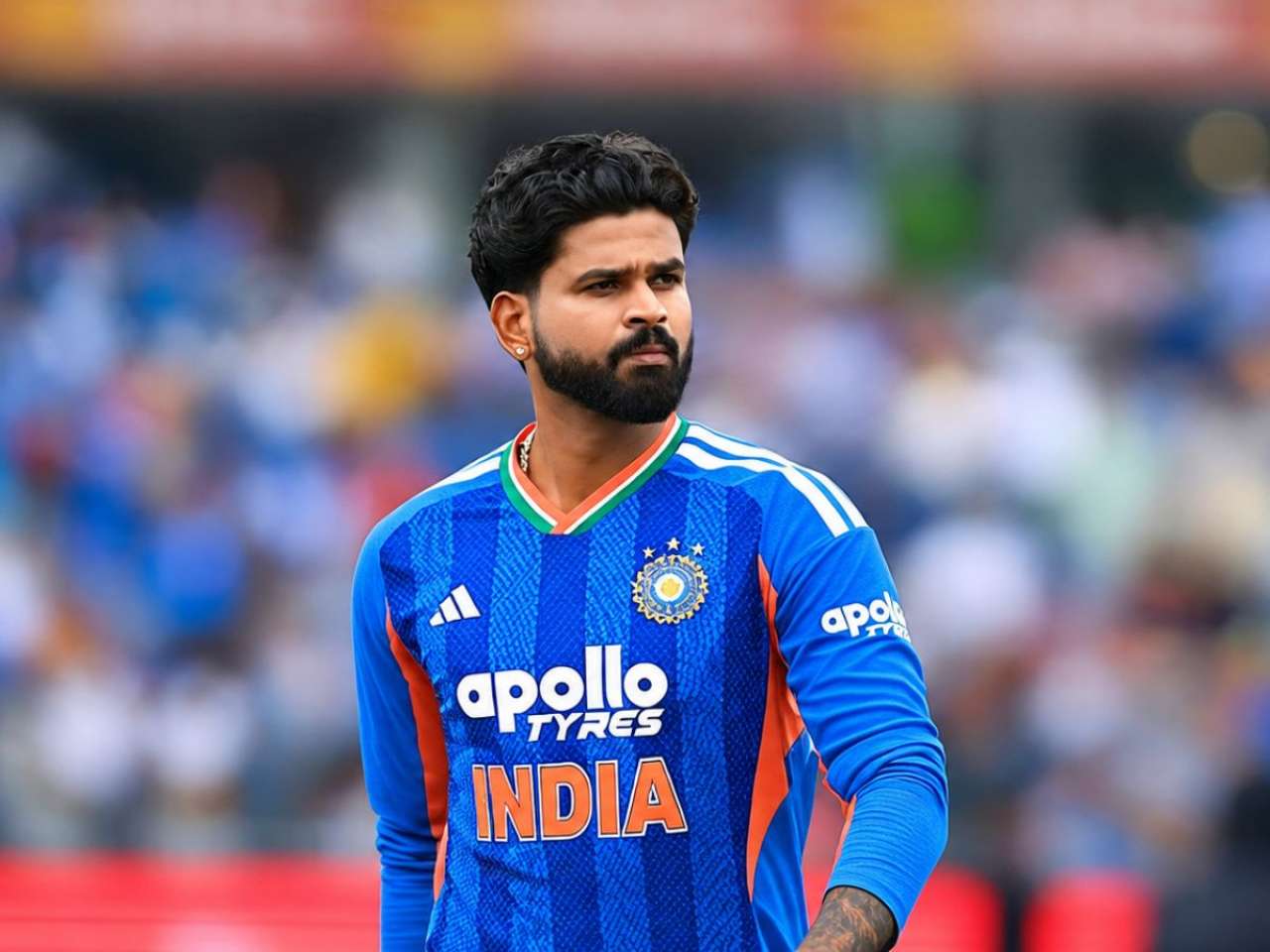
The tour had commenced brightly for India, mirroring their recent form in the shortest format. Under Shreyas Iyer’s leadership, they had displayed flashes of brilliance, securing comprehensive victories in the first three T20Is. These wins, built on strong batting displays and disciplined bowling, had sealed the series and showcased India’s depth and adaptability. The momentum was unequivocally with the visitors, and expectations were high for a clean sweep or at least a strong finish to the series. This comfortable position, however, may have inadvertently bred a degree of complacency that New Zealand ruthlessly exploited.
New Zealand’s Batting Blitzkrieg
The narrative shifted dramatically once New Zealand took to the crease. Opting to bat first, the Black Caps unleashed an unprecedented assault on the Indian bowlers. The innings was spearheaded by a breathtaking century from Glenn Phillips, who arrived at the crease with an aggressive intent that never wavered. Phillips, a dynamic middle-order batsman known for his powerful hitting, crafted a magnificent 107 runs off just 49 balls, a knock studded with six audacious fours and a staggering ten sixes. Each boundary was met with a roar from the Auckland crowd, as Phillips dismantled the Indian bowling attack with clinical precision, finding gaps and clearing the ropes seemingly at will. His century was not just a statistical milestone; it was a masterclass in T20 batting, setting a ferocious pace that India struggled to contain.
Adding to India’s woes, Michael Bracewell provided a rapid-fire cameo that ensured the scoring rate remained astronomical. His explosive 65 runs off merely 25 deliveries was a testament to New Zealand’s depth and aggressive batting philosophy. Bracewell’s innings, characterized by innovative shots and immense power, perfectly complemented Phillips’s brilliance, pushing the total further out of India’s reach. By the close of their innings, New Zealand had amassed an imposing 259 for 7, a total that not only sent shockwaves through the Indian dressing room but also rewrote several record books. The Indian bowlers, who had been largely effective in the earlier matches, appeared helpless in the face of such relentless hitting, their plans disrupted and their confidence visibly shaken.
India’s Collapse in the Chase
Chasing such a colossal target demanded an exceptional start, but India’s reply began in the worst possible fashion and never recovered. The tone was set by New Zealand’s fast bowler Jacob Duffy, who delivered a devastating opening spell. Duffy ripped through India’s top order, claiming two crucial wickets – those of Sanju Samson and Ishan Kishan – in his very first over. These early blows shattered India’s hopes and momentum, leaving them reeling and facing an uphill battle from the outset. Duffy continued his destructive spell, finishing with remarkable figures of 4 wickets for just 23 runs, an instrumental performance that broke the back of India’s batting lineup.
The subsequent Indian chase was characterized by a lack of substantial partnerships and a consistent inability to match the required run rate. While some batsmen attempted to accelerate, the pressure of the escalating target and the precision of the New Zealand bowlers proved overwhelming. The middle and lower order struggled to build any significant momentum, succumbing to the relentless pressure. India ultimately capitulated, managing to score only 172 runs before being bowled out, resulting in a crushing 87-run defeat. The margin of loss was not just significant; it was a stark indicator of the chasm that existed between the two teams on this particular evening, leaving India with much to ponder.
Supporting Data: Unpacking the Records and Statistics
The defeat in Auckland was not merely a loss; it was a historical aberration, laden with statistical anomalies and unwanted records for the Indian cricket team, particularly under the current leadership. Conversely, it was a day of unprecedented triumph for New Zealand, as they shattered several long-standing benchmarks.

India’s Unwanted Milestones
The 87-run defeat now stands as India’s second-worst T20 International defeat by run margin. This unenviable record trails only a colossal 125-run drubbing inflicted by England earlier in the year (2026) in Nottingham. What is particularly alarming is the common thread running through these two ignominious defeats: both have occurred since Shreyas Iyer assumed the captaincy. This pattern suggests a concerning vulnerability in the team’s ability to withstand pressure and bounce back from early setbacks under his leadership.
Adding to the statistical indictment, New Zealand achieved a historic feat by becoming the first team ever to thrash India by 80-plus runs twice in T20Is. The other instance was an 80-run victory in Wellington, also in 2026. This repeated dominance by the Black Caps in comprehensive fashion highlights a specific tactical or psychological challenge India faces against this particular opposition, especially in away conditions.
India’s top T20I defeats by run margin (2025-2026):

- England, 125 runs, Nottingham, 2026: A monumental collapse that set the benchmark for India’s heaviest T20I losses. Occurred under Shreyas Iyer’s captaincy.
- New Zealand, 87 runs, Auckland, 2026: The recent humiliation, further deepening the concerns around the team’s resilience. Also under Shreyas Iyer’s captaincy.
- New Zealand, 80 runs, Wellington, 2026: Another significant loss to the same opposition, demonstrating a pattern of heavy defeats.
- South Africa, 76 runs, Ahmedabad, 2025: A substantial home defeat, indicating that these vulnerabilities are not exclusive to overseas tours.
- England, 56 runs, Southampton, 2026: A challenging defeat, again highlighting struggles against top-tier opposition.
The frequency and magnitude of these heavy losses within a relatively short span underscore a troubling trend for a team that traditionally prides itself on its T20 prowess and competitive spirit.
The Breach of Fortress: Highest Totals Against India
The sheer scale of New Zealand’s batting performance resulted in another deeply concerning record for India. Their total of 259/7 is now the highest score ever put up against India in T20 Internationals. This marks the third occasion in T20I history that India has conceded a total exceeding 250 runs, and shockingly, all three instances have occurred since Shreyas Iyer took over the captaincy in July 2026.
A closer examination of the "Biggest innings against India in T20Is" reveals an even more alarming pattern:

Biggest innings against India in T20Is (2026):
- New Zealand, 259/7, Auckland, 2026: The new peak of India’s bowling woes.
- England, 257/3, Southampton, 2026: A daunting total conceded earlier in the year.
- West Indies, 252/4, Ranchi, 2026: Another instance of India’s bowlers struggling to contain opposition batsmen.
- West Indies, 247/3, Hyderabad, 2026: Highlighting a recurring issue with controlling aggressive batting.
- England, 246/7, Mumbai, 2026: Even before Iyer’s captaincy, 2026 proved challenging, but the trend intensified post-July.
Astonishingly, all five of the biggest totals ever scored against India in T20Is have happened in the year 2026, and the top four of these came after Shreyas Iyer was appointed captain following the T20 World Cup. This statistic points directly to a systemic issue within India’s T20I bowling attack or their strategic approach under the new leadership, raising serious questions about tactical flexibility, bowler selection, and the ability to execute plans under pressure.
New Zealand’s Historic Achievements
While India grappled with its record-breaking misfortunes, New Zealand celebrated a series of historic achievements. Their monumental 259/7 wasn’t just big for India; it is now officially the highest T20I total ever seen in New Zealand. This score eclipsed the previous record of 245, famously set by Australia during a memorable chase at the very same Eden Park back in 2018. The Black Caps’ performance thus set a new benchmark for T20I batting prowess on their home turf.

Furthermore, this 259 is also New Zealand’s highest-ever T20I score, surpassing their previous best of 254 which they posted against Scotland in 2022. This represents a significant milestone for the Black Caps, demonstrating their evolving attacking prowess in the format. Until this match, New Zealand had never crossed the formidable 250-run mark against a full-member nation. Their previous bests against top-tier opposition were two instances of 243 runs, both achieved at home against the West Indies and against themselves (in an internal match scenario) at Auckland in 2018. The Auckland annihilation therefore marks a pivotal moment in New Zealand’s T20I history, showcasing their capability to dominate even the strongest teams with aggressive, high-octane cricket.
The Captaincy Conundrum: Shreyas Iyer Under Scrutiny
The weight of these statistics falls heavily on the shoulders of Shreyas Iyer, whose tenure as India’s T20I skipper has been, by all accounts, a turbulent and inconsistent one. The recent debacle in Auckland has intensified the debate around his leadership, especially when contrasted with the stability and success of his immediate predecessor.
A Turbulent Reign: Iyer’s Performance at the Helm
Since taking over as India’s T20I captain in July 2026, Shreyas Iyer’s record has been a mixed bag, with the scales seemingly tipping towards concern rather than confidence. Statistically, the numbers do not flatter him. India has now lost 9 out of 25 games under his leadership. While 25 games is a relatively short period for a captain to fully establish his imprint, the nature and magnitude of some of these defeats are particularly troubling.

Iyer has certainly steered India to some series victories, notably against New Zealand, Afghanistan, and Zimbabwe, showcasing the team’s ability to win against certain oppositions. He also led India to a gold medal at the Asian Games, an achievement that brought national pride. However, these successes are juxtaposed with significant setbacks. Under his captaincy, India has suffered whitewashes at the hands of both Ireland and England, indicating a struggle against teams known for their aggressive T20 approach. Moreover, India dropped a home series for the first time in four years, managing only a 2-2 draw with the West Indies, a result that raised eyebrows given India’s formidable home record. The latest record-breaking defeat to New Zealand only adds to this growing list of concerns, painting a picture of a captaincy that lacks the consistent dominance and stability expected of an Indian T20I side.
Suryakumar Yadav’s Illustrious Predecessor
The pressure on Shreyas Iyer is amplified by the stark contrast with his predecessor, Suryakumar Yadav. Suryakumar’s tenure as India’s T20I captain was nothing short of stellar, marked by remarkable consistency and significant trophy hauls. He lost only 8 matches while captaining India in 52 T20I games, a record that speaks volumes about his leadership and tactical acumen.
Suryakumar led India to numerous series victories and, more importantly, lifted major trophies, including the Asia Cup in 2025 and the coveted T20 World Cup in 2026. His captaincy was characterized by fearless decision-making, excellent man-management, and an uncanny ability to inspire performances from his team. He fostered a winning culture and brought a sense of stability and confidence to the T20I setup. The shoes Iyer is attempting to fill are therefore exceptionally large, and the current turbulent reign, marked by heavy defeats and inconsistent performances, stands in stark contrast to the golden era under Suryakumar Yadav. This comparison invariably leads to questions about whether the captaincy transition was handled effectively and if Iyer possesses the necessary qualities to replicate such success.

Official Responses and Expert Commentary
While no direct official quotes were immediately available from the Indian camp after such a crushing defeat, the prevailing sentiment would undoubtedly be one of disappointment and introspection.
Post-Match Reflections from the Camps (Inferred)
One could envision Shreyas Iyer, facing the press, acknowledging the team’s subpar performance, particularly with the ball and in the initial phase of the chase. He would likely take responsibility, emphasizing the need for a quick turnaround and learning from mistakes. "This was not the performance we wanted to deliver, especially after sealing the series," a hypothetical Iyer might state. "We were outplayed in all departments today. We need to go back to the drawing board, understand where we went wrong, and come back stronger in the next game. As captain, I take full responsibility, and we will work hard to ensure this doesn’t happen again."
From the jubilant New Zealand camp, the mood would be celebratory. Their captain or coach would laud the team’s collective effort, singling out the extraordinary performances of Glenn Phillips and Jacob Duffy. "Absolutely thrilled with that performance," a New Zealand representative might remark. "The lads showed incredible character to bounce back after losing the series. Glenn Phillips was sensational, truly one of the best T20 innings you’ll see, and Jacob Duffy set the tone perfectly with the ball. To break so many records against a top team like India is a testament to our team’s belief and execution."

Behind the scenes, the Indian coaching staff and selectors would undoubtedly be engaged in intense discussions. The consistent leakage of runs and the alarming batting collapses would be central to their analysis, potentially leading to stern conversations about individual performances and overall strategy.
Cricket Pundits Weigh In (General Sentiment)
Cricket pundits, both domestic and international, would likely be unanimous in their assessment of India’s performance: concerning. Many would highlight the psychological impact of such heavy defeats, especially for a team that has recently enjoyed significant T20 success. Questions would be raised about India’s bowling depth, particularly in the absence of certain key players, and the effectiveness of their death bowling strategies.
Experts might suggest that while Iyer has shown flashes of tactical acumen, the consistency required at the highest level of T20 captaincy might still be developing. Some might propose a need for greater stability in team selection, while others might openly debate alternative captaincy options, given Suryakumar Yadav’s proven track record. The consensus would be that India needs a serious re-evaluation of its T20 approach, both in terms of personnel and strategy, to avoid a repetition of such comprehensive losses.

Implications for India’s T20I Future
The reverberations of the Auckland defeat extend far beyond the immediate series, posing significant questions for India’s short-term challenges and long-term strategic vision in T20 International cricket.
Immediate Challenges and Upcoming Matches
The immediate challenge for India is to prevent the series from ending on a further sour note. While the series is already won, a dominant performance in the final T20I would be crucial to restore morale and confidence within the squad. Another heavy defeat could severely dent the team’s psychological state and foster an environment of doubt, which is particularly detrimental in the fast-paced, high-stakes world of T20 cricket.
Looking ahead, India has a packed schedule of "upcoming matches" that were alluded to in the original report. These likely include further bilateral series and, critically, preparations for future ICC tournaments. The consistent trend of conceding high totals and suffering heavy defeats raises concerns about India’s readiness for such major events. The team needs to quickly identify and address the root causes of these vulnerabilities, both tactical and psychological, to ensure they are competitive on the global stage. The loss in Auckland serves as a stark warning, demanding immediate and decisive action.

Long-Term Strategy and Leadership Questions
Perhaps the most significant implication of this defeat pertains to the long-term strategy and leadership of India’s T20I team. The glaring contrast between Shreyas Iyer’s record and that of Suryakumar Yadav has ignited a fierce debate about the captaincy. Will Iyer retain the leadership role moving forward, especially if the inconsistent results persist? The decision-makers within Indian cricket will face immense pressure to reassess the captaincy, weighing the need for stability against the imperative for consistent high-level performance. Alternative candidates, or even a return to Suryakumar Yadav, might become serious considerations if the current trajectory continues.
Beyond captaincy, the fundamental issues of the bowling attack need urgent attention. Conceding 250+ runs on multiple occasions, particularly within a single year and under one captain, points to deep-seated problems that cannot be ignored. Is it a lack of quality, a flawed strategy, or an inability to execute under pressure? These questions demand comprehensive answers and potentially significant overhauls in both personnel and tactical approaches. Similarly, the batting unit’s tendency to collapse under pressure, as seen in the 87-run defeat, highlights a need for greater resilience and adaptability.
The current period presents a critical juncture for Indian cricket. The team needs to rediscover its identity in T20Is, find a clear direction, and ensure stability both on and off the field. The implications of the Auckland annihilation are profound, signaling that complacency is a luxury India cannot afford, and that decisive leadership and strategic clarity are paramount for navigating the challenges ahead and reclaiming their dominant status in the shortest format of the game.

—