Lahore, Pakistan – In a move that has sent ripples across the cricketing fraternity, legendary Pakistani fast bowler Waqar Younis has unveiled his all-time combined India-Pakistan dream XI, making selections that have largely favored Indian stalwarts and sparked intense debate among fans and pundits alike. The former captain and one of the game’s most feared pacers, known for his incisive swing and lethal yorkers, made his surprising picks during a rapid-fire segment on the Shubhankar Mishra Podcast, leaving just one Pakistani cricketer to feature in his star-studded lineup.
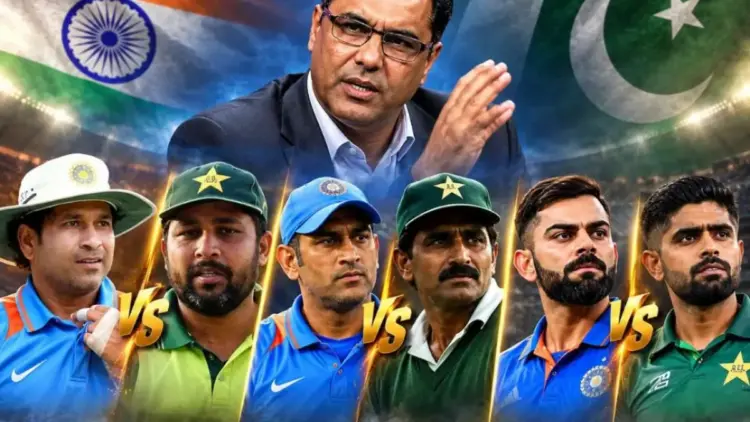
At the heart of Younis’s contentious choices are his direct comparisons of iconic figures from both nations. Sachin Tendulkar, the undisputed ‘Little Master’ of Indian cricket, was chosen over Pakistan’s elegant stroke-maker Inzamam-ul-Haq. Modern-day batting titans saw Virat Kohli preferred over Babar Azam, while the tactical genius of MS Dhoni eclipsed the legendary Javed Miandad. The selections underscore a perceived shift in cricketing dominance and ignite discussions about individual legacies and the evolving landscape of the subcontinent’s fierce rivalry.
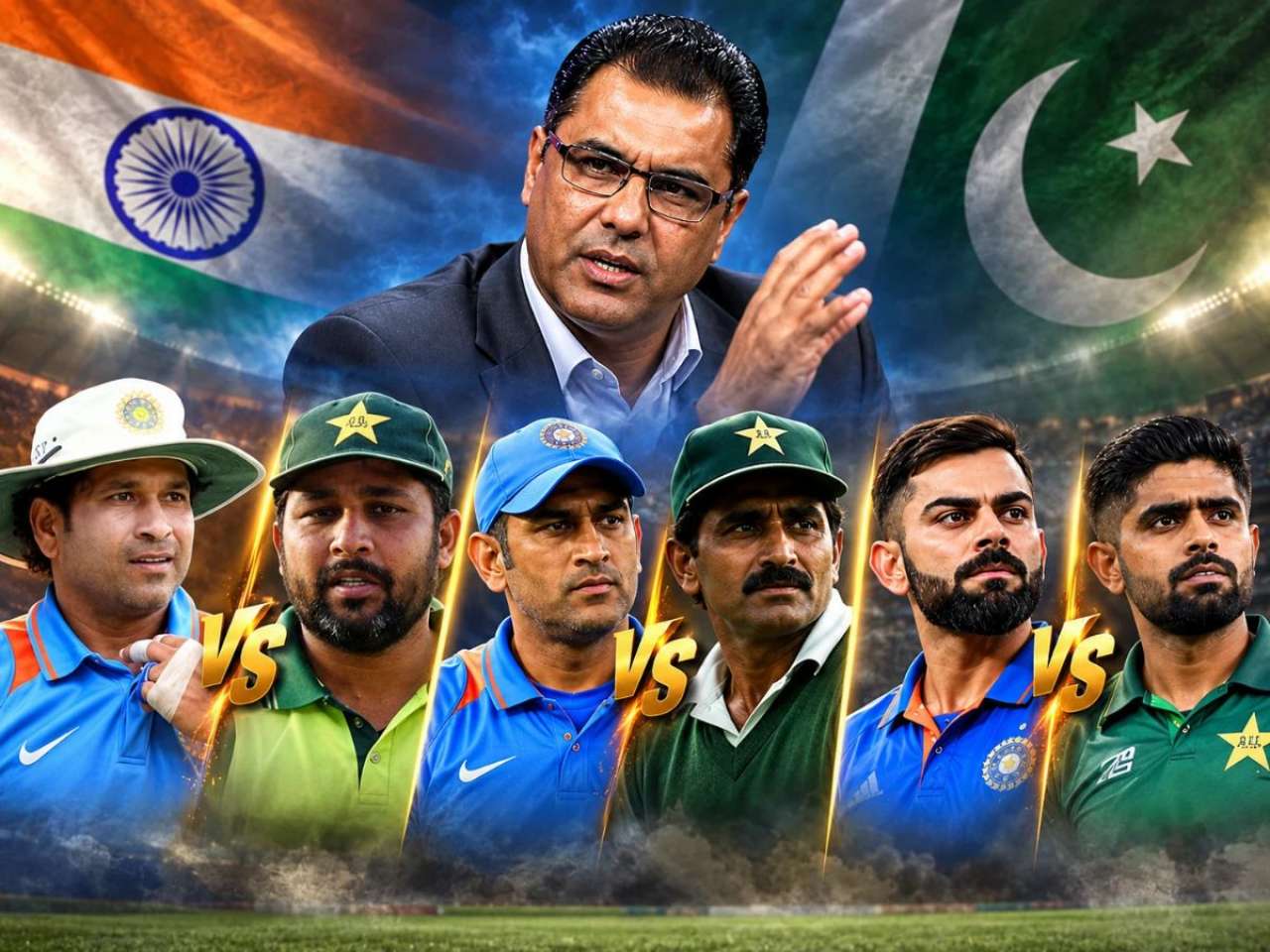
The singular Pakistani player to earn a spot in Waqar’s XI, a choice that has itself become a focal point of discussion due to its obscurity, is Shahid Anwar, who was preferred over India’s explosive opener Virender Sehwag. This particular decision, alongside a host of other Indian heavyweights, paints a compelling picture of how one of Pakistan’s most respected cricketing minds views the combined talent pool.
The Unveiling: Main Facts and Surprising Choices
Waqar Younis, whose name is synonymous with fast bowling excellence and the golden era of Pakistani cricket, recently took part in a podcast segment designed to test his ultimate cricketing preferences. The premise was simple: given a choice between two iconic players, one Indian and one Pakistani, who would he pick for his all-time combined XI? The results were anything but simple, defying conventional expectations and sparking widespread discussion.
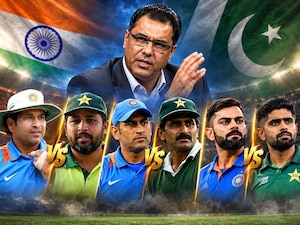
The most striking revelation was the sheer imbalance of the chosen XI. Out of nine direct comparisons, a staggering eight went in favor of Indian cricketers, leaving a solitary Pakistani representation. This outcome is particularly noteworthy coming from a figure like Waqar Younis, who has been a passionate advocate for Pakistani cricket throughout his illustrious career, both as a player and later as a coach and commentator. His choices are not merely subjective preferences but carry the weight of an insider’s perspective, having played against and observed many of these legends up close.
The key head-to-head battles and Waqar’s decisive picks were:

- Sachin Tendulkar over Inzamam-ul-Haq
- Virat Kohli over Babar Azam
- Jasprit Bumrah over Shaheen Afridi
- Rahul Dravid over Younis Khan
- MS Dhoni over Javed Miandad
- Rohit Sharma over Fakhar Zaman
- VVS Laxman over Misbah-ul-Haq
- Mohammed Shami over Mohammed Amir
- Shahid Anwar over Virender Sehwag
The consistent preference for Indian players across batting, bowling, and wicketkeeping categories signals a profound statement on the depth and quality of Indian cricket, particularly in recent decades. The inclusion of Shahid Anwar as the sole Pakistani, a relatively lesser-known name compared to the cricketing giants he was pitched against, has added an intriguing layer of mystery and surprise to Waqar’s selections.
A Journey Through Time: Chronology of Waqar’s Selections and Career Context
Waqar Younis’s perspective is forged from a career that spanned from the late 1980s through the early 2000s, a period marked by some of the most intense India-Pakistan cricketing encounters. Debuting in 1989, he played 87 Tests and 262 One Day Internationals, claiming a remarkable total of 789 international wickets. His partnership with Wasim Akram formed arguably the most lethal new-ball pair in cricket history, striking fear into the hearts of batsmen worldwide. Having witnessed firsthand the evolution of the game and the talents emerging from both sides of the border, his choices are grounded in extensive experience.

The rapid-fire format of the Shubhankar Mishra Podcast segment required instant decisions, forcing Waqar to rely on his gut instinct and deep understanding of the game. Each comparison presented a difficult choice between players who have defined eras for their respective nations.
The Batting Maestros: From Openers to Middle-Order Anchors
Sachin Tendulkar vs. Inzamam-ul-Haq: Waqar’s choice of Sachin Tendulkar is perhaps the least surprising, yet it speaks volumes. Tendulkar, with his unparalleled records in both Tests and ODIs, his longevity, and his ability to perform under immense pressure, stands as a global icon. Inzamam, while a magnificent batsman known for his elegant stroke play and calm demeanor, particularly in pressure chases, simply doesn’t command the same statistical dominance or global reverence as Tendulkar. Waqar, having bowled against Tendulkar numerous times, would have an intimate understanding of his genius.

Virat Kohli vs. Babar Azam: This is a comparison between two modern-day titans. Kohli, with his aggressive approach, phenomenal consistency, and record-breaking prowess across formats, has redefined batting in the 21st century. Babar Azam, while incredibly talented and aesthetically pleasing, is still building his legacy. Kohli’s sheer volume of runs, match-winning ability, and leadership experience likely tipped the scales for Waqar.
Rohit Sharma vs. Fakhar Zaman: Rohit Sharma’s transformation into one of the most destructive white-ball openers in history, coupled with his recent success in Test cricket, makes him a formidable choice. His ability to score big hundreds, including three ODI double centuries, sets him apart. Fakhar Zaman, while capable of explosive innings, lacks the consistent high-level performance and longevity that Rohit boasts.

Rahul Dravid vs. Younis Khan: Both Dravid and Younis Khan were pillars of their respective Test teams, known for their resilience, technique, and ability to grind out long innings. Dravid, "The Wall," was renowned for his unwavering concentration and ability to perform in all conditions, especially overseas. Younis Khan, Pakistan’s highest Test run-scorer, was a master of patience and late-career resurgence. Waqar’s nod to Dravid likely reflects the Indian’s slightly more consistent output and ability to adapt across formats.
VVS Laxman vs. Misbah-ul-Haq: This choice pits two middle-order stalwarts against each other. VVS Laxman was a magician with the bat, especially in Test cricket, known for his wristy elegance and ability to perform heroics in the lower middle order, often rescuing India from precarious positions. Misbah-ul-Haq was a rock for Pakistan, particularly in Test cricket, known for his calm captaincy and ability to stabilize innings. Laxman’s match-winning performances and flair, particularly in high-stakes situations, might have swayed Waqar.

The Wicketkeeper-Captains and Pace Battery
MS Dhoni vs. Javed Miandad: This was perhaps one of the most anticipated and debated comparisons. Miandad was a feisty, street-smart batsman and a fierce competitor, a cornerstone of Pakistan’s batting for decades. MS Dhoni, on the other hand, revolutionized captaincy and wicketkeeping, becoming one of the greatest finishers in white-ball cricket history and leading India to multiple ICC titles. Waqar’s choice of Dhoni highlights the immense impact of a modern leader who combined batting prowess with unparalleled strategic acumen.
Jasprit Bumrah vs. Shaheen Afridi: Two of the most lethal fast bowlers of the current generation. Bumrah’s unique action, pinpoint accuracy, and ability to deliver crucial breakthroughs across all formats make him a global phenomenon. Shaheen Afridi, with his left-arm pace and swing, is equally dangerous, especially with the new ball. However, Bumrah’s slightly longer track record of consistent high-level performance and versatility likely gave him the edge in Waqar’s eyes.

Mohammed Shami vs. Mohammed Amir: This pits two contrasting but equally effective pacers. Mohammed Shami, with his upright seam and ability to generate movement off the pitch, has been a potent force for India, particularly in Test cricket. Mohammed Amir, known for his searing pace and swing, especially early in his career, promised much. Shami’s consistent performance and ability to pick up wickets in all conditions might have been the deciding factor.
Virender Sehwag vs. Shahid Anwar: This is the most perplexing and intriguing selection. Virender Sehwag redefined Test opening with his fearless, aggressive approach, often reaching triple centuries at a blistering pace. Shahid Anwar, the chosen Pakistani, is not a name that immediately resonates as a prominent international cricketer, especially one who would be placed in direct comparison with Sehwag. Research indicates no internationally recognized Pakistani cricketer named Shahid Anwar with a career comparable to Sehwag’s. This could either be an extremely obscure, personal choice by Waqar, a reference to a domestic legend, or potentially a transcription error from the podcast. If it is indeed Shahid Anwar, his selection as the sole Pakistani in a combined XI, over numerous other illustrious Pakistani names, makes this the most surprising and debated pick of all. It invites speculation on what specific qualities Waqar might have seen in this player, or if it was a moment of whimsy in a rapid-fire segment.

Waqar’s refusal to pick between Vaibhav Sooryavanshi and Sameer Minhas, two young prodigies, citing insufficient observation, further underscores his pragmatic approach to selection, making his definitive choices even more impactful.
Statistical Analysis and Supporting Data: Justifying the Selections
To understand the rationale behind Waqar’s picks, one must delve into the statistical prowess and impact of the players involved. While Waqar’s choices are inherently subjective, they often align with widely accepted notions of cricketing greatness, particularly for the Indian contingent.

-
Batting Prowess:
- Sachin Tendulkar: Holds records for most Test and ODI runs, most centuries in both formats. His longevity (200 Tests, 463 ODIs) and adaptability across eras are unmatched.
- Virat Kohli: Over 26,000 international runs, second only to Sachin in ODI centuries. His ability to chase targets is legendary.
- Rohit Sharma: Three ODI double centuries, one of the highest run-scorers in T20Is, and a potent Test opener.
- Rahul Dravid: Over 24,000 international runs, known for his Test match resilience and ability to bat for long periods.
- VVS Laxman: Often lauded for his match-winning innings in Test cricket, especially against Australia, with an average of 45.97 in Tests.
-
Wicketkeeping & Captaincy:

- MS Dhoni: Led India to T20 World Cup (2007), ODI World Cup (2011), and Champions Trophy (2013). His 10,773 ODI runs as a finisher are remarkable.
-
Bowling Brilliance:
- Jasprit Bumrah: Unique action, averages under 25 in all three formats. Known for his death bowling in ODIs/T20s and ability to take wickets in Tests.
- Mohammed Shami: Over 400 international wickets, particularly potent in Test cricket with his seam movement.
The Pakistani players Waqar overlooked are legends in their own right, with impressive records:

- Inzamam-ul-Haq: Over 20,000 international runs, elegant and destructive.
- Javed Miandad: Over 16,000 international runs, known for his fighting spirit and resilience.
- Babar Azam: Over 13,000 international runs, currently among the top batsmen across formats.
- Shaheen Afridi: Over 250 international wickets, a genuine wicket-taker with the new ball.
- Younis Khan: Pakistan’s highest Test run-scorer (10,099 runs), averaged over 52.
- Misbah-ul-Haq: Over 9,000 international runs, exceptional Test captain.
- Mohammed Amir: Over 250 international wickets, known for his swing and pace.
The disparity in selection, especially for a Pakistani legend, might indicate a deeper acknowledgment of the statistical dominance and global impact of Indian cricketers over the past two decades. While Pakistani cricket has produced individual brilliance, the consistent depth and sustained excellence across multiple positions, particularly in batting, appears to have weighed heavily in Waqar’s mind. The "Shahid Anwar" choice remains an outlier, making it difficult to analyze statistically without more context.
Anticipated Reactions and Expert Opinions
Waqar Younis’s dream XI is bound to elicit strong reactions from both sides of the border.

Pakistani Fanbase: Many Pakistani fans are likely to feel a sense of disappointment, perhaps even betrayal, that a national hero picked so few of his countrymen. The absence of legends like Imran Khan, Wasim Akram (though not directly compared in the rapid fire, his absence from an overall XI is notable), Saeed Anwar, or Shoaib Akhtar, and the choice of Shahid Anwar as the sole Pakistani, will undoubtedly fuel heated debates on social media and sports forums. Some might question Waqar’s loyalty, while others might view it as an honest, if painful, assessment of cricketing talent.
Indian Fanbase: Indian fans will likely revel in Waqar’s choices, interpreting them as an acknowledgement from a rival legend of India’s cricketing strength. The selection of multiple Indian icons over their Pakistani counterparts will serve as validation of the quality and depth of talent that India has consistently produced.

Cricket Pundits: Experts from both nations are expected to dissect each choice.
- "It’s a bold statement from Waqar," remarked a prominent cricket analyst on a sports channel. "Coming from a Pakistani legend, it highlights the undeniable impact and statistical superiority of many Indian players, especially in the modern era. The ‘Shahid Anwar’ pick, however, is truly baffling and will be the subject of much discussion."
- Another former cricketer commented, "Waqar has always been brutally honest. Perhaps this is his way of telling us where he genuinely believes the greater talent pool lies, particularly when comparing across generations. It takes courage to make such choices against popular sentiment in your own country."
- Discussions will likely revolve around whether Waqar prioritized white-ball dominance, Test match resilience, or simply overall impact. The lack of a single Pakistani bowler chosen, given Pakistan’s rich history of fast bowling, is also a significant talking point.
Implications: Reshaping the Narrative of India-Pakistan Cricket
Waqar Younis’s India-Pakistan dream XI carries significant implications, both for the perception of individual legacies and the broader narrative of the subcontinent’s cricketing rivalry.

Shifting Power Dynamics
The overwhelming presence of Indian players in a dream XI selected by a Pakistani legend implicitly suggests a perceived shift in cricketing power dynamics. While Pakistan has consistently produced individual talents and occasional world-beating teams, India’s consistent performance, robust domestic structure, and financial might have allowed it to cultivate a deeper and more sustained pool of world-class cricketers across formats. Waqar’s choices could be seen as an admission of this reality.
Fueling Legacy Debates
The direct comparisons chosen by Waqar will inevitably reignite long-standing debates about who truly stands as the greatest. Is Tendulkar definitively superior to Inzamam? Is Dhoni a greater leader and finisher than Miandad? Such selections, coming from a player who faced many of them, add a fresh perspective to these enduring arguments, influencing how future generations might view these legends.

The "Shahid Anwar" Mystery
The most intriguing implication arises from the selection of Shahid Anwar. If it’s a genuine, personal pick, it suggests an almost subversive choice, highlighting a lesser-known talent over global superstars. If it’s a mistake, it underscores the need for accuracy in such high-profile discussions. Regardless, it has ensured that this particular XI will be remembered not just for its Indian dominance, but for its singular, enigmatic Pakistani representative.
Current Cricketing Landscape
The selections also resonate with the current state of cricket. India is presently touring New Zealand, having already secured a 3-0 T20I series victory and looking ahead to ODIs and Tests, showcasing their continued strength. Pakistan, meanwhile, is engaged in a home ODI tri-series with England and Sri Lanka, having already qualified for the final. While both teams are performing well in their respective current assignments, Waqar’s XI, leaning heavily on Indian talent, might subtly suggest a long-term view of sustained excellence rather than fleeting form.

In conclusion, Waqar Younis’s India-Pakistan dream XI is far more than just a list of names. It is a powerful statement from a cricketing giant, a reflection on individual brilliance, national cricketing trajectories, and the ever-evolving nature of one of sports’ greatest rivalries. It will undoubtedly spark endless discussions, reminding us of the passion and pride associated with cricket in the subcontinent.
Find your daily dose of All Latest News including Sports News, Entertainment News, Lifestyle News, explainers & more. Stay updated, Stay informed- Follow DNA on WhatsApp.