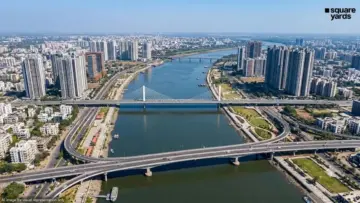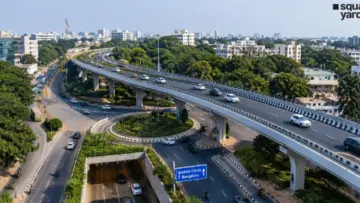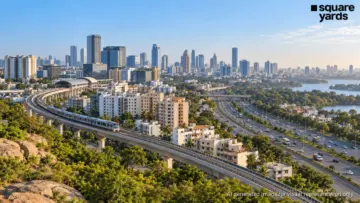
The landscape of the Mumbai Metropolitan Region (MMR) is on the cusp of a historic transformation. As the Navi Mumbai International Airport (NMIA) prepares to transition from a massive construction site to a bustling global aviation hub, the economic ripples are being felt far beyond the runways. With an estimated potential to generate nearly 15 lakh (1.5 million) direct and indirect jobs, NMIA is not merely an infrastructure project; it is a catalyst for a new urban ecosystem.
This ambitious project, spearheaded by the Adani Group in collaboration with the City and Industrial Development Corporation (CIDCO), is designed to alleviate the saturated Chhatrapati Shivaji Maharaj International Airport (CSMIA) while positioning Navi Mumbai as a primary destination for international business, logistics, and residential growth.
Main Facts: The Blueprint of a Global Gateway
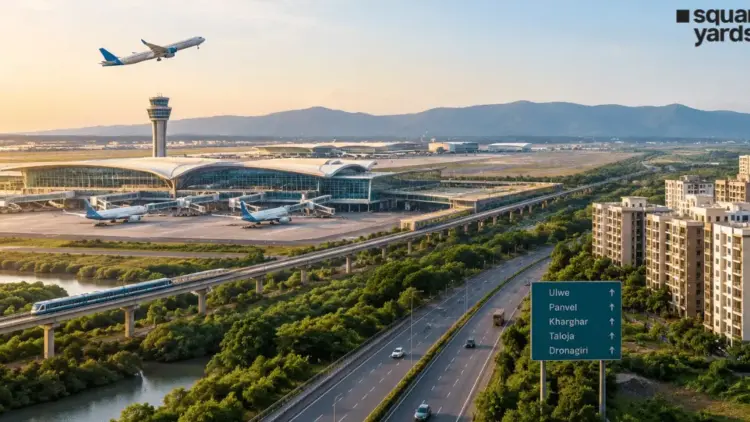
The Navi Mumbai International Airport, located in the Ulwe-Panvel belt, is being developed as one of the largest "greenfield" airports in the world. Its strategic location provides a secondary gateway to the MMR, which has long struggled with the constraints of a single major airport.
Key Features and Capacity
The project is being executed in four distinct phases. While the initial phase focuses on establishing core operations, the long-term vision is staggering in scale:
| Key Feature | Details |
|---|---|
| Location | Ulwe/Panvel, Navi Mumbai |
| Development Agency | NMIAL (Adani Group) & CIDCO |
| Project Model | Public-Private Partnership (PPP) |
| Development Plan | Four Phases |
| Initial Passenger Capacity | 20 million passengers annually |
| Planned Final Capacity | Up to 90 million passengers annually |
| Planned Cargo Capacity | Up to 3.5 million tonnes annually |
| Expected Commercial Operations | Late 2024 (Testing) / Full scale by December 2025 |
| Key Connectivity Links | Atal Setu (MTHL), Navi Mumbai Metro, Sion-Panvel Highway, Uran Suburban Line |
The airport’s design incorporates a "Lotus" theme, reflecting Indian heritage, and aims to be one of the most technologically advanced aviation hubs in Asia. Beyond the terminal, the project includes a massive cargo complex, fuel farms, and a dedicated "Aerocity" featuring commercial and hospitality hubs.
Chronology: From Vision to Takeoff
The journey of NMIA has been decades in the making, marked by complex land acquisition, environmental clearances, and engineering marvels like the diversion of the Ulwe River and the flattening of hills.
- Early 2000s: The concept of a second airport for Mumbai is formalized due to the projected saturation of the existing Sahar and Santacruz terminals.
- 2017-2018: Major land acquisition and pre-development works commence. CIDCO begins the rehabilitation of over 3,000 families from 10 villages.
- 2021: The Adani Group takes over the management and development of the project from the GVK Group.
- 2023: Significant progress is made on the 3.7-km runway and terminal building. The Prime Minister’s Office begins regular monitoring of the project under the PRAGATI platform.
- 2024: Testing of navigational aids and trial landings are expected to commence.
- December 2025: Scheduled commencement of full-scale commercial passenger and cargo operations.
Supporting Data: The 15-Lakh Job Multiplier Effect
The most significant impact of NMIA is its role as an employment generator. Economic experts suggest that for every direct job created in the aviation sector, approximately five to seven indirect jobs are generated in the surrounding economy.
1. Direct Aviation and Terminal Roles
With an initial capacity of 20 million passengers, the airport will require a massive workforce for day-to-day operations.
- Passenger Handling: Thousands of roles for check-in agents, security personnel, baggage handlers, and customer service executives.
- Technical Operations: A high-demand market for aircraft maintenance technicians (AMT), electrical engineers, and air traffic control (ATC) specialists.
- Management: Senior roles in airport operations, IT systems, and safety compliance.
2. The Cargo and Logistics Powerhouse
The planned 3.5 million tonnes of cargo capacity will make Navi Mumbai a global logistics node. This will necessitate:
- Freight Management: Warehouse supervisors, forklift operators, and customs documentation specialists.
- Specialized Handling: Trained personnel for cold-chain logistics (essential for pharmaceuticals and perishables) and hazardous material handling.
- Last-Mile Connectivity: An estimated 6,000 jobs in trucking, distribution, and freight forwarding.
3. Ancillary Services and "Aerocity"
The "Aerocity" concept surrounding the airport will host hotels, shopping malls, and corporate offices.
- Hospitality: Thousands of jobs in the hotel industry for cabin crew accommodation and transit passengers.
- Retail & F&B: Staffing for duty-free shops, luxury retail outlets, and multi-cuisine restaurants.
- Catering: Flight kitchens will require chefs, nutritionists, and quality control experts.
Official Responses and Strategic Vision
Government officials and project stakeholders have consistently emphasized that NMIA is the centerpiece of the "Third Mumbai" vision.
A spokesperson for CIDCO recently noted, "The Navi Mumbai International Airport is not just about flights; it is about creating a sustainable urban center. Our focus is on the Pushpak Nagar township and the surrounding infrastructure to ensure that the 1.5 million people who will eventually work here have world-class living conditions."
The Adani Group has also highlighted its commitment to local employment. In various stakeholders’ meets, the group has expressed plans to collaborate with local skill-development institutes to train the youth of Navi Mumbai for specialized roles in ground handling and terminal management.
Industry analysts from Square Yards Research point out that the synergy between NMIA and the Jawaharlal Nehru Port Trust (JNPT) creates a unique "multi-modal" advantage. This combination of sea and air connectivity is expected to attract multinational corporations to set up headquarters in Navi Mumbai, further fueling high-end job creation.
Implications: The Real Estate Gold Rush
The influx of 15 lakh employees necessitates a massive expansion in housing and commercial real estate. From affordable rentals for ground staff to luxury villas for senior pilots and executives, the demand spectrum is broad.
Market Insights: The Navi Mumbai Value Chain
According to Square Yards Research, property prices in the vicinity of the airport have already seen a steady appreciation of 10-15% annually over the last three years.
| Locality | Average Price per Sq. Ft. (INR) | Primary Target Segment |
|---|---|---|
| Ulwe | ₹13,000 – ₹23,000 | Airline staff, Ground handlers |
| Panvel | ₹9,000 – ₹16,000 | Families, Middle-management |
| Pushpak Nagar | ₹10,000 – ₹16,000 | Airport-linked professionals |
| Kharghar | ₹12,000 – ₹26,000 | Engineers, Senior executives |
| Taloja | ₹8,000 – ₹15,000 | Logistics and Warehouse workers |
| Dronagiri | ₹7,000 – ₹12,000 | Industrial and Port workers |
Deep Dive into Beneficiary Localities
1. Ulwe: The Immediate Frontier
Ulwe is the closest residential hub to the airport. Its transformation from a sleepy node to a high-rise destination is directly linked to the airport’s progress. The presence of the Bamandongri and Kharkopar railway stations, combined with the proximity to the Atal Setu (MTHL) entry point, makes it the most sought-after location for bachelor accommodation and rental housing for airport shift workers.
2. Pushpak Nagar: The Planned Successor
Developed by CIDCO specifically as an airport-aligned township, Pushpak Nagar is being marketed as a "smart" locality. It is designed to house the families displaced by the airport project as well as new professionals. Its grid-like planning and proximity to the cargo terminal make it a prime spot for logistics offices and mid-range residential projects.
3. Panvel and New Panvel: The Established Anchor
Panvel remains the logistical and educational heart of Navi Mumbai. With its massive railway terminus and established healthcare infrastructure, it appeals to long-term residents. The area is expected to see a surge in "crew hotels" and serviced apartments, catering to the transient workforce of the aviation industry.
4. Kharghar: The Lifestyle Destination
Known as the "educational hub," Kharghar offers a superior quality of life with its wide boulevards, central park, and golf course. This locality is the primary choice for senior management, aviation engineers, and expatriates who will be working at the NMIA but seek a premium residential environment away from the industrial noise.
5. Taloja and Dronagiri: The Industrial Backbone
While Ulwe and Kharghar handle the "white-collar" demand, Taloja and Dronagiri are the engines of the "blue-collar" and logistics housing market. Taloja’s proximity to the Metro Line 1 and Dronagiri’s link to the JNPT port make them ideal for the thousands of workers involved in the 3.5 million-tonne cargo operations.
Conclusion: A New Economic Gravity
The Navi Mumbai International Airport is more than just a solution to Mumbai’s air traffic congestion; it is a redefinition of the region’s economic gravity. By creating 15 lakh jobs, the project is ensuring that Navi Mumbai evolves from a "dormitory city" into a self-sustaining megalopolis.
For real estate investors, the current window represents a strategic opportunity. As connectivity via the Atal Setu and the Navi Mumbai Metro matures, the physical distance between South Mumbai and this new aviation hub will continue to shrink, further driving up demand. The transition of Navi Mumbai into a global aviation and logistics hub is no longer a "future project"—it is a reality unfolding in real-time, one runway and one residential sector at a time.
Disclaimer: This report is based on current market data and project projections. Real estate prices are subject to market fluctuations. Connectivity timelines are based on official government announcements.