

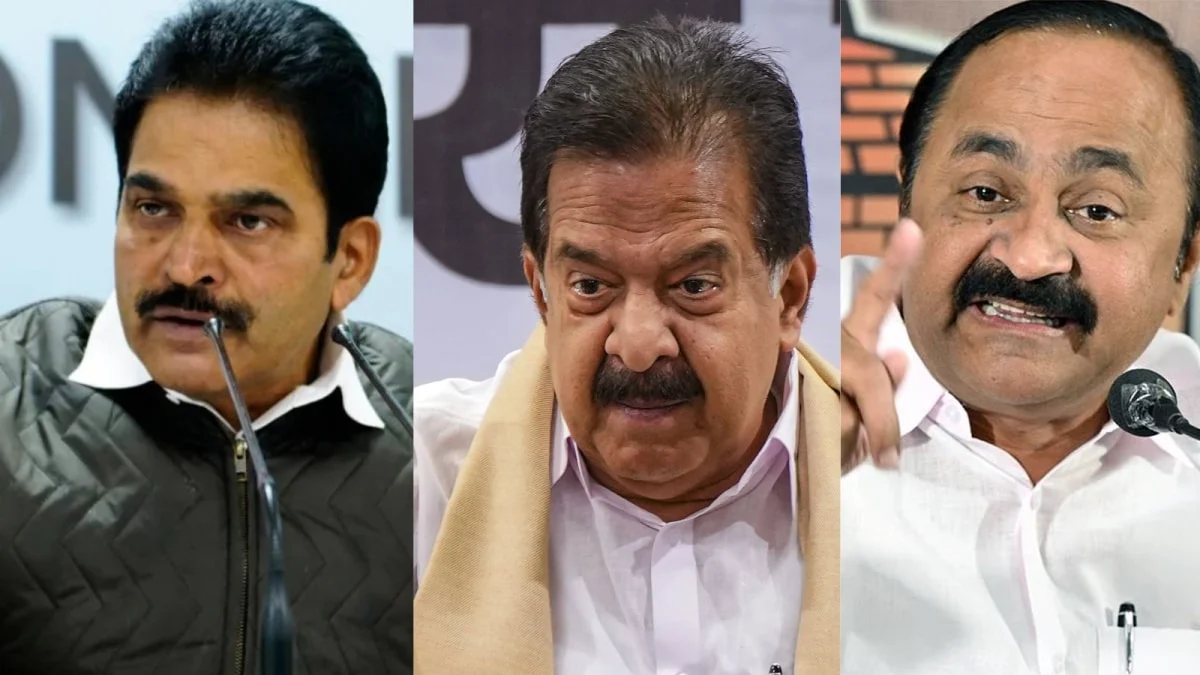
Thiruvananthapuram, Keralam – May 12, 2026 – Days after securing a resounding victory in the Keralam Assembly Elections, the Congress-led United Democratic Front (UDF) finds itself mired in an intense internal struggle, delaying the crucial announcement of the state’s next Chief Minister. The suspense continues to grip the political landscape of Keralam, with the party’s national leadership currently holding the reins of the decision-making process.
Keralam Pradesh Congress Committee (KPCC) president Sunny Joseph, addressing the escalating speculation on Sunday, confirmed that the party’s national president, Mallikarjun Kharge, and Leader of Opposition (LoP) in the Lok Sabha, Rahul Gandhi, would soon unveil the chosen leader. Joseph indicated that the coveted Chief Ministerial post would be filled by one of the three prominent contenders: K C Venugopal, V D Satheesan, or Ramesh Chennithala, all of whom have already engaged in extensive discussions with the Congress high command.
"Everyone has been asked to refrain from controversial moves," Joseph stated, acknowledging the brewing internal dissent, but prudently declined to specify a concrete date for the eagerly anticipated announcement. This delay has triggered a palpable political stir, not only within the Congress but also among its UDF allies and the broader public. Supporters of the top three contenders have taken to the streets, making their preferences known through spirited protests, ubiquitous posters, and demonstrations that have even reached the national capital.
A Decisive Mandate Meets an Undecided Leadership
The Keralam Assembly Elections of 2026 marked a historic resurgence for the Congress-led UDF, which swept to power by securing a commanding 102 out of 140 Assembly seats. This electoral triumph effectively ended a decade-long rule by the Left Democratic Front (LDF), which was relegated to a mere 35 seats. The scale of the victory, a clear mandate from the people of Keralam, was expected to pave the way for a swift and seamless transition of power. Instead, the focus has dramatically shifted from the electoral success to the prolonged conundrum of leadership selection.
The high command’s meticulous, and some would say protracted, deliberation underscores the significant stakes involved, both for Keralam and for the national Congress party. While the UDF’s win provides a much-needed morale boost for the Congress across India, the inability to quickly name a Chief Minister risks undermining the mandate and projecting an image of internal disarray.
The Chronology of Deliberations: A Week of High-Stakes Meetings
The process of selecting Keralam’s Chief Minister has unfolded through a series of high-level meetings and consultations, primarily orchestrated from Delhi.
Initial Consultations Post-Victory
Immediately following the declaration of election results, the Congress high command initiated the process of gauging the mood and preferences within the newly elected legislative party. This involved sending central observers to Keralam to collect feedback from MLAs and other senior party functionaries. The names of K C Venugopal, V D Satheesan, and Ramesh Chennithala quickly emerged as the frontrunners, each commanding a significant loyal base and presenting distinct leadership profiles.
Weekend Huddle in Delhi
The intensity of the deliberations escalated over the past weekend. On Saturday, May 10, 2026, Congress President Mallikarjun Kharge and Lok Sabha LoP Rahul Gandhi held separate and joint meetings with the key contenders. AICC General Secretary (Organisation) K C Venugopal, former Leader of Opposition Ramesh Chennithala, and the incumbent Leader of Opposition V D Satheesan were all present for these crucial discussions. KPCC president Sunny Joseph was also reportedly present during some of these high-level deliberations, providing insights into the state unit’s perspective. These meetings were aimed at understanding the aspirations of each leader, their vision for Keralam, and their willingness to work cohesively for the party’s future.
Sunday’s Public Acknowledgment
Sunny Joseph’s statement on Sunday, May 11, served as the first official confirmation from the state unit that the decision rested squarely with the national leadership. His call for restraint amongst party members highlighted the growing impatience and factionalism within the Keralam Congress ranks, underscoring the delicate balance the high command is attempting to maintain.
Broader Consultations on Monday and Tuesday
As the suspense continued, the Congress high command opted for even wider consultations. On Monday, May 12, several senior Keralam leaders were summoned to Delhi to provide their opinions on government formation and the Chief Ministerial pick. Among those called to the capital were prominent MLAs-elect like K Muraleedharan, along with KPCC vice presidents AP Anil Kumar, Shafi Parambil, and PC Vishnunadh, as reported by India Today.
Further intensifying these consultations, on Tuesday, May 13, the high command expanded its outreach to include former KPCC presidents and working presidents. Leaders such as VM Sudheeran, Mullappally Ramachandran, K Muraleedharan (again, indicating his dual role), K Sudhakaran, and MM Hassan were called to Delhi. This move, reported by PTI, signifies the party’s attempt to build a broad consensus and ensure that all significant voices within the state unit are heard before a final decision is made. Discussions were reportedly scheduled to take place at 10 Janpath around 11 A.M. on Tuesday, with approximately eight former KPCC presidents and working presidents arriving in Delhi, according to CNN-News18 sources.
Supporting Data: The Contenders and Internal Dynamics
The delay in naming the Chief Minister is not merely procedural; it is a reflection of the complex internal dynamics and the distinct strengths of the three leading candidates.
The Frontrunners: Profiles and Prospects
-
K C Venugopal: Currently serving as the AICC General Secretary (Organisation), Venugopal holds significant sway within the national party apparatus. His proximity to Rahul Gandhi and his role in managing party affairs across various states make him a powerful figure. He is often seen as the high command’s preferred choice due to his administrative experience and ability to implement central directives. However, his long absence from Keralam state politics could be a perceived weakness by some local factions. His selection would signify a strong central hand in state affairs.
-
V D Satheesan: The incumbent Leader of Opposition, Satheesan has cultivated an image as an articulate, reform-minded leader. He is known for his sharp parliamentary skills and intellectual prowess, often seen as a generational shift within the party. He enjoys considerable support among younger leaders and a section of the party cadres who seek a break from traditional factional politics. Satheesan has reportedly hardened his stance, making it clear through sources close to him (as reported by NDTV) that he is "not ready to accept any other post" than the Chief Ministerial one, indicating his strong ambition and confidence in his support base.
-
Ramesh Chennithala: A seasoned politician and former Leader of Opposition, Chennithala represents the more traditional face of Keralam Congress. With extensive experience in state politics and administration, he commands a strong organizational network. His supporters highlight his seniority and deep understanding of Keralam’s political landscape. He is often associated with the "I" faction within the state Congress, a traditional power bloc.
Internal Factionalism and External Pressure
The Congress in Keralam has historically been plagued by factionalism, primarily between the ‘A’ and ‘I’ groups, though these lines have somewhat blurred over time. The current CM selection process has reignited these internal rivalries, with each faction fiercely lobbying for its preferred candidate. The protests, poster campaigns, and demonstrations by supporters are a clear manifestation of this internal jostling for power.
The delay has also drawn criticism from key UDF allies, most notably the Indian Union Muslim League (IUML). The IUML, a crucial partner in the coalition, voiced its strong displeasure. P Abdul Hameed, IUML Malappuram district general secretary, issued a stark warning: "The decision has already been delayed. If it is prolonged further, there will be repercussions. We hope the AICC leadership realises this." This statement underscores the precariousness of the situation, as any further delay could strain the coalition’s unity and effectiveness even before the new government takes office.
Official Responses: Deflections and Warnings
The political theatre surrounding the CM selection has seen various official and unofficial responses, reflecting the pressures from within and outside the party.
Congress’s Internal Matter Stance
Responding to criticism from the opposition, particularly the Bharatiya Janata Party (BJP), Congress leader Priyank Kharge dismissed concerns over the delay. "Why is BJP so interested in it? They took more than a month to make a CM in Karnataka. It is our internal matter," he stated, as quoted by ANI. This statement attempts to deflect external criticism by invoking past precedents and asserting the party’s prerogative in its internal decision-making.
Opposition’s Jab
Prime Minister Narendra Modi, seizing on the opportunity presented by the Congress’s internal strife, targeted the party. He claimed that the Congress remained "embroiled in internal tussle instead of governing the state," a jibe aimed at portraying the party as disorganized and unfit to lead, despite its landslide victory. Such criticisms from the ruling national party add to the pressure on the Congress high command to expedite its decision.
IUML’s Explicit Warning
The warning from the IUML’s P Abdul Hameed is perhaps the most significant external pressure from within the UDF. As a long-standing and influential ally, the IUML’s concerns cannot be ignored. Their reference to "repercussions" suggests potential dissatisfaction that could manifest in difficulties during cabinet formation, policy decisions, or even future electoral alliances if their concerns are not addressed.
Satheesan’s Uncompromising Stand
The reported stance of V D Satheesan, that he is "not ready to accept any other post" than the top one, is a bold declaration. It signals his strong belief in his mandate and support, but also potentially limits the high command’s flexibility in offering alternative roles (like Deputy CM or a prominent ministerial portfolio) to appease different factions. This makes the high command’s task of balancing ambitions even more challenging.
Implications: The Stakes for Keralam and Congress
The prolonged delay in announcing Keralam’s Chief Minister carries significant implications, impacting governance, party unity, public perception, and the strategic future of the Congress.
Impact on Governance and Administration
The immediate and most tangible implication is the paralysis in government formation. Without a Chief Minister, the administrative machinery remains in a state of flux. Key policy decisions, urgent administrative appointments, and the setting of the new government’s agenda are all on hold. Keralam, having just emerged from a decade of LDF rule, requires swift and decisive leadership to implement the UDF’s electoral promises and address pressing state issues. A prolonged vacuum at the top could lead to administrative inertia and delay the benefits of the new government reaching the populace.
Threat to Party Unity and Factionalism
While Sunny Joseph has called for restraint, the very need for such an appeal underscores the deep-seated factionalism within the Keralam Congress. The delay risks exacerbating these divisions. If the high command’s final decision is perceived as biased or unfair by a significant faction, it could lead to resentment, infighting, and even defections, potentially destabilizing the newly formed government. The challenge for Kharge and Gandhi is to select a leader who can unite the diverse groups within the party and ensure a cohesive administration.
Public Perception and Trust
Despite a monumental electoral victory, the inability to quickly name a Chief Minister casts a shadow over the Congress’s image. It fuels the narrative, often pushed by opposition parties, that the Congress is indecisive and more concerned with internal power struggles than with governance. This perception can erode public trust and diminish the goodwill generated by the election win, potentially impacting future electoral prospects not just in Keralam but nationally. Voters expect efficiency and stability, and a protracted leadership battle undermines both.
Strain on UDF Coalition
The explicit warning from IUML highlights the potential for strain within the UDF coalition. The Congress, as the dominant partner, needs to ensure that its allies feel valued and heard. A decision that alienates key allies could complicate cabinet formation and future legislative cooperation, potentially weakening the government’s stability and its ability to pass crucial legislation. Maintaining coalition harmony is paramount for effective governance.
Strategic Considerations for National Congress
For the national Congress, the Keralam CM selection is a critical test. It comes at a time when the party is attempting to rebuild its strength across the country. How it handles this delicate situation in Keralam will set a precedent for future leadership selections in other states. The high command must balance the democratic aspirations of the state unit with its strategic imperatives, including projecting a unified and decisive image nationally. The choice will also indicate the party’s approach to central vs. state leadership dynamics and its willingness to empower regional leaders.
Conclusion: A Critical Juncture
The Congress party stands at a critical juncture in Keralam. Having secured a historic mandate, the onus is now on the national leadership to translate this victory into stable and effective governance. The decision on the Chief Minister is not merely about selecting an individual; it is about setting the tone for the new administration, ensuring party unity, and reaffirming public trust. As Mallikarjun Kharge and Rahul Gandhi deliberate, Keralam, and indeed the entire nation, watches intently, hoping for a swift and unifying resolution to this unfolding political drama. The chosen leader will have the unenviable task of not only governing the state but also healing the internal rifts that have surfaced during this intense selection process.
