

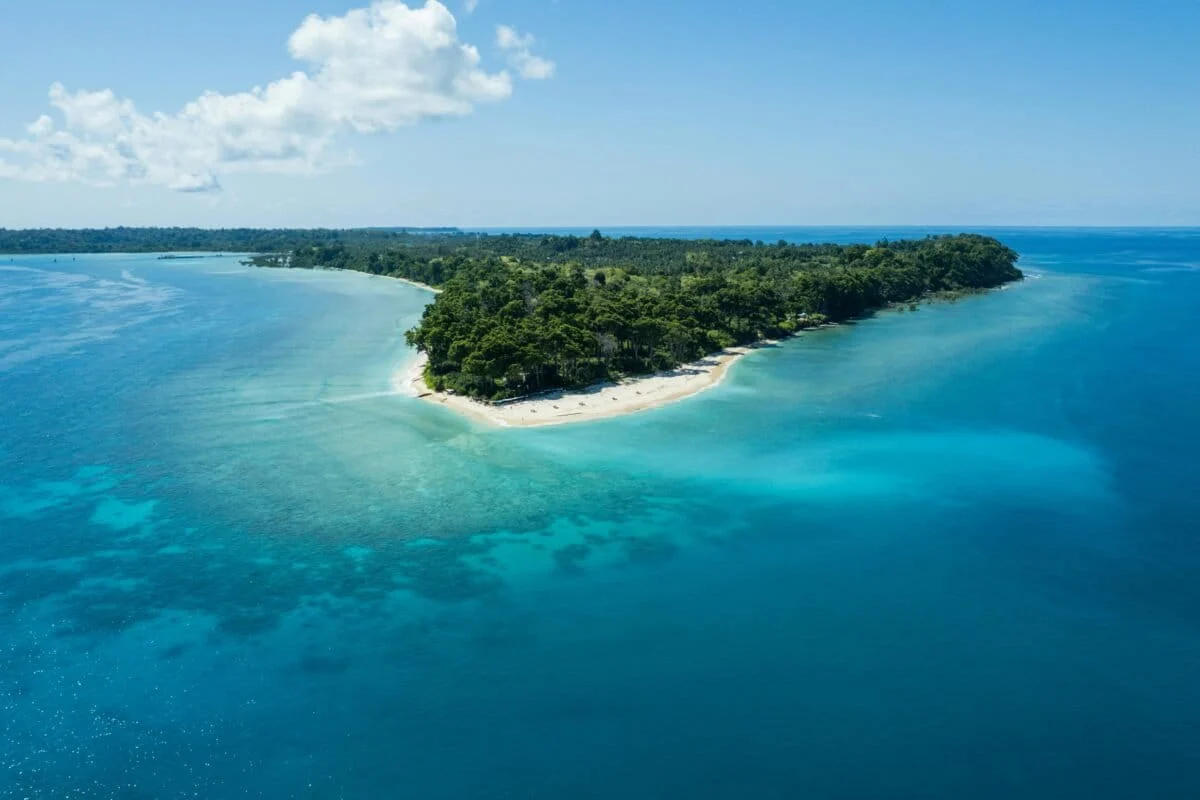
The ambitious and controversial Great Nicobar Island megaproject has hit a significant legal hurdle as the Calcutta High Court’s Divisional Bench at Port Blair recently ruled in favor of hearing three Public Interest Litigations (PILs). These petitions allege systemic violations of forest rights and procedural lapses in the granting of clearances for the ₹72,000-crore developmental initiative. In a move that signals a rigorous judicial review of the project’s impact on indigenous communities and the island’s fragile ecosystem, the court rejected the Union government’s attempts to dismiss the case on technical grounds.
The ruling marks a pivotal moment in the ongoing struggle between large-scale infrastructure development and the protection of constitutional rights for India’s most vulnerable tribal populations. By allowing the petitions to proceed, the court has underscored the distinction between environmental regulatory compliance and the statutory rights of forest-dwelling communities under the Forest Rights Act (FRA) of 2006.
Main Facts of the Case: A Judicial Rejection of Government Objections
The legal battle centers on three PILs filed by Meena Gupta, a former officer of the Indian Administrative Service (IAS) and former Secretary to the Ministry of Environment, Forest and Climate Change (MoEFCC). The petitions challenge the clearances granted to the Great Nicobar Project, specifically highlighting how the implementation of the Forest Rights Act (FRA) was allegedly bypassed or manipulated to facilitate the project.
The Locus Standi Debate
The Union government initially sought a dismissal of the PILs by questioning the locus standi (legal standing) of the petitioner. Government counsel argued that because Meena Gupta resides in Telangana—thousands of kilometers away from the Andaman and Nicobar archipelago—she had no direct stake in the matter and should not be permitted to litigate on behalf of the islanders.
However, the Calcutta High Court’s Divisional Bench dismissed this objection. The court maintained that in matters of Public Interest Litigation, especially those involving the rights of marginalized tribes and the protection of unique national ecological assets, the geographical residence of a petitioner is secondary to the substance of the legal violations being alleged.
Distinguishing the NGT Ruling
A secondary argument presented by the Union government was that the matter had already been adjudicated. They cited a previous ruling by the National Green Tribunal (NGT), which had cleared the project three months prior after reviewing its environmental impact. The government contended that re-visiting the case would result in redundant litigation.
The High Court disagreed, stating it was "crystal clear" that the petitions before it were fundamentally different from the NGT case. While the NGT focused on Environmental Clearance (EC) and the technicalities of ecological impact assessments, the current PILs focus on the socio-legal framework of the Forest Rights Act. Specifically, they address the rights of the Shompen and Nicobarese tribes, the validity of Gram Sabha (village council) consents, and the legal reduction of buffer zones around protected National Parks.
Chronology of the Great Nicobar Megaproject
To understand the weight of the current legal proceedings, one must look at the timeline of the project’s development and the mounting opposition it has faced:
- March 2021: NITI Aayog proposes the "Holistic Development of Great Nicobar Island," featuring an International Container Transshipment Terminal (ICTT), a greenfield international airport, a gas and solar-based power plant, and a strategic township.
- September 2022: The Ministry of Environment, Forest and Climate Change (MoEFCC) grants Stage-I forest clearance for the diversion of 130.75 square kilometers of forest land.
- November 2022: Environmental Clearance (EC) is granted for the project, despite warnings from scientists and environmentalists regarding the impact on leatherback turtles and the endemic Nicobar megapode.
- Late 2022: The Tribal Council of Great and Little Nicobar, which had initially provided a "No Objection Certificate" (NOC), formally withdraws its consent. The Council cited concerns that they were misled about the extent of land diversion and the impact on their ancestral hunting grounds.
- April 2023: The National Green Tribunal (NGT) constitutes a high-level committee to review the environmental clearances but does not halt the project entirely.
- January 2024: Reports emerge of tribal leaders alleging administrative pressure to sign land surrender certificates.
- Early 2025: The Calcutta High Court’s Port Blair Bench agrees to hear the three PILs filed by Meena Gupta, setting the next hearing for June 23, 2025.
Supporting Data: Tribal Rights and Ecological Stakes
The Great Nicobar Island is not merely a strategic outpost; it is a UNESCO Biosphere Reserve and home to two unique indigenous communities: the Shompen, a Particularly Vulnerable Tribal Group (PVTG) who live as hunter-gatherers, and the Nicobarese.

The Forest Rights Act (FRA) Violations
The PILs argue that the government failed to comply with the mandatory provisions of the Forest Rights Act of 2006. Under this law, any diversion of forest land requires the informed consent of the local Gram Sabhas.
- Quorum Deficiencies: Media reports and legal filings suggest that the Gram Sabha meetings held to approve the project did not meet the mandatory 50% quorum.
- Exclusion of Tribes: The Shompen tribe, due to their nomadic and isolated nature, do not participate in the modern Gram Sabha system. The PIL argues that the administration should have sought the specific consent of the Tribal Council, which represents the traditional authority of these indigenous groups, rather than using administrative shortcuts.
Ecological Impact and Buffer Zones
Great Nicobar is home to the Galathea Bay, one of the world’s most important nesting sites for the Giant Leatherback Turtle. The project involves reducing the buffer zones around the Galathea Bay National Park and the Great Nicobar Biosphere Reserve.
- Deforestation: The project necessitates the felling of approximately 8.5 lakh (850,000) trees in a primary rainforest.
- Buffer Zone Shrinkage: The PILs allege that buffer zones were arbitrarily reduced to accommodate the footprint of the transshipment port and the airport, violating established wildlife protection norms.
Official Responses and the Government’s Defense
The Union Government and the Andaman and Nicobar Administration have consistently defended the project as a "national priority." Their defense rests on three primary pillars:
- Strategic Importance: Located near the Strait of Malacca, Great Nicobar is seen as a vital location for India to project its maritime power and monitor international shipping lanes. The government argues that the project is essential for national security and geopolitical stability in the Indo-Pacific region.
- Economic Growth: The International Container Transshipment Terminal is projected to compete with major ports like Colombo and Singapore, potentially transforming India into a global logistics hub.
- Procedural Compliance: The government maintains that all "necessary" procedures were followed. In court filings, the administration has asserted that tribal interests are being protected through a "generous" compensation and rehabilitation package, and that the forest diversion is being offset by compensatory afforestation in other parts of India (such as Haryana), a claim that has been widely criticized by ecologists due to the vast difference in biodiversity between tropical islands and semi-arid plains.
Implications: A Precedent for Indigenous Sovereignty
The Calcutta High Court’s decision to hear these PILs has far-reaching implications for the future of environmental and indigenous law in India.
Legal Precedent for Locus Standi
By rejecting the government’s plea to dismiss the case based on the petitioner’s residence, the court has reaffirmed that the protection of the environment and the rights of isolated tribes are "national concerns." This prevents the government from using geographical technicalities to silence expert critics who possess the knowledge to challenge complex environmental clearances.
The Power of the Tribal Council
If the court finds that the Tribal Council’s withdrawal of consent was legally binding, it could halt the project in its current form. This would reinforce the legal standing of traditional tribal institutions over modern administrative bodies (like the Gram Sabha) in regions inhabited by PVTGs. It poses a fundamental question: Can the state "manufacture" consent for a project that threatens the very survival of a tribe?
Environmental Jurisprudence
The case also challenges the practice of "compensatory afforestation" in entirely different climatic zones. A ruling in favor of the PILs could force the government to reconsider how it values primary tropical rainforests versus plantation forests, potentially setting a higher bar for "non-forest use" clearances in ecologically sensitive zones.
Conclusion
As the legal proceedings move toward the June 23 hearing, the eyes of the international community, environmentalists, and human rights advocates remain fixed on the Port Blair Bench. The Great Nicobar Megaproject represents a classic development-versus-conservation dilemma, but the intervention of the Calcutta High Court has shifted the focus to a more fundamental issue: the rule of law.
The outcome of these PILs will determine whether the "holistic development" of India’s frontiers can coexist with the ancestral rights of its oldest inhabitants, or if the pursuit of strategic dominance will necessitate the erosion of the legal protections meant to safeguard the nation’s most vulnerable people and its most precious natural heritage.
