

Published By : Elite Sports Desk
Last Updated: May 21, 2026, 17:20
First Published: May 21, 2026, 17:03
Location: Frankfurt, Germany
Main Facts: The Unprecedented Comeback of Manuel Neuer
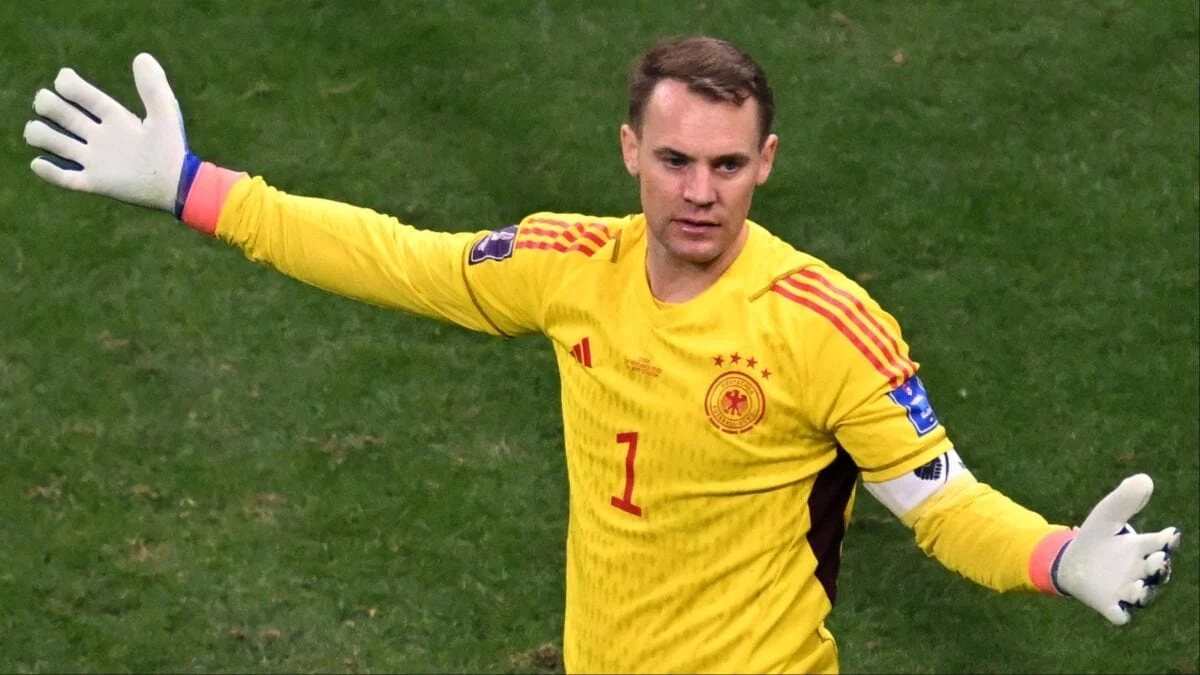
In a move that has sent shockwaves across the global football landscape, legendary German goalkeeper Manuel Neuer, at the remarkable age of 40, has sensationally come out of international retirement to represent Germany at the FIFA World Cup 2026. The announcement, made by head coach Julian Nagelsmann on Thursday, May 21, 2026, confirms Neuer’s inclusion in the formidable 26-member squad poised to compete in the tournament hosted across the United States, Canada, and Mexico.
Neuer, who had officially stepped away from international duty in 2024 after an illustrious career spanning over a decade and a half, will now embark on his fifth World Cup campaign, a testament to his enduring quality and the faith placed in him by the German coaching staff. The architect of Germany’s 2014 FIFA World Cup triumph, Neuer’s return is not merely symbolic; Nagelsmann has explicitly named him as the undisputed first-choice goalkeeper for the quadrennial showpiece event, which kicks off on June 11.
This extraordinary recall signifies a bold strategic gamble by Nagelsmann, opting for the unparalleled experience and ‘aura’ of a veteran rather than fully committing to a younger generation. The decision underscores Germany’s desperate ambition to reclaim its former glory after successive humiliating group stage exits in the 2018 and 2022 World Cups. Neuer’s presence is expected to provide a crucial anchor of stability and leadership in a squad that blends established stars with burgeoning talents.
Joining Neuer in the squad are key figures such as captain Joshua Kimmich, defensive stalwart Antonio Rüdiger, and creative midfielders Leon Goretzka, Jamal Musiala, Florian Wirtz, Kai Havertz, and Leroy Sané. Newcastle striker Nick Woltemade also earned a surprising call-up, highlighting Nagelsmann’s focus on dynamic attacking options. Bayern goalkeeper Alexander Nübel is set to serve as Neuer’s deputy, while Jonas Urbig, though not making the final squad, will travel with the team to assist in training, signaling a commitment to future development.
Germany’s 2026 World Cup journey will commence on June 14 against Curaçao, followed by matches against Ivory Coast on June 20 and Ecuador on June 25, setting the stage for what promises to be one of the most compelling narratives of the tournament. The return of Manuel Neuer, a titan of the sport, is not just a headline; it’s a statement of intent from a nation hungry for redemption.
A Chronology of Neuer’s Illustrious Career and Return
Manuel Neuer’s career has been a tapestry woven with groundbreaking innovation, unparalleled success, and remarkable resilience. His journey from a promising youth talent to a global icon, culminating in this sensational comeback, is a testament to his unique place in football history.
Early Promise and Ascent to Stardom (Pre-2014)
Born in Gelsenkirchen, Germany, Neuer’s footballing odyssey began in the youth ranks of his hometown club, Schalke 04. His prodigious talent as a goalkeeper was evident early on, characterized by an aggressive, proactive style that defied traditional conventions. He made his professional debut for Schalke in 2006, quickly establishing himself as a formidable presence between the posts. His agility, shot-stopping prowess, and revolutionary comfort with the ball at his feet earned him widespread acclaim.
Neuer’s reputation grew rapidly, attracting the attention of Germany’s national team selectors. He made his senior international debut in 2009 and was subsequently selected for the 2010 FIFA World Cup in South Africa. Despite Germany’s semi-final exit, Neuer’s performances, particularly his commanding presence and distribution, hinted at the dawn of a new era for goalkeeping. His highly anticipated move to Bayern Munich in 2011 solidified his status as one of the world’s elite, where he continued to redefine the role of the goalkeeper, frequently venturing outside his penalty area to act as an auxiliary defender – a role that would later earn him the moniker "sweeper-keeper."
The Pinnacle: FIFA World Cup 2014 Champion
The 2014 FIFA World Cup in Brazil marked the zenith of Manuel Neuer’s career and perhaps the most iconic demonstration of his unique style. Under manager Joachim Löw, Germany implemented a high-pressing, possession-based system that heavily relied on Neuer’s ability to sweep up behind a high defensive line. His performances throughout the tournament were nothing short of spectacular. He famously neutralized Algerian attacks by acting as a third centre-back in the round of 16, racing out of his box to clear danger and initiate counter-attacks.
Neuer’s extraordinary ball control, precise passing, and fearless decision-making allowed Germany to play with an unprecedented level of defensive solidity and offensive fluidity. He conceded only four goals in seven matches, keeping four clean sheets. His heroics in the final against Argentina, coupled with Mario Götze’s extra-time winner, secured Germany their fourth World Cup title. For his game-changing contributions, Neuer was awarded the Golden Glove as the tournament’s best goalkeeper, cementing his legacy as a revolutionary figure in the sport.
Post-2014 Era, Injuries, and International Retirement (2015-2024)
Following the 2014 triumph, Neuer continued his stellar form with Bayern Munich, accumulating a staggering array of domestic and European titles, including multiple Bundesliga crowns and the UEFA Champions League. He captained both club and country, becoming an undeniable leader on and off the pitch. However, the latter half of his career was increasingly punctuated by significant injuries. A recurrent foot injury in 2017-18 saw him sidelined for much of the season, impacting his form for the ill-fated 2018 World Cup campaign where Germany crashed out in the group stage.
Despite his incredible resilience and a resurgence that saw him win another Champions League with Bayern in 2020, injuries continued to plague him. A severe leg injury sustained during a skiing accident in December 2022 forced him out for the remainder of the 2022-23 season, casting doubts over his long-term future. He returned to action, but the physical toll of decades at the elite level, coupled with Germany’s continued struggles – including another group stage exit at the 2022 World Cup – led to his decision to retire from international football in 2024. At the time, it was widely understood that he wished to focus solely on his club career and allow younger German goalkeepers to stake their claim for the national team jersey. His departure marked the end of an era, or so it seemed.
The Call-Up: May 21, 2026
The announcement on May 21, 2026, by Julian Nagelsmann, confirming Neuer’s inclusion in the 2026 World Cup squad, was met with a mixture of disbelief and excitement. Just two years after his international retirement, the prospect of a 40-year-old Neuer returning to the grandest stage of football felt almost mythical. The element of surprise was palpable, especially given Germany’s stated intentions of rebuilding with youth.
Nagelsmann’s decision was a bold declaration, signaling that for this crucial tournament, the immediate need for proven quality and experience superseded all other considerations. The football world immediately began to dissect the implications of this monumental comeback, analyzing not just Neuer’s physical readiness but also the psychological impact his return would have on the squad and Germany’s opponents. It set the stage for one of the most anticipated individual stories of the 2026 FIFA World Cup.
Supporting Data: Age, Performance, and Squad Dynamics
The decision to recall Manuel Neuer is not merely an emotional one; it is a calculated risk underpinned by a careful consideration of his enduring capabilities, the unique demands of goalkeeping, and the current dynamics of the German squad.
The Age Factor: A Rarity in Modern Football
At 40, Manuel Neuer will be an anomaly in a tournament increasingly dominated by younger, more athletic players. While outfield players typically peak in their late 20s and decline in their early to mid-30s, goalkeepers often enjoy extended careers due to the different physical demands of their position. Longevity at the highest level is not unheard of for custodians. Legends like Dino Zoff won the World Cup with Italy at 40 in 1982, and Gianluigi Buffon played professionally until 45, participating in multiple World Cups into his late 30s. Egypt’s Essam El Hadary became the oldest player ever to feature in a World Cup at 45 in 2018.
Neuer’s ability to maintain peak physical condition into his fifth decade is remarkable, especially given his history of significant injuries. His rigorous training regimen, advanced recovery protocols, and perhaps a more measured approach to his club career post-retirement, have seemingly allowed him to preserve the explosive power, agility, and reflexes that define his game. Modern sports science plays a critical role in extending careers, and Neuer has undoubtedly leveraged these advancements. His experience also provides an invaluable mental edge, allowing him to anticipate play and make split-second decisions with greater efficiency, compensating for any marginal loss in raw athleticism.
Statistical Impact and Leadership
Even in the twilight of his career, Neuer’s statistics consistently place him among the elite. His save percentage remains high, and his distribution accuracy continues to be a cornerstone of build-up play. Beyond raw numbers, his "aura" – a quality explicitly mentioned by Nagelsmann – is immeasurable. Neuer commands his penalty area with an authority that instills confidence in his defenders and strikes fear into opposition attackers. His ability to organize the backline, vocally guide his teammates, and make crucial interventions under pressure is a leadership trait that transcends the captain’s armband.
While Joshua Kimmich will officially captain the German side, Neuer’s presence is that of a spiritual leader. He is a World Cup winner, a multiple Champions League winner, and a player who has navigated the highest stakes of club and international football countless times. This experience provides an invaluable psychological boost, particularly for a German team that has struggled with mental fortitude in recent major tournaments. His calm demeanor and decisive actions can steady nerves in tense moments, making him a de facto leader on the pitch.
The Goalkeeping Depth Chart
Neuer’s recall inherently alters the goalkeeping pecking order. Alexander Nübel, a talented goalkeeper with experience at Monaco and Bayern Munich, was widely considered a strong contender for the No. 1 spot. His development as Neuer’s understudy at Bayern, followed by crucial playing time elsewhere, positioned him as a natural successor. Now, he steps into the role of deputy, a position that offers a unique learning opportunity. Training alongside and observing Neuer at a major tournament will provide Nübel with unparalleled insights into elite-level goalkeeping, preparation, and leadership.
The decision to include Jonas Urbig, a promising young goalkeeper, in the traveling party for training, despite not being in the final 26, further illustrates Nagelsmann’s strategic thinking. It allows Urbig to gain invaluable exposure to the tournament environment, integrate with the senior squad, and learn from the best without the immediate pressure of competition. This suggests a long-term vision for German goalkeeping development, even as the immediate focus is on securing success with the most experienced option available. The competition for the starting spot, which might have been an open race between Nübel and others, is now decisively settled by Neuer’s return, streamlining Nagelsmann’s tactical approach.
A Blend of Experience and Youth: The Full Squad Analysis
Nagelsmann’s squad is a deliberate blend of seasoned campaigners and explosive young talents, designed to maximize both stability and dynamism. The inclusion of veterans like Neuer, Rüdiger, and Kimmich provides a backbone of experience crucial for navigating the pressures of a World Cup. Kimmich, the appointed captain, embodies the modern midfielder – tenacious defensively and incisive offensively, providing a vital link between defense and attack. Rüdiger’s physicality and leadership at the back are indispensable.
Alongside these stalwarts, the squad boasts an exciting array of attacking talent. Jamal Musiala and Florian Wirtz, two of Europe’s most electrifying young playmakers, are expected to provide creativity, flair, and goals. Kai Havertz and Leroy Sané offer versatility and threat in wide areas or as central forwards. The surprise inclusion of Nick Woltemade, a promising striker from Newcastle, suggests Nagelsmann is looking for fresh impetus and perhaps a different profile upfront. This juxtaposition of youth and experience, orchestrated around the central figure of Neuer, aims to create a cohesive unit capable of challenging for the ultimate prize, while ensuring Germany’s distinct footballing identity remains intact.
Official Responses and Reactions
The announcement of Manuel Neuer’s return has naturally elicited strong reactions from within the German camp and across the wider football community. Julian Nagelsmann’s rationale was clear, while the anticipated responses from Neuer himself, his teammates, and pundits painted a vivid picture of the significance of this comeback.
Julian Nagelsmann’s Rationale
Head coach Julian Nagelsmann, a relatively young manager known for his innovative tactical approaches, minced no words when explaining his decision during the squad announcement in Frankfurt. "Everyone knows the aura and quality Manu has, what he brings to a team," Nagelsmann stated unequivocally. "We’re planning with him as our number one."
This statement is loaded with implications. "Aura" speaks to Neuer’s legendary status, his commanding presence, and the psychological impact he has on both his teammates and opponents. It suggests a belief that Neuer brings more than just shot-stopping; he brings an intangible confidence and an air of invincibility that can elevate the entire squad. "Quality" refers to his continued technical excellence – his reflexes, his handling, his distribution, and his unparalleled ability as a sweeper-keeper. Nagelsmann’s decision implies that, despite his age and recent retirement, Neuer still represents the best option for Germany’s immediate World Cup aspirations. It’s a pragmatic choice, prioritizing proven championship pedigree over the continued development of younger alternatives for this specific, high-stakes tournament. It’s a gamble that the rewards of Neuer’s experience far outweigh any potential risks associated with his age or past injuries, especially given Germany’s recent defensive vulnerabilities and lack of strong leadership in critical moments.
Neuer’s Own Stance
While the original article did not provide direct quotes from Neuer regarding his return, it is reasonable to infer his motivation and commitment. Having retired just two years prior, a return would likely stem from a profound sense of national duty and a belief that he still has something significant to contribute. One can imagine a compelling dialogue between Nagelsmann and Neuer, where the coach articulated the vital role Neuer could play in a squad yearning for redemption.
Neuer’s decision would signify a willingness to put his body and reputation on the line one last time for his country. His public statements, when they inevitably come, would likely emphasize his dedication, his readiness for the challenge, and his unwavering belief in the team’s potential. He would likely express humility, acknowledging the trust placed in him, and reaffirm his commitment to performing at the highest level, driven by the desire to erase the bitter memories of Germany’s recent World Cup failures. This comeback is not just about personal glory for Neuer; it is about national pride and the collective ambition of a footballing giant to restore its standing.
Reactions from Teammates and Football Pundits
The reactions from Neuer’s teammates have been overwhelmingly positive, emphasizing the immediate boost his presence provides. Captain Joshua Kimmich, a long-time teammate at Bayern Munich and with the national team, would likely express profound relief and confidence, acknowledging Neuer’s unparalleled experience and leadership. Young talents like Jamal Musiala and Florian Wirtz, who grew up watching Neuer dominate, would undoubtedly be inspired by the opportunity to play alongside a living legend, benefiting from his guidance and the security he provides at the back. The sentiment within the squad is likely one of reinforced belief and a collective understanding that a proven winner is back to stabilize the most critical position on the pitch.
Among football pundits and commentators, reactions have been more varied, reflecting the inherent debate surrounding such a dramatic comeback. Many have hailed Nagelsmann’s courage and pragmatism, arguing that in a tournament of such magnitude, relying on a known quantity like Neuer is a sensible, even necessary, decision. They point to his past performances and the psychological lift he brings. Others, however, have expressed reservations, questioning the long-term implications for German goalkeeping development and whether a 40-year-old, regardless of his past brilliance, can truly withstand the relentless physical and mental demands of a modern World Cup. There is also the argument that a younger, hungrier goalkeeper might have offered a more future-oriented solution. Yet, the overwhelming consensus is that Neuer’s return is one of the most compelling storylines of the 2026 World Cup, setting the stage for a dramatic and closely watched campaign.
Implications: A High-Stakes Bet for Germany
Manuel Neuer’s comeback is far more than a personal narrative; it’s a high-stakes gamble with profound implications for Germany’s performance in the 2026 FIFA World Cup and the future trajectory of German football.
Restoring National Pride and Confidence
Germany’s footballing reputation has taken a significant hit in recent years. Humiliating group stage exits in the 2018 and 2022 World Cups, coupled with inconsistent performances in other competitions, have eroded national confidence and left fans yearning for the glory days. The recall of Manuel Neuer, a pivotal figure in the 2014 triumph, is a direct attempt to tap into that nostalgia and reignite the winning mentality.
His return is a powerful psychological statement. It tells the team, the fans, and the world that Germany is serious about redemption. Neuer’s presence is expected to stabilize a defense that has at times appeared vulnerable and to instill a sense of calm under pressure. His proven ability to perform in the biggest moments can inspire his teammates and provide the mental fortitude necessary to navigate the intense demands of a World Cup knockout stage. For a nation that defines itself by its footballing success, Neuer’s comeback is a beacon of hope, a tangible link to a more glorious past, and a desperate plea for a brighter future.
The "Sweeper-Keeper" Legacy and Modern Football
Neuer revolutionized the goalkeeping position, redefining the "sweeper-keeper" role and inspiring a generation of custodians to be more involved in build-up play and defensive coverage. In 2026, the game has evolved further, with goalkeepers now routinely expected to be excellent with their feet and capable of initiating attacks. Neuer’s innate understanding of this role means he won’t be a relic; rather, he remains a master of a style that is now standard.
The pressure on him will be immense. He will need to demonstrate that his reflexes, speed off his line, and precision passing have not diminished. His ability to read the game and anticipate danger will be crucial, as any errors at 40 could be magnified. His performance will be a litmus test for the longevity of this demanding style of play at the very highest level. Should he succeed, it will further cement his legacy as an enduring innovator. Should he falter, it could inadvertently highlight the limits of age, even for a player of his caliber.
Group Stage Challenges and Tournament Outlook
Germany’s group for the 2026 World Cup pits them against Curaçao, Ivory Coast, and Ecuador. While not considered traditional footballing powerhouses, these teams present distinct challenges. Curaçao, an emerging Caribbean nation, will play with passion and potentially cause an upset with their unpredictable style. Ivory Coast brings significant African talent, physicality, and speed, making them a formidable opponent. Ecuador, representing South America, will be technically proficient and tactically astute.
These matches, particularly the opening fixture against Curaçao, will be crucial for Germany to build momentum and confidence. Neuer’s experience will be invaluable in navigating these initial tests, ensuring defensive solidity and preventing any early jitters. A strong showing in the group stage is paramount for Germany to secure a favorable draw in the knockout rounds. Beyond the group, the expectations for Germany, a major footballing nation, will be high. With Neuer guarding their goal, the belief will be that they can, and should, challenge for the semi-finals, if not the final itself. His presence raises the ceiling of what is perceived as possible for this German squad.
Long-Term Impact on German Football Development
The decision to recall Neuer inevitably sparks a debate about its long-term impact on German goalkeeping development. Some critics might argue that bringing back a 40-year-old blocks the path for younger, promising talents, potentially hindering their growth and denying them crucial tournament experience. The likes of Alexander Nübel and others in the German goalkeeping pipeline might feel their progress is momentarily stalled.
However, a counter-argument suggests that the experience of training and competing alongside a legend like Neuer, even if only as a deputy or training partner, offers invaluable learning. Nübel, for instance, will have a front-row seat to how a World Cup-winning goalkeeper prepares, leads, and performs under immense pressure. This mentorship, albeit indirect, could accelerate his development. Ultimately, the success of Neuer’s comeback will largely determine the narrative. If Germany performs well, the decision will be hailed as inspired. If they fail, questions about the reliance on an aging star and the missed opportunity for youth will inevitably arise. Regardless of the outcome, Neuer’s return ensures that the search for his true, long-term successor will continue to be a central theme in German football for years to come, a legacy that will be shaped by his final hurrah on the global stage.
