

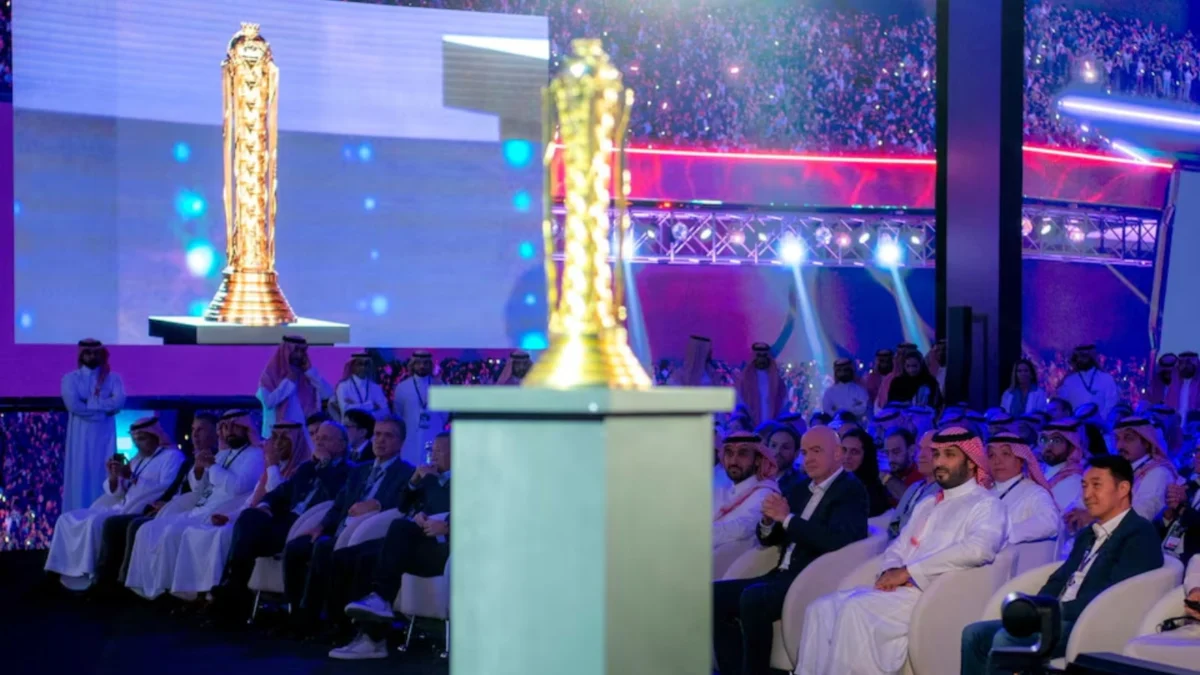
Paris, France – May 21, 2026 – In a significant and rapidly unfolding development, the highly anticipated Esports World Cup (EWC) 2026, initially slated to take place in Riyadh, Saudi Arabia, has been officially relocated to Paris, France. The dramatic shift comes as a direct consequence of escalating geopolitical tensions in the Middle East, which have reportedly intensified into a full-blown conflict involving Iran, Israel, and the United States. The Esports Foundation (EF), the organizing body behind the global tournament, confirmed the decision late on Wednesday, citing the need to ensure "clarity and stability for players, clubs, publishers, partners, and fans worldwide."
The prestigious competition, a cornerstone of the rapidly expanding global esports calendar, will now captivate audiences from the French capital, running from July 6 to August 23, 2026. This unprecedented move marks the first time the Esports World Cup will be held outside Saudi Arabia, signifying a pivotal moment for the tournament’s international trajectory and underscoring the profound impact of global events on the world of competitive gaming.
French President Emmanuel Macron swiftly welcomed the news, hailing it as a "historic first and an honor" for France. His enthusiastic endorsement, shared via social media, immediately galvanized support and excitement within the nation, positioning Paris once again at the forefront of hosting major international events. The relocation, while undoubtedly a complex logistical undertaking, reflects the esports industry’s growing maturity and its commitment to safeguarding the integrity and continuity of its premier competitions amidst an unpredictable global landscape.
The Unforeseen Relocation: A Global Esports Pivot
The announcement of the Esports World Cup 2026’s relocation sends ripples through the international sports and entertainment communities. What was conceived as a landmark event in Saudi Arabia’s ambitious vision for economic diversification and global engagement has now found a new home in one of the world’s most iconic cities. The decision, though regrettable for the original host, underscores a paramount concern for the safety and security of thousands of participants, staff, and attendees from across the globe.
The Esports Foundation’s statement emphasized a long-term vision for its tournaments, aiming for international rotation and collaboration with various global markets. The current geopolitical climate, however, compelled an acceleration of this ambition for the 2026 edition. This strategic pivot ensures that an event of such immense scale and global viewership can proceed without the shadow of regional instability, thereby preserving its competitive integrity and commercial viability. The move to Paris, a city synonymous with grand international spectacles, offers a compelling alternative, promising a vibrant and secure environment for the world’s elite esports athletes and their fervent fanbase.
A Timeline of Geopolitical Unrest and Strategic Decisions
The journey of the Esports World Cup 2026 from its initial announcement to its current relocation is a testament to the volatile nature of global affairs and the adaptive capacity required of major event organizers.
Riyadh’s Initial Ambition and the Vision for Esports
Saudi Arabia, through its Public Investment Fund (PIF) and initiatives like the Savvy Games Group, has made significant strides in positioning itself as a global hub for esports. Riyadh was originally selected as the host city for the EWC 2026, building on its successful hosting of previous regional and international esports events. The kingdom had invested heavily in infrastructure and talent development, viewing esports as a key pillar in its Vision 2030 strategy to diversify its economy away from oil and attract global talent and tourism. The EWC was intended to be a crowning jewel in these efforts, showcasing Saudi Arabia’s capabilities on a global stage and fostering a thriving local esports ecosystem. Plans for state-of-the-art arenas and extensive fan engagement zones were likely already in advanced stages, making this relocation a substantial blow to those aspirations for 2026.
The Evolving Crisis in the Middle East
The catalyst for this monumental shift lies in the dramatic deterioration of security in the Middle East. While the precise details of the "full-blown war involving Iran, Israel, and the United States" are not fully elaborated in the EF’s public statement, the implications are clear: a region once seen as a burgeoning market for international events has become too volatile for a gathering of this magnitude. Reports over the preceding months had indicated a steady escalation of tensions, with increased military posturing, proxy conflicts, and direct engagements. The involvement of major global powers, specifically the United States, alongside regional adversaries Iran and Israel, signifies a conflict with far-reaching consequences that extend beyond immediate battlefields, impacting international travel, security assessments, and logistical feasibility for any large-scale gathering. The safety concerns for thousands of international visitors and the potential for travel disruptions or security incidents became insurmountable factors for the Esports Foundation.
The Esports Foundation’s Deliberation and Announcement
Faced with an increasingly precarious security situation, the Esports Foundation initiated an "extended evaluation process." This likely involved intensive consultations with security experts, governmental bodies, logistical partners, and participating organizations. The EF’s mandate is not only to promote esports but also to ensure the well-being of its community and the smooth operation of its tournaments. The decision to accelerate its "international rotation ambition" was therefore a pragmatic one, prioritizing participant safety and event continuity over adherence to original plans.
The official announcement came "late on Wednesday" from the EF. Interestingly, French President Emmanuel Macron had already posted his welcoming message on X (formerly Twitter) on May 20, 2026, the preceding day (or earlier on Wednesday, depending on timezone alignment, if May 21st is Thursday IST). This suggests that high-level diplomatic discussions and agreements were already in place before the public unveiling by the EF, underscoring the urgency and strategic coordination involved in such a high-stakes relocation. The swift response from the French government indicates a readiness and eagerness to absorb an event of this magnitude on short notice.
The Rationale Behind the Move: Prioritizing Stability and Integrity
The Esports Foundation’s statement provided crucial insight into the guiding principles behind the relocation. The emphasis on "accelerating that international rotation ambition" and offering "clarity and stability for players, clubs, publishers, partners, and fans worldwide" highlights a sophisticated understanding of the esports ecosystem’s needs.
Major international events, whether traditional sports or esports, thrive on predictability and security. Athletes dedicate years to training, teams invest millions, and sponsors commit substantial resources. Any uncertainty regarding venue safety, travel restrictions, or potential disruptions can severely undermine participation and engagement. By making a decisive move to a stable and proven host city like Paris, the EF aims to mitigate these risks.
The phrase "preserving the tournament’s scale, structure, and competitive integrity" is particularly telling. It implies that the EF was unwilling to compromise on the grandeur or the fairness of the competition. Maintaining a prize pool exceeding $75 million, accommodating over 2,000 players from 100+ countries, and hosting 25 tournaments across 24 games requires immense logistical planning and a secure environment. In a region embroiled in conflict, guaranteeing these elements would have been extraordinarily challenging, if not impossible. The relocation, therefore, is not merely a change of address but a strategic safeguard for the very essence of the Esports World Cup. It establishes a precedent for global event organizers to prioritize safety and operational continuity above all else when faced with escalating geopolitical risks.
Paris Steps Up: A New Chapter for Global Esports
The selection of Paris as the new host city is a testament to its unparalleled capacity for staging world-class events and its growing prominence in the global sports and entertainment landscape.
France’s Endorsement and Macron’s Welcome
President Macron’s immediate and enthusiastic public endorsement underscored France’s commitment to embracing new frontiers in international events. His tweet – "The EWC will be held in Paris! It is a historic first and an honor for us. Thank you to Saudi Arabia for their trust. We are ready to host the Esports World Cup 2026. Very proud to welcome the world once again" – not only welcomed the EWC but also subtly acknowledged the complex diplomatic nature of the relocation, thanking Saudi Arabia despite the circumstances. This swift governmental backing is crucial for an event of this scale, providing the necessary political will and logistical support for a successful execution. France has consistently demonstrated its ability to host major gatherings, from the Olympic Games (Paris 2024 is just around the corner) to the Rugby World Cup, showcasing its robust infrastructure and organizational prowess.
The Appeal of the ‘City of Light’ for International Events
Paris offers an ideal backdrop for the Esports World Cup. Renowned globally as a center of culture, fashion, and innovation, the ‘City of Light’ also boasts state-of-the-art convention centers, world-class sporting arenas, and an extensive public transportation network. Its experience in managing massive influxes of international visitors is well-documented, ensuring that the logistical challenges of accommodating thousands of players, staff, media, and fans can be met efficiently. Furthermore, Paris’s vibrant atmosphere and iconic landmarks provide a compelling draw for both participants and spectators, promising an unforgettable experience that transcends the competition itself. The city’s multicultural environment also aligns perfectly with the diverse global community of esports.
What Paris Gains: Economic and Reputational Boost
Hosting the Esports World Cup 2026 represents a significant windfall for Paris and France. Economically, the event will generate substantial revenue through tourism, hospitality, retail, and local services. Thousands of visitors will fill hotels, restaurants, and cultural sites, providing a considerable boost to the local economy. Beyond immediate financial gains, the EWC offers a potent reputational boost, further solidifying Paris’s image as a dynamic, forward-thinking global capital capable of hosting both traditional mega-events and the burgeoning spectacles of the digital age. It demonstrates France’s adaptability and willingness to embrace new forms of entertainment and competition, enhancing its soft power and appeal to a younger, digitally native demographic. The association with such a high-profile, modern event could also inspire local esports development and talent, creating a lasting legacy.
The Esports World Cup: A Monumental Global Spectacle
The Esports World Cup is not just another tournament; it is a flagship event that encapsulates the phenomenal growth and professionalization of competitive gaming.
Scaling New Heights: The 2025 Precedent
The 2025 edition of the EWC set new benchmarks for viewership and engagement, illustrating the tournament’s impressive global reach. It captivated over 750 million viewers worldwide, generating more than 350 million hours watched, with peak concurrent viewership nearing an astounding 8 million. The event’s broadcast footprint was equally expansive, reaching fans in 140 countries across 28 platforms through 97 partners and over 800 channels, delivered in 35 languages. These figures not only highlight the immense popularity of esports but also the EWC’s critical role in driving this global phenomenon. Such a vast and diverse audience underscores the importance of a stable and secure host environment to ensure uninterrupted access and maximum engagement.
The Vision for EWC 2026: Unprecedented Scale and Prize Pool
The 2026 edition is poised to surpass its predecessors in scale and ambition. It is projected to feature more than 2,000 players representing over 200 clubs from more than 100 countries. These elite competitors will battle across 24 distinct games, participating in 25 tournaments, all vying for a share of an unprecedented prize pool exceeding $75 million. This colossal prize fund not only attracts the best talent but also injects significant economic value into the esports ecosystem, fostering professional careers and encouraging further investment. The sheer number of games and tournaments also speaks to the diversity within esports, catering to a broad spectrum of player skills and fan interests, from tactical shooters and real-time strategies to fighting games and sports simulations.
Esports’ Ascendancy: From Niche to Mainstream Global Phenomenon
The trajectory of esports over the past decade has been nothing short of meteoric. Once a niche pursuit confined to basements and internet cafes, it has blossomed into a multi-billion-dollar industry, rivaling traditional sports in terms of viewership, sponsorship, and professional infrastructure. The EWC stands as a prime example of this ascendancy, showcasing the highest level of competitive gaming on a global stage. Its professional leagues, structured team organizations, dedicated training facilities, and massive prize pools mirror those of established sports, attracting significant investment from venture capitalists, media conglomerates, and even traditional sports team owners. The relocation to Paris further cements its status, placing it in a city that regularly hosts events like the Olympics and the FIFA World Cup, thereby bridging the gap between digital and traditional global spectacles.
Navigating Diplomatic Waters: Statements from Leadership
The official statements following the relocation announcement were carefully crafted, reflecting the delicate balance between acknowledging the unavoidable circumstances and maintaining positive relationships within the global esports community.
Ralf Reichert on Riyadh’s Legacy and Paris’s Promise
Ralf Reichert, CEO of the Esports Foundation, delivered a particularly diplomatic statement, acknowledging Riyadh’s foundational role while celebrating Paris’s new opportunity. "Riyadh helped turn the Esports World Cup into a global phenomenon," Reichert stated, emphasizing, "Riyadh is the home of the EWC and one of the world’s leading hubs for esports, powered by an incredible community of fans and long-term ambition for the future of the sport." This acknowledgement serves to recognize Saudi Arabia’s significant investment and contribution to the EWC’s success, subtly mitigating any potential diplomatic fallout from the sudden change.
He then smoothly transitioned to the new chapter: "This year, we’re excited to bring the EWC to Paris for its first edition outside Saudi Arabia. Paris has hosted some of the world’s biggest sporting events and is one of the great global capitals of sport, culture, and entertainment. Together with the passion of French fans and the strong support we’ve received locally, we’re excited to bring the global esports community there for the next chapter of the EWC. Paris now becomes the first international chapter in EWC history." Reichert’s words effectively frame the move not as a rejection of Riyadh but as a natural evolution of the EWC’s international aspirations, with Paris leading the charge into a new era.
The Unspoken Perspective: Saudi Arabia’s Role and Future
While Saudi officials were not directly quoted in the provided article, the diplomatic tone of Reichert’s statement suggests a level of understanding, albeit perhaps with underlying disappointment, from the Saudi side. For Riyadh, hosting the EWC was more than just an event; it was a strategic national project aimed at projecting a modern image and diversifying its economy. The forced relocation due to regional instability, a factor largely beyond Saudi Arabia’s control, is undoubtedly a setback.
However, Saudi Arabia’s long-term commitment to esports, evidenced by massive investments in gaming companies and infrastructure, is unlikely to wane. Reichert’s comment about Riyadh being "the home of the EWC" and a "leading hub for esports" implies that while the 2026 edition is moving, future editions or other major esports events could still return to the Kingdom once regional stability is restored. Saudi Arabia’s ambition in esports is deeply rooted in its economic vision, and this temporary setback is more likely to lead to a re-evaluation of strategies rather than a withdrawal from the scene.
Broader Implications: A Precedent for Future International Events
The relocation of the Esports World Cup 2026 sets a significant precedent, prompting a broader discussion about the interplay of geopolitics and global sporting events.
The Interplay of Geopolitics and Global Sports
This incident vividly illustrates how major international events are increasingly susceptible to geopolitical volatility. Organizers of large-scale gatherings, whether sports, cultural, or business, must now incorporate comprehensive risk assessments that factor in regional conflicts, political instability, and their potential to disrupt even well-laid plans. Insurance, security protocols, and contingency planning for venue changes or cancellations will become even more critical considerations for bidding cities and organizing bodies. The EWC’s move highlights a growing trend where the pursuit of ‘sportswashing’ or nation-branding through major events can be severely hampered by external political realities, regardless of the host nation’s intentions or investments.
Impact on Players, Teams, and Fans
For the thousands of players, coaches, and support staff, the relocation means an abrupt change in travel plans, training schedules, and logistical arrangements. Teams that may have scouted potential training facilities or accommodations in Riyadh will now need to pivot quickly to Paris. While professional organizations are generally adaptable, such last-minute changes can add stress and logistical hurdles. Fans who had already made travel bookings or accommodation arrangements for Riyadh will face the inconvenience and potential financial loss of re-planning their trips. However, for those in Europe, the accessibility of Paris might be a welcome change, potentially increasing local attendance. The announcement of the specific venue in Paris will be crucial for both teams and fans to finalize their preparations.
The Future of Esports Event Hosting
This incident will undoubtedly influence future bidding processes for major esports tournaments. Host cities and nations will likely face more stringent scrutiny regarding their geopolitical stability, security infrastructure, and contingency plans. Event organizers, in turn, may develop more flexible contracts that allow for easier relocation in unforeseen circumstances. While the allure of emerging markets remains strong, the emphasis on proven stability and logistical capability, as demonstrated by Paris, might take precedence. The EWC 2026 relocation serves as a stark reminder that even in the rapidly evolving world of esports, the fundamental principles of safety, security, and operational continuity remain paramount.
Looking Ahead: The Road to Paris 2026
With the new dates set from July 6 to August 23, 2026, the focus now shifts entirely to Paris. The Esports Foundation has indicated that details regarding the specific venues for EWC 2026 in Paris will be announced at a later date. This eagerly awaited information will allow teams, players, and fans to finalize their plans and begin to truly visualize the grand spectacle unfolding in the heart of France.
Despite the unexpected change of scenery, the core mission of the Esports World Cup remains undeterred: to celebrate the pinnacle of competitive gaming, foster global connections, and continue the remarkable ascent of esports as a truly international phenomenon. Paris, with its rich history, iconic landmarks, and proven ability to host the world, stands ready to embrace this new chapter, promising an EWC 2026 that will be remembered not just for its relocation, but for its enduring spirit of competition and community. The world of esports, ever resilient and adaptable, prepares to write another compelling chapter in the City of Light.
