

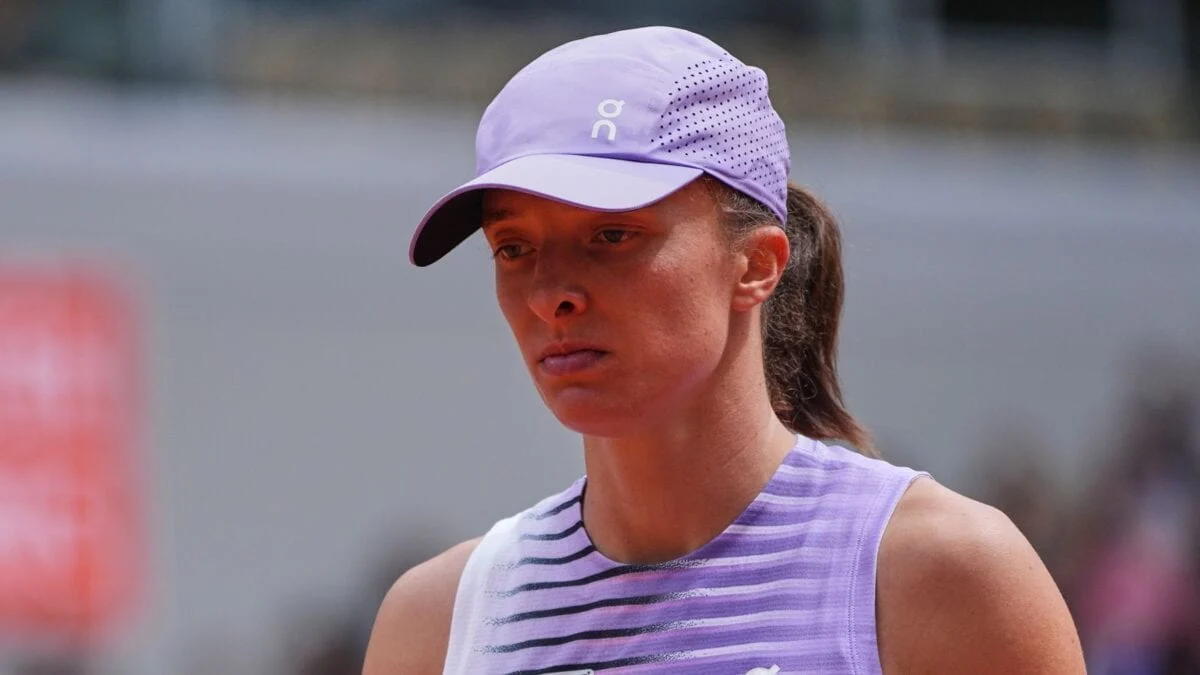
Swiatek, celebrating her 25th birthday on the day of the match, was widely considered the overwhelming favourite, especially on her favoured clay surface where she has enjoyed unparalleled dominance in recent years. However, Kostyuk, riding an extraordinary wave of form, showcased an unparalleled blend of defensive grit and aggressive ball-striking, extending her unbeaten streak on clay this season to a remarkable 16 matches. Her triumph over the Polish superstar has blown the women’s draw wide open, setting the stage for an unpredictable and thrilling conclusion to the Parisian fortnight.
The implications of Swiatek’s unexpected exit are profound, mirroring a similar scenario in the men’s draw where the losses of Jannik Sinner and Novak Djokovic, coupled with Carlos Alcaraz’s absence due to injury, also ensure a new male champion will be crowned. This convergence of events creates an unprecedented atmosphere of anticipation and opportunity, promising fresh faces and potentially new legends forged on the hallowed red clay of Roland-Garros.
Adding to the tournament’s compelling narratives, Romanian veteran Sorana Cirstea, planning her retirement at the season’s end, etched her name into the history books by reaching her second French Open quarterfinal, a staggering 17 years after her first. Her enduring journey serves as a testament to perseverance, offering a poignant contrast to the youthful exuberance of Kostyuk’s breakthrough.
Main Facts: A Grand Slam Upheaval
The 2026 French Open has delivered an early contender for the most surprising Grand Slam of the decade, following a series of high-profile eliminations that have stripped both the men’s and women’s singles draws of their most decorated and anticipated champions. The most striking of these upsets occurred on Sunday, May 31, when Ukraine’s Marta Kostyuk, ranked 15th, delivered a masterful performance to defeat the reigning queen of clay, Iga Swiatek, in the fourth round. The final score of 7-5, 6-1 against a player who had previously defeated Kostyuk in all three of their encounters and never conceded a set, speaks volumes about the Ukrainian’s elevated game and mental fortitude.
Kostyuk’s victory is not merely a personal triumph but a pivotal moment for the tournament. With Swiatek, a four-time French Open champion, and Coco Gauff, another leading contender, both eliminated, it is now mathematically certain that a new name will be etched onto the Suzanne-Lenglen Cup. This scenario, where neither a former champion nor a recent major finalist remains in contention, injects an unparalleled level of excitement and unpredictability into the women’s competition.
The parallel development in the men’s draw further amplifies this narrative of renewal. The early departures of defending champion Novak Djokovic and Australian Open winner Jannik Sinner, alongside the pre-tournament withdrawal of two-time major winner Carlos Alcaraz, similarly guarantees a first-time men’s champion. Such a convergence – guaranteed new champions in both singles draws – is an exceedingly rare occurrence in Grand Slam history, underscoring a potential changing of the guard at the sport’s highest level.
Marta Kostyuk’s path to the quarterfinals is paved with an exceptional clay-court season, marked by an impressive 16-match winning streak on the surface. Her titles in Madrid, the biggest of her career, and Rouen, France, positioned her as a dark horse contender, but few anticipated such a decisive dismantling of Swiatek. Her undefeated record on clay leading into Roland-Garros highlights a player in peak physical and mental condition, ready to challenge the established order.
Beyond the high-stakes main event, the resilience of veterans like Sorana Cirstea has also captured attention. The Romanian’s journey to her second Roland-Garros quarterfinal, 17 years after her first, stands as a remarkable testament to her enduring passion and commitment to the sport, providing a poignant subplot to a tournament defined by upsets and emergent talent.
Chronology: A Battle of Wills and a Veteran’s Return
The atmosphere at Roland-Garros on Sunday, May 31, was distinct from the suffocating heatwave that had plagued the first week. With temperatures dropping to a more comfortable 21 degrees Celsius (70 F) around midday, conditions were ripe for high-quality tennis. What unfolded on court was a gripping contest, particularly in the opening set, which served as a microcosm of the entire match’s shifting dynamics.
The First Set Thriller: A Shift in Momentum
From the opening serve, the encounter between Kostyuk and Swiatek was an intense baseline battle. Both players traded powerful groundstrokes, seeking to dictate play. Swiatek, known for her relentless pressure and heavy topspin forehand, earned the first break, overwhelming Kostyuk after a lengthy rally with a precise backhand winner to take an early lead. However, Kostyuk, displaying the steely resolve that has characterized her recent clay-court success, immediately broke back, refusing to let Swiatek consolidate her advantage.
The set continued its seesaw nature as Swiatek again broke Kostyuk’s serve, seemingly gaining control and establishing a 5-4 lead. Serving for the set, the pressure visibly mounted on the four-time champion. A series of uncharacteristic errors began to creep into Swiatek’s game: a double-fault, a shanked forehand wide, and a missed volley at the net. These lapses in concentration and execution proved costly, allowing Kostyuk to seize the opportunity and level the score at 5-all. The pivotal 12th game saw Swiatek commit two more double faults, betraying her mounting frustration and nerves. Kostyuk, remaining focused and capitalizing on every opening, sealed the set with a brilliant backhand passing shot, sending a clear message of intent. The crowd, initially subdued, erupted in a mix of surprise and exhilaration as the underdog took the crucial first set.
Between Sets: Composure and Reflection
Following the loss of the first set, a visibly distraught Swiatek briefly left the court, presumably to regroup and compose herself. During her absence, Marta Kostyuk exhibited remarkable calm and self-assurance. She kept herself warm with stretches and hops beside her chair, even indulging in a few dance moves to the music playing in the stadium, drawing appreciative applause from the spectators. This display of relaxed confidence underscored her belief in her game and her enjoyment of the moment, a stark contrast to her opponent’s evident distress.
Second Set Dominance: Kostyuk Closes It Out
Upon Swiatek’s return, there was a brief glimmer of hope for her fans as she managed to break Kostyuk’s serve at the start of the second set. However, the momentum was short-lived. Yet another double fault from Swiatek, coupled with a string of unforced errors, immediately handed the break back to Kostyuk, leveling the score at 1-all. From that point onwards, Kostyuk asserted complete control. Her defensive game was impenetrable, chasing down seemingly impossible balls and turning them into offensive opportunities. Her groundstrokes found their mark with precision and power, consistently pushing Swiatek onto the back foot. The Ukrainian won the next five consecutive games, steamrolling her illustrious opponent with a combination of relentless pressure and tactical brilliance. The final point saw Kostyuk’s unyielding aggression rewarded, clinching the set 6-1 and sealing the biggest win of her career with a dominant display.
Sorana Cirstea’s Enduring Journey
While Kostyuk’s upset was the headline, another compelling story unfolded with Romanian veteran Sorana Cirstea. Facing Chinese qualifier Wang Xiyu, Cirstea navigated a challenging encounter to win 6-3, 7-6 (4). Her victory propelled her into the quarterfinals of Roland-Garros for only the second time in her career. What makes this achievement truly remarkable is the temporal gap: Cirstea’s first quarterfinal appearance in Paris was a staggering 17 years ago. This 17-year interval between Grand Slam quarterfinal appearances at a single major stands as the longest by any woman in the Open Era, a testament to her longevity, dedication, and unwavering passion for tennis. With plans to retire at the end of the season, Cirstea’s deep run adds a poignant, almost fairytale-like dimension to her farewell tour.
Supporting Data: A Season of Triumph and a Chasm of Time
Marta Kostyuk’s victory over Iga Swiatek is not an isolated incident but the culmination of an exceptional clay-court season that has seen the Ukrainian emerge as one of the most in-form players on the WTA Tour. Her 16-match winning streak on clay leading into and through her fourth-round match at Roland-Garros is a statistic that speaks volumes about her current level. This remarkable run includes two significant titles: the WTA 1000 event in Madrid, the biggest title of her career, and the WTA 250 event in Rouen, France. These victories showcased her tactical evolution, marked by an improved serve, enhanced defensive capabilities, and more consistent, aggressive groundstrokes that can dictate rallies even against the sport’s elite. Her ability to defend deep in the court, absorb pace, and then unleash powerful winners has proven to be a potent combination on the red dirt.
In stark contrast, Iga Swiatek’s clay-court season, while still strong by most standards, has not reached the stratospheric heights of her previous years. The Polish star had not won a title on clay since her triumph at the 2024 French Open, an unusual drought for a player once considered almost invincible on the surface. While she still reached deep into tournaments, her aura of invincibility had begun to wane, with opponents finding chinks in her armour. Her performance against Kostyuk, marked by an uncharacteristic number of unforced errors and particularly costly double faults (five in the first set alone), suggests a player grappling with pressure and perhaps a slight dip in form compared to her peak.
The guaranteed emergence of a first-time women’s champion at Roland-Garros is a statistical anomaly that highlights the current fluidity at the top of women’s tennis. With Coco Gauff’s earlier exit and Swiatek’s defeat, the draw is devoid of any player who has previously lifted the French Open trophy. This is a rare occurrence at a Grand Slam, underscoring the depth of talent and the increasing competitiveness on the WTA Tour, where new contenders are constantly challenging established hierarchies.
This phenomenon is mirrored in the men’s draw, making the 2026 French Open truly unique. The absence of Carlos Alcaraz due to injury, coupled with the surprising fourth-round losses of defending champion Novak Djokovic and Australian Open winner Jannik Sinner, ensures that a new male champion will also be crowned. The last time both the men’s and women’s singles events at Roland-Garros crowned first-time Grand Slam champions was in 2004 (Gastón Gaudio and Anastasia Myskina), highlighting the historical significance of this year’s tournament.
Furthermore, Sorana Cirstea’s journey has added a layer of historical intrigue. Her progression to the quarterfinals 17 years after her first appearance in the last eight at Roland-Garros (in 2009) sets a new Open Era record for the longest gap between Grand Slam quarterfinal appearances at a single major by any woman. This remarkable feat, achieved by a player contemplating retirement, defies conventional sporting timelines and underscores the enduring power of passion and dedication in professional tennis. Her career statistics, including her consistent presence in the top 50 for over a decade, quietly affirm her status as a resilient and formidable competitor, making her current run all the more poignant.
Official Responses: Joy, Shock, and Enduring Ambition
The immediate aftermath of such a significant upset brings forth a range of emotions, captured eloquently in the words of the victorious players. Marta Kostyuk, still processing the magnitude of her achievement, expressed genuine disbelief and elation following her triumph over Iga Swiatek.
"I’m still in shock," Kostyuk admitted in her on-court interview, a sentiment that resonated with many spectators who had witnessed the dominant performance. "To beat such an unbelievable player, who won four times here," she continued, acknowledging the immense stature of her opponent and the challenge she had overcome. Her words conveyed not just the joy of victory but also a deep respect for Swiatek’s accomplishments, further highlighting the significance of her personal breakthrough.
Kostyuk also offered insight into her mindset, revealing a philosophy that appears to be a cornerstone of her current success. "The most important thing that I’ve been doing this whole time is really just trying to enjoy," she explained. "It’s helping. I want to keep enjoying. I try not to focus at all on winning or losing because I’m not playing tennis to win, I’m playing tennis because I love it." This emphasis on intrinsic motivation and the pure enjoyment of the sport rather than the outcome-driven pressure of professional tennis offers a compelling perspective on her remarkable clay-court form. It suggests a mental clarity and freedom that allows her to play without inhibition, unleashing her full potential.
On the other side of the draw, Sorana Cirstea’s reflections after reaching her historic quarterfinal were equally profound, speaking to the enduring spirit of a veteran athlete. Her words resonated deeply, particularly given her stated intention to retire at the end of the season.
"There is no expiration date for ambition and for dreams," Cirstea declared, challenging societal norms that often associate age with diminished capability. Her statement was a powerful affirmation of her continued drive and passion. "And I have so much passion for this sport. I absolutely love tennis, and to be able to still play at this level, have my family, my team, the closest people watching me… It’s an absolute joy." Her heartfelt expression underscored the personal satisfaction she derives from competing at the highest level, surrounded by her loved ones.
Cirstea further elaborated on her philosophy: "Sometimes society puts us in certain groups because of the age, but I think in life you are free to do whatever you want and I want to play. And here I am." Her defiance of age-related expectations and her commitment to pursuing her passion serve as an inspiring message, particularly to older athletes and individuals contemplating career changes or new challenges. Her run at Roland-Garros is not just a sporting achievement but a powerful statement on personal agency and the pursuit of joy.
While Iga Swiatek did not provide an immediate official response following her loss, her swift departure from the court after the final point suggested a profound disappointment, amplified by the fact it occurred on her birthday. The absence of a direct quote leaves room for speculation about her immediate feelings, but the visual evidence spoke volumes about the emotional toll of such an unexpected defeat.
Implications: A New Era Dawns on Parisian Clay
The stunning upset of Iga Swiatek by Marta Kostyuk at Roland-Garros carries far-reaching implications, not only for the trajectory of both players’ careers but also for the broader landscape of professional tennis. The guaranteed crowning of a first-time women’s champion signifies a pivotal moment, potentially ushering in a new era of contenders and challenging the established order.
For Marta Kostyuk: This victory is, without a doubt, a career-defining moment. Reaching her first Grand Slam quarterfinal, and doing so by defeating a four-time champion on her favoured surface, elevates Kostyuk from a promising talent to a legitimate Grand Slam contender. Her undefeated streak on clay (16 matches) and her recent titles in Madrid and Rouen now gain immense weight, establishing her as a formidable force on the surface. The psychological boost from this win will be immense, potentially unlocking further levels of performance and confidence. Should she continue her run, this French Open could be the catalyst for her to become a consistent top-tier player and a future Grand Slam champion, fulfilling the promise she has shown since her junior days. Her "enjoyment-first" philosophy might prove to be a powerful mental tool in navigating the intense pressure of the latter stages of a major.
For Iga Swiatek: The loss represents a significant setback, particularly on her 25th birthday and on a surface where she has historically been dominant. While one loss does not erase her legacy, it shatters the narrative of her invincibility on clay that had been carefully constructed over years. This defeat will undoubtedly prompt a period of introspection and strategic re-evaluation for Swiatek and her team. It highlights areas for improvement, particularly her serve under pressure and her ability to adapt when her primary aggressive tactics are effectively countered. The psychological impact of losing such a significant match on her birthday could linger, but Swiatek’s proven resilience suggests she will use this experience as motivation to return stronger, perhaps refining her game to counter opponents like Kostyuk who can match her intensity and defensive prowess. It also opens the door for new rivalries to flourish, challenging her reign at the top.
For the French Open and Women’s Tennis: The guarantee of a first-time champion creates an exhilarating and wide-open field, injecting unprecedented excitement into the tournament. Fans will witness the rise of a new Grand Slam winner, a narrative that always captivates. This outcome underscores the increasing depth and competitiveness in women’s tennis, where several players are now capable of challenging for major titles. It suggests a potential shift away from the consistent dominance of one or two players, leading to a more unpredictable and thrilling tour. This unpredictability is a boon for television ratings and fan engagement, as every match in the latter stages becomes a must-watch event. The absence of traditional powerhouses means that every remaining player will feel an enhanced sense of opportunity, leading to potentially more aggressive and high-stakes tennis.
For Sorana Cirstea: Her remarkable run, reaching the quarterfinals 17 years after her first, provides a compelling human interest story amidst the athletic drama. As she contemplates retirement, this deep run offers a poignant and potentially fairytale ending to her long and dedicated career. Her success serves as an inspiration, demonstrating that ambition and dreams have no age limit. Should she progress further, it would be an incredible capstone to her journey, celebrated by fans and peers alike. Her story adds a layer of experience and perseverance to a tournament otherwise dominated by narratives of breakthrough and youth.
In conclusion, Marta Kostyuk’s stunning victory over Iga Swiatek has not merely produced an upset; it has ignited a spark of change at Roland-Garros. With both singles draws poised to crown first-time champions, the tournament embodies a spirit of renewal and fresh opportunity. The events of this French Open are set to redefine narratives, elevate new stars, and remind the world that in tennis, as in life, the only constant is change, and sometimes, the most unexpected stories are the most compelling.
