

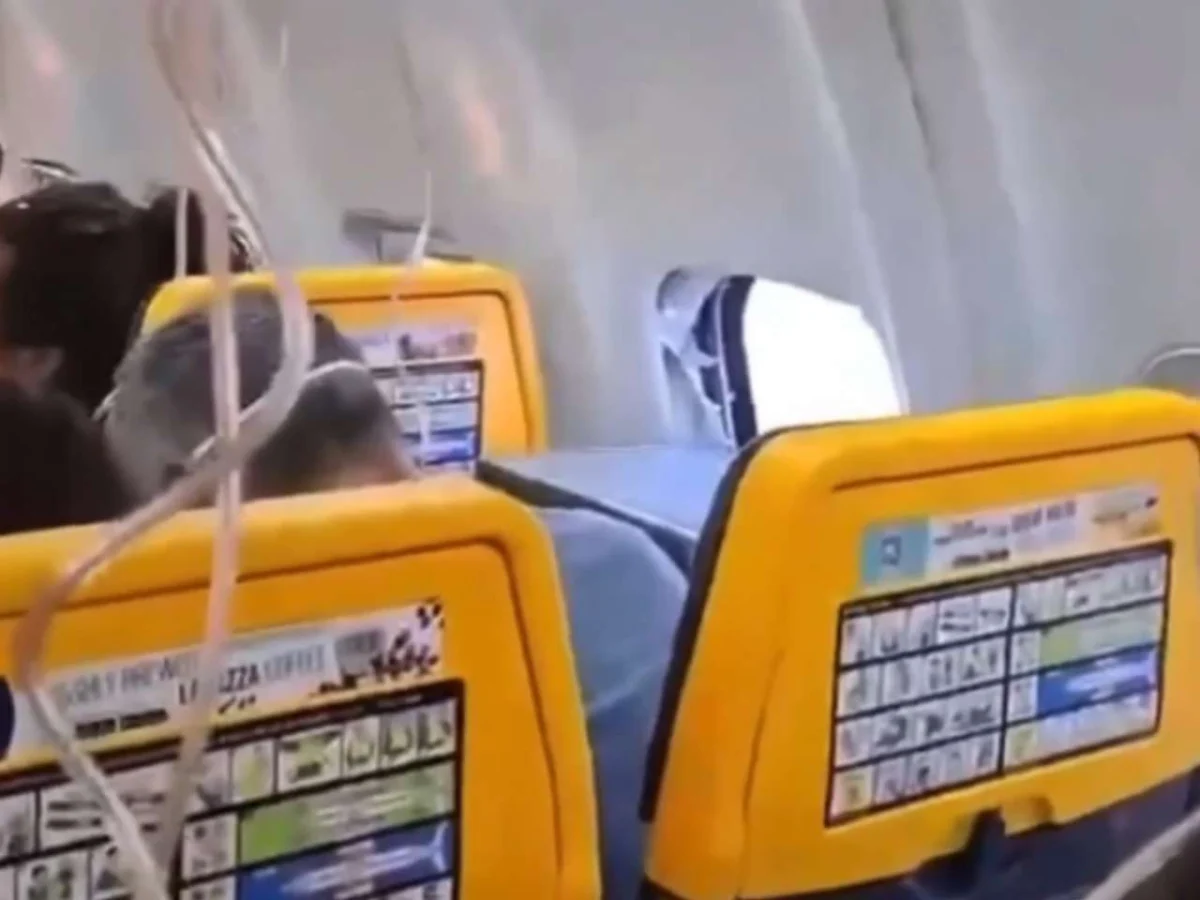
THESSALONIKI, Greece – July 11, 2026 – A harrowing incident unfolded aboard a Malta Air flight, operating for Ryanair, on Friday, July 10, when a passenger was partially pulled out of an aircraft after a window became dislodged shortly after take-off from Thessaloniki, Greece. The terrifying event, which saw the 61-year-old male passenger momentarily exposed to the extreme conditions of high altitude, forced the flight to make an emergency return to its departure airport. Quick-thinking fellow passengers are being hailed as heroes for their immediate actions, managing to pull the man back to safety inside the cabin.
The flight, FR1879, a Boeing 737-800 en route to Memmingen, Germany, was just beginning its ascent when the cabin experienced a sudden and violent decompression. Initial reports and witness accounts suggest a loud bang preceded the failure of a passenger window, leading to a dramatic breach of the aircraft’s pressurized environment. The incident has prompted an immediate and thorough investigation by international aviation authorities, focusing on both the structural integrity of the aircraft and the potential for an engine-related issue.
Main Facts of the Incident
The extraordinary event occurred on Friday, July 10, 2026, on a Malta Air flight (FR1879) operating under the Ryanair banner, shortly after departing from Thessaloniki International Airport "Makedonia" (SKG) in northern Greece. The destination was Memmingen Airport (FMM) in Bavaria, Germany.
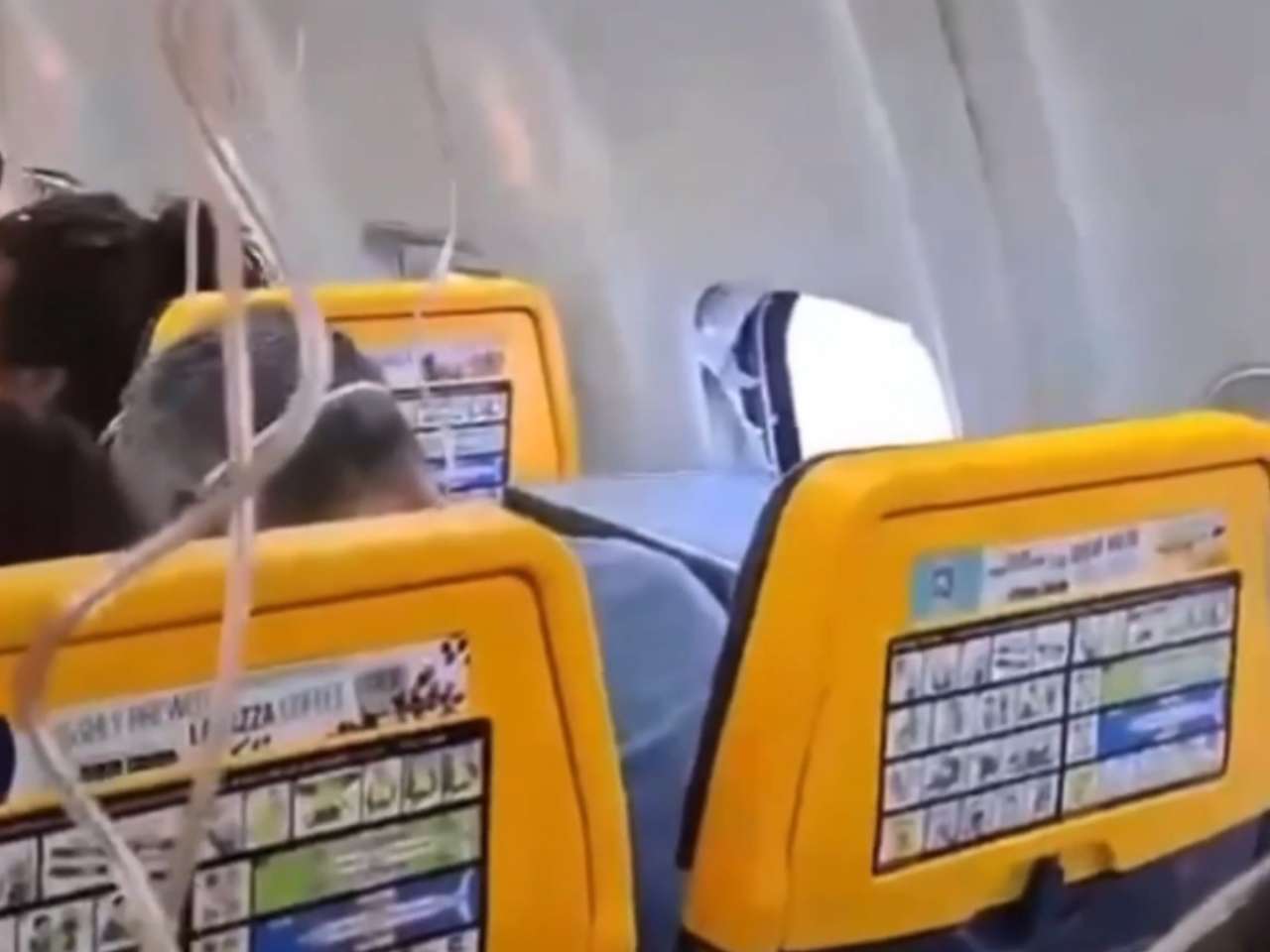
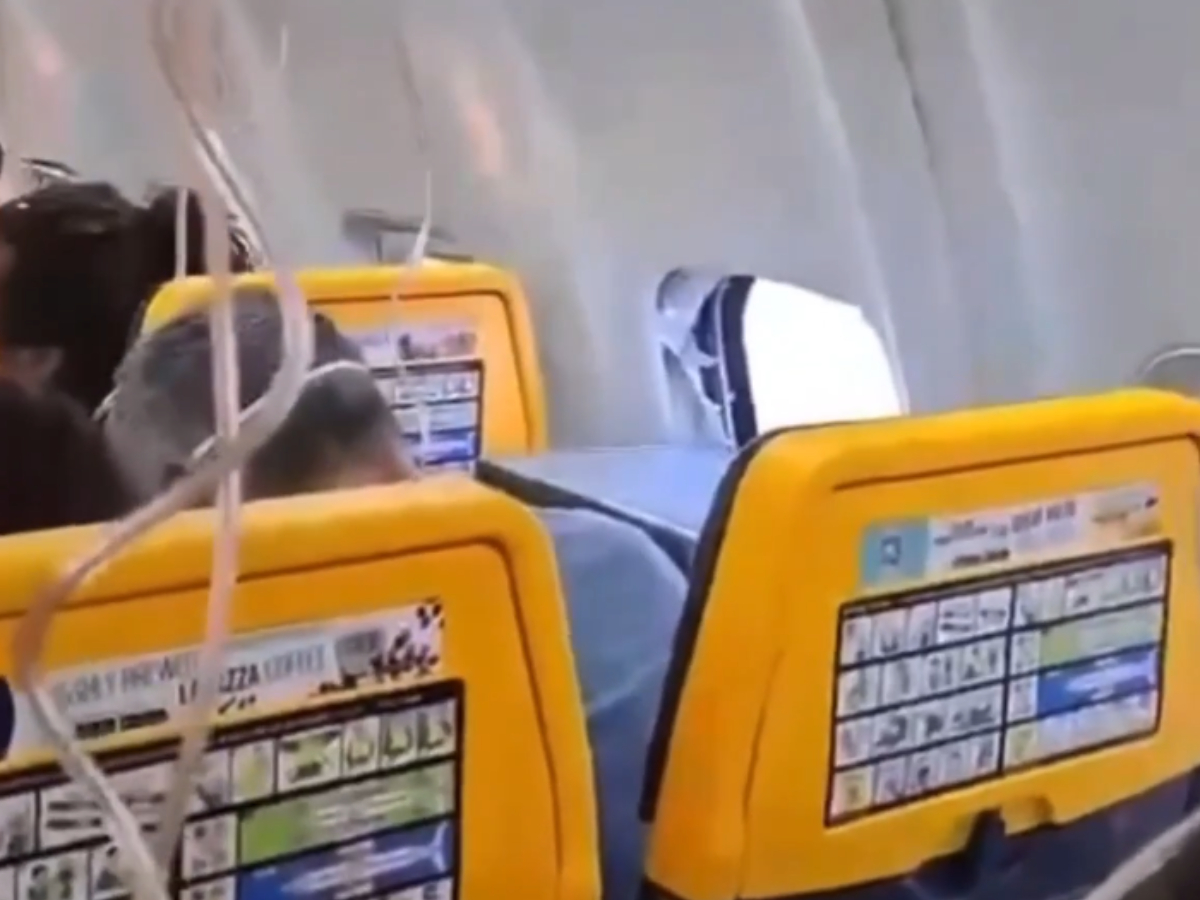
The tranquility of the early flight was shattered when, at an altitude exceeding 15,000 feet, a passenger window on the Boeing 737-800 aircraft reportedly failed. The sudden structural breach led to an explosive decompression within the cabin, a phenomenon characterized by a rapid equalization of pressure between the aircraft’s interior and the thin, cold air outside. This violent rush of air created a powerful suction force.
A 61-year-old male passenger, seated near the affected window, bore the brunt of this force. According to eyewitnesses, his head, neck, and shoulders were partially pulled out of the aircraft, leaving him dangerously exposed to the sub-zero temperatures and oxygen-depleted atmosphere outside. The sight of the man being drawn towards the open breach ignited panic among the 150-plus passengers on board.
In a remarkable display of human courage and instinct, several fellow passengers immediately reacted, grabbing hold of the man and exerting significant effort to pull him back into the safety of the cabin. Their swift and decisive intervention is credited with saving the man from what could have been a fatal incident.
)
Following the decompression and the successful retrieval of the passenger, oxygen masks automatically deployed from the ceiling, and the flight crew initiated an emergency descent. The pilots expertly maneuvered the distressed aircraft, bringing it down to a safer altitude of approximately 6,000 feet, where the ambient air pressure allowed for more stable conditions. The aircraft then made an emergency return to Thessaloniki, landing safely about an hour after its initial departure.
Upon landing, emergency services were on standby. The injured passenger received immediate medical attention for neck and shoulder injuries, along with friction burns consistent with the force he endured. While the physical injuries were significant, the psychological trauma for all involved, especially the passenger and those who aided him, is undoubtedly profound. The aircraft involved, a Boeing 737-800, entered service with Ryanair in 2008 and is now grounded pending a comprehensive investigation.
Chronology of Events
The unfolding of events on Friday, July 10, painted a dramatic picture of an ordinary flight turning into a fight for survival:
)
1. Routine Departure (Approx. 11:30 AM IST / 09:00 AM EEST):
- Ryanair flight FR1879, operated by Malta Air, a Boeing 737-800, commenced its scheduled journey from Thessaloniki International Airport "Makedonia" (SKG) to Memmingen Airport (FMM).
- Passengers, including the 61-year-old man, boarded the aircraft, anticipating a routine flight across Europe.
- The aircraft received clearance and proceeded with its take-off sequence, lifting off the runway without any apparent anomalies.
2. Ascent and Initial Cruise (Minutes after take-off):
- As is standard procedure, the Boeing 737-800 began its climb to its cruising altitude. Flight tracking data later confirmed that the aircraft ascended rapidly, reaching an altitude exceeding 15,000 feet.
- Most passengers had settled in, with some reportedly dozing off, lulled by the steady hum of the engines.
3. The Catastrophic Event (Approx. 15-20 minutes into flight):

- A sudden and extraordinarily loud bang resonated through the cabin. Witness Christina described it as "like a tire bursting, but very loud."
- Simultaneously, a passenger window reportedly dislodged or shattered, creating a gaping hole in the aircraft’s fuselage.
- The cabin immediately depressurized. Oxygen masks automatically deployed from the overhead compartments, dangling before the shocked passengers.
- The 61-year-old passenger, seated in close proximity to the compromised window, was instantly subjected to the powerful suction force. Eyewitnesses recounted with horror as his "whole head, neck, shoulders" were partially pulled out of the aircraft, leaving him dangling precariously against the extreme outside environment.
- Panic erupted. Christina vividly recalled "screams, shrieks, shouting" as passengers grappled with the sudden and life-threatening emergency.
4. Mid-Air Rescue and Emergency Descent (Immediately following decompression):
- Amidst the chaos, several courageous passengers seated nearby reacted without hesitation. They lunged towards the imperiled man, gripping him firmly and working together to pull him back inside the cabin against the formidable suction force. Their actions were critical in preventing a potentially fatal outcome.
- Almost simultaneously, the flight crew received immediate indications of the cabin pressure loss. The pilots, adhering to emergency protocols, initiated a rapid, controlled descent. The aircraft quickly dropped from over 15,000 feet to a safer altitude of around 6,000 feet, where cabin pressure could be more easily managed and the oxygen supply was less critical.
5. Emergency Return to Thessaloniki (Approx. 30-40 minutes after incident):
- Having stabilized the aircraft and assessed the situation, the flight crew declared an emergency and made the decision to return to Thessaloniki.
- The aircraft turned back towards its origin airport, maintaining the lower altitude for the remainder of the flight.
- Passengers, though still shaken, were instructed to remain calm and follow cabin crew instructions.
6. Safe Landing and Post-Incident Procedures (Approx. 1 hour after initial departure):
)
- The Boeing 737-800 landed safely back at Thessaloniki International Airport, where a full contingent of emergency services, including medical personnel and firefighters, was awaiting its arrival.
- The injured 61-year-old passenger was immediately attended to by paramedics and transported to a local hospital for treatment of neck and shoulder injuries, as well as friction burns.
- The remaining passengers disembarked and were escorted back to the terminal, where they received support and were later provided with a replacement aircraft to continue their journey to Memmingen.
- The incident aircraft was immediately taken out of service for a thorough inspection and investigation.
This detailed chronology highlights the rapid and dynamic nature of in-flight emergencies, underscoring both the critical importance of aircraft design and maintenance, and the invaluable human element of quick thinking and cooperation in moments of extreme peril.
Supporting Data and Context
The terrifying incident on Ryanair flight FR1879 is a stark reminder of the immense forces at play in high-altitude flight and the rare but critical failures that can occur. Understanding the physics of decompression and the structural integrity of modern aircraft windows provides crucial context for the severity of this event.
The Physics of Rapid Decompression:
Commercial aircraft typically cruise at altitudes between 30,000 and 40,000 feet, where the outside air pressure is significantly lower than the air pressure maintained inside the cabin. This pressure differential is essential for passenger comfort and safety, mimicking conditions found at much lower altitudes (usually around 6,000-8,000 feet).
)
When a cabin window or any part of the fuselage breaches, this pressure differential is violently equalized. Air rushes out of the cabin with explosive force, often accompanied by a loud bang. This rapid expulsion of air can cause:
- "Sucking Out" Effect: Anything unsecured or in close proximity to the breach can be pulled out of the aircraft due as air rushes from a high-pressure zone (cabin) to a low-pressure zone (outside). This is precisely what occurred with the passenger on FR1879.
- Sudden Drop in Temperature: The air at cruising altitude is extremely cold, often well below freezing. A rapid decompression instantly exposes the cabin to these frigid temperatures.
- Hypoxia: The sudden decrease in oxygen concentration in the cabin air can lead to hypoxia, a dangerous condition where the body is deprived of adequate oxygen. This is why oxygen masks immediately deploy, providing passengers with supplementary oxygen to prevent loss of consciousness and other severe physiological effects.
- Fogging: The sudden expansion of moist air can cause a dense fog to form inside the cabin.
- Structural Damage: The explosive force can cause secondary damage to internal structures and furnishings.
Aircraft Window Design and Safety:
Aircraft windows are not single panes of glass but sophisticated, multi-layered structures designed to withstand immense pressure differentials and provide multiple fail-safes. Typically, they consist of:
- Outer Pane: Bears the brunt of the pressure differential.
- Inner Pane: Acts as a fail-safe, capable of withstanding the full pressure differential if the outer pane fails. It also protects the outer pane from cabin damage.
- Scratch Pane (Interior): A thin plastic layer that prevents passengers from damaging the structural panes.
- Breather Hole: A small hole in the inner pane allows for pressure equalization between the inner and outer panes, preventing stress buildup.
Window failures are exceedingly rare due to these robust designs and rigorous manufacturing and maintenance standards. When they do occur, they are often attributed to:
)
- Foreign Object Damage (FOD): Debris, such as from an engine failure or bird strike, impacting the window.
- Fatigue Cracks: Microscopic cracks that propagate over time due to repeated pressurization cycles, eventually leading to failure.
- Manufacturing Defects: Rare instances of flaws introduced during production.
- Maintenance Errors: Incorrect installation or unnoticed damage during routine checks.
Historical Precedents and Lessons Learned:
While rare, incidents involving window failures or rapid decompression have occurred in aviation history, each contributing to enhanced safety protocols:
- British Airways Flight 5390 (1990): Perhaps one of the most famous incidents, where a cockpit window blew out at 17,000 feet, partially sucking the captain out of the aircraft. The co-pilot made an emergency landing while cabin crew held onto the captain’s legs for 20 minutes. The cause was incorrect bolts used during maintenance.
- Aloha Airlines Flight 243 (1988): An extreme case of catastrophic structural failure where a large section of the fuselage roof ripped off in flight due to metal fatigue. While not a window failure, it highlighted the dangers of aging aircraft and the importance of structural inspections.
- Southwest Airlines Flight 1380 (2018): An uncontained engine failure resulted in debris striking the fuselage and a passenger window. The window shattered, causing rapid decompression and tragically leading to a passenger being partially sucked out and fatally injured. The incident underscored the vulnerability of aircraft to engine debris.
The FR1879 incident shares parallels with the Southwest Airlines Flight 1380 event, particularly if the "right engine issue and cabin decompression" cited by the NTSB is confirmed to be the primary cause, suggesting engine debris may have initiated the window failure. These historical events serve as critical learning opportunities, leading to changes in aircraft design, maintenance procedures, and crew training, ultimately making air travel safer. The fact that the passenger survived on FR1879 is a testament to both the aircraft’s ability to withstand significant damage and the swift human intervention.
Official Responses and Investigations
The gravity of the incident on Ryanair flight FR1879 has triggered immediate responses from the airline, passengers, and international aviation safety bodies, all converging on a comprehensive investigation to determine the exact cause and prevent future occurrences.
)
Ryanair’s Official Statement:
Ryanair, through its operating subsidiary Malta Air, swiftly issued a statement confirming the incident. The airline acknowledged that flight FR1879 had returned to Thessaloniki shortly after take-off due to "a passenger window dislodged in-flight." Their statement emphasized that the aircraft landed safely, and one passenger received medical treatment on the ground. Ryanair also confirmed that a replacement aircraft was arranged to transport the remaining passengers to Memmingen, ensuring minimal disruption to their travel plans despite the terrifying ordeal. The airline affirmed its full cooperation with the investigating authorities, underscoring its commitment to safety as its top priority.
Passenger Accounts: The Human Perspective:
Eyewitness testimonies have provided a chilling, first-hand perspective on the mid-air scare. Christina, a passenger on the flight, recounted the harrowing moments to local radio, describing a "loud bang" that she likened to a tire bursting, but "very loud." She immediately understood the severity of the situation: "We knew straight away we lost pressure because we lost altitude." Her description of the ensuing panic – "Screams, shrieks, shouting" – painted a vivid picture of the terror that gripped the cabin.
Most poignantly, Christina detailed the precarious situation of the 61-year-old passenger. "His whole head, neck, shoulders were pulled out of the window," she stated, highlighting the sheer force of the decompression. She also lauded the quick actions of fellow passengers who "quickly grabbed him and pulled him back inside," acknowledging their bravery in a moment of extreme danger. These personal accounts are crucial, offering an invaluable human dimension to the technical details that will emerge from the official investigation.
)
Regulatory and Investigative Bodies:
The investigation into the FR1879 incident is a multi-national effort, reflecting the global nature of aviation.
-
Aircraft Accident and Incident Investigation Committee of the Republic of North Macedonia: This body has been designated as the lead investigating authority. While the incident occurred on a Greek flight originating from Greece, the nationality of the aircraft operator or the location of the incident (sometimes involving international airspace) can dictate which nation’s accident investigation board takes the lead. Their primary role is to conduct a thorough, impartial, and independent investigation into the cause of the accident or incident, identify contributing factors, and issue safety recommendations.
-
US National Transportation Safety Board (NTSB): The NTSB, a highly respected independent U.S. government investigative agency responsible for civil transportation accident investigation, confirmed it had been informed of the incident. Their involvement stems from the fact that the aircraft, a Boeing 737-800, is manufactured in the United States. The NTSB stated that the flight turned back due to "a right engine issue and cabin decompression." This initial assessment from a credible source offers a potential explanation for the sequence of events, suggesting that an engine malfunction might have preceded or contributed to the window failure. The NTSB has offered its full assistance to the lead investigators, leveraging its extensive expertise in aircraft accident analysis.
)
-
European Union Aviation Safety Agency (EASA): As the primary aviation safety regulator for the European Union, EASA will undoubtedly monitor the investigation closely. EASA sets and enforces safety standards for aircraft design, manufacturing, and maintenance across its member states. Any significant findings or safety recommendations from the investigation could lead to directives or airworthiness mandates from EASA, impacting similar aircraft types across Europe.
Focus of the Investigation:
The multi-agency investigation will meticulously examine several critical areas:
- Aircraft Maintenance Records: A detailed review of the Boeing 737-800’s maintenance history, including all scheduled checks, repairs, and inspections related to the fuselage, windows, and engines.
- Structural Integrity of the Window: Forensic analysis of the failed window and its frame to identify any signs of fatigue, manufacturing defects, incorrect installation, or external impact damage.
- Engine Performance and Integrity: Given the NTSB’s preliminary report of a "right engine issue," a thorough inspection of the engine will be paramount. Investigators will look for evidence of uncontained engine failure, foreign object ingestion, or any other malfunction that could have generated debris capable of striking the fuselage or window.
- Crew Actions and Procedures: Evaluation of the flight crew’s response to the emergency, their adherence to standard operating procedures for rapid decompression, and their communication with air traffic control.
- Environmental Factors: While less likely to be a primary cause, meteorological conditions and any potential external factors at the time of the incident will also be considered.
The findings from this comprehensive investigation will be vital for understanding why such a rare event occurred and for implementing any necessary safety enhancements to prevent similar incidents in the future.
)
Implications and Future Outlook
The mid-air emergency on Ryanair flight FR1879 carries significant implications, not only for the airline and its passengers but also for the broader aviation industry and the ongoing evolution of air travel safety. This near-catastrophe serves as a potent reminder of the inherent risks in aviation and the continuous effort required to mitigate them.
Passenger Safety Concerns and Public Perception:
While commercial air travel remains statistically one of the safest modes of transportation, incidents like the one on FR1879 inevitably heighten public anxiety. The image of a passenger being partially sucked out of an aircraft window is profoundly unsettling and can erode public confidence, at least temporarily. Airlines and regulators face the challenge of reassuring the flying public that such events are exceedingly rare and that robust safety measures are continually in place and being enhanced. Transparent communication throughout the investigation and a clear articulation of any resulting safety improvements will be crucial in restoring trust.
Industry Scrutiny and Maintenance Protocols:
This incident will undoubtedly lead to intensified scrutiny of maintenance practices, particularly concerning fuselage integrity, window installation, and engine inspections across the entire airline industry.
)
- Window Integrity Checks: Manufacturers and airlines may re-evaluate the frequency and methodology of inspections for cabin windows, looking for microscopic cracks or stress points that might go unnoticed during routine checks. Advanced non-destructive testing techniques could see wider adoption.
- Engine Maintenance and Monitoring: If the investigation confirms an engine issue as the root cause, there will be a renewed focus on engine inspection protocols, potentially leading to revised maintenance schedules, component life limits, or real-time engine monitoring enhancements to detect anomalies before they escalate.
- Aging Aircraft Fleets: The Boeing 737-800 involved entered service in 2008. While not an old aircraft by industry standards, the incident could prompt a broader review of specific components on mid-life aircraft to ensure they are not succumbing to fatigue.
Potential Recommendations and Regulatory Changes:
The findings of the investigation, led by the Aircraft Accident and Incident Investigation Committee of the Republic of North Macedonia with NTSB and EASA oversight, are expected to result in a series of safety recommendations. These recommendations could range from specific maintenance directives for Boeing 737-800 aircraft to broader changes in design standards for windows or engine cowlings. Regulators might issue Airworthiness Directives (ADs) mandating inspections or modifications across fleets, ensuring that lessons learned from this incident are applied universally. The goal is always to create a stronger, more resilient safety net.
Legal and Financial Ramifications:
While the immediate focus is on safety, there will likely be legal ramifications. The injured passenger may pursue claims for personal injury against the airline or relevant manufacturers. The grounding of the aircraft and any potential fleet-wide inspections could result in significant financial costs for Ryanair/Malta Air and potentially for Boeing if a design or manufacturing flaw is identified. Insurance companies will also be heavily involved in assessing damages and liabilities.
The Human Element: Bravery and Resilience:
Amidst the technical and regulatory aspects, the incident powerfully highlights the human element. The extraordinary bravery of the passengers who pulled their fellow traveler back from the brink of disaster underscores the resilience and innate human instinct to help in times of crisis. It also serves as a testament to the rigorous training of flight crews, whose swift and professional response prevented an even greater tragedy. This collective heroism will undoubtedly be remembered as a defining aspect of the FR1879 incident.
)
In conclusion, while the Ryanair flight FR1879 incident was a terrifying and highly unusual event, it will ultimately contribute to the continuous improvement of aviation safety. Every such incident, however rare, is meticulously analyzed, leading to advancements in aircraft design, maintenance practices, and operational procedures, reinforcing the commitment of the aviation industry to making air travel as safe as possible for millions of passengers worldwide. The full findings of the ongoing investigation will be critical in shaping the future trajectory of these safety enhancements.
