

Chandigarh, Punjab – Punjab is on the cusp of a significant political litmus test as its urban local body (ULB) elections, scheduled for May 26, transcend their routine administrative purpose. These polls, encompassing eight municipal corporations, 76 municipal councils, and 21 nagar panchayats, are widely regarded by political observers and parties alike as a crucial semi-final ahead of the 2027 Assembly elections. The stakes are particularly high for the ruling Aam Aadmi Party (AAP), which swept the 2022 state elections but now faces a resurgent opposition and internal challenges.
The Electoral Battleground: More Than Just Urban Wards
While technically classified as urban polls, the geographical and political footprint of these elections extends far beyond the traditional city limits, reaching deep into Punjab’s semi-rural heartland. Municipal councils and nagar panchayats are present in nearly every district, influencing close to 90 of the state’s 117 Assembly constituencies. This broad reach elevates their significance, transforming them into a barometer of public sentiment across diverse demographics.
With approximately 36.73 lakh eligible voters – constituting about 17.1% of Punjab’s total electorate of nearly 2.14 crore – these elections represent the first major gauge of public mood following the recent 2024 Lok Sabha polls. The results will not only determine local governance but also offer critical insights into the political momentum, organizational strength, and popular appeal of each major party as they strategize for the more consequential state elections three years away.
Chronology of Contention: The Road to May 26
The journey to these ULB elections has been fraught with political tensions and logistical challenges, setting a contentious backdrop for the polling day.
Announcement and Nomination Scrutiny:
The Punjab State Election Commission’s announcement of the civic body poll schedule initiated a frantic pace of candidate finalization across parties. Initially, a staggering 10,809 nomination papers were filed. However, the scrutiny process proved to be a significant flashpoint. A total of 713 nominations were rejected, while 2,393 candidates subsequently withdrew their candidacies. This left 7,623 candidates in the fray, with 79 candidates already elected unopposed, largely in areas where opposition was minimal or non-existent.
Nomination Rejection Controversy:
The rejection of nomination papers quickly escalated into one of the most prominent political flashpoints of the campaign. Opposition parties alleged foul play and political interference by the ruling AAP.
- Barnala Outcry: On Tuesday, anger over rejected nominations boiled over in Barnala, leading to a half-day bandh (strike). Protesters vociferously raised slogans against the AAP government after 11 nomination papers belonging to Opposition candidates were dismissed. This incident provided the Opposition with a ready-made campaign plank, allowing them to accuse the government of undermining democratic processes.
- Mansa Tensions: Similar scenes unfolded in Mansa on Monday, where protests erupted outside the Sub-Divisional Magistrate’s office amid fears of mass rejections. The situation became so tense that local AAP MLA Vijay Singla required police escort amidst intense sloganeering. Although no nomination papers were ultimately rejected in Mansa, the widespread apprehension underscored the political sensitivity of the scrutiny process. Babbi Danewalia, president of the Mansa Arhtiya Association, commented, "Ultimately, no nomination paper was rejected on scrutiny in Mansa, while in other districts it has happened," highlighting the perceived arbitrary nature of rejections elsewhere.
- Malout Protests: Malout also witnessed protest marches against the AAP government, further indicating widespread discontent over the nomination process.
Labor Unrest and Civic Disruption:
Adding to the AAP’s discomfort, a wave of labor unrest significantly disrupted civic life and presented a public relations nightmare for the ruling dispensation.
- Sanitation Workers’ Strike: From May 6 to May 21, members of the Safai Sewak Union (Sanitation Workers’ Union) staged a widespread strike, turning into a major embarrassment for the AAP. Garbage piled up across towns, sewer lines remained choked, and public health concerns mounted. In Nabha, sanitation workers even protested outside the residence of local MLA Gurdev Singh Dev Mann, throwing garbage after a heated argument with the legislator. The strike was finally postponed for 30 days following negotiations with the government, offering a much-needed reprieve for the AAP just days before polling.
- Civil Secretariat Employees’ Rally: On Friday, civil secretariat employees in Mohali held a massive protest rally, pledging not to vote for the AAP. Their grievances, often related to pay scales, promotions, and old pension scheme demands, added another layer of organized opposition to the government.
Internal Dissent within AAP:
Beyond external challenges, the AAP found itself grappling with significant internal dissent, primarily concerning ticket distribution.
- Bathinda Dissatisfaction: In the Bathinda Municipal Corporation, local MLA Jagroop Singh Gill publicly voiced his displeasure over candidate selection. The discontent escalated with AAP trade wing chairman Tarsem Garg resigning from the party. The core allegation from disgruntled party workers was that "founder workers," who had built the party from its grassroots, were ignored in favor of leaders who had recently defected from the Congress.
- Ferozepur Allegations: Similar resentment simmered in Ferozepur district, where party insiders alleged that "loyal" workers were sidelined in the Mamdot and Zira municipal councils, with tickets reportedly given to candidates perceived as close to political strongman Gurpreet Singh Sekhon.
- High-Level Spat: This internal discontent reached the party leadership during a meeting in Ludhiana, where state Agriculture Minister Gurmeet Singh Khudian reportedly had a verbal spat with senior AAP leader Manish Sisodia over ticket distribution in the Bathinda Municipal Corporation, highlighting the deep fissures within the party over candidate selection.
AAP’s Uphill Task: Navigating Anti-Incumbency and Perception
For Chief Minister Bhagwant Mann and the AAP leadership, the stakes in these ULB elections are exceptionally high. Despite their sweeping victory in the 2022 Assembly elections, local body contests in Punjab have historically followed a different trajectory, often revolving around intricate local equations, deep-seated factionalism, and the specific influence of individual candidates rather than state-level popularity alone. This dynamic poses a unique challenge for AAP, which primarily rode a wave of anti-establishment sentiment and promises of change in the Assembly polls.
Historical Precedent and the Ruling Party Advantage:
Historically, local body polls in Punjab have shown a strong propensity to favor the ruling party. In the previous February 2021 polls, the then-ruling Congress secured a clear majority in all eight municipal corporations and 77 out of 109 municipal councils. This advantage is often attributed to the ruling party’s access to state resources, influence over local administration, and the ability to project an image of developmental efficiency. After AAP’s 2022 Assembly victory, many councils saw councillors switching allegiance to the newly elected ruling party, resulting in a de facto AAP majority in several bodies. In other corporations and councils, AAP and Opposition-led bodies have seen frequent tussles over developmental initiatives, often hindering progress and creating friction at the local level.
Now, the challenge for AAP extends beyond mere electoral performance. It encompasses critical perception management amidst escalating criticism from Opposition parties, various unions, and even significant sections within its own organizational structure. The party must demonstrate effective governance at the local level, especially after delays in holding these elections, which further fueled Opposition accusations of the government’s fear of anti-incumbency. The terms of many municipal corporations, councils, and nagar panchayats had expired in February, prompting repeated accusations from the Opposition that the government deliberately postponed polls, wary of a potential backlash following the Lok Sabha elections.
Adding to the AAP’s woes, a video went viral in which Shutrana MLA Kulwant Singh Bazigar was purportedly heard saying, "We will win for sure and if there will be any vote margin issue in a few wards, we will sort that by closing the gates… We learnt this from our opponents only." This statement, widely interpreted as a threat of booth capturing, led to separate complaints being filed by the Congress, SAD, and BJP with the State Election Commission. Bazigar later claimed he had been "misunderstood," asserting he meant he would "not let any Opposition parties’ leaders create nuisance" at polling booths. However, the damage to the party’s image was already done.
Opposition’s Counter-Offensive: Leveraging Discontent
The Opposition parties have found fertile ground in the unfolding controversies and public discontent to launch a concerted counter-offensive against the Mann government.
BJP’s Democratic Allegations:
The Punjab BJP, despite its relatively limited organizational base in the state, is viewing these elections with utmost seriousness. Punjab BJP president Sunil Jakhar has been at the forefront, accusing the AAP government of "undermining democracy" by allegedly orchestrating the rejection of Opposition candidates’ nomination papers, particularly in areas where the BJP perceives itself as electorally competitive. Jakhar announced the BJP’s intention to move court against such rejections, citing instances where "without any concrete grounds," nomination papers were dismissed. According to the BJP, 21 of its candidates’ papers were rejected in Batala, 10 in Moga, 11 in Barnala, and three in Dhuri, among other places. The party has deployed its entire state leadership, including Union Minister of State for Railways and Food Processing Ravneet Singh Bittu, signaling its commitment to these polls as a foundational step for future growth in Punjab.
SAD’s "Punjab vs. Delhi" Narrative:
For the Sukhbir Singh Badal-led Shiromani Akali Dal (SAD), these elections are nothing short of critical. The party is desperately attempting to regain lost political ground after consecutive electoral setbacks, including a dismal performance in the 2022 Assembly and 2024 Lok Sabha elections. Badal has emerged as the SAD’s principal campaign face, aggressively promoting the theme of "Punjab versus Delhi" politics. He targets both the AAP and the BJP as "Delhi-controlled parties," aiming to appeal to regional sentiments and Punjabi identity. Badal has also consistently alleged that SAD leaders are being falsely implicated in cases, citing the arrest of the party’s Faridkot district president as an example of political vendetta. This narrative aims to consolidate traditional Akali voters and paint the current government as externally controlled.
Congress’s Rebuilding Efforts:
The principal Opposition Congress, still battling internal factionalism at multiple levels, is also attempting to capitalize on local anti-incumbency, widespread labor unrest, and general civic dissatisfaction to rebuild its urban support base. While the party’s state leadership struggles with unity, local Congress leaders are focusing on hyperlocal issues, criticizing the AAP’s perceived failures in municipal governance, waste management, and addressing the grievances of sanitation workers and other civic employees. They aim to tap into the disillusionment stemming from the recent strikes and alleged administrative apathy.
Official Responses and Campaign Rhetoric
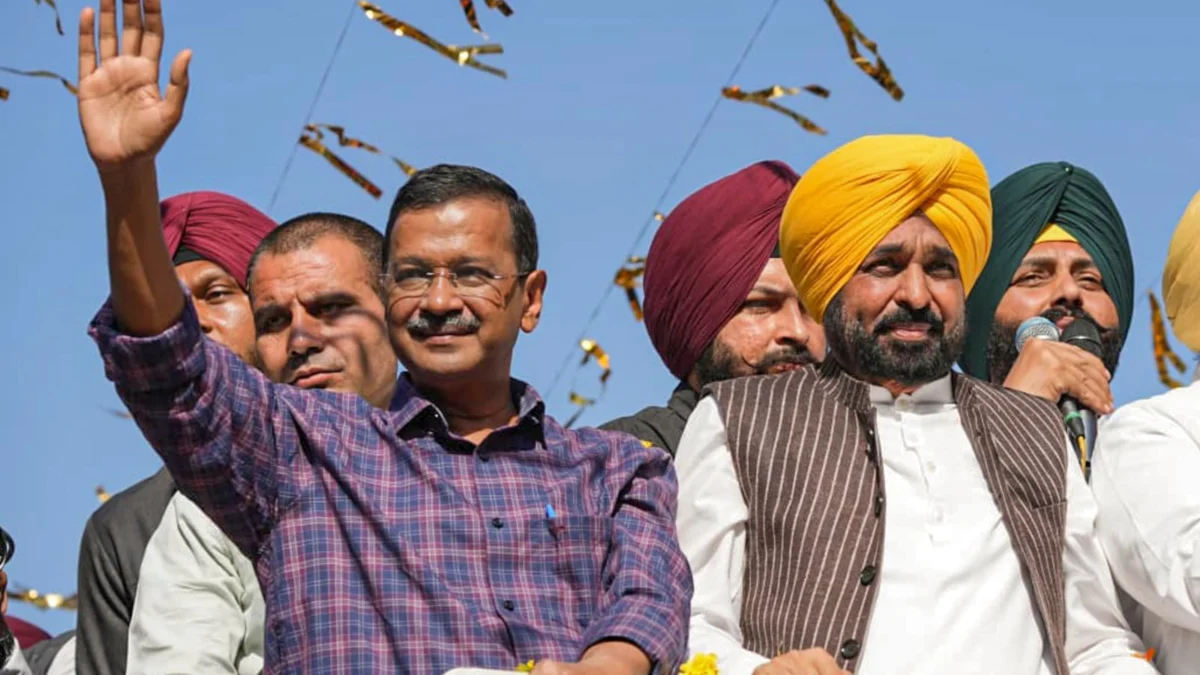
Despite the myriad challenges and the vociferous Opposition, the AAP continues to project an image of confidence. Chief Minister Bhagwant Mann and party national convener Arvind Kejriwal have campaigned aggressively across the state, highlighting what they term as the government’s significant achievements. Their campaign rhetoric centers on:
- Welfare Schemes: Emphasizing initiatives like free electricity (300 units per household), which has been a flagship promise.
- Anti-Corruption Measures: Touting actions taken against corruption, portraying the AAP as a clean government.
- Infrastructure Projects: Showcasing ongoing and completed development works aimed at improving urban infrastructure.
- Development Initiatives: General claims of progress and good governance undertaken over the last two years of their tenure.
Arvind Kejriwal, in particular, has gone a step further, claiming that there are "pro-incumbency" sentiments for the party, attributing any perceived discontent to a biased media or a desperate Opposition. This counter-narrative aims to reassure the party’s base and project an image of strong, effective governance.
Implications: A Referendum on Governance and Momentum
The eight municipal corporations going to polls are Bathinda, Moga, Abohar, Barnala, Batala, Pathankot, Kapurthala, and Hoshiarpur. Polling will take place through traditional ballot papers, with the counting of votes scheduled for May 29.
Beneath the veneer of campaign rhetoric and official reassurances, the May 26 polls have effectively transformed into a comprehensive "referendum" on the AAP dispensation’s governance, organizational efficacy, and political momentum. The outcomes will not only shape the urban landscape of Punjab for the next few years but, more importantly, will provide crucial insights into the political landscape heading into the 2027 Assembly elections.
A strong performance by the AAP would reinforce its claims of public support, validate its governance model, and provide a much-needed morale boost after the Lok Sabha results. Conversely, a significant setback could embolden the Opposition, expose the fragility of AAP’s organizational structure at the grassroots, and signal a broader anti-incumbency wave, forcing the ruling party to recalibrate its strategies significantly. For the Opposition, these elections are an opportunity to demonstrate their collective ability to challenge the AAP, build local networks, and lay the groundwork for a more unified front in 2027. The results will be keenly watched, not just in Punjab, but across the national political spectrum, as a bellwether for regional political dynamics.
