

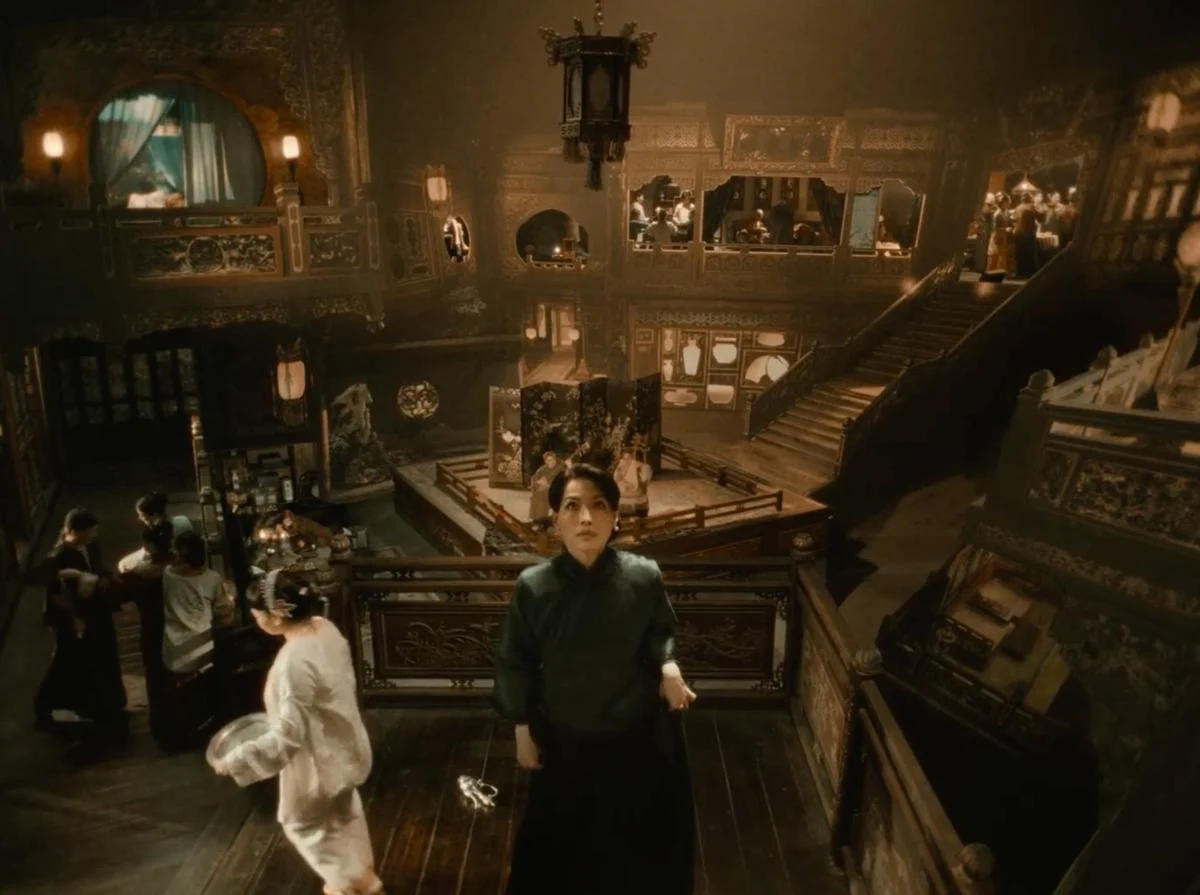
The anticipation surrounding a highly-awaited film can be a powerful, almost consuming force for cinephiles. For years, director Bi Gan’s "Resurrection" has occupied this rarefied space, a cinematic phantom that promised to redefine the boundaries of filmmaking. Its journey from a buzzed-about premiere at the 2025 Cannes Film Festival, where it garnered the Prix Spécial, to its recent arrival on Prime Video has been a testament to its elusive allure and the fervent desire of audiences to witness its enigmatic brilliance. This article delves into the multifaceted aspects of "Resurrection," exploring its critical reception, thematic depth, technical mastery, and its profound implications for the future of cinema.
The Long Road to Revelation: From Cannes Buzz to Streaming Debut
"Resurrection" first captured the global cinematic consciousness at the 2025 Cannes Film Festival. Emerging from competition, the film immediately sparked a vigorous debate among critics, who grappled with its audacious vision. Some hailed it as the harbinger of cinema’s next evolutionary leap, while others described it as a beautifully orchestrated descent into delirium. This duality of interpretation underscored the film’s profound impact and its refusal to be easily categorized.
For many, myself included, the wait for "Resurrection" became an almost personal quest. The announcement of its Cannes premiere ignited a fervent hope that it would soon grace Indian film festivals, offering a tangible connection to this much-anticipated work. However, a series of near misses and scheduling conflicts meant that opportunities to witness the film on the big screen eluded those who yearned for it. This prolonged period of anticipation, marked by a persistent optimism that surely it would surface somewhere, eventually gave way to a more accessible, albeit less glamorous, release on Prime Video. The streaming debut, nearly a year after its celebrated festival bow, finally brought this cinematic yearning to a welcome conclusion, allowing audiences to finally engage with Bi Gan’s singular artistic statement.

Bi Gan’s Cinematic Legacy: A Master of Dreams and Time
The extensive anticipation surrounding "Resurrection" is deeply rooted in the established reputation of its director, Bi Gan. At just thirty-six years old, the filmmaker from China’s Guizhou province has carved a distinctive niche in contemporary world cinema. His debut, "Kaili Blues" (2015), announced his arrival with a mesmerizing blend of memory and geography, famously encapsulated in a single, dreamlike forty-minute tracking shot.
Three years later, "Long Day’s Journey Into Night" (2018) expanded upon these ambitious explorations, pushing the boundaries of formal experimentation. The film’s now-legendary hour-long stereoscopic sequence dissolved the distinctions between recollection, fantasy, and physical reality with an audacious fluidity that drew comparisons to cinematic titans like Andrei Tarkovsky and Hou Hsiao-hsien. "Resurrection" represents the logical evolution of these thematic and stylistic preoccupations, imagining the very act of dreaming as cinema’s most fundamental biological function.
Thematic Core: A Future Without Dreams and the Price of Immortality
"Resurrection" presents a future where humanity has achieved a form of immortality by consciously abandoning dreams altogether. This trade-off, a surrender of imagination for indefinite existence, has created a seemingly perfected civilization. However, a clandestine group known as "Deliriants" continues to dream, despite understanding that each nocturnal journey consumes their remaining lifespan. These dreamers become hunted figures, their continued existence a threat to the established order.

The film centers on one such Deliriant, portrayed by Jackson Yee. Introduced under layers of elaborate German Expressionist monster prosthetics, Yee’s character carries an entire projector embedded within his body, a literal embodiment of his cinematic existence. He is pursued by a mysterious woman, played by the captivating Shu Qi, tasked with retrieving him from his dream state. Yet, as their paths intertwine, obligation gives way to compassion. Shu Qi’s character discovers that allowing him one final, profound journey through memory is the only true act of mercy available. This premise, while seemingly daunting in its synopsis, is masterfully unveiled by Bi Gan with a delicate touch before he plunges into abstract cinematic territories.
A Symphony of the Senses: Six Movements, Six Eras of Cinema
The narrative structure of "Resurrection" is divided into six distinct movements, each organized around the six recognized senses within Buddhist philosophy: sight, hearing, taste, smell, touch, and finally, mind. This intricate framework allows Bi Gan to explore the multifaceted nature of human experience while simultaneously engaging with the history of cinema. Each chapter adopts the cinematic vocabulary of a different historical period, mirroring the Deliriant’s journey through multiple incarnations across a century of imagined lives.
This ambitious conceit could easily have devolved into a mere cinephilic scavenger hunt. However, Bi Gan, in collaboration with cinematographer Dong Jingsong, production designers Liu Qiang and Tu Nan, editor Qin Yanan, and the French electronic group M83, crafts a far more beguiling and immersive experience. The film consistently defies easy categorization or prediction. Just as an audience believes they have deciphered the mechanics behind a particular sequence, Bi Gan audaciously discards the blueprint and embarks on a new impossibility. Watching "Resurrection" becomes an exercise in surrendering to Bi Gan’s unique cinematic language, a language that suggests he possesses a profound understanding of filmmaking that remains largely inaccessible to the wider industry.

The Dawn of Cinema: A Homage to the Silent Era
The opening movement of "Resurrection" is a breathtaking homage to silent cinema, executed with astonishing fidelity. The Deliriant, embodying the spirit of early filmmakers, lurks within an opium den-like, forgotten studio backlot. Intertitles replace spoken dialogue, paper-cut silhouettes drift through deliberately artificial sets, and stop-motion transitions disrupt physical continuity. Reverse photography bends movement into uncanny rhythms, while exaggerated painted shadows evoke the indelible visual style of "The Cabinet of Dr. Caligari."
Every visible cinematic trick, from stagehands casually entering the frame to painted backdrops gliding into place, serves as a powerful reminder of cinema’s inherent nature as an elaborate game of confidence. Bi Gan channels the spirit of Georges Méliès, celebrating the audience’s capacity to admire the mechanics of filmmaking as much as the magic it conjures. This fascination with material filmmaking also establishes the film’s emotional core: the Deliriant’s very existence is intertwined with the survival of cinema. Each reel projected through the device embedded in his body extends his fragment of existence while simultaneously depleting his remaining life, transforming film stock into both a lifeline and a countdown clock. This potent metaphor, imbued with a palpable melancholy in an era grappling with the decline of theatrical exhibition and shifting audience attention spans, is handled by Bi Gan with a remarkable absence of nostalgic sermonizing.
Echoes of War and Mystery: The Power of Sound
The first dream abruptly transitions from the handcrafted world of silent film, depositing the Deliriant into a wartime espionage narrative focused on the sense of hearing. A bombed railway station vanishes beneath a dense, blue-grey fog. Bi Gan widens the aspect ratio, abandons silent formalism, reintroduces spoken dialogue, and saturates the soundscape with mechanical echoes, distant explosions, and the chilling resonance of tinnitus. Jackson Yee sheds his grotesque prosthetics, embarking on one of several distinct physical performances. This sequence masterfully evokes a collision between postwar noir and espionage melodrama, its emotional engine remaining strikingly intimate amidst the chaos.

Spiritual Austerity and the Weight of Memory: The Taste of Bitterness
The second dream contracts both its scale and its tempo. The Deliriant reappears as a former monk tasked with escorting looters through an abandoned Buddhist monastery, only to find himself inadvertently stranded overnight. The sense of taste governs this chapter, manifested through the monk’s relentless toothache, the eventual extraction of which releases the "Spirit of Bitterness" in the form of his deceased father. Dong Jingsong drains the image into an icy monochrome, blanketing the monastery in an oppressive whiteness that channels the spiritual austerity reminiscent of Béla Tarr’s work. The sound design becomes remarkably sparse, reducing entire stretches to the crunch of footsteps on snow, the distant howl of wind, and the grinding discomfort of the monk’s aching jaw. By allowing the extracted tooth to summon the image of his father, Bi Gan ingeniously transforms physical suffering into a potent mechanism through which memory is resurrected.
The Art of Deception and the Fragility of Belief: The Scent of Illusion
The third dream pivots towards the sense of smell, offering a chapter that is simultaneously the film’s warmest and most crushing. Bi Gan delves into the grubby professionalism of a small-time con artist. Yee returns as Jia, a hustler who enlists an orphaned girl into an elaborate confidence trick. Their scheme involves identifying playing cards through scent to convince a grieving crime boss that the girl possesses supernatural abilities. The premise echoes classic caper cinema, recalling the melancholy street wisdom of Peter Bogdanovich’s "Paper Moon," filtered through the fatalism of Chinese gangster melodrama.
The orphan girl relentlessly searches for the meaning behind a riddle left by her absent father on a banknote, while the aging mob boss desperately seeks to recover the contents of a letter destroyed in the fire that claimed his estranged daughter. Dong Jingsong photographs these spaces with a richer color saturation than in earlier chapters, and M83’s score softens, featuring soothing piano motifs and restrained electronic textures that coexist with prolonged stretches of diegetic silence. Having long been enchanted by cinema’s ability to manufacture belief through sleight of hand, Bi Gan here redirects that fascination towards the psychology of spectatorship, exploring how audiences are drawn into the illusion.

A Vampire’s Kiss and the Dawn of a New Millennium: The Power of Touch and Mind
The fourth and final dream unfolds on New Year’s Eve 1999, set within a rain-lashed port city. The docks and back alleys glow beneath an ocean of saturated crimson, culminating in one of the most breathtaking single-take sequences committed to digital cinema in recent memory. Yee returns as Apollo, an impulsive young hoodlum whose greatest source of embarrassment is his lack of romantic experience. An aimless evening introduces him to Tai Zhaomei, portrayed by Li Gengxi with an intoxicating blend of melancholy and playful mystery. Tai’s dependence on a local crime lord is revealed to be profoundly literal: she is a vampire kept alive by the blood he supplies in exchange for ownership of the soil from her grave.
Despite its extraordinary logistical complexity, the camera moves with remarkable emotional intelligence. It abandms the rigid choreography that has come to define many digitally stitched "prestige" long takes, opting instead for a curious and genuinely improvisational flow. The camera slips alongside Apollo, wanders away from him, lingers on strangers, momentarily borrows his perspective, glides through packed karaoke rooms erupting into gunfire, drifts across warehouses and deserted docks, and gently boards a boat as dawn begins to dissolve the darkness. Every creative department operates with breathtaking precision: the constantly shifting choreography, the hidden lighting cues, and the production design that transforms wet asphalt into a canvas for fractured neon reflections. M83’s euphoric score steadily gathers momentum, mirroring the time-lapse photography that carries the night towards the first sunrise of the new millennium. When Apollo offers Tai his own blood before they finally kiss on the departing boat, the chapter locates romance within an act of voluntary sacrifice, an act inseparable from Bi Gan’s larger conviction that cinema itself survives because generation after generation willingly gives a part of itself to those who come after.
Supporting Data: The Technical and Artistic Prowess
The success of "Resurrection" hinges not only on its thematic depth but also on its exceptional technical and artistic execution. The film is a testament to the collaborative spirit of filmmaking, with each department contributing to the creation of its immersive and multifaceted world.

- Cinematography: Dong Jingsong’s work is nothing short of revelatory. He navigates the shifting cinematic languages of each era with masterful precision, creating distinct visual identities for every segment of the Deliriant’s journey. From the stark, artificial beauty of the silent era to the saturated, moody hues of the final dream, Jingsong’s lens captures both the grandeur and the intimacy of Bi Gan’s vision.
- Production Design: Liu Qiang and Tu Nan’s production design is crucial in establishing the authenticity of each cinematic epoch. Their meticulously crafted sets, whether a decaying studio backlot or a rain-swept port city, serve as both tangible spaces and dreamlike canvases, seamlessly integrating the film’s thematic concerns with its visual storytelling.
- Editing: Qin Yanan’s editing is vital in weaving together the disparate threads of "Resurrection." The transitions between dream sequences, the shifts in cinematic style, and the pacing of the narrative all owe a significant debt to Yanan’s skillful hand in maintaining coherence and emotional resonance.
- Music and Sound Design: The French electronic group M83’s score is an integral component of the film’s emotional landscape. Their music, ranging from ethereal soundscapes to driving electronic beats, enhances the dreamlike atmosphere and underscores the film’s thematic explorations. The sound design, a critical element in the second movement, further immerses the audience in the Deliriant’s sensory experiences.
Official Responses and Critical Acclaim
The critical reception of "Resurrection" has been overwhelmingly positive, with many recognizing it as a landmark achievement in contemporary cinema. The Prix Spécial at Cannes was a clear indicator of its artistic merit and its ability to resonate with a discerning international jury. Reviews consistently praised Bi Gan’s audacious vision, his command of cinematic language, and his profound exploration of themes such as memory, dreaming, and the enduring power of film.
Critics highlighted the film’s innovative structure, its visual splendor, and the compelling performances of its lead actors, particularly Jackson Yee and Shu Qi. The film’s ability to seamlessly blend diverse cinematic styles and historical references without sacrificing emotional impact was a recurring point of praise. While some acknowledged its challenging nature, the consensus pointed towards a film that rewards patient viewing and intellectual engagement.
Implications for the Future of Cinema
"Resurrection" arrives at a pivotal moment for the film industry, a time when questions about cinema’s relevance and its future are constantly being debated. Bi Gan’s film offers a powerful and exhilarating argument for its immortality. By imagining cinema as a living ouroboros, a symbol of self-consumption and perpetual reinvention, he suggests that the medium’s survival lies not in rigid preservation but in its capacity for endless adaptation and self-renewal.

The film challenges the notion of authorship as a singular creative act, proposing instead an accumulation of everything the medium has already experienced. "Resurrection" galvanizes the feeling of witnessing film history continuously digest itself to discover a new future. This conviction, born from a deep and abiding love for cinema, is what sets Bi Gan apart and positions "Resurrection" as a film that not only entertains but also profoundly shapes our understanding of what cinema can be. In an era where films often seem preoccupied with their own mortality, Bi Gan’s masterpiece makes an exhilarating case for its enduring vitality and its boundless potential for reinvention. "Resurrection" is not merely a film; it is an affirmation of cinema’s soul, a testament to its capacity to dream, to remember, and to ultimately, endure.
