

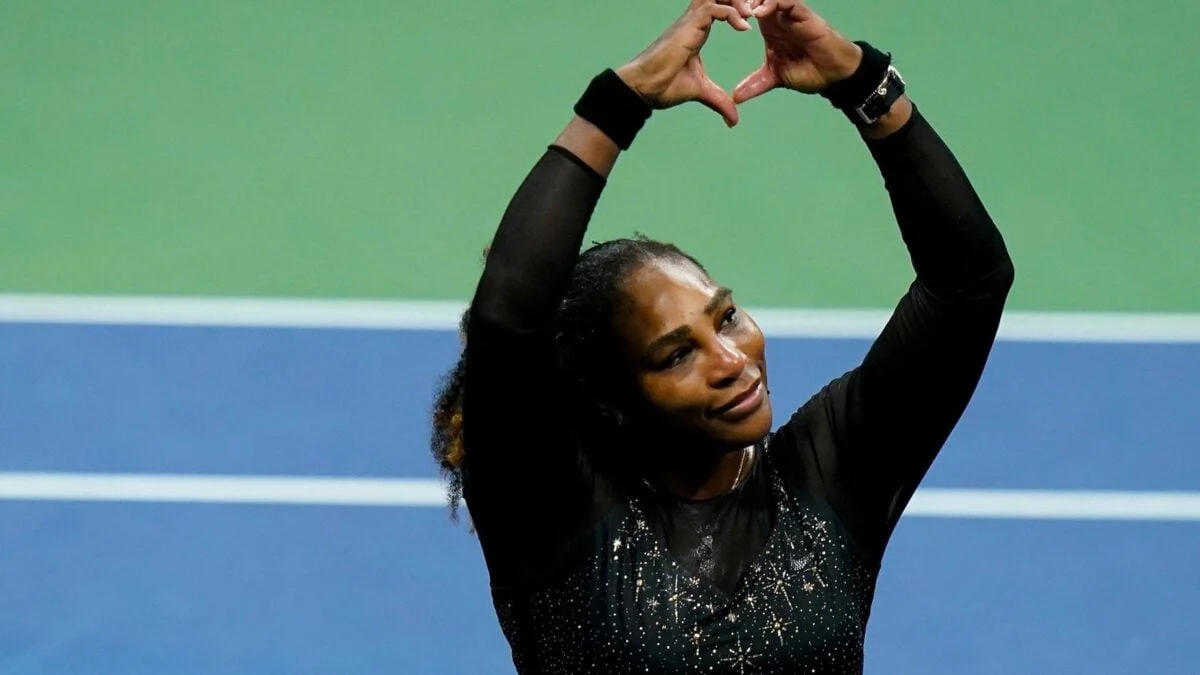
New Delhi, India – June 1, 2026 – In a move that has sent ripples of excitement and disbelief throughout the global sports community, 23-time Grand Slam champion Serena Williams has officially announced her return to competitive tennis at the age of 44. The legendary athlete is slated to compete in the women’s doubles event at the prestigious Queen’s Club Championship in London, marking her first professional appearance since her emotional farewell at the 2022 US Open. Her unexpected comeback is poised to captivate audiences and reignite debates about longevity, ambition, and the enduring power of a true icon.
Williams, a trailblazer who has transcended the sport of tennis to become a global cultural phenomenon, confirmed her participation via a wildcard entry for the tournament, which commences on June 8. While her doubles partner was initially unconfirmed, reports swiftly indicated a compelling pairing with Canadian teenager Victoria Mboko, a 19-year-old rising star currently ranked world No. 9 in singles. This intergenerational partnership adds another layer of intrigue to Williams’ highly anticipated return, promising a blend of unparalleled experience and burgeoning talent on the hallowed grass courts of Queen’s Club.
"Queen’s Club feels like the perfect place to begin this next chapter," Williams stated in an official release that accompanied her social media teasers. "Grass has given me some of the most meaningful moments of my career, and I am excited to be back competing on one of the sport’s most iconic stages." Her words encapsulate a renewed sense of purpose and an undeniable passion for the game that many believed she had left behind for good.
A Grand Return to the Grass Courts
Serena Williams’ decision to re-enter the professional tennis arena at 44 is nothing short of extraordinary. Her last competitive match was at the 2022 US Open, where she bid an emotional adieu, describing her departure as an "evolution" away from the sport that had defined nearly three decades of her life. Her return to the WTA 500 event in London will mark her first appearance on a tennis court in a staggering 196 weeks, a testament to her enduring competitive spirit and perhaps, an unfinished symphony.
The Queen’s Club Championship, renowned as a key warm-up event for Wimbledon, provides an ideal setting for Williams’ comeback. Its grass courts are intimately familiar to her, having been the stage for seven of her record 23 Grand Slam singles titles at the All England Club. This strategic choice suggests a thoughtful approach to her re-entry, opting for a surface where her powerful serve and aggressive baseline game have historically flourished.
The Unexpected Announcement
The announcement itself was preceded by a series of subtle but significant indicators that had kept the tennis world on tenterhooks for months. Speculation initially began circulating late last year when Williams’ name mysteriously appeared on the list of players enrolled in the sport’s rigorous anti-doping testing pool. While she initially dismissed these suggestions as mere administrative formalities, the seeds of doubt were sown.
The intensity of the rumours heightened considerably in February when her name reappeared on the International Tennis Integrity Agency (ITIA)’s list of reinstated players. This official listing, typically reserved for athletes returning to competition after a hiatus, provided concrete evidence that a comeback was more than just a distant possibility. The tennis media and fan base, accustomed to Williams’ flair for the dramatic, began to anticipate a significant announcement.
Her official confirmation on Monday was delivered in classic Serena style. A clip posted on social media showed her confidently striding onto a tennis court, accompanied by the intriguing caption, "Guess everybody heard the news," followed by another message: "Good news travels fast." This playful yet definitive reveal immediately went viral, confirming what many had hoped for but few dared to believe.
A Strategic Partnership: Williams and Mboko
The reported pairing with Canadian teenager Victoria Mboko adds a fascinating dimension to Williams’ return. At just 19 years old, Mboko represents the new guard of women’s tennis, a highly-touted prospect with a world No. 9 ranking in singles that underscores her immense potential. This partnership is not merely a practical choice for a doubles team but a symbolic passing of the torch, or perhaps, a shared journey across generations.
For Mboko, the opportunity to share a court with Serena Williams is invaluable. It offers an unparalleled learning experience, exposing her to the strategic acumen, mental fortitude, and sheer presence of one of the greatest athletes of all time. The spotlight that Williams brings will also undeniably shine on Mboko, offering her unprecedented media exposure and a chance to test her skills alongside a legend. For Williams, playing with a dynamic young talent like Mboko could inject fresh energy and a different perspective into her game, potentially mitigating some of the physical demands of singles play by focusing on doubles.
The Road Back: A Timeline of Speculation and Preparation
Serena Williams’ journey back to the professional circuit has been a gradual unfolding, marked by carefully orchestrated hints and official acknowledgments that built anticipation over months. Understanding this chronology is crucial to appreciating the magnitude of her decision.
The "Evolution" and Initial Retirement
In August 2022, Serena Williams announced her "evolution" away from tennis in a poignant essay for Vogue magazine. She clarified that it wasn’t a retirement in the traditional sense but a shift in focus towards expanding her family and business ventures. Her final tournament was the US Open, where she delivered vintage performances, defeating Danka Kovinić and then second seed Anett Kontaveit, before ultimately falling to Ajla Tomljanović in a thrilling three-set encounter. The emotional scenes at Arthur Ashe Stadium were widely believed to be the definitive end of her illustrious career, a fitting farewell after 27 years on tour.
Whispers from the Anti-Doping Pool
The first flicker of a potential comeback emerged subtly in late 2023. Athletes who are retired are typically removed from the sport’s anti-doping testing pool. However, Williams’ name, to the surprise of many, reappeared on the list maintained by the International Tennis Integrity Agency (ITIA). While this could have been an administrative error or a standard protocol for athletes who haven’t officially "retired" in a way that fully disengages them from the system, it immediately sparked whispers among pundits and fans. Her initial dismissal of the reports did little to quell the growing speculation.
Official Reinstatement by ITIA
The whispers gained significant volume and credibility in February 2024 when the ITIA officially listed Serena Williams among its "reinstated players." This designation is typically reserved for athletes who have previously retired or been inactive but are now eligible to compete again, having re-entered the testing pool and met all necessary requirements. This was the strongest indicator yet that a return was not just possible, but highly probable. It signified a conscious and deliberate step on Williams’ part to make herself available for competition.
Social Media Teasers and Confirmation
True to her iconic status, Williams chose to control the narrative of her comeback through her powerful social media presence. The cryptic posts on Monday, featuring her walking onto a court and suggestive captions, created an immediate sensation. It was a masterclass in building suspense and engaging her massive global fanbase directly. The official statement that followed solidified the news, confirming her wildcard entry into Queen’s Club and her excitement to return to a surface that has brought her so much success. This chronological build-up has ensured maximum impact for an announcement that reverberates far beyond the confines of the tennis world.
The Legacy and the Rationale: Why Now?
Serena Williams’ career statistics speak for themselves: 23 Grand Slam singles titles, placing her second only to Margaret Court’s 24, and a record that has long been a topic of fervent discussion. She holds 73 singles titles, 23 doubles titles, and 4 Olympic gold medals. Her dominance spanned three decades, revolutionizing women’s tennis with her power, athleticism, and unyielding competitive drive. The question on everyone’s mind is: why return now, at 44, after such a celebrated "evolution"?
Chasing Records or Pure Passion?
One prevalent theory is that Williams might be making a final push to equal or surpass Margaret Court’s all-time record of 24 Grand Slam singles titles. Her last major title came at the 2017 Australian Open while she was pregnant, and she reached four Grand Slam finals after becoming a mother, falling short each time. The lure of that elusive 24th title, particularly at Wimbledon, which follows Queen’s Club, could be a powerful motivator for an athlete who has consistently pushed the boundaries of achievement.
However, Williams’ statement about "beginning this next chapter" and her excitement to be back on grass suggests a motivation that might extend beyond mere record-chasing. It could be a profound love for the game, a desire to experience the thrill of competition one more time, or even to inspire her daughter, Olympia, to witness her mother’s prowess firsthand on the grandest stages. Her "evolution" may have allowed her to gain perspective and find a renewed appreciation for the sport she dominated for so long. The pressure of being the undisputed GOAT (Greatest Of All Time) for so many years might have been immense, and a return without the same overwhelming expectations could be liberating.
The Physical and Mental Challenge at 44
Returning to professional tennis at 44 presents immense physical and mental challenges. The demands of the modern game, characterized by relentless power and athleticism, are formidable even for athletes in their prime. Williams has always been known for her incredible fitness, but age undoubtedly brings increased risk of injury and longer recovery times. Her focus on doubles for this initial return might be a strategic way to ease back into the competitive rhythm without the full physical toll of singles matches.
Mentally, the pressure on Williams will be immense. Every shot, every movement, will be scrutinized. She will be expected to perform at a high level, even after a significant break. However, her vast experience and unparalleled mental toughness, honed over decades of Grand Slam finals and high-stakes matches, will be her greatest assets. She has consistently demonstrated an ability to rise to the occasion, to block out external noise, and to perform under extreme pressure. This comeback, in many ways, is a testament to that formidable mental strength.
Queen’s Club: A Proving Ground for Wimbledon Hopes
The choice of Queen’s Club is highly significant. As a WTA 500 event and a key precursor to Wimbledon, it offers a perfect opportunity to test her match fitness, adjust to the unique demands of grass-court tennis, and gauge her competitive level against top-tier opponents. Her performance, particularly in doubles, will be closely watched for any indications of her form and potential readiness for a singles comeback at Wimbledon, should that be her ultimate goal. Historically, Williams has used grass-court warm-up tournaments sparingly, often preferring to go straight into Wimbledon, making this entry even more notable. It suggests a more gradual approach to her return.
The Rising Star: Victoria Mboko’s Opportunity
Victoria Mboko, the Canadian teenager, finds herself thrust into an unprecedented spotlight by virtue of her anticipated partnership with Serena Williams. Ranked world No. 9 in singles at just 19, Mboko is already recognized as one of the brightest talents on the WTA tour. This collaboration is a career-defining moment for her, far beyond the confines of a single tournament.
Mentorship and Momentum
Playing alongside Serena Williams offers Mboko an invaluable mentorship opportunity. She will gain firsthand insight into Williams’ tactical genius, her unyielding focus, and her ability to perform under pressure. This experience, more than any coaching session, will accelerate Mboko’s development, teaching her nuances of the game that only a true legend can impart. The partnership also provides Mboko with significant momentum. The attention generated by Williams’ return will inevitably highlight Mboko’s own talent, potentially attracting new fans and sponsors. It’s a chance for her to prove herself on a grand stage, benefiting from the global audience Williams commands. The dynamic between the seasoned veteran and the eager newcomer will be a compelling narrative to watch, offering glimpses into the future of the sport while celebrating its past.
Historical Precedents: Comebacks in Tennis
Tennis history is replete with examples of players who have attempted comebacks, some incredibly successful, others proving the immense difficulty of returning to the sport’s highest echelons. Serena Williams’ return adds another fascinating chapter to this rich tapestry.
Successful Returns
Several notable players have made triumphant returns after significant breaks. Kim Clijsters, for instance, famously retired in 2007, got married, and had a child, only to return in 2009 and win three more Grand Slam singles titles (two US Opens and one Australian Open) as a mother. Martina Hingis also had multiple comebacks, primarily in doubles, achieving great success later in her career. Roger Federer, though never formally retired, demonstrated remarkable longevity and resilience, returning from injuries in his mid-30s to win multiple Grand Slams. These examples offer hope that Williams, with her unparalleled talent and drive, could defy age once more.
The Challenges of Re-entry
However, the path of comeback is fraught with challenges. Many players find it difficult to regain their previous form, struggling with the physical demands, the mental grind of the tour, or simply a diminished competitive edge. Bjorn Borg’s attempted comeback in the early 1990s, where he played with his old wooden racket, famously fizzled out. Justine Henin, another multi-Grand Slam winner, also attempted a comeback in 2010 but struggled with injuries and ultimately re-retired. The physical toll on the body increases with age, making recovery from injuries longer and the maintenance of peak fitness a constant battle. The mental aspect, too, can be overwhelming, as the pressure to perform at a level once achieved can be immense. Williams will need to manage expectations, both her own and those of the public, to navigate this complex terrain.
Reactions, Expectations, and Broader Implications
Serena Williams’ comeback is more than just a tennis story; it’s a global event that transcends sports, sparking conversations about age, aspiration, and the limits of human potential.
The Tennis World Reacts
The immediate reaction from the tennis community has been overwhelmingly positive, laced with a sense of awe and excitement. Players, pundits, and fans alike have expressed their anticipation for her return. Many believe her presence will undoubtedly boost viewership and interest in the Queen’s Club Championship and potentially the entire grass-court season, including Wimbledon. Her competitors, while undoubtedly aware of the challenge she presents, will also relish the opportunity to share the court with a living legend. Coaches and former players have weighed in, praising her dedication and speculating on her true intentions, whether it’s solely for doubles, a precursor to singles, or simply for the sheer joy of competition.
Commercial and Media Frenzy
Beyond the court, Williams’ return is expected to generate a significant commercial and media frenzy. Brands associated with her, tournament sponsors, and broadcasters will all benefit from the heightened attention. Her return is a marketing dream, offering a compelling narrative of resilience and defiance of age. Media outlets globally will dedicate extensive coverage, analyzing every aspect of her performance, her physical condition, and her interactions on and off the court. The impact on social media will be instantaneous and widespread, as fans worldwide celebrate the return of one of their most beloved athletes.
What Lies Beyond Queen’s Club?
While Queen’s Club is the immediate focus, the inevitable question is: what comes next? Her participation in a doubles event naturally leads to speculation about a potential singles entry at Wimbledon, which begins shortly after Queen’s. A successful outing in doubles could be the confidence booster she needs to consider a full return to singles, even if only for a few select tournaments. Her long-term intentions remain shrouded in mystery, adding to the intrigue. Is this a one-off exhibition of her enduring love for the game, a strategic prelude to a final Grand Slam pursuit, or the beginning of a more extended, though perhaps limited, "next chapter" in her extraordinary career? Only time, and Serena Williams herself, will tell.
Her return is a powerful reminder that for some athletes, the love of the game, the thrill of competition, and the pursuit of excellence are lifelong endeavors, transcending retirement announcements and conventional expectations. As Serena Williams steps back onto the grass courts of Queen’s Club, the world will be watching, ready to witness another chapter in the unparalleled saga of a true sporting icon.
