India Vice-Captain Faces Sanction After On-Field Outburst in Raipur T20I
Raipur, India – In a development that has underscored the International Cricket Council’s (ICC) unwavering commitment to upholding the highest standards of player conduct, India’s dynamic vice-captain, Shafali Verma, has been officially reprimanded. The young batting sensation was found in breach of the ICC Code of Conduct following an incident during the second T20 International against Zimbabwe in Raipur. The 22-year-old, known for her explosive batting and aggressive style, received one demerit point for an act of frustration, drawing attention to the fine line between passion and indiscipline in professional cricket.
The incident, which occurred on Sunday, saw Verma react impulsively after dropping a catch, leading to a Level 1 breach of the ICC Code of Conduct. While the immediate penalty is an official reprimand and a single demerit point, the event serves as a significant reminder for all players, irrespective of their stature or experience, about the strict guidelines governing on-field behaviour. India ultimately secured a dominant nine-wicket victory in the match, but the disciplinary action against one of their key players has become a notable talking point in cricketing circles.
The Core Incident: A Moment of Frustration Under Scrutiny
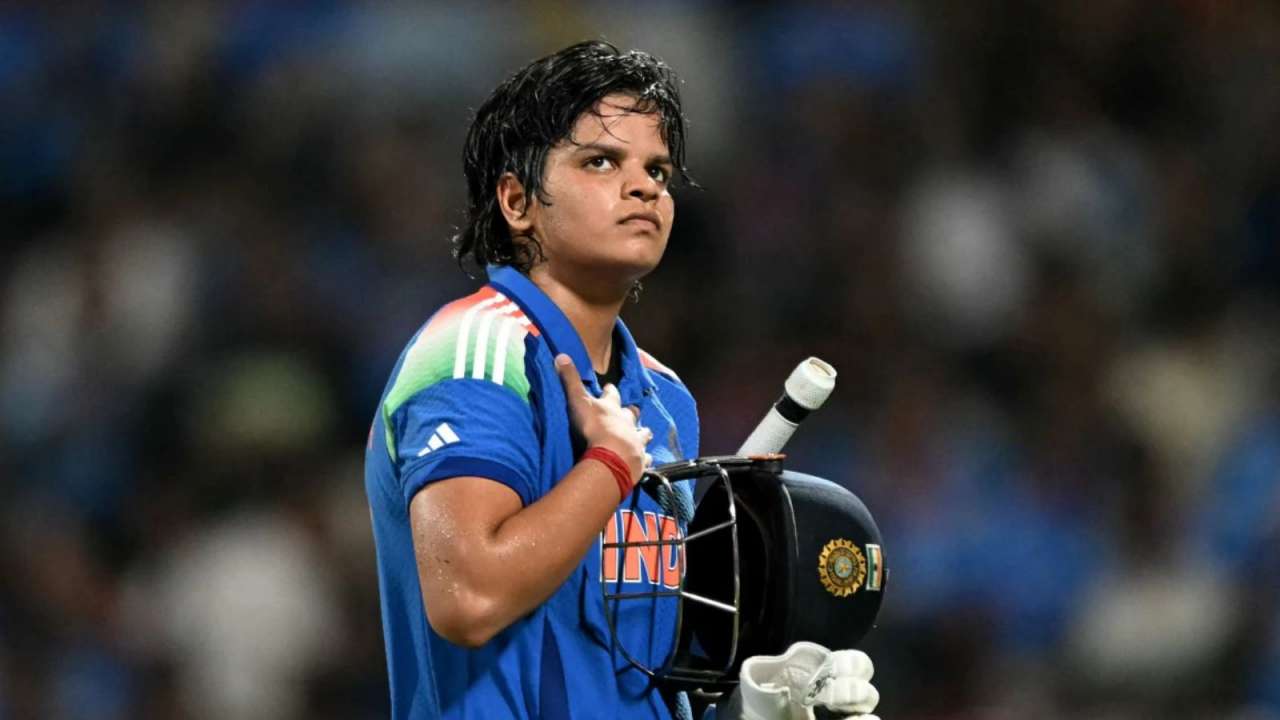
The crux of the matter revolves around Shafali Verma’s reaction to a dropped catch during Zimbabwe’s innings. In the 12th over of the match, as Zimbabwe attempted to build momentum, batter Chipo Mugeri-Tiripano struck a delivery from Indian bowler Shree Charani towards the mid-off region. Positioned to take what many would consider a regulation catch, Shafali Verma uncharacteristically put it down. The immediate aftermath saw the usually composed player succumb to a moment of intense frustration, impulsively flinging the ball to the ground. This seemingly minor act, born out of personal disappointment, was deemed a violation of the ICC’s strict regulations regarding player conduct.
The incident did not go unnoticed by the match officials. On-field umpires Vrinda Rathi and Gayathri Venugopalan, along with third umpire Anna Harris and fourth umpire Janani Narayanan, collectively reported the breach. The swift and unanimous reporting by the umpiring panel highlights the heightened vigilance exercised by officials in monitoring player behaviour and ensuring adherence to the spirit of the game. Shafali Verma, acknowledging her mistake, promptly accepted the charge, thus foregoing the need for a formal hearing and allowing for a direct imposition of the sanction.
Chronology of the Event: From Play to Penalty
To fully understand the context and implications of Shafali Verma’s reprimand, a detailed chronological breakdown of the events leading to the sanction is essential.
The Series and Match Setting
The incident unfolded during the second T20 International of a bilateral series between India and Zimbabwe, held at a prominent cricketing venue in Raipur. These matches, while perhaps not carrying the same weight as a World Cup encounter, are crucial for player development, team cohesion, and maintaining international rankings. For a young, developing squad like Zimbabwe, playing against a cricketing powerhouse like India offers invaluable experience. For India, it provides an opportunity to test bench strength, fine-tune strategies, and allow key players to gain match practice. Shafali Verma, as India’s vice-captain, carries an additional layer of responsibility, not just for her performance but also for setting an example for her teammates. The series, though not a high-stakes affair, demands professionalism and adherence to the game’s laws from all participants.

The Critical 12th Over
Zimbabwe, having batted first, was in the process of attempting to accelerate their scoring rate. Their innings progression was crucial, and every run and wicket held significance. The 12th over of their innings was being bowled by Shree Charani, an Indian spinner tasked with breaking partnerships or containing runs. The pressure of international cricket is ever-present, and every delivery, every fielding effort, holds significance. It was in this over that Chipo Mugeri-Tiripano, a seasoned Zimbabwean batter, attempted to assert herself against the spin, looking to find the boundary or rotate the strike to build a competitive total.
The Dropped Catch
Mugeri-Tiripano played a shot that offered a catching opportunity at mid-off. Shafali Verma, renowned for her athleticism and sharp fielding skills, was positioned perfectly to take the catch. However, in a rare lapse for a player of her calibre, the ball slipped through her grasp. Dropping a catch, especially one that could have been pivotal in halting an opposition’s progress or breaking a partnership, is one of the most disheartening moments for any fielder. The immediate surge of disappointment, self-reproach, and frustration can be overwhelming, even for the most seasoned professionals, as it directly impacts the team’s fortunes and a player’s individual performance metrics.

The Reaction and Its Repercussions
It was in the immediate aftermath of the dropped catch that Shafali Verma’s emotions momentarily got the better of her. Instead of simply retrieving the ball and moving on, she reacted by throwing it forcefully to the ground. This act, while perhaps perceived by some as a minor expression of annoyance, falls squarely under the ICC’s purview of unacceptable behaviour. The Code of Conduct is designed to ensure that players maintain a level of decorum and respect for the game, its equipment, and its spirit, even in moments of intense pressure or personal disappointment. The act of throwing the ball, an essential piece of cricket equipment, out of frustration, signals a momentary lapse in composure that the ICC deems unacceptable.
Official Reporting and Acceptance
The meticulous nature of modern cricket officiating meant that the incident was immediately flagged. The collective vigilance of the on-field umpires, Vrinda Rathi and Gayathri Venugopalan, alongside the third umpire Anna Harris and fourth umpire Janani Narayanan, ensured that the breach was documented comprehensively. Following the match, the charge was formally leveled against Verma. Crucially, Shafali Verma, demonstrating maturity and an understanding of the rules, accepted the charge without dispute. This acceptance meant that the case did not require a formal hearing, streamlining the disciplinary process and allowing the sanction to be applied directly. G.S. Lakshmi of the Emirates ICC International Panel of Match Referees, the appointed Match Referee for the series, confirmed the proposed penalty, which Verma accepted, bringing a swift conclusion to the disciplinary process.

Supporting Data: Unpacking the ICC Code of Conduct
Shafali Verma’s reprimand is not merely an isolated incident but a direct consequence of her breach of Article 2.2 of the ICC Code of Conduct for Players and Player Support Personnel. Understanding the nuances of this code is vital to appreciating the gravity of the sanction, however minor it may seem in the broader context of the game.
Article 2.2: Abuse of Cricket Equipment
Article 2.2 specifically addresses "abuse of cricket equipment or clothing, ground equipment or fixtures and fittings during an International Match." This rule is designed to prevent players from damaging or disrespecting the physical components of the game, whether it’s their own equipment, the opposition’s, or the general infrastructure of the playing arena. Such regulations are critical for maintaining the professional environment of international cricket. Examples of such behaviour, which could lead to a breach, include:

- Throwing a bat in anger after being dismissed.
- Kicking the stumps or bails in frustration.
- Hitting advertising hoardings with a bat or ball, causing potential damage.
- Slamming a helmet or other protective gear onto the ground with excessive force.
- And, as in Verma’s case, throwing the ball forcefully in frustration, even if no actual damage is caused.
The underlying principle of Article 2.2 is to maintain the integrity and sanctity of the playing environment. While the equipment might be replaceable, the image of the game and the professionalism of its participants are paramount. Such acts, even if fleeting, can be perceived negatively by spectators and undermine the spirit of fair play.
Level 1 Breach: The Least Serious, Yet Significant
The ICC Code of Conduct categorises offences into four distinct levels, with Level 1 being the least serious. However, "least serious" does not equate to "insignificant." A Level 1 breach carries a minimum punishment of an official reprimand and a maximum fine of up to 50% of a player’s match fee. Additionally, one or two demerit points are added to the player’s disciplinary record. In Shafali Verma’s case, she received an official reprimand and one demerit point, a standard penalty for such an infraction.

The demerit point system is a crucial aspect of the ICC’s disciplinary framework. It acts as a cumulative deterrent, ensuring that repeat offenders face increasingly severe penalties for recurrent breaches.
The Demerit Point System: A Cumulative Warning
- Accumulation: Players accumulate demerit points for breaches of the Code of Conduct. These points are not merely symbolic; they carry significant weight over time.
- Timeframe: These points remain on a player’s record for a rolling period of 24 months from the date of the offence. This ensures that past conduct is considered when evaluating new incidents.
- Suspension Thresholds: The accumulation of demerit points leads to suspension points, which can result in bans from matches:
- Accumulating four or more demerit points within a 24-month period converts into two suspension points. Two suspension points equate to a ban from one Test match or two ODIs or two T20Is, whichever comes first for the player. This is a crucial threshold that players must be acutely aware of.
- Six demerit points result in a ban from two Test matches or four ODIs or four T20Is, indicating a more severe pattern of non-compliance.
- Eight demerit points lead to a ban from four Test matches or eight ODIs or eight T20Is, representing a significant period of exclusion from international competition.
For Shafali Verma, this is her first infraction within the past 24 months, meaning she currently has one demerit point. While not immediately threatening a suspension, it places her on the ICC’s watchlist, requiring her to be extra careful with her conduct moving forward. Any further Level 1 breaches resulting in additional demerit points could quickly escalate her situation, potentially leading to match bans.

Precedents and Consistency in Sanctions
The ICC is meticulous in its application of the Code of Conduct, striving for consistency across all international matches and players. Numerous cricketers throughout history have faced similar Level 1 breaches for acts of frustration or equipment abuse. While specific examples vary, the pattern of official reprimands and demerit points for such actions is well-established. For instance:
- Players have been fined for audibly swearing after being dismissed, falling under ‘disrupting an international match’.
- Batsmen have received demerit points for hitting their bat against the ground in frustration, potentially damaging the pitch.
- Bowlers have been reprimanded for kicking the ball away after a boundary was conceded, showing dissent or frustration.
These instances underscore the ICC’s zero-tolerance policy towards any behaviour that undermines the "Spirit of Cricket," a fundamental tenet of the game that encourages fair play, respect for opponents, umpires, and the game itself. The ICC aims to ensure that professional cricketers, as role models, embody the highest standards of sportsmanship, both in victory and defeat.

Official Responses and Stakeholder Perspectives
The resolution of this incident involved several key stakeholders, each playing a vital role in upholding the disciplinary framework of international cricket.
The ICC’s Stance
The International Cricket Council, through its official statement, confirmed the breach and the subsequent penalty. Their communication emphasizes the importance of adherence to the Code of Conduct, regardless of the match’s outcome or the player’s profile. The ICC’s role is not punitive for punishment’s sake but rather to maintain discipline, ensure fair play, and protect the image of the sport globally. By acting swiftly and transparently, the ICC reinforces its authority and the universality of its rules, ensuring that all players are treated equally under the Code.

The Match Referee’s Authority
G.S. Lakshmi, a distinguished member of the Emirates ICC International Panel of Match Referees, was instrumental in this process. As the Match Referee, her responsibilities include overseeing the conduct of the match, adjudicating on player behaviour, and imposing sanctions for Code of Conduct breaches. Her recommendation of the penalty, which Shafali Verma accepted, is a testament to the efficient functioning of the ICC’s disciplinary system when a player acknowledges their transgression. The absence of a formal hearing underscores Verma’s acceptance and the clear-cut nature of the offence, allowing for a streamlined and unambiguous resolution.
Shafali Verma’s Acceptance
Shafali Verma’s decision to accept the charge and the proposed sanction is a significant aspect of this incident. It demonstrates her acknowledgement of wrongdoing and her respect for the ICC’s authority and the rules of the game. For a young player, especially one in a leadership role as vice-captain, accepting responsibility is a sign of maturity. It suggests that she understands the implications of her actions and is prepared to learn from the experience. Had she contested the charge, a formal hearing would have been convened, potentially drawing out the process and creating further headlines. Her prompt acceptance reflects a desire to move past the incident swiftly and focus on her game, demonstrating professionalism.

Team Management and BCCI’s Perspective (Inferred)
While no official statement from the Indian team management or the Board of Control for Cricket in India (BCCI) was explicitly reported, it can be inferred that such incidents are typically addressed internally. Team management would likely reinforce the importance of maintaining composure under pressure and adhering to the Code of Conduct. For a young, talented player like Shafali, who is a crucial part of India’s future plans, such an incident would serve as a teaching moment. Coaches and senior players often play a role in mentoring younger cricketers on managing emotions and representing their country with dignity and discipline. The BCCI, as the governing body for cricket in India, fully endorses the ICC’s Code of Conduct and would expect its players to comply without exception, safeguarding the reputation of Indian cricket.
Expert Commentary (General)
Cricket experts and commentators often weigh in on such incidents, generally advocating for emotional control. While passion is celebrated in sport, it must be channelled appropriately. The consensus among pundits is usually that players, especially those in leadership positions, must serve as role models. The pressure of international cricket is immense, but professional athletes are expected to manage their reactions, even in moments of extreme disappointment or frustration. This incident, while minor, provides a good talking point for discussing the psychological aspects of the game and the increasing scrutiny players face in the modern era, where every action is captured and analyzed.

Implications and Future Outlook
The reprimand issued to Shafali Verma, though a Level 1 breach, carries several implications for her, the Indian team, and the broader cricketing community.
Impact on Shafali Verma’s Career and Reputation
For Shafali Verma, this incident marks her first demerit point within the 24-month rolling period. While it does not immediately affect her ability to play, it places a spotlight on her disciplinary record. She will need to be extra cautious in her future on-field conduct to avoid accumulating further demerit points, which could lead to suspensions and impact her availability for crucial matches.

Beyond the formal penalty, there is a reputational aspect. As a vice-captain and one of the most exciting young talents in women’s cricket, Verma is a role model for aspiring cricketers