October 16, 2026 – Tesla has once again ignited the imagination of the automotive world, unveiling a radically re-engineered Roadster capable of unprecedented feats, including aerial maneuvers like jumping and barrel rolling. Billed as a true "flying car" in its most advanced iteration, the new Roadster, slated for a 2028 launch, promises to shatter performance benchmarks with a claimed 0-100 km/h acceleration in a mind-boggling 0.81 seconds. This ambitious project, leveraging technology from Elon Musk’s SpaceX, aims to push the boundaries of what a road-legal vehicle can achieve, though it raises significant questions about safety, regulation, and the very future of personal transportation.
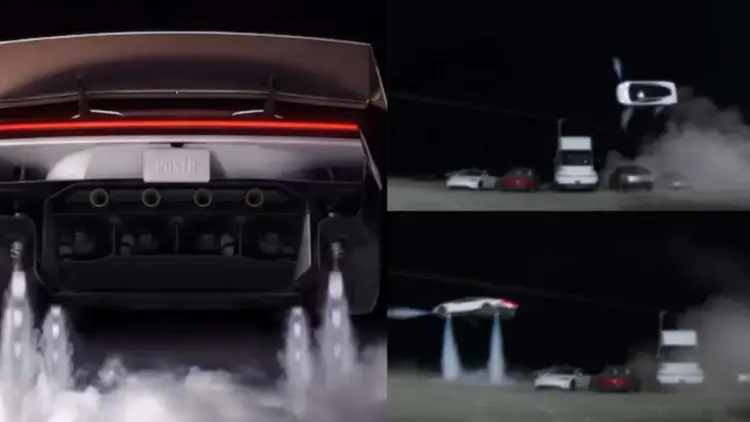
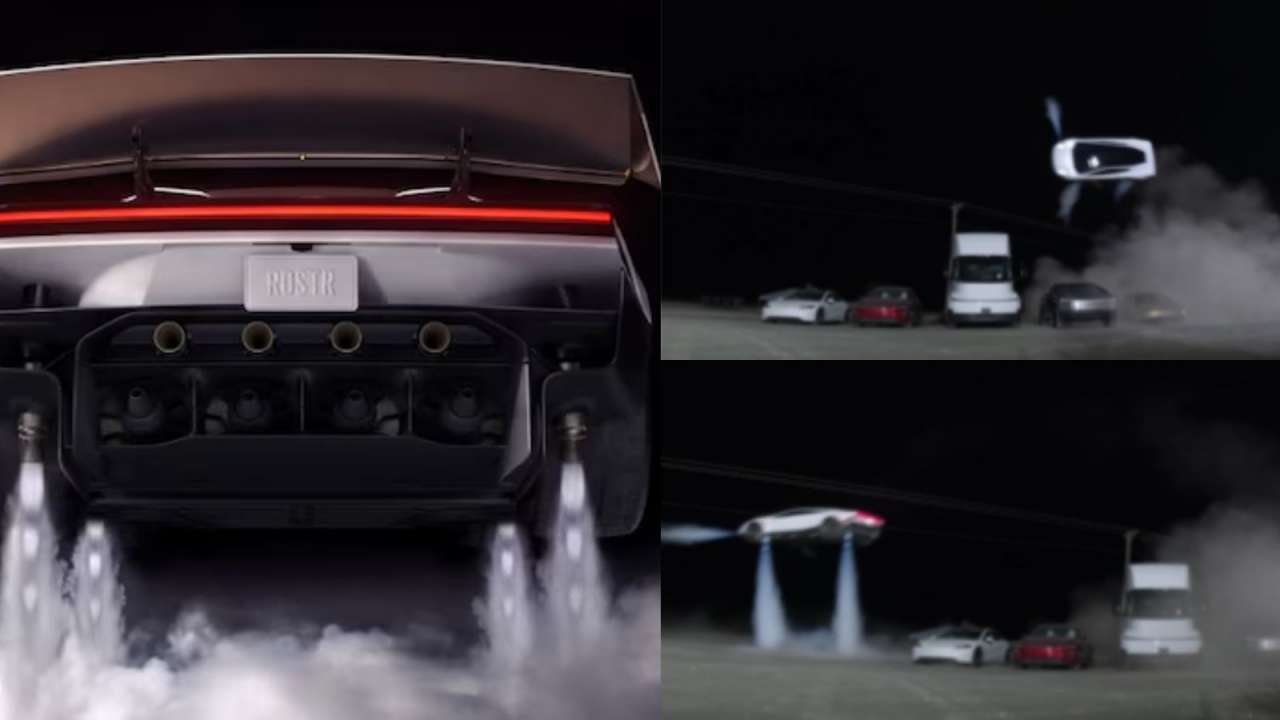
During a recent high-profile demonstration in Texas, the next-generation Roadster showcased its extraordinary capabilities, executing controlled jumps and flips, powered by a sophisticated system of ten rocket thrusters. Tesla CEO Elon Musk highlighted the vehicle’s unparalleled acceleration, asserting it would outpace any supercar currently on the market. The highly anticipated machine will be offered in three distinct variants: Performance, Thrust, and the exclusive, invite-only Rocket version, the latter being the only one equipped with a full flight system. While the base Performance model still promises blistering speed, the Rocket variant represents Tesla’s boldest venture yet into uncharted automotive territory, blurring the lines between ground vehicle and personal aircraft.
A Chronology of Tesla Roadster: From Electric Pioneer to Flying Supercar
The journey of the Tesla Roadster is a testament to the company’s persistent innovation and its willingness to challenge conventional automotive engineering. The original Roadster, launched between 2008 and 2012, holds a significant place in history as Tesla’s very first production electric vehicle. Based on the Lotus Elise chassis, it was a pioneering effort that proved the viability and excitement of high-performance electric cars, laying the groundwork for the company’s subsequent success with the Model S, X, 3, and Y. It was a statement of intent, demonstrating that electric vehicles could be both environmentally conscious and exhilarating.
Fast forward to 2017, Tesla unveiled the concept for the second-generation Roadster, promising revolutionary performance metrics. At its debut, Musk announced a target 0-100 km/h time of 1.9 seconds, a top speed exceeding 400 km/h, and an astonishing range of 1,000 km on a single charge. The initial delivery target was set for 2020. However, like many ambitious Tesla projects, the Roadster faced several delays. These postponements were often attributed to the company prioritizing the production ramp-up of its mass-market Model 3, the development of the Cybertruck, and the continuous refinement of battery technology. Each delay fueled anticipation, but also skepticism, about the feasibility of such groundbreaking claims.
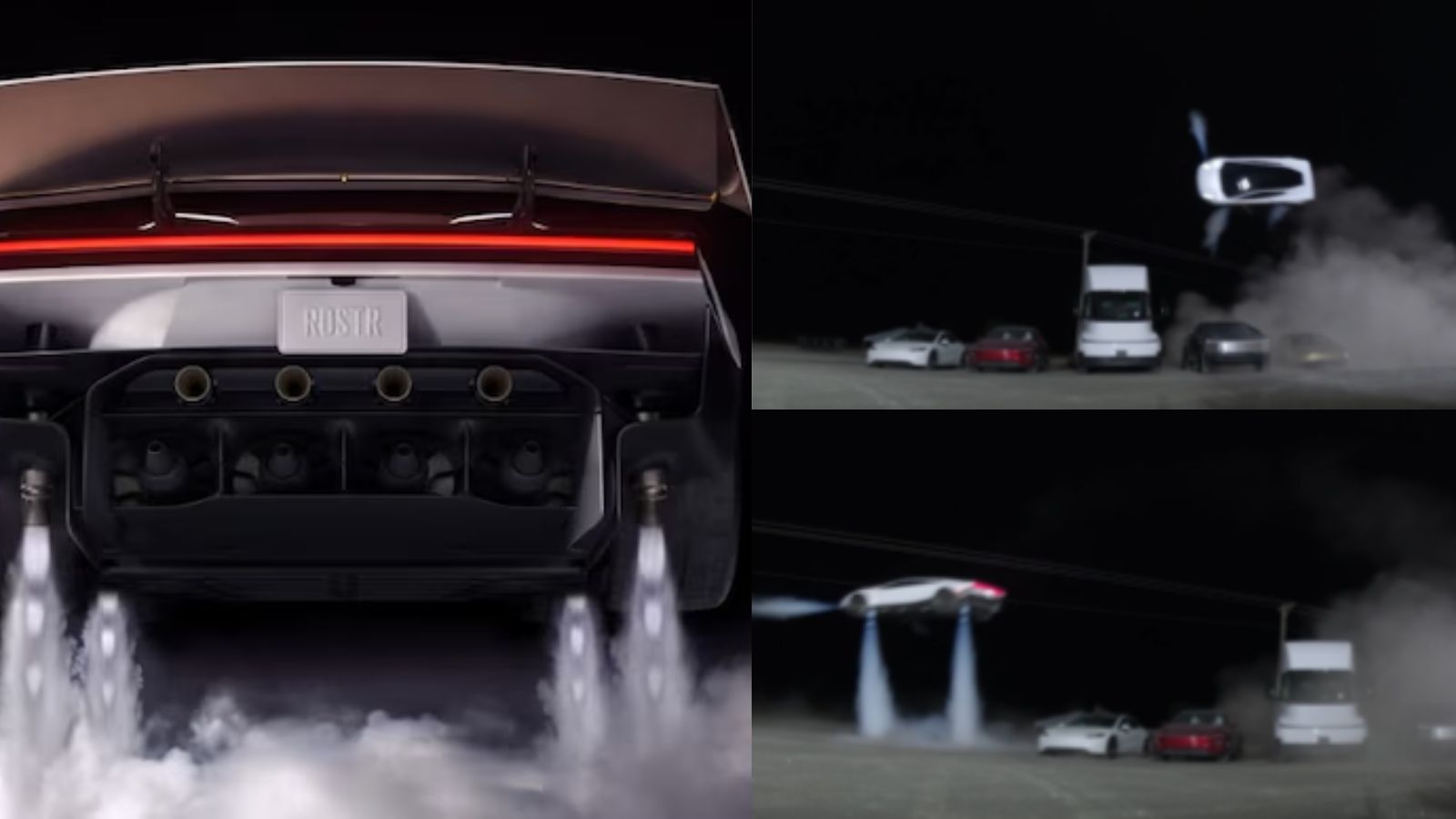)
The concept of integrating rocket thrusters into the Roadster first surfaced as a speculative "SpaceX Package" for the second-generation model. Initially, it seemed a fantastical idea, a characteristic Muskian flourish. However, the recent October 2026 demonstration in Texas confirmed that this once-futuristic concept has materialized into a tangible, if still prototype, reality. This latest unveiling, along with the revised 2028 launch timeline, marks a critical juncture in the Roadster’s protracted development cycle, signaling that Tesla is now closer than ever to bringing this extraordinary vehicle to market. The evolution from a mere high-performance EV to a machine capable of aerial maneuvers underscores Tesla’s commitment to pushing the boundaries of automotive engineering, albeit with a history of ambitious timelines and subsequent adjustments.
Supporting Data: Unpacking the Roadster’s Unprecedented Technology
The new Tesla Roadster’s audacious claims are underpinned by a suite of advanced technologies, meticulously engineered to deliver performance previously confined to science fiction. Understanding the distinct capabilities of its three variants—Performance, Thrust, and Rocket—is key to appreciating the scope of Tesla’s ambition.

Variant Breakdown:
- Performance: This serves as the base model, priced at an estimated $50,000. While it foregoes the rocket thrusters, it is still expected to deliver supercar-level acceleration and handling, drawing upon Tesla’s extensive expertise in electric powertrain technology. It will likely feature multiple electric motors, all-wheel drive, and advanced torque vectoring, ensuring it remains a formidable contender in the high-performance segment, even without the aerial theatrics.
- Thrust: Positioned as the mid-tier option, the Thrust variant incorporates rear-facing boosters. These are designed not for sustained flight, but to provide an additional burst of thrust for enhanced acceleration, potentially shaving off critical milliseconds from its 0-100 km/h time. This variant requires a substantial USD 250,000 deposit, signaling its limited availability and exclusive appeal. The boosters are likely integrated discreetly, maintaining the vehicle’s aesthetic while providing a significant performance advantage.
- Rocket: The pinnacle of the Roadster line-up, the Rocket variant is where the "flying car" dream truly takes shape. This invite-only, single-seater model boasts a complete flight system, powered by ten strategically placed thrusters. These thrusters are fueled by compressed gas, stored in onboard tanks and recharged by integrated compressors, suggesting a self-contained, re-usable system. The design implies a complex interplay of propulsion, aerodynamics, and control systems, enabling short-duration jumps and potentially more intricate aerial maneuvers, as hinted by the "barrel roll" capability. The exclusivity of this model suggests a highly limited production run, catering to a select few willing to embrace the bleeding edge of automotive innovation.
Performance Metrics and Engineering Marvels:
)
The headline-grabbing acceleration of 0-100 km/h in 0.81 seconds is not merely a number; it represents a monumental leap in vehicle dynamics. To put this in perspective, current hypercars like the Rimac Nevera achieve the same feat in around 1.8-1.9 seconds, while Formula 1 cars take approximately 2.6 seconds. This sub-second acceleration for a production car would be unprecedented, requiring not only immense power but also sophisticated traction control and tire technology to manage the forces involved. It points to an extraordinary power-to-weight ratio and instantaneous torque delivery characteristic of electric drivetrains, amplified by the thrusters.
Beyond raw speed, all three Roadster versions will feature a fan-based suction system, capable of generating up to 2G of downforce. This system, demonstrated during the Texas event by the car driving down a ramp, is a sophisticated application of aerodynamic principles. By creating a low-pressure zone beneath the vehicle, the fans effectively "suck" the car to the ground, significantly enhancing grip and stability, particularly during high-speed cornering or extreme acceleration. This active aerodynamic solution could allow for far greater cornering speeds than traditional passive aerodynamic elements like wings, offering a dynamic advantage regardless of the vehicle’s forward velocity. The combination of electric power, rocket thrust, and active downforce represents a holistic approach to extreme performance, pushing the boundaries of physics in a road-legal package. The collaboration with SpaceX is evident in the choice of propulsion technology and the ambition to integrate aerospace-grade engineering into a consumer vehicle, signaling a cross-pollination of expertise that few other manufacturers can emulate.
)
Official Responses and Industry Scrutiny
The official narrative surrounding the new Roadster is largely driven by Elon Musk’s visionary pronouncements, painting a picture of an automotive future redefined. Musk’s statements emphasize the vehicle’s unparalleled performance and groundbreaking capabilities, aligning with his long-held ambition to push technological boundaries. The public demonstration in Texas served as a powerful visual confirmation of these claims, albeit under controlled conditions.
However, beneath the spectacle, a significant number of critical questions remain unanswered by Tesla. For the invite-only Rocket variant, Tesla has not disclosed the criteria for selecting purchasers, nor has it indicated the total number of vehicles planned for production. This lack of transparency fuels speculation about the exclusivity and ultimate accessibility of this top-tier model. Given the immense deposit required for the Thrust variant, it’s clear that these vehicles are targeting an ultra-luxury, high-net-worth demographic, but the exact mechanism for entry into the "Rocket club" remains a mystery.
)
More importantly, Tesla has remained notably silent on crucial aspects concerning the Roadster’s operation in real-world environments. The primary concerns revolve around safety, regulatory compliance, and practical usability. The original article explicitly states, "The sound, the speed and the safety on roads are still not clear. Tesla has not said how the car will follow road rules or if all the tricks seen will be in the version of the car." This ambiguity is a major point of contention for industry experts and regulators alike.
- Safety: The integration of rocket thrusters, even for short bursts, introduces a new layer of complexity and potential hazards. Questions arise about the safety protocols for managing compressed gas systems, the impact of sudden thrust on vehicle stability, and the structural integrity required to withstand the forces of jumping and barrel rolling. Furthermore, the potential for operator error in controlling such a powerful and dynamic vehicle is a significant concern.
- Regulatory Compliance: This is perhaps the biggest hurdle. Existing road regulations are simply not equipped to handle vehicles capable of aerial maneuvers. Will the Roadster be considered a car, an aircraft, or a new hybrid category? How will its "flight" capabilities be licensed and regulated? What are the implications for air traffic control, even for short jumps? The legal framework for ground vehicles is vastly different from that for aircraft, and reconciling these two domains presents a formidable challenge for authorities worldwide.
- Operational Practicality: Beyond the wow factor, the practical utility of jumping or barrel rolling on public roads is questionable. The sound generated by the thrusters, the potential for debris, and the sheer speed achieved could pose significant risks in populated areas. Tesla’s silence on how these features will be restricted or adapted for road use suggests either ongoing development or a reliance on private tracks for full functionality.
Industry reactions, while generally acknowledging Tesla’s innovative spirit, have been tinged with a healthy dose of skepticism. Automotive safety organizations are likely to demand rigorous testing and clear guidelines before such vehicles are approved for widespread use. Competitors, while perhaps admiring the engineering prowess, are also likely to watch closely for regulatory precedents and the practical challenges Tesla will undoubtedly face in bringing these capabilities to market responsibly. The lack of detailed official responses on these critical issues leaves a significant void, suggesting that while the technology may be advanced, the roadmap for its integration into society is still very much in flux.
)
Implications: Reshaping the Future of Transportation
The arrival of the Tesla Roadster with its rocket thrusters and aerial capabilities carries profound implications that extend far beyond the automotive industry. It represents a bold step towards redefining personal transportation, challenging established norms, and pushing the boundaries of what is considered feasible for a road-legal vehicle.
Regulatory and Safety Frameworks:
Perhaps the most immediate and significant implication lies in the regulatory sphere. Current traffic laws and vehicle safety standards are simply not designed for cars that can jump, barrel roll, or achieve sub-second acceleration. The introduction of the Roadster’s "flight system" demands a complete re-evaluation of how vehicles are classified, licensed, and operated. Regulators globally will face unprecedented challenges in drafting new legislation that addresses:
)
- Airspace Integration: Even short jumps raise questions about low-altitude airspace management and potential interference with other aerial vehicles or structures.
- Safety Protocols: New safety standards will be required for compressed gas thruster systems, structural integrity during extreme maneuvers, and occupant protection in high-G force environments.
- Liability and Insurance: The complexities of accidents involving a vehicle capable of aerial movements will necessitate new insurance models and liability frameworks.
- Public Road Use: How will the full capabilities be restricted on public roads versus private tracks? Will special permits or licenses be required for drivers to utilize advanced features? The article’s point about "how the car will follow road rules or if all the tricks seen will be in the version of the car" highlights this critical grey area.
Market Redefinition and Technological Spillover:
The Roadster’s extreme performance and unique features are poised to create an entirely new niche within the ultra-luxury and hypercar markets. It moves beyond mere speed and luxury, offering an experience that borders on science fiction. This could force traditional supercar manufacturers to innovate more aggressively, exploring new propulsion systems, active aerodynamics, and perhaps even their own interpretations of "flying cars." The technologies developed for the Roadster, such as advanced thruster systems, compressed gas storage, and high-G force resistant chassis design, could eventually trickle down into other automotive applications, leading to advancements in areas like active safety, emergency braking, or even novel forms of mobility.
Infrastructure and Environmental Considerations:
While electric, the energy demands of such a high-performance vehicle, especially one utilizing thrusters, will be substantial. The environmental impact of producing and operating these highly specialized components will need to be scrutinized. Furthermore, if such vehicles were to become more common, the existing road infrastructure would prove inadequate. Dedicated "jump zones" or enhanced road surfaces might be necessary to safely accommodate its unique capabilities, sparking discussions about future urban planning and transportation networks.
)
Tesla’s Vision and Societal Impact:
The Roadster embodies Elon Musk’s long-term vision of pushing humanity towards a multi-planetary future and making life "multi-planetary." The integration of SpaceX technology into a consumer car underscores this ambition, blurring the lines between terrestrial and extraterrestrial transport. This vehicle is not just about getting from point A to point B; it’s about making a statement about what’s possible when conventional constraints are ignored.
However, the invite-only, single-seater, and high-deposit nature of the more advanced variants also highlights a growing disparity in technological access. Such groundbreaking innovations often debut as exclusive luxuries, raising questions about broader societal benefit and accessibility. The Roadster, in its current form, is a testament to technological prowess and an aspirational dream, but its real-world impact will hinge on how Tesla and global regulators navigate the complex interplay of innovation, safety, and societal integration over the coming years. The 2028 launch date marks not just the arrival of a new vehicle, but potentially a new era in personal transportation, demanding a fresh perspective on what an automobile can truly be.