

The Indian motorcycling landscape has undergone a seismic shift over the last decade. What was once a market dominated by fuel-efficient commuters has evolved into a sophisticated arena where adventure (ADV) motorcycles reign supreme. The reason for this dominance is clear: Indian riders demand versatility. They seek machines capable of navigating the chaotic urban sprawl of the week, cruising the national highways on Saturday, and tackling the rugged, unpaved trails of the hinterlands on Sunday.
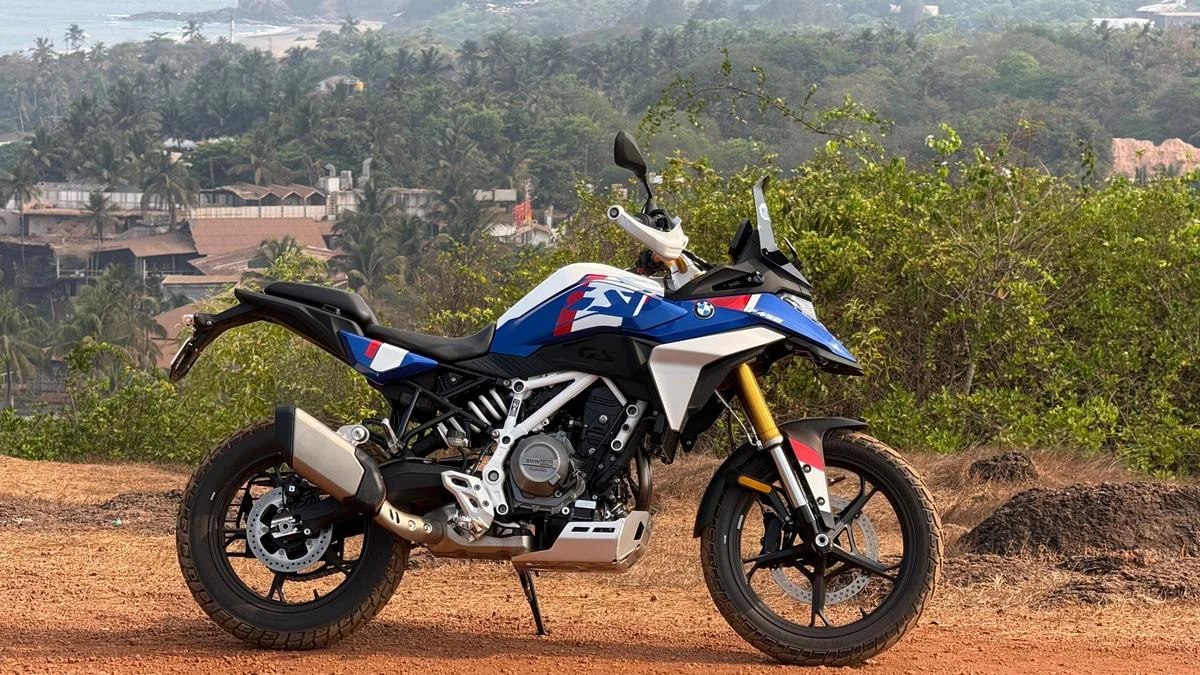
Into this highly competitive environment steps BMW Motorrad with the F 450 GS. Positioned strategically to bridge the gap between the entry-level G 310 GS and the heavyweight R 1300 GS, the F 450 GS is not merely a placeholder in the lineup. Following an extensive test ride through the winding coastal roads of Goa and the punishing inclines of the Vagator hilltop, it is evident that BMW has engineered a motorcycle that understands the specific nuances of the mid-capacity adventure segment.
Main Facts: The Technical Blueprint of the F 450 GS
The BMW F 450 GS is a purpose-built adventure tourer designed to offer premium German engineering at a scale that remains accessible to a broad demographic of riders. At its core lies a newly developed 420 cc parallel-twin engine, a departure from the single-cylinder architecture found in the smaller 310 series. This power plant produces a respectable 48 hp and 43 Nm of torque, placing it squarely in the crosshairs of the A2-license category globally and the premium performance segment in India.
One of the most significant technical highlights is the engine’s 135° crankshaft. This specific configuration is designed to provide a unique firing order that mimics the character of larger engines while significantly cancelling out the vibrations typically associated with parallel twins.
The motorcycle is launched in India with three distinct variants:
- Base Variant: ₹4,70,000
- Exclusive Variant: ₹4,90,000
- GS Trophy Variant: ₹5,30,000
(All prices are ex-showroom, India)
These prices reflect BMW’s "premium but accessible" strategy, positioning the bike above domestic competitors like the Royal Enfield Himalayan 450 but offering a level of technological sophistication that justifies the delta.
Chronology of the Experience: From Coastal Cruising to Hilltop Scrambling
The First Impression: Aesthetics and Ergonomics
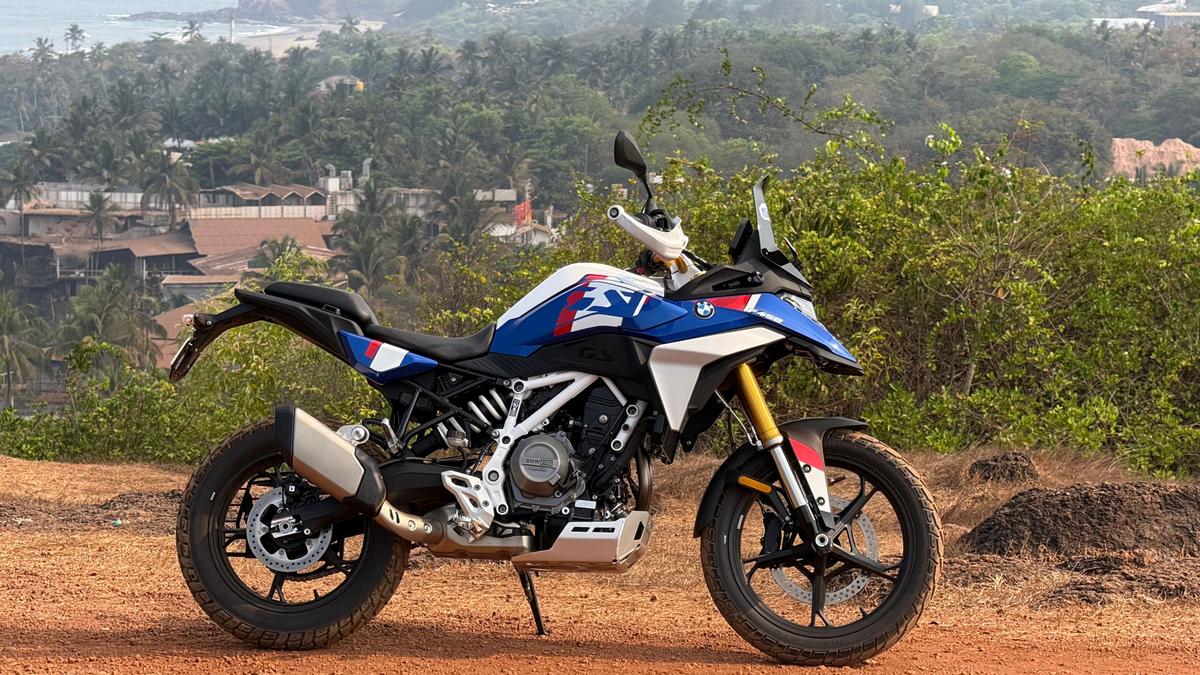
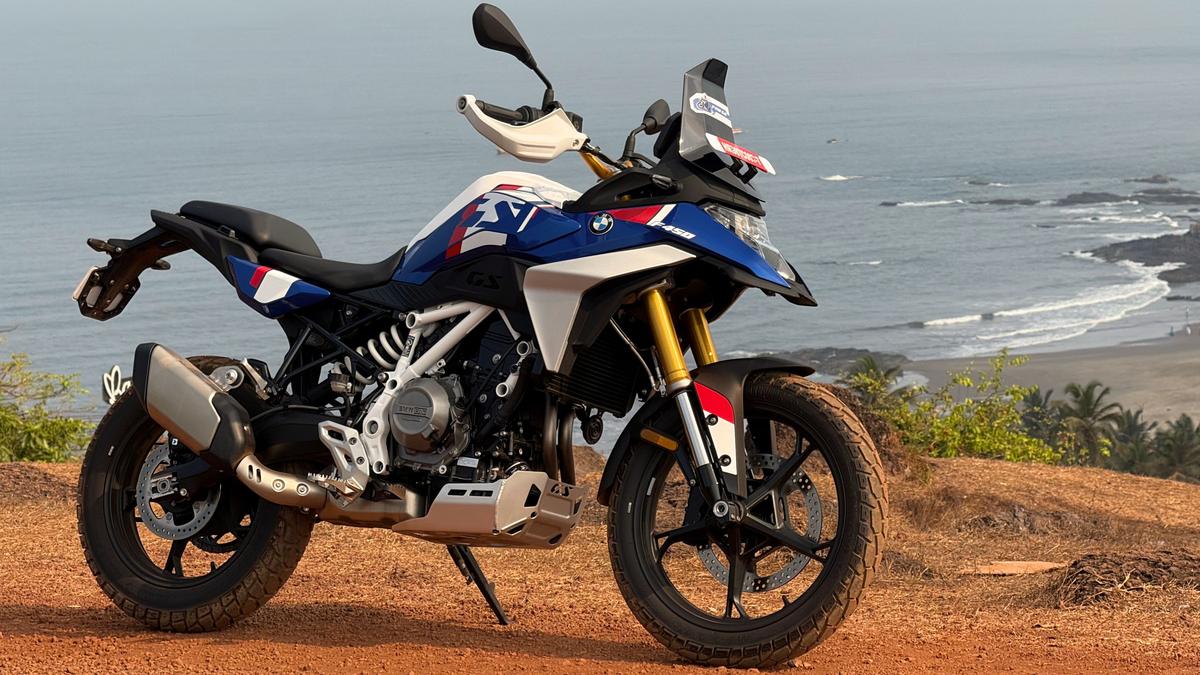
The journey began in the humid, salt-tinged air of Goa. At first glance, the F 450 GS is unmistakably a member of the "Gelände/Straße" (Off-road/Road) family. It carries the iconic GS DNA—the pronounced front beak, the asymmetrical LED headlight signature, and an athletic, high-riding stance. However, unlike the R 1250 or R 1300 GS, which can feel intimidatingly vast, the F 450 GS feels compact and condensed.
Swinging a leg over the saddle reveals an 845 mm seat height. While this provides a commanding view of the road, it presents a slight hurdle for shorter riders. However, the narrowness of the bike where the tank meets the seat allows for a more direct reach to the ground than the numbers might suggest. The upright riding triangle is immediately comfortable, suggesting that 500-kilometer days in the saddle would be well within the bike’s remit.
The Road Test: Pavement Performance
Exiting the narrow lanes of North Goa onto the open tarmac, the engine’s refinement became the protagonist of the story. The parallel-twin is remarkably smooth. As the digital tachometer climbed, the usual "buzz" through the footpegs and handlebars remained absent, a testament to the engineering of the 135° crank and internal counter-balancers.
The power delivery is linear and predictable. There is a healthy reservoir of low-end torque, meaning the rider does not need to dance on the gear lever to maintain momentum in traffic. On the highway, the bike sits comfortably at triple-digit speeds, with plenty of headroom left for overtaking maneuvers.
The Off-Road Challenge: Vagator Hilltop
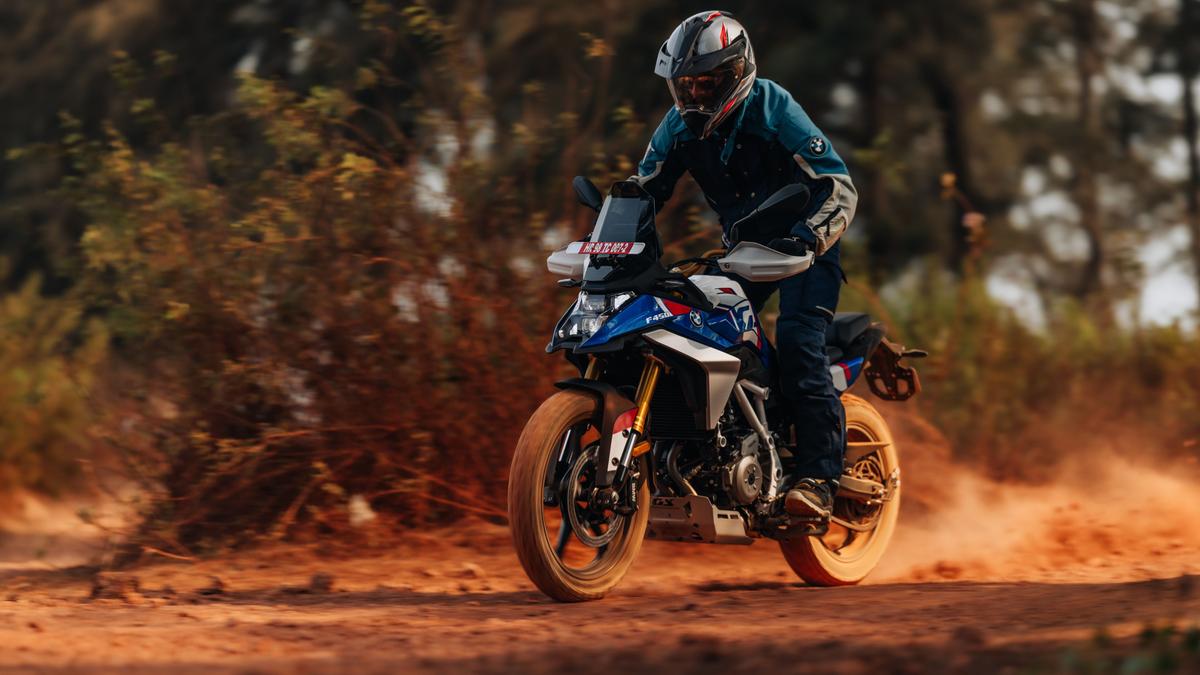
The true test of any GS is how it handles the "Gelände." The Vagator hilltop provided a mix of loose shale, steep gradients, and dusty trails. Switching the bike into Enduro Pro mode fundamentally changed its personality. This mode sharpens the throttle response and adjusts the traction control and ABS parameters to allow for more rear-wheel slip—essential for navigating loose terrain.
Standing on the pegs, the bike felt narrow and easy to grip with the knees. The suspension—comprising Upside-Down (USD) front forks and a rear monoshock with progressive damping—soaked up the harshness of the rocky ascent without bottoming out or deflecting the bike off-course. For a novice off-roader, the bike is forgiving; for an expert, it is a precise tool.
Supporting Data: Technology and Efficiency
BMW has packed the F 450 GS with technology that was, until recently, reserved for the liter-class segment.
The Easy Ride Clutch (ERC) and Shift Assistant Pro
Perhaps the most polarizing yet innovative feature is the Easy Ride Clutch. This system allows the rider to come to a complete stop and pull away again without manually engaging the clutch lever. When paired with the Shift Assistant Pro (BMW’s terminology for a bi-directional quickshifter), the rider can essentially navigate the entire gearbox without the clutch, except perhaps in extreme technical maneuvers.
During our testing, we found there is a learning curve to the ERC. It requires a nuanced touch on the throttle to ensure smooth take-offs. However, in the stop-and-go traffic of Mapusa or during slow-speed technical climbs where stall-prevention is key, the system proves its worth.
Thermal Management and Fuel Economy
In the 33-degree Celsius heat of Goa, engine heat management was a critical observation point. Many mid-capacity performance bikes struggle to vent heat away from the rider’s legs in slow traffic. The F 450 GS remained impressively cool, with the radiator fans working efficiently to direct hot air away from the rider’s shins.
In terms of efficiency, the F 450 GS returned a fuel economy figure of approximately 26–27 km/l during a mixed cycle of aggressive trail riding and highway cruising. With its fuel tank capacity, this gives the bike a theoretical range of nearly 400 kilometers, a crucial metric for long-distance tourers in India.
Strategic Positioning: BMW’s Market Intent
While BMW Motorrad has not issued a formal "response" to competitors, their pricing and feature set speak volumes about their strategy. By pricing the GS Trophy variant at ₹5,30,000, BMW is targeting the "aspirational upgrader"—the rider who has spent time on a 200cc or 250cc machine and is now looking for a "forever bike" in the mid-capacity segment.
The inclusion of a 6.5-inch TFT display with multi-controller integration allows the F 450 GS to offer a user interface that feels light-years ahead of the more utilitarian displays found on budget ADVs. This "digital cockpit" approach is a clear attempt to bring the luxury experience of the 7 Series or the R 1300 GS down to a more accessible price point.
Implications: The Future of the Mid-Size ADV Segment
The arrival of the BMW F 450 GS has several significant implications for the Indian motorcycle market:
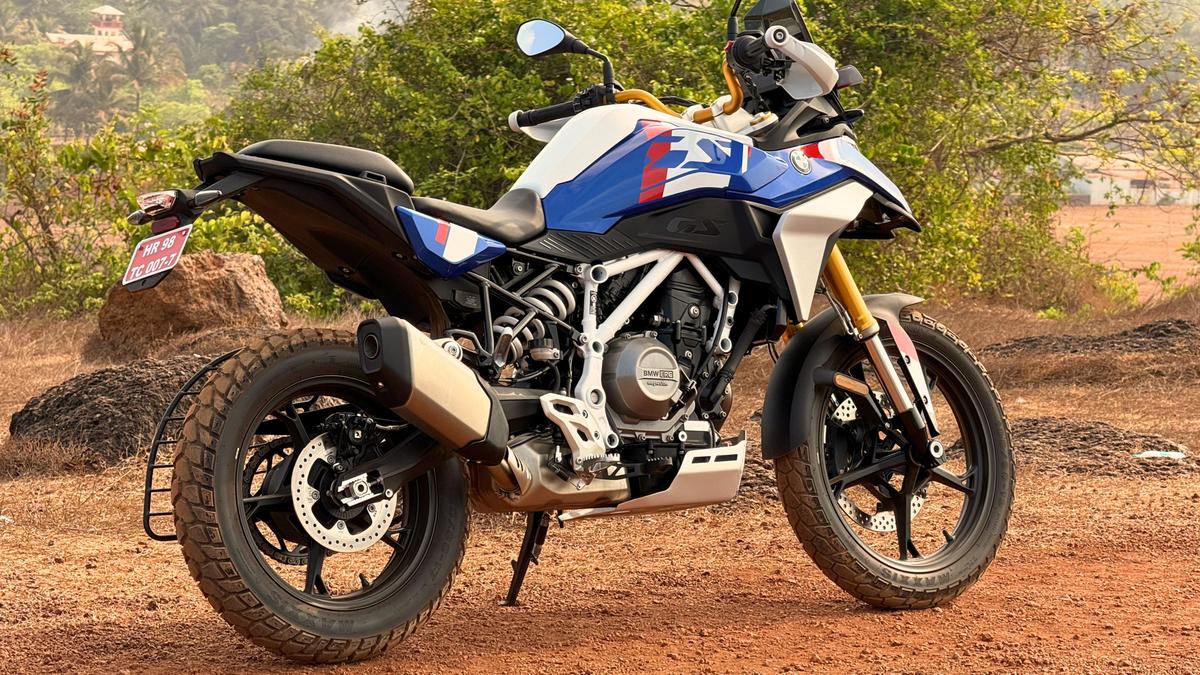
- Redefining Refinement: The F 450 GS sets a new benchmark for NVH (Noise, Vibration, and Harshness) levels in the sub-500cc segment. It challenges other manufacturers to move away from the "characterful" but often vibrating single-cylinder engines in favor of more sophisticated multi-cylinder layouts.
- Tech-Forward Riding: Features like the ERC and Enduro Pro modes suggest that rider aids are no longer just safety nets; they are becoming integral to the riding experience, making adventure riding more accessible to novices.
- The "One-Bike" Solution: The F 450 GS makes a strong case for being the only motorcycle a rider needs. It is light enough for the daily commute, fast enough for the highway, and rugged enough for the Himalayas.
- Brand Equity: For many Indian riders, the BMW badge carries immense prestige. By offering a "proper" GS (one that doesn’t feel like a compromise) at this price point, BMW is likely to capture a significant share of the premium market that was previously looking at the KTM 390 Adventure or the Triumph Scrambler 400X.
In conclusion, the BMW F 450 GS is a masterclass in balance. It manages to be sophisticated without being overly complex, and capable without being intimidating. While the price point puts it in the premium bracket, the level of engineering, particularly the smoothness of the parallel-twin and the utility of the electronic aids, justifies the investment for those seeking a truly refined adventure experience. BMW has not just launched another motorcycle; they have redefined what the Indian rider should expect from the 450cc class.
