

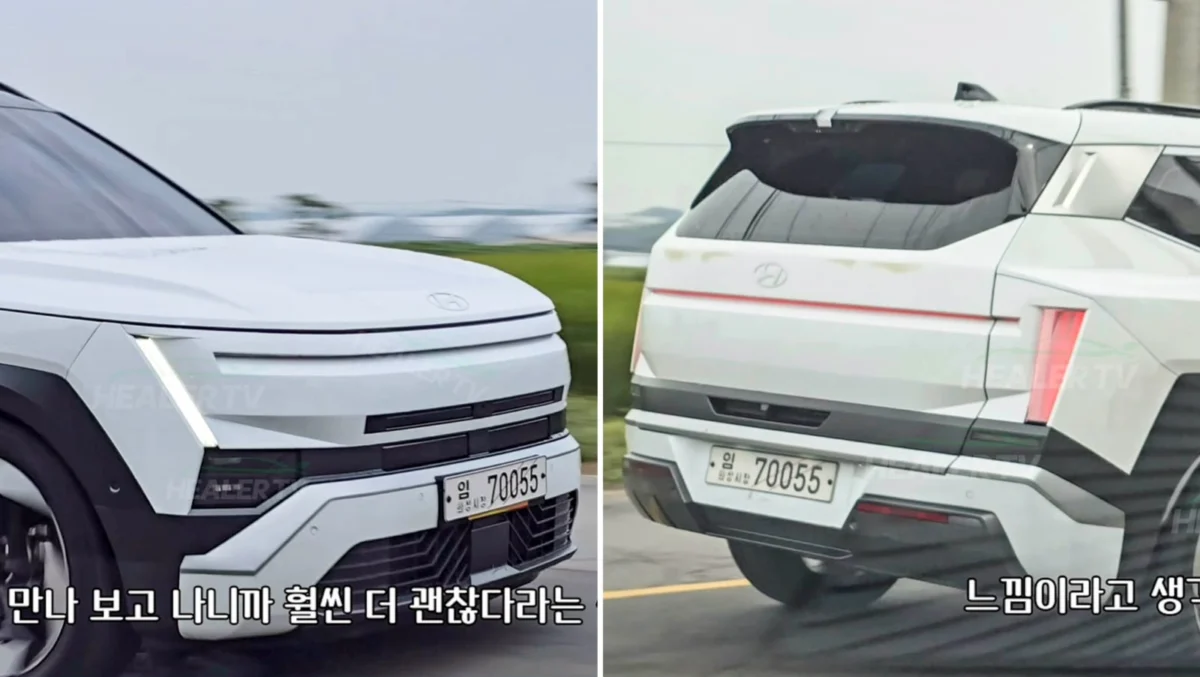
The automotive world has caught its first unfiltered glimpse of the future of the compact SUV segment. Following the official unveiling of the 5th-generation Hyundai Tucson, the vehicle has been spotted in the wild, showcasing a radical departure from its predecessors. Built upon Hyundai’s ambitious "Art of Steel" design philosophy, the 2027 Tucson represents more than just a seasonal update; it is a comprehensive re-imagining of one of the world’s best-selling SUVs.
Captured recently by the Healer TV channel in a striking white finish, the new Tucson demonstrates a move toward a sharper, boxier, and more commanding road presence. As Hyundai prepares for a global rollout, the 5th-generation model aims to bridge the gap between mass-market utility and premium luxury, integrating a "Software Defined Vehicle" (SDV) approach with the new Pleos infotainment interface.

Main Facts: A Bold Leap in Design and Technology
The 5th-generation Hyundai Tucson is characterized by a "geometrical precision" that sets it apart from the fluidic designs of the past. The core of its identity lies in the "Art of Steel" philosophy, which emphasizes high-tension creases, 3D-style elements, and a silhouette that leans into a futuristic, almost brutalist aesthetic.
Key Highlights of the New Generation:
- Design Philosophy: Adoption of the "Art of Steel" language, moving away from "Sensuous Sportiness."
- Dimensions: Significant growth in length (+60mm), width (+40mm), and wheelbase (+30mm).
- Lighting Signature: New H-style LED Daytime Running Lights (DRLs) and vertically stacked headlamp clusters.
- Cockpit Innovation: Introduction of the Pleos infotainment system featuring a large, portrait-oriented central interface and a secondary driver-centric information strip.
- Enhanced Utility: Improved rear passenger access with doors that open 10 degrees wider and increased interior headroom.
The vehicle’s presence on the road confirms that Hyundai is doubling down on its "unconventional" design strategy, which has previously proven successful with the Ioniq series and the latest Santa Fe.

Chronology: The Journey to the 5th-Generation Tucson
The Tucson nameplate has been a cornerstone of Hyundai’s global success since its debut in 2004. To understand the significance of the 2027 model, one must look at the rapid acceleration of Hyundai’s design cycles.
- The Formative Years (2004–2015): The first and second generations focused on reliability and value-for-money, establishing the Tucson as a viable alternative to established Japanese rivals.
- The Premium Pivot (2016–2020): The 3rd generation introduced more sophisticated styling and better materials, moving the Tucson into a more aspirational bracket.
- The Radical 4th Gen (2021–2025): This generation introduced the "Parametric Hidden Lights," a design so bold it polarized the market before becoming a massive commercial hit.
- The 2027 "Art of Steel" (5th Gen): Revealed in late 2024 and spotted testing in 2025, this model marks the transition to a boxier, more tech-heavy architecture. It reflects Hyundai’s shift toward electrification and high-end digital integration, preparing the nameplate for the second half of the decade.
Supporting Data: Dimensions and Engineering Specifications
One of the most critical aspects of the new Tucson is its physical growth. By expanding the footprint, Hyundai is repositioning the Tucson to cater to families who might have previously found it slightly too compact compared to D-segment SUVs.

Detailed Dimensional Comparison
| Parameter | 4th Gen Tucson | 5th Gen (2027) Tucson | Variance |
|---|---|---|---|
| Length | 4,640 mm | 4,700 mm | +60 mm |
| Width | 1,865 mm | 1,905 mm | +40 mm |
| Height | 1,665 mm | 1,685 mm | +20 mm |
| Wheelbase | 2,755 mm | 2,785 mm | +30 mm |
Exterior Engineering Features
The "Art of Steel" isn’t just about aesthetics; it incorporates functional aerodynamics. The front fascia features a closed-off upper grille to reduce drag, while the lower section houses active air flaps. These flaps remain closed at highway speeds to optimize airflow and open when the engine or battery (in hybrid models) requires cooling.
The side profile is defined by squared-off wheel arches, a design cue shared with the new Santa Fe. A continuous black trim strip runs from the front bumper, over the arches, and across the lower boot lid, creating a visual "girdle" that lowers the car’s perceived center of gravity while emphasizing its ruggedness.

Interior Ergonomics and The "Pleos" Interface
The interior is where the 2027 Tucson truly breaks the mold. The traditional "waterfall" dashboard has been replaced by a clean, minimalist layout.
- The Pleos System: This next-generation UI is designed to be more intuitive, utilizing a high-resolution portrait screen that handles everything from climate control to navigation.
- Driver Awareness: A slim, horizontal screen is mounted high on the dashboard, allowing the driver to check speed and navigation prompts without taking their eyes off the road—effectively acting as a physical Head-Up Display (HUD).
- Passenger Comfort: The 30mm increase in wheelbase is primarily funneled into the rear cabin. Combined with a 29mm increase in headroom and a wider door-opening angle, the new Tucson is significantly easier to ingress and egress, making it more elder- and child-friendly.
Official Responses and Powertrain Strategy
While Hyundai has been selective with technical details, the company’s global strategy provides a clear roadmap for the Tucson’s mechanical underpinnings.

Powertrain Outlook
Hyundai officials have hinted at a "multi-pathway" approach to propulsion. While a full-electric version is not expected (as that space is occupied by the Ioniq 5), the Tucson will feature:
- Updated 1.6L Turbo Hybrid (HEV): Expected to offer improved thermal efficiency and a larger battery pack for better fuel economy.
- Plug-in Hybrid (PHEV): Aiming for a higher all-electric range to meet tightening Euro 7 and EPA regulations.
- Internal Combustion (ICE): Standard petrol and diesel variants (market-dependent) will likely feature 48V mild-hybrid technology as standard.
Brand Positioning
In recent press briefings, Hyundai’s design chiefs have noted that the Tucson is intended to be a "bridge" vehicle. It carries the rugged DNA of the Santa Fe but maintains the urban maneuverability that has made the Tucson a city favorite. The "Art of Steel" moniker is intended to convey a sense of permanence and strength in an era where many EV designs are becoming increasingly soft and rounded.

Implications: Market Impact and Competitive Landscape
The arrival of the 5th-generation Tucson has significant implications for the global SUV market and Hyundai’s brand trajectory.
1. The "Santa Fe" Effect
By adopting the boxy design language of the larger Santa Fe, the Tucson is likely to attract buyers who want the "rugged-luxury" look but don’t need a three-row SUV. This "down-aging" of the premium aesthetic allows Hyundai to maintain a cohesive brand identity across its SUV lineup.

2. Setting the Tone for the New Creta
Industry analysts suggest that the design language seen on the 2027 Tucson—specifically the H-style lighting and the "Art of Steel" creases—will eventually trickle down to the next-generation Creta. This ensures that Hyundai’s high-volume models share a premium DNA, reinforcing brand loyalty in emerging markets like India and Brazil.
3. The Digital Arms Race
With the Pleos interface, Hyundai is signaling its intent to compete with Tesla and Chinese manufacturers on the software front. By moving toward a Software Defined Vehicle architecture, Hyundai can offer over-the-air (OTA) updates that improve everything from battery management to the user interface, potentially increasing the vehicle’s resale value and longevity.

4. Impact on the Indian Market
For the Indian market, the 5th-generation Tucson is expected to arrive in 2027. Given the increasing demand for premium SUVs in India, the Tucson’s larger dimensions and "Art of Steel" design will position it as a strong competitor against the Volkswagen Tiguan, Jeep Compass, and the upcoming next-gen Skoda Kodiaq. The focus on rear-seat comfort and premium tech aligns perfectly with the preferences of the Indian chauffeur-driven demographic and tech-savvy urbanites alike.
Conclusion
The 2027 Hyundai Tucson is a statement of intent. It proves that Hyundai is not content with following trends but is determined to set them. By blending the raw, industrial appeal of the "Art of Steel" philosophy with the sophisticated "Pleos" digital ecosystem, the 5th-generation Tucson stands as a formidable contender for the title of the world’s most advanced compact SUV. As it moves from spy shots to showroom floors, the Tucson is poised to redefine what drivers expect from a family vehicle in the late 2020s.
