

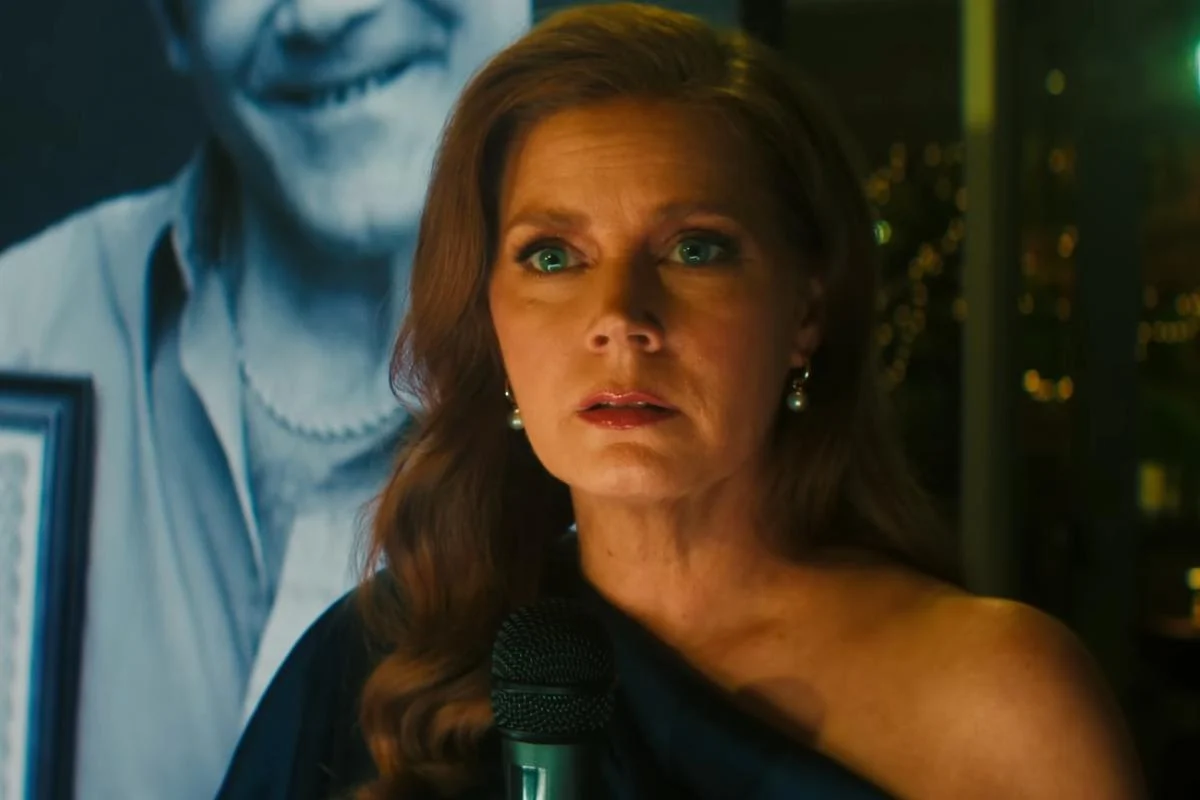
The narrative of a man seeking vengeance against those who wronged him, particularly the legal system that imprisoned him, has proven remarkably resilient across cinematic and televisual landscapes. John D. MacDonald’s 1957 novel, The Executioners, brought to life first in J. Lee Thompson’s taut 1962 thriller Cape Fear and then in Martin Scorsese’s viscerally charged 1991 adaptation, has once again been reimagined for the streaming era. The recently concluded Apple TV+ series, also titled Cape Fear, attempts to update this classic tale of familial defense and primal fear for contemporary audiences. However, despite a pedigree of acclaimed filmmakers and a stellar cast, this latest iteration falters, failing to capture the psychological depth and narrative coherence that defined its predecessors.
The Genesis of Fear: A Cinematic Lineage
The story of Cape Fear is rooted in a profound exploration of good versus evil, and the fragility of the established order when confronted by pure, unadulterated malice. The original 1962 film, directed by J. Lee Thompson, cast Gregory Peck, an actor synonymous with integrity and moral rectitude, as lawyer Sam Bowden. Peck’s portrayal of Bowden, a man of unwavering principles, was crucial. His casting, mere months before he would embody the iconic Atticus Finch in To Kill a Mockingbird, effectively cemented his character as the embodiment of justice, making the terror inflicted by Robert Mitchum’s Max Cady all the more chilling. Mitchum delivered a performance of captivating menace, his Cady a charismatic sadist who weaponized his incarceration as a tool for psychological torture, systematically dismantling the Bowden family’s sense of security.
The 1991 remake, helmed by Martin Scorsese, shifted the moral compass, presenting a more morally ambiguous Sam Bowden, played by Nick Nolte. In this version, Bowden is not above compromising his ethics, even resorting to concealing evidence to ensure Cady’s conviction. This subtle, yet significant, alteration reflected the anxieties of a changing era, hinting at the erosion of absolute moral certainty. Robert De Niro, in a performance of electrifying intensity, brought Cady to life with an almost gleeful abandon, his malevolence amplified by the film’s grittier aesthetic and a heightened sense of psychological unraveling. Scorsese’s Cape Fear was a masterclass in suspense, a harrowing descent into the darkest corners of human depravity.
The Contemporary Canvas: Nick Antosca’s "Cape Fear" Series
It is against this formidable backdrop that Nick Antosca’s 10-episode series, boasting the formidable executive producing talents of Martin Scorsese and Steven Spielberg (who famously swapped directorial duties with Scorsese for Schindler’s List), arrived on Apple TV+. With a cast featuring Javier Bardem as the menacing Cady, and Amy Adams and Patrick Wilson as the formidable legal duo Anna and Tom Bowden, expectations were understandably high. The series promised a modern interpretation, one that would undoubtedly grapple with the unique anxieties of our current times, from the pervasive influence of social media to the complexities of the digital age. Given Antosca’s previous success with the deliciously unsettling Brand New Cherry Flavor, a solid, pulpy thriller seemed a reasonable anticipation.

Unfortunately, the reality of the series falls far short of these lofty expectations. The narrative, despite its promising premise and stellar cast, is plagued by significant plot holes that appear with alarming regularity. Characters, at times, behave in ways that defy logic, rendering their actions inexplicable. The stakes, which should be the lifeblood of a revenge thriller, feel perpetually absent, with every looming threat dissipating as quickly as it emerges, despite Bernard Herrmann’s iconic, dissonant score attempting to inject a sense of terror.
Unraveling the Narrative Threads: Plot and Character Deficiencies
The central premise of the series is straightforward: Max Cady, a dangerous criminal, is released from prison after 17 years, fueled by a burning desire for revenge against the lawyers, Anna and Tom Bowden, who orchestrated his incarceration. Anna, it is revealed, was Cady’s defense attorney when he was convicted of killing his pregnant wife. She convinced him to accept a plea deal, a decision that has haunted her ever since. Tom, her husband, served as the prosecuting counsel in the original trial. Now married with two children, Zack (Joe Anders) and Natalie (Lily Collias), the Bowden family finds themselves the target of Cady’s meticulously planned retribution.

However, the execution of this revenge plot is where the series begins to unravel. The repeated insistence from Anna and Tom that "no one must know what we have done" becomes a hollow refrain, especially when the grand reveal in the finale proves to be profoundly anticlimactic. The series introduces a plethora of supporting characters – mysterious women, Cady’s abusive family members, Anna’s disreputable father – and attempts to weave in commentary on the detrimental effects of social media. While these elements are not inherently flawed, their integration feels disjointed, adding layers of complexity without enhancing the core narrative.
The decision-making of the Bowden family, particularly Anna and Tom, is consistently perplexing. For individuals who have achieved significant success as lawyers, they make remarkably un-lawyerly choices, often undermining their own safety and the legal principles they presumably uphold. Their children, Zack and Natalie, are similarly portrayed as navigating a world of poor decisions, their actions often feeling like plot devices rather than organic character development.

A World of Inexplicable Choices: The Supporting Cast and Police Procedural Failures
The unreliability extends beyond the immediate family. The police force, Anna’s boss, and even the podcasters investigating the case all make decisions that strain credulity. The police, in one particularly baffling instance, fail to station a single officer at the Bowden residence after Max has escaped custody. The concept of incarceration itself seems to be treated with a casual disregard, with a revolving door policy for many characters, making Cady’s 17-year sentence feel like an anomaly rather than a testament to the justice system.
The Ensemble’s Struggle: Performance and Tone
The ensemble cast, which includes notable actors like Ron Perlman and Juliette Lewis (who reprised her role from the 1991 film, albeit in a different capacity), struggles to elevate the material. Performances often oscillate between over-the-top melodrama and a disconcerting lack of engagement, creating an uneven tonal landscape. Javier Bardem, a formidable actor, is given moments to shine in the finale, where he indulves in a more uninhibited performance. However, his efforts are largely undermined by the passive reactions of the surrounding cast, who offer him little more than sidelong glances, rendering his climactic pronouncements impotent.

The series also resorts to gratuitous violence, with scenes of extreme brutality like biting off toes and smashing heads. While intended to shock, these moments often feel disconnected from the narrative, serving as mere spectacle rather than contributing to character development or plot progression.
The Aftermath: A Disappointing Conclusion
By the time the credits roll on the tenth episode, the lingering sentiment is one of profound disappointment. The few redeeming qualities are the survival of the family pet (a cat, a departure from the dog in the films), the visually striking and saturated cinematography, and the inclusion of Blue Öyster Cult’s iconic song "(Don’t Fear) The Reaper." These elements, however, are insufficient to salvage a series that ultimately fails to live up to its legacy or its potential.

The Cape Fear franchise has consistently explored the primal fear of the outsider threatening the sanctity of the home and the perceived invincibility of the law. While the 1962 and 1991 iterations masterfully tapped into the zeitgeist of their respective eras, the 2024 series struggles to find its footing. It introduces modern anxieties but fails to integrate them organically into a compelling narrative. The result is a watered-down imitation, lacking the psychological depth, narrative coherence, and visceral impact that made its predecessors enduring classics. The story of a man defending his family remains a potent theme, but this latest iteration of Cape Fear suggests that simply updating the anxieties of the time is not enough; a strong, well-crafted narrative remains the true bedrock of suspense.
Cape Fear is currently streaming on Apple TV+.
