

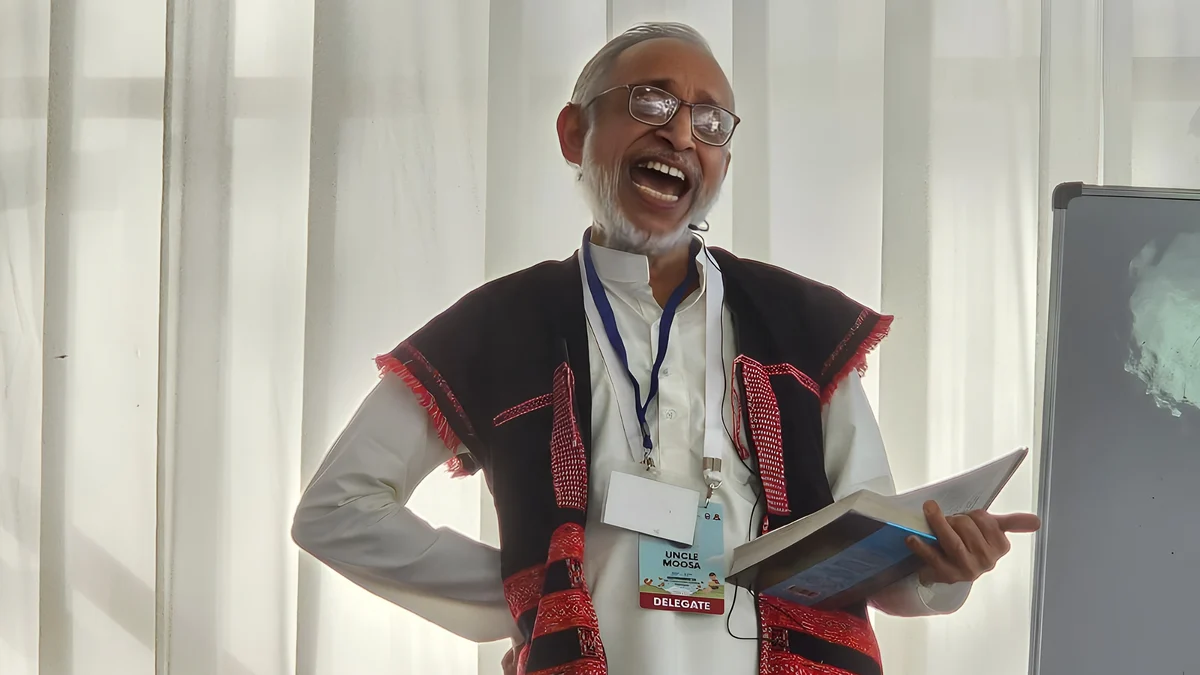
Sathyanarayanan Mundayoor, affectionately known as "Uncle Moosa" to generations of children in Arunachal Pradesh, embodies a profound belief in the transformative power of reading. What began as a young boy’s simple fascination with the cricket page of The Hindu has blossomed into a lifelong mission to bring the joy of literature and learning to remote corners of India. For over four decades, Mundayoor has dedicated himself to fostering a love for books, challenging conventional notions of education, and advocating for a more equitable and holistic learning experience for all. His journey, from a secure job in Mumbai to the vibrant landscapes of Arunachal Pradesh, is a testament to the idea that education is not merely about acquiring knowledge, but about cultivating curiosity, nurturing empathy, and fostering a lifelong passion for discovery.
From Cricket Pages to Community Libraries: A Life Dedicated to Literacy
Sathyanarayanan Mundayoor’s formative years were marked by a simple yet profound habit: devouring the daily newspaper, particularly the cricket section. "I was in Class 2," he recalls, his voice tinged with nostalgia, "I used to grab The Hindu and try to read the cricket news on the last page." This early exposure ignited a spark of curiosity that would define his life’s trajectory. Reading became not just a pastime, but a gateway to a world of knowledge, joy, and boundless discovery. It was this very realization that fueled his desire to share this transformative experience with others, especially those who lacked access to the simple pleasure of a book.
In 1979, Mundayoor made a life-altering decision. He left behind the perceived security of his job in Mumbai and embarked on a journey to Arunachal Pradesh. His initial motivation was not an adventurous spirit or a pre-conceived career in education. Instead, a newspaper advertisement from Vivekananda Kendra Kanyakumari, seeking volunteers to establish schools for first-generation learners, had captured his attention. "I thought this is a very interesting experiment in which I can definitely contribute something," he explains.

Upon arriving in December 1979, Mundayoor’s primary aim was to connect with the local communities. Within weeks, it became evident that schools offered a potent avenue to engage with the region’s youth. Despite lacking formal pedagogical qualifications, Mundayoor held a steadfast conviction that learning should be "free and open-ended," empowering children to explore and discover at their own pace. Reflecting on his decision, he expresses no regrets. His time in Arunachal Pradesh profoundly shaped his understanding of education, shifting the focus from rote memorization and syllabus completion to the intrinsic joy of acquiring new knowledge. "We came because work [was] an act of love," he asserts. "If it can give the joy of living, joy of learning, joy of growing up to the young people, that is the work."
The Teacher as a Learner: Embracing the Wisdom of Children
Mundayoor’s initial intention was to impart knowledge to the children of Arunachal Pradesh. However, he soon discovered that he was equally, if not more, of a student. "My best teachers have been the Arunachali children," he states with deep sincerity. Their lessons extended far beyond the confines of textbooks. From them, he learned practical skills such as gardening, working with natural materials, and performing everyday tasks with greater efficiency. More importantly, he learned the invaluable art of empathy, becoming acutely sensitive to the struggles and difficulties of others. "These were all beautiful lessons," he reflects. "They have been always teaching me how to become a better human being."
This reciprocal learning dynamic fundamentally reshaped Mundayoor’s philosophy of education. He believes that an educator cannot simply occupy a position of authority, expecting passive absorption. True learning, he posits, is a two-way street. "A teacher is a learner," he declares. This understanding likely contributed to his preference for the moniker "Uncle Moosa" over the conventional title of "teacher." "I would rather love to be someone who is a close friend of the children," he expresses. For him, the locus of learning is not confined to classrooms or libraries; it can flourish under a tree or on a veranda. The critical element is the nurturing relationship between the learner and the guide.

Beyond School Walls: The Rise of the Lohit Youth Library Movement
Mundayoor’s vision for education extends beyond the enrollment of children in schools. He recognized that formal schooling, while essential, did not always translate into a genuine love for reading. A child might learn to read for examinations without ever experiencing the sheer delight of getting lost in a story. This realization propelled him to focus on establishing libraries as central pillars of his educational endeavors.
His dedicated efforts culminated in the establishment of the Lohit Youth Library Movement in 2007. This initiative aimed to bring books and the joy of reading to young people residing in rural and underserved communities. These libraries were conceived not merely as repositories of books, but as vibrant spaces where children could freely explore their interests – whether it was delving into a comic book, discovering a captivating story, delving into the wonders of science, or simply pursuing a topic that piqued their curiosity. "Schools can produce systems, products of systems, but it cannot produce education," Mundayoor observes, highlighting the limitations of a purely institutional approach.
The Lohit Youth Library Movement also champions the role of young volunteers, whom Mundayoor affectionately terms "reader activists." Their mandate extends beyond personal reading to actively guiding others in discovering the magic of literature. "Readers today have to build up tomorrow’s readers," he emphasizes. This philosophy places adolescents at the forefront of the educational landscape, not merely as recipients of knowledge but as active agents in its dissemination.

Addressing the Gaps: Accessibility, Equity, and the Essence of Education
Mundayoor has witnessed significant advancements in educational accessibility over the decades. The proliferation of schools, enhanced access to information, and a burgeoning array of reading and digital resources are undeniable progress. However, he astutely points out that accessibility does not automatically equate to equality. His experiences in Arunachal Pradesh vividly illustrate the stark disparities in educational opportunities based on geographical location. Schools in district headquarters often boast essential amenities like electricity and water, coupled with better connectivity and access to qualified teachers. In contrast, remote villages often grapple with fundamental infrastructural challenges.
The COVID-19 pandemic brought this digital divide into sharp relief. The lack of universal access to smartphones, reliable electricity, and stable internet connectivity rendered digital learning inaccessible for many. "Even if you have a smartphone, it is just like another piece of plastic" in areas lacking connectivity, Mundayoor notes wryly. He identifies this uneven access as one of India’s most pressing educational challenges, underscoring the fallacy of assuming that opportunities available in urban centers are replicated in remote villages.
Beyond the issue of access, Mundayoor expresses concern about a more subtle yet profound gap: the distinction between schooling and education. He observes that educational institutions can become overly focused on producing compliant students who fit within a rigid system, thereby stifling the autonomy of both teachers and students to determine what, how, and why they learn. "A true education should be very open-ended," he advocates. Community libraries, in his view, serve as crucial spaces to bridge this gap, empowering children with the freedom to choose their learning paths and pursue their intellectual curiosities.

Cultivating Holistic Development: Learning by Doing and Valuing Mother Tongues
Mundayoor ardently believes that Indian schools should place greater emphasis on "learning by doing." He champions practical skills, citing simple tasks like changing a light bulb, fixing a leaky faucet, washing one’s own dishes, or maintaining personal space. These activities, he argues, equip children with problem-solving abilities and foster a hands-on approach to learning – a concept he describes as "thinking with hands." While a child in a rural setting might possess innate skills in gathering firewood, cultivating vegetables, or working with natural materials, a highly educated urban student might falter in performing basic repairs. "We must go back to the Gandhian thing that, yes, I must do my own work," he urges, referencing Mahatma Gandhi’s emphasis on self-reliance and practical skills.
Furthermore, Mundayoor advocates for the preservation and promotion of knowledge embedded within mother tongues. His work in Arunachal Pradesh has underscored the inextricable link between language, culture, and community identity. He calls for greater recognition and support for India’s smaller and marginalized languages, enabling children to engage with the wider world without severing their roots. "If he is strongly founded in his mother language," he explains, "learning other languages can become easier." This approach ensures that children can build upon their cultural heritage while acquiring new knowledge and perspectives.
Navigating the Digital Age: Books and Screens in Harmony
Mundayoor does not perceive smartphones as an inherent adversary to books. He acknowledges that not all children have equal access to digital devices or the internet. However, in contexts where smartphones are readily available, he has observed a discernible decline in reading habits, a trend that affects adults and educators alike. He posits that a teacher who cherishes reading is more likely to inspire students to embrace books. Conversely, a teacher engrossed in their smartphone may inadvertently convey a different set of priorities. Therefore, the debate is not simply about books versus screens, but about ensuring that young people have access to meaningful knowledge and, crucially, someone who can guide them in its discovery.

Guiding Young Minds: What Should Teenagers Read?
Mundayoor refrains from prescribing a singular reading list for all teenagers, recognizing that individual preferences are shaped by language, interests, and background. However, he strongly recommends inspiring biographies, works of non-fiction, historical accounts, and stories from diverse regions of India. He particularly advocates for young readers to explore narratives about lesser-known communities and regions, including the Northeast, and to engage with translations that offer glimpses into cultures beyond their own. "Before we think about foreign countries, we should also know more about the smaller, less-known parts of India," he emphasizes. This call to explore the intricacies of their own nation fosters a deeper appreciation for India’s rich tapestry of cultures and experiences.
The Legacy of Love: Passing on the Gift of Reading
After more than four decades of dedicated service, Mundayoor’s driving force remains remarkably simple: to impart a gift that he himself was fortunate enough to receive. As a child, reading bestowed upon him knowledge, ignited his curiosity, and brought him immense joy. He views these as precious endowments from his parents, elders, and his environment – a responsibility he feels compelled to share. "So, it’s my duty to share it with someone else," he states with conviction.
His work has transcended the realm of a mere profession; it has evolved into "work as an act of love." The people of Arunachal Pradesh have become an integral part of his journey. The Mishmi community affectionately calls him "Ambong," meaning uncle, and their warmth has made him feel like a member of their extended families. "I feel so much attached to them because of that quality of love, of unconditional love which they have poured on me," he shares, his voice resonating with emotion.

The journey is far from over. There are still countless young individuals who have yet to discover the profound joy of reading, and Mundayoor feels a deep-seated responsibility to reach them. His enduring mission is a testament to the belief that education is a continuous process of giving and receiving, a cycle of knowledge and love that benefits both the giver and the receiver.
A Call to Action: Become a Reader Activist
Mundayoor’s work, which began with the tangible act of distributing books, carries an implicit hope for continuity through the very children he has touched. His message to teenagers is empowering and actionable: one need not embark on grand expeditions or establish formal institutions to make a difference. "Look around you," he implores. "There may already be a younger child, friend, neighbour, or even an adult who needs help discovering books."
He urges them to "Become a reader activist in your neighbourhood." By forming teams, engaging with their communities, and actively seeking out opportunities, they can "share the joy of reading with them." If every reader can inspire another, this movement for literacy can perpetuate itself, passing the torch of knowledge and enthusiasm from one generation to the next. For Uncle Moosa, this embodies the true essence of education: it is not an endpoint but a continuous process of growth, amplified when the joy of learning is shared.
