

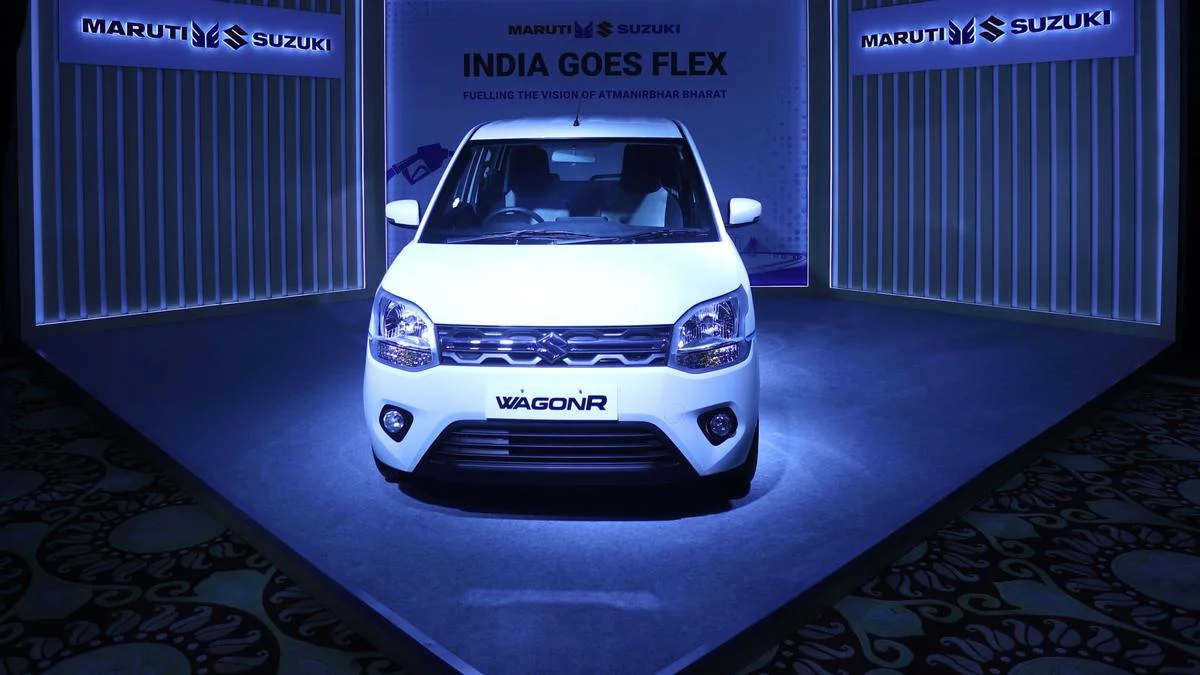
The Indian automotive landscape is currently undergoing a metamorphosis unlike any seen since the liberalization of the 1990s. At the heart of this transformation is a dual imperative: the urgent need to decarbonize a rapidly growing transport sector and the strategic necessity of reducing a staggering reliance on imported crude oil. While the global narrative has largely centered on Battery Electric Vehicles (BEVs), India is carving out a more nuanced, multi-modal path.
The recent unveiling of the Maruti Suzuki Wagon R Flex Fuel prototype marks a pivotal moment in this journey. By integrating flexible-fuel technology into one of the country’s most iconic and high-volume nameplates, Maruti Suzuki is signaling that the internal combustion engine (ICE) still has a significant role to play—provided it can adapt to a greener, more self-reliant future.
Main Facts: The Engineering Behind the Wagon R Flex Fuel
At first glance, the Maruti Suzuki Wagon R Flex Fuel maintains the familiar tall-boy silhouette that has made it a staple of Indian middle-class mobility. However, the true innovation lies beneath the hood. Unlike standard petrol engines, which can typically handle only up to 10% or 20% ethanol blending (E10 or E20), this variant is engineered to be fully compatible with ethanol-petrol blends ranging from E20 all the way to E100 (100% anhydrous ethanol).
Technical Sophistication
To achieve this level of flexibility, Maruti Suzuki’s engineers had to address the corrosive nature of ethanol and its different combustion characteristics. The vehicle features:
- Advanced Engine Control Unit (ECU): A sophisticated "brain" that utilizes sensors to detect the exact ethanol-to-petrol ratio in real-time. It then automatically adjusts ignition timing and fuel injection parameters to ensure optimal performance and fuel efficiency regardless of the blend.
- Reinforced Fuel System: Ethanol is hygroscopic (absorbs water) and can be corrosive to standard rubber and plastic components. The Wagon R Flex Fuel utilizes upgraded fuel pumps, injectors, and modified fuel lines to prevent degradation.
- Enhanced Engine Components: To handle the higher heat and different lubricity requirements of ethanol, the engine’s valves and valve seats have been hardened.
Positioning and Pricing
By choosing the Wagon R—a car synonymous with value and mass-market reach—Maruti Suzuki is moving flex-fuel technology out of the realm of "niche experimentation" and into the mainstream. The expected price point of INR 7.50 – 8.00 lakh positions it competitively, potentially making it the most affordable flex-fuel vehicle in the world upon its official commercial launch.
Chronology: India’s Decades-Long Ethanol Evolution
The journey toward the Wagon R Flex Fuel did not happen in a vacuum. It is the culmination of a decades-long policy push by the Government of India to integrate biofuels into the energy mix.

- 2003: The Ethanol Blending Programme (EBP) was first launched, initially targeting a modest 5% blending (E5) in select states. Progress was slow due to inconsistent feedstock supply.
- 2018: The National Policy on Biofuels was introduced, providing a much-needed framework to expand the scope of raw materials for ethanol production beyond sugarcane molasses to include damaged food grains, maize, and surplus rice.
- 2021-2022: The Prime Minister accelerated the target for 20% ethanol blending (E20) from 2030 to 2025. This move forced the automotive industry to rapidly re-engineer fuel systems for all new models.
- 2023: E20 fuel became available at select petrol pumps across India, and Maruti Suzuki showcased the Wagon R Flex Fuel prototype at the Auto Expo, demonstrating readiness for the next stage of the roadmap.
- 2024-2025: The focus has shifted toward the commercialization of Flex-Fuel Vehicles (FFVs) and Flex-Fuel Strong Hybrid Electric Vehicles (FFS-HEVs), with the Wagon R leading the charge for the mass market.
Supporting Data: The Economic and Environmental Imperative
The push for flex-fuel technology is driven by cold, hard data. India currently imports nearly 85% of its crude oil requirements, a dependency that drains the national exchequer and leaves the economy vulnerable to geopolitical volatility.
The Import Bill and Agricultural Synergy
In the 2022-23 fiscal year, India’s oil import bill exceeded $150 billion. By shifting toward domestically produced ethanol, the government aims to save billions in foreign exchange. Furthermore, ethanol production provides a direct economic stimulus to the agrarian sector.
- Feedstock Diversification: By utilizing sugarcane, corn, and broken rice, ethanol production provides a "safety net" for farmers, ensuring demand for surplus crops and stabilizing prices.
- Rural Wealth Creation: The expansion of ethanol distilleries creates localized employment and keeps energy spending within the domestic rural economy.
Emissions Profile
From an environmental standpoint, ethanol is a significantly cleaner-burning fuel than pure gasoline.
- Carbon Footprint: According to lifecycle assessments, E100 can reduce greenhouse gas (GHG) emissions by up to 79% compared to petrol, depending on the feedstock and production method.
- Tailpipe Pollutants: Ethanol-blended fuels typically result in lower emissions of carbon monoxide (CO), hydrocarbons (HC), and particulate matter, contributing to better air quality in India’s congested urban centers.
Official Responses: Industry and Government Alignment
The development of the Wagon R Flex Fuel is a result of tight collaboration between the Ministry of Road Transport and Highways (MoRTH) and the Society of Indian Automobile Manufacturers (SIAM).
Nitin Gadkari, Union Minister for Road Transport and Highways, has been a vocal proponent of this shift. In various industry forums, he has emphasized that flex-fuel is not just a "bridge" technology but a permanent pillar of India’s "Atmanirbhar Bharat" (Self-Reliant India) initiative. He has frequently urged manufacturers to bring FFVs to market as quickly as possible to provide consumers with an alternative to expensive fossil fuels.
Maruti Suzuki’s Leadership has echoed this sentiment. By showcasing the Wagon R, the company has stated that its strategy is "technology agnostic." While they are investing heavily in EVs, they recognize that for a country of India’s size and diversity, a single-track solution is insufficient. Their focus on flex-fuel, CNG, and hybrids ensures that they can meet the needs of different consumer segments while adhering to increasingly stringent emission norms.

Implications: Challenges, Consumer Adoption, and the Road Ahead
While the technical feasibility of the Wagon R Flex Fuel is proven, the path to widespread adoption is fraught with challenges that extend beyond the factory floor.
The Infrastructure Gap
The primary hurdle for FFVs is the "chicken and egg" problem of fuel availability. For a consumer to buy a car that runs on E85 or E100, they must be confident that they can find that fuel at any station. Currently, the infrastructure for E20 is still being rolled out; a separate dispensing network for higher ethanol blends will require significant capital investment from Oil Marketing Companies (OMCs).
The "Price-at-the-Pump" Dilemma
Perhaps the most critical factor for the Indian consumer is the cost of operation. Ethanol has a lower energy density than petrol, meaning a vehicle running on E100 will typically deliver lower mileage (kilometers per liter) than one running on petrol.
- Consumer Expectation: To offset the lower fuel economy, the price of ethanol at the pump must be significantly lower than that of petrol.
- Policy Intervention: The success of the Wagon R Flex Fuel will depend on the government’s ability to implement a pricing structure that makes ethanol an attractive financial proposition for the end-user.
Durability and Education
There remains a "trust deficit" among some vehicle owners regarding ethanol. Concerns about the long-term impact on engine life, cold-start issues in northern Indian winters, and the maintenance costs of specialized fuel systems are prevalent. Maruti Suzuki and other manufacturers face a significant task in educating the public on the robustness of modern flex-fuel engineering.
A Multi-Technology Future
The introduction of the Wagon R Flex Fuel reinforces the idea that the future of Indian mobility will be a "mosaic" of technologies.
- EVs for urban commuting and fleet operations.
- CNG for cost-conscious long-distance travelers.
- Flex-Fuel for those seeking a balance between the familiarity of ICE and the benefits of green energy.
- Hybrids for maximizing efficiency across all terrains.
Conclusion
The Maruti Suzuki Wagon R Flex Fuel is more than just a new variant of a popular car; it is a laboratory on wheels and a statement of national intent. It proves that the Indian automotive industry has the technical prowess to innovate for local conditions while meeting global environmental standards.

However, the hardware is only half the battle. For flex-fuel to truly become a mainstream reality, the surrounding ecosystem—comprising fuel pricing, distribution infrastructure, and consumer awareness—must evolve with the same speed as the engineering. If successful, this transition could transform India from an energy importer to an energy-secure nation, fueled by its own fields and driven by its own technology.
Maruti Suzuki Wagon R Flex Fuel expected price: (INR 7.50 – 8.00 lakh)
Motorscribes, in association with The Hindu, brings you the latest in cars and bikes. Follow them on Instagram @motorscribes
