

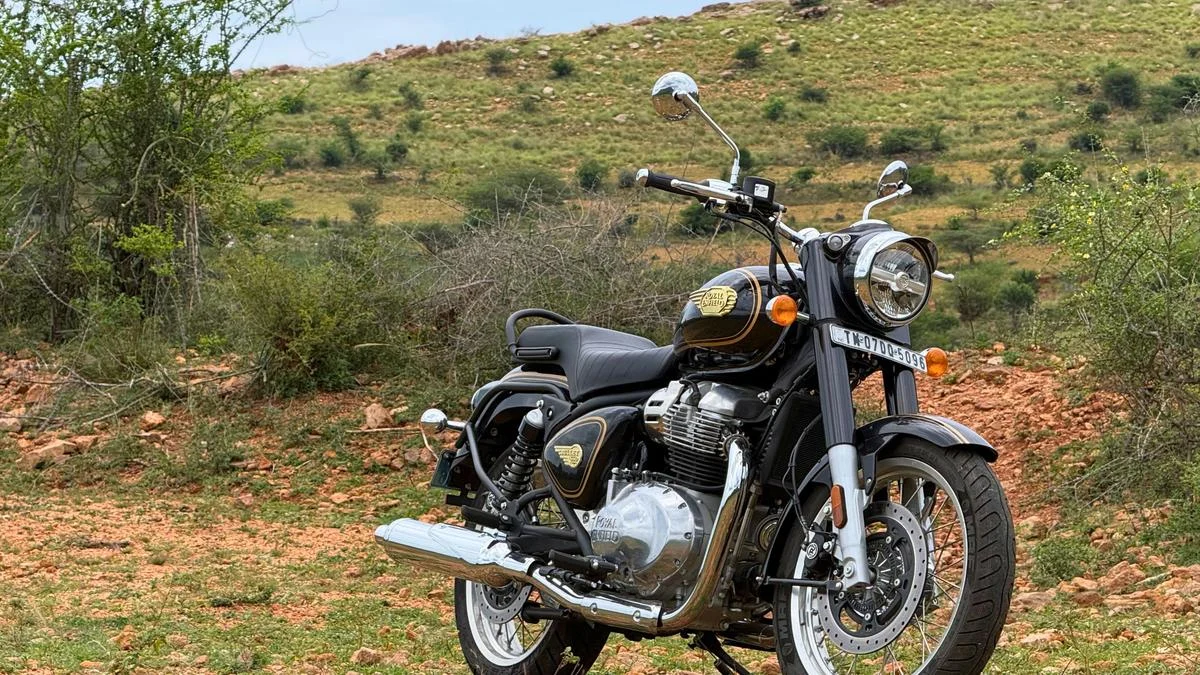
The Royal Enfield Bullet is not merely a motorcycle; it is a cultural institution. As the longest-running motorcycle model in continuous production, the Bullet has served as the backbone of the Indian motorcycling landscape for decades. However, the automotive world is shifting, and the demand for higher displacement, greater refinement, and long-distance touring capability has never been higher. Enter the Royal Enfield Bullet 650.
By marrying the iconic aesthetic of the Bullet with the critically acclaimed 648cc parallel-twin platform, Royal Enfield has created a machine that seeks to bridge the gap between mid-century nostalgia and 21st-century engineering. Priced at ₹3.64 lakh (ex-showroom), the Bullet 650 represents the pinnacle of the brand’s heritage lineup.
I. Main Facts: The Fusion of Heritage and Modernity
The Bullet 650 arrives as the fourth major installment in Royal Enfield’s 650cc twin-cylinder family, following the Interceptor, the Continental GT, and the recently launched Classic 650. While its siblings lean toward roadster, cafe racer, or neo-retro styling, the Bullet 650 remains steadfastly committed to the "Standard" silhouette that has defined the brand since 1932.
Key Specifications at a Glance:
- Engine: 648cc, air-oil cooled, parallel-twin SOHC.
- Power: 47 PS at 7,250 rpm.
- Torque: 52.3 Nm at 5,650 rpm.
- Transmission: 6-speed constant mesh with a slipper clutch.
- Chassis: Steel tubular spine frame.
- Weight: 243 kg (Kerb).
- Price: ₹3.64 Lakh (Ex-showroom).
The design philosophy is one of "evolution, not revolution." The motorcycle retains the signature teardrop-shaped fuel tank, complete with the legendary hand-painted gold pinstripes—a craft passed down through generations of artisans at the Chennai plant. The "Tiger Eye" pilot lamps, the squared-off rear mudguard, and the chrome peashooter exhausts are all present, ensuring that even from a distance, the 650 is unmistakably a Bullet.

II. Chronology: The Journey to the Twin-Cylinder Era
The path to the Bullet 650 began in 2018 with the global launch of the Interceptor 650 and Continental GT 650. These models signaled Royal Enfield’s intent to move beyond the "thumper" single-cylinder engines that had defined them for half a century.
- The Single-Cylinder Legacy (1932–2023): For nearly 90 years, the Bullet relied on various iterations of the 350cc and 500cc single-cylinder engines. From the cast-iron blocks to the Unit Construction Engines (UCE) and finally the J-Series, the "thump" was the motorcycle’s primary selling point.
- The 650 Platform Success (2018–Present): The 648cc parallel-twin platform was developed at Royal Enfield’s UK Technology Centre. It was designed to be "over-engineered," prioritizing reliability and smooth torque delivery over sheer top-end speed.
- The Transition: After the successful integration of this engine into the Super Meteor and the Shotgun, the company turned its attention to its most sacred nameplates: the Classic and the Bullet. The launch of the Bullet 650 marks the final stage of this transition, bringing the flagship engine to the brand’s most traditional chassis style.
III. Supporting Data: Engineering and Performance Deep-Dive
The Heart of the Machine: The Parallel-Twin
The transition from a single-cylinder to a parallel-twin is the most significant change in the Bullet’s history. The 648cc unit produces a linear power curve that is remarkably approachable. Unlike modern high-revving twins, this engine delivers its 52.3 Nm of torque early in the rev range, allowing for effortless cruising.
One of the most debated changes is the exhaust note. The traditional rhythmic "thump" has been replaced by a 270-degree firing order rumble. While purists may initially miss the old cadence, the new "throaty roar" is deeper and more mature, reflecting the bike’s increased performance capabilities.
Ride Quality and Suspension
To manage the significant weight and power of the 650cc engine, Royal Enfield equipped the Bullet with a robust suspension setup:

- Front: 43mm telescopic forks with 120mm of travel.
- Rear: Twin shock absorbers with 90mm of travel.
Despite a kerb weight of 243 kg, the motorcycle feels planted. The 1,480mm wheelbase provides exceptional straight-line stability, making it an ideal candidate for long-distance touring on Indian highways. The 19-inch front and 18-inch rear wheel combination maintains the traditional stance while offering a wide contact patch for better grip.
Braking and Safety Systems
Safety is handled by a dual-channel ABS system as standard. The 320mm front disc and 300mm rear disc, both utilizing twin-piston floating calipers, provide progressive and predictable stopping power. This is a critical upgrade over previous generations, where braking was often described as "adequate" rather than "inspiring."
Real-World Efficiency
In controlled testing environments, Royal Enfield claims a fuel efficiency of over 25 kmpl. However, real-world data paints a more nuanced picture. In "spirited" riding conditions—including hill climbs and high-speed highway runs—the bike averages approximately 18 kmpl. For a 650cc machine of this mass, these figures remain competitive within the mid-capacity cruiser segment.
IV. Official Responses: Positioning and Market Strategy
While formal executive quotes are often reserved for press releases, the positioning of the Bullet 650 reveals Royal Enfield’s strategic intent. The company is positioning this motorcycle as the "Ultimate Cruiser for the Traditionalist."

Bullet 650 vs. Classic 650: The Internal Rivalry
A common question within the enthusiast community is how the Bullet 650 differs from the Classic 650. From an engineering standpoint, they are twins. However, Royal Enfield’s marketing strategy focuses on the "purity of experience."
- The Classic 650 is aimed at the "lifestyle" rider, featuring more chrome, intricate badging, and a slightly different seating arrangement.
- The Bullet 650 is for the "heritage enthusiast." It is more understated, focusing on the historical pinstripes and the iconic "Standard" seat design that emphasizes utility and comfort over flair.
The company’s decision to keep the 800mm seat height suggests they are targeting the global market, where taller riders are common, though it poses a challenge for the average Indian rider when maneuvering the 243 kg mass at a standstill.
V. Implications: The Future of the Heritage Brand
The arrival of the Bullet 650 has several long-term implications for the motorcycling industry and the Royal Enfield brand.
1. The End of the "Vibration" Era
For decades, the Bullet was known for its characterful vibrations. The 650 platform effectively eliminates this. This shift implies that Royal Enfield is no longer content with being a "niche" retro manufacturer; they are competing directly with global brands like Triumph and Honda in terms of refinement and build quality.

2. Democratizing the "Big Bike" Experience
At ₹3.64 lakh, the Bullet 650 is one of the most accessible twin-cylinder motorcycles in the world. This price point democratizes the "big bike" experience, allowing riders who grew up on 350cc commuters to graduate to a machine capable of sustained 100-120 kmph cruising without breaking the bank.
3. The Purist’s Dilemma
The removal of the "thump" is a polarizing move. The implication here is that Royal Enfield is betting on a new generation of riders—those who value the look of the Bullet but demand the performance of a modern twin. Whether the brand can maintain its soul without its signature sound remains to be seen, but early sales figures for the 650 platform suggest the market is ready for the change.
4. Touring Capability
With a powerful headlight, stable chassis, and relaxed ergonomics, the Bullet 650 is arguably the best "pure" tourer in the Royal Enfield lineup for those who don’t want the adventure-styling of the Himalayan. It reinforces the idea that the Bullet is a "go-anywhere" machine, now with the power to actually get there faster.
Final Verdict: A Legend Reimagined
The Royal Enfield Bullet 650 is a masterclass in brand management. It manages to preserve the visual DNA of a century-old legend while adopting a powertrain that is thoroughly modern. It is a heavy, substantial, and imposing motorcycle that demands respect, yet it remains surprisingly approachable due to its smooth power delivery and neutral handling.

For the rider who wants a piece of history but refuses to compromise on highway performance, the Bullet 650 stands alone. It is no longer just a motorcycle for the Sunday morning ride; it is a machine built for the open road, the cross-country tour, and the next chapter of the Royal Enfield story.
This report was prepared in association with Motorscribes and The Hindu. For the latest updates on the automotive world, follow @motorscribes on Instagram.
