

By [Journalist Name/News Bureau]
In the vast landscape of Indian infrastructure, the construction of a highway is often viewed through the lens of asphalt, concrete, and engineering milestones. However, occasionally a project emerges that transcends its physical dimensions to become a catalyst for regional metamorphosis. The Delhi-Amritsar-Katra (DAK) Expressway is one such project. Stretching 670 kilometers across the heart of North India, this high-speed artery is no longer a mere blueprint; it is a developing reality that is already recalibrating land values, industrial logistics, and the spiritual geography of the nation.
As the National Highways Authority of India (NHAI) pushes toward a phased opening, the project stands at a critical juncture—balancing significant construction progress against a backdrop of escalating costs and shifting deadlines.
Main Facts: A Vision for North Indian Connectivity
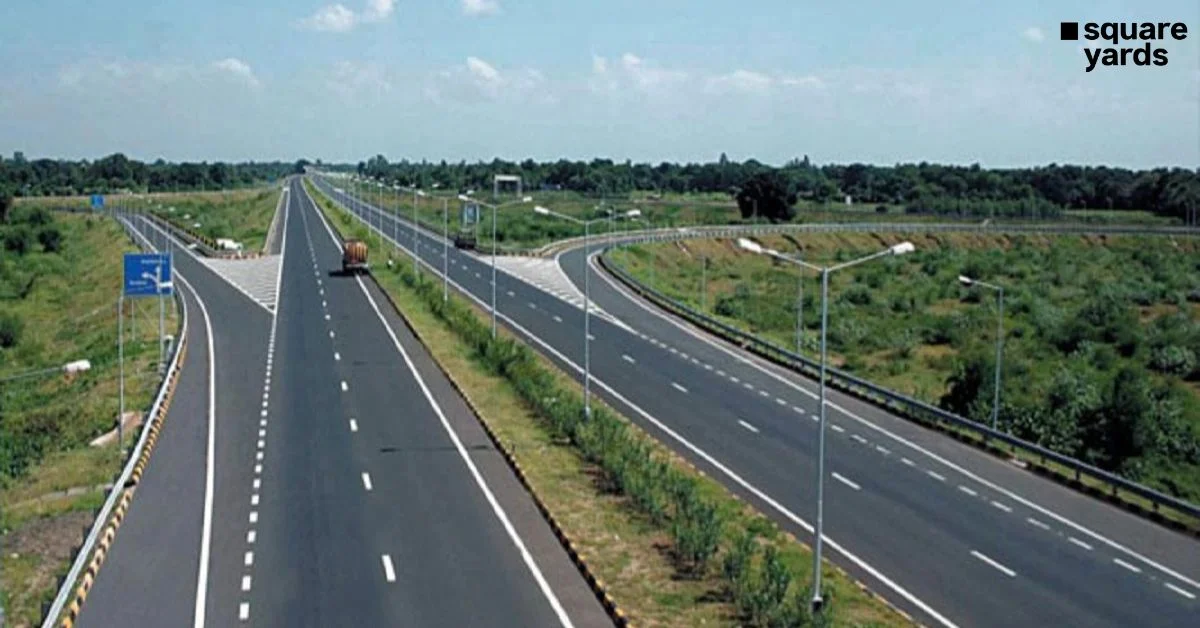
The Delhi-Amritsar-Katra Expressway is designed as a six-lane, access-controlled greenfield and brownfield project, with the inherent capacity to be expanded to eight lanes as traffic demands evolve. Its primary objective is to link Bahadurgarh, on the periphery of Delhi, to the holy town of Katra in Jammu and Kashmir, while providing a dedicated spur to the historic city of Amritsar.
The scale of the transformation is best understood through travel time metrics. Currently, the journey from the national capital to Amritsar—a route central to India’s grain belt and religious tourism—takes approximately eight hours. Upon the expressway’s completion, this will be halved to four hours. More dramatically, the 14-hour arduous trek from Delhi to the Vaishno Devi shrine in Katra will be reduced to a mere six hours.
In a significant operational update, the NHAI confirmed this month that a crucial segment of the corridor is now ready for deployment. The stretch from Balsua in Punjab to the Ring Road at Raya is prepared to receive traffic. In a move that highlights the project’s strategic and social importance, authorities plan to open this section in June to facilitate the movement of Amarnath pilgrims, providing a safer and faster route for the millions who undertake the annual yatra.
Chronology: From Ambition to Real-World Obstacles
The journey of the DAK Expressway has been marked by ambitious targets met with the complex realities of Indian infrastructure development.
- Initial Conception and Targets: The project was initially envisioned with an aggressive completion target of October 2023. It was framed as a centerpiece of the Bharatmala Pariyojana, intended to boost the economy of Punjab, Haryana, and Jammu & Kashmir.
- The Period of Delays: As the project progressed, the timeline began to shift. The target was first moved to 2025 as land acquisition hurdles in Punjab became apparent. These delays were compounded by the complexities of securing clearances for several major railway overbridges (ROBs) and the logistical disruptions caused by "Operation Sindhoor."
- 2024 Milestones: Despite the setbacks, 2024 has seen the completion of significant engineering feats. Physical progress on construction packages in Punjab and Jammu and Kashmir currently stands between 85% and 95%. Major river bridges over the Ravi, Ujh, Tarnah, and Basantar rivers are nearing final completion.
- Revised Deadlines: Union Minister for Road Transport and Highways, Nitin Gadkari, and NHAI officials have recently adjusted the working target. While December 2026 was the previous goal, March 2027 is now the realistic window for most of the project. Phased completion of the most difficult stretches could now extend into March 2028.
Supporting Data: The Cost of Progress and Engineering Feats
The financial and physical data surrounding the DAK Expressway reveal both the project’s magnitude and the challenges of large-scale infrastructure.
Financial Escalation
The project’s fiscal footprint has expanded significantly. Originally estimated at 250 billion rupees (INR 25,000 crore), the cost has climbed to approximately 389 billion rupees (INR 38,900 crore). This 55% increase is attributed to:
- Rising costs of raw materials (steel and cement).
- Increased compensation for land acquisition.
- Complex engineering solutions required for river crossings and hilly terrain in the Jammu sector.
Engineering and Infrastructure
The 100-kilometer Balsua-to-Raya section serves as a microcosm of the project’s complexity. It spans three construction packages and includes:
- Major River Bridges: Essential crossings over the Ravi and Ujh rivers which are critical for year-round connectivity.
- The Devak Bridge: Located near AIIMS Vijaypur, this bridge is already operational and carrying traffic, providing an early proof-of-concept for the corridor’s utility.
- Connectivity Hubs: The expressway is designed to integrate with the Kundli-Manesar-Palwal (KMP) Expressway, allowing commercial traffic to bypass the congestion of Delhi entirely when moving toward Agra, Jaipur, or central India.
Early Adoption Metrics
In a rare phenomenon, the expressway is being utilized even before its formal inauguration. Residents in the Ludhiana-Malerkotla-Sangrur belt report a 25% saving in fuel and time on local journeys. Travel operators have begun using the Patran-to-Khanauri stretch, citing the immediate economic benefits of reduced vehicle wear and tear and faster turnaround times.
Official Responses and Tactical Challenges
The NHAI and the Ministry of Road Transport and Highways have been transparent about the "growing pains" of the project. Officials acknowledge that while the engineering is sound, the human and environmental factors have been the primary bottlenecks.
Land Acquisition in Punjab: This remains the most persistent challenge. Protests and negotiations regarding compensation rates have slowed progress in several packages across the state. NHAI officials have stated they are working closely with state authorities to resolve these "pockets of resistance" to ensure a continuous corridor.
Environmental Hurdles: The 147-kilometer stretch in Jammu and Kashmir faced severe disruptions due to heavy rains and flash flooding. These natural events necessitated a redesign of certain drainage systems and reinforced embankments, adding both time and cost to the project.
The "Pilgrim-First" Strategy: By opening the Balsua-Raya stretch in June, officials are signaling that the project is being prioritized based on social utility. The decision to open sections for the Amarnath Yatra is a tactical move to ease the burden on existing state highways during peak travel seasons.
Implications: The Real Estate and Economic Ripple Effect
The most profound long-term impact of the DAK Expressway is not the road itself, but the economic activity it will generate. Historically, high-speed corridors in India—such as the Yamuna Expressway—have led to a "re-pricing" of land that often catches casual observers by surprise.
1. The Urban Hubs: Amritsar and Ludhiana
Amritsar is poised for a real estate evolution. With a current average property price of ₹7,126/sq. ft, the city is already seeing a range of investments from ₹24 lakhs to ₹4 crore. The reduction of travel time from Delhi to four hours transforms Amritsar from a "long-haul" destination into a "weekend-trip" possibility for the NCR’s affluent population. This is expected to drive demand for premium hospitality, second homes, and organized retail.
Ludhiana, the industrial powerhouse of Punjab, is seeing a different trend. With prices averaging ₹7,296/sq. ft, the focus here is on logistics. The expressway strengthens the case for massive warehousing hubs and "Inland Container Depots" (ICDs) that can feed into the Ludhiana-Delhi-Kolkata Industrial Corridor.
2. The Emerging Industrial Belt: Malerkotla and Sangrur
The Malerkotla-Sangrur region, where prices currently average ₹8,148/sq. ft, represents the "dark horse" of the corridor. As industrial real estate expands, residential development invariably follows. The proximity to the expressway makes these towns attractive for mid-tier manufacturing units that require fast access to both the Delhi markets and the northern borders.
3. The Hospitality Frontier: Katra
Katra has historically been a "one-night-stay" destination due to the exhausting nature of the journey. A six-hour drive from Delhi changes the calculus. Investors are looking at Katra and the broader Jammu region for high-end hospitality projects and wellness retreats, anticipating a shift in pilgrim behavior from "quick visits" to "extended stays."
4. Strategic Advice for Stakeholders
For homebuyers and investors, the "window of opportunity" is narrowing. Experts suggest four key considerations:
- The Interchange Factor: Property value is dictated by proximity to interchanges, not just the road itself. A property 5km from an exit is exponentially more valuable than one 20km away.
- The Pricing Window: Current valuations in many corridor towns still reflect pre-expressway fundamentals. Once the road is fully operational, "developer-led inflation" is expected to spike prices.
- The NRI Connection: For the Punjabi diaspora, the expressway provides a tangible reason to reinvest in ancestral regions, as connectivity to major airports and Delhi becomes seamless.
- Patience and Timeline: While the project is "real," the 2027/2028 timeline for full completion means that investors must have a medium-to-long-term horizon.
Conclusion: Beyond the Asphalt
The Delhi-Amritsar-Katra Expressway is more than a feat of civil engineering; it is a bridge between India’s industrial future and its deep-rooted spiritual heritage. By linking the national capital to the Golden Temple and the Vaishno Devi shrine, the government is not just moving vehicles—it is facilitating the movement of faith, commerce, and people.
The Balsua-to-Raya opening in June is a symbolic milestone. It serves as a reminder that despite the delays, the cost overruns, and the complexities of land acquisition, the corridor is transitioning from a vision to a functional reality. For those watching the property markets and the industrial charts, the message is clear: the map of North India is being redrawn, and the center of gravity is shifting toward the expressway.
