

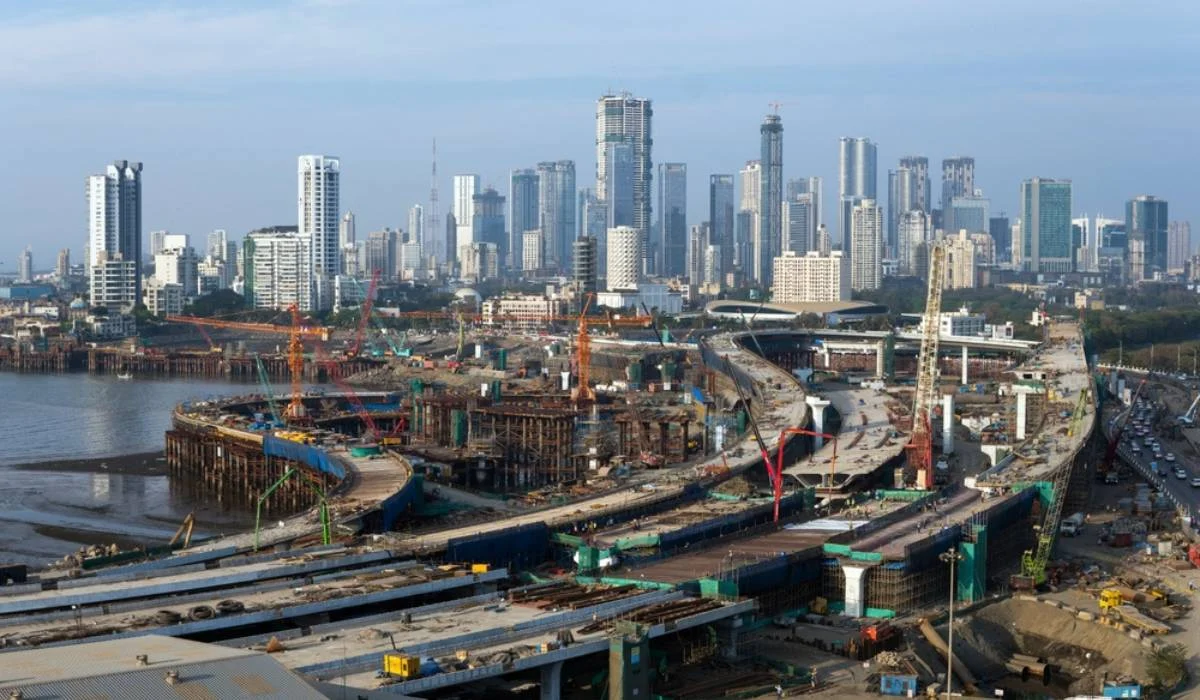
MUMBAI – For decades, the narrative of Mumbai’s real estate market was one of geographic scarcity and historical prestige. To own a "luxury" home meant securing a pin code in the narrow, southern tip of the island city. However, a seismic shift is underway. Mumbai’s real estate story is no longer being written by legacy alone; it is being dictated by the rapid expansion of high-capacity infrastructure.
As metro lines crisscross the suburbs, coastal roads bridge distant shores, and a new international airport takes shape, the city’s geography is being compressed. This physical transformation is doing more than just easing the daily commute for millions; it is fundamentally reshaping where people want to live, how developers conceptualize projects, and which micro-markets are emerging as the city’s next premium addresses. In contemporary Mumbai, infrastructure is no longer a secondary amenity—it has become the primary driver of capital appreciation and lifestyle evolution.
Main Facts: The New Determinants of Property Value
The traditional "South Mumbai vs. Suburbs" binary is dissolving. The current market cycle is characterized by "Infrastructure-Led Growth," where the value of a property is increasingly tied to its proximity to transit hubs and high-speed corridors.
Key trends currently defining the market include:
- The Decentralization of Luxury: High-Net-Worth Individuals (HNWIs) are moving away from the congested streets of South Mumbai toward the Western Suburbs and Navi Mumbai, where land availability allows for more expansive, amenity-rich developments.
- Transit-Oriented Appreciation: Proximity to a Metro station (typically within a 1 km radius) now serves as a guarantee for price appreciation, often outperforming the broader market by significant margins.
- The Rise of Integrated Townships: Buyers are prioritizing "ecosystem living"—gated communities that offer security, green spaces, and wellness facilities—over standalone luxury towers in crowded districts.
- Time as the New Currency: The reduction in travel time facilitated by the Coastal Road and the Mumbai Trans Harbour Link (MTHL) has effectively "re-mapped" the city, making distant suburbs viable for C-suite executives and business owners.
Chronology: From Geographic Constraints to Connectivity-Led Expansion
To understand the current boom, one must look at the chronological evolution of Mumbai’s transit landscape and its subsequent impact on real estate:
The Legacy Era (Pre-2010): For most of Mumbai’s modern history, real estate value was strictly concentric. The closer a property was to Nariman Point or Colaba, the higher its value. The suburbs were largely viewed as residential dormitories with limited infrastructure, characterized by heavy reliance on the aging Local Train network.
The Transit Transition (2014–2020): The inauguration of Metro Line 1 (Versova-Andheri-Ghatkopar) marked the first major shift. It proved that east-west connectivity could drastically alter property demand. During this period, developers began eyeing larger land parcels in the North, anticipating a city-wide metro network.
The Post-Pandemic Acceleration (2021–Present): The convergence of the COVID-19 pandemic and the completion of major infrastructure projects accelerated a shift in buyer psychology. The pandemic increased the demand for larger homes and "better living," while the operationalization of Metro Lines 2A and 7 in the Western Suburbs provided the necessary connectivity to make these larger homes practical.
The Current Phase (2024 and Beyond): We are now in the "Connectivity Convergence" phase. With the Mumbai Coastal Road (Phase 1) operational and the MTHL (Atal Setu) open, the city is experiencing a simultaneous surge in value across both its western and eastern flanks.
Supporting Data: Quantifying the Infrastructure Impact
The correlation between infrastructure and real estate value is backed by robust data. According to the Mumbai Property Exchange infra-impact tracker, the following trends have emerged:
1. The Metro Multiplier
Residential markets within a 1 km radius of a metro station typically witness a 20% to 35% price appreciation within the first two years of the line becoming operational. In the Western corridor, markets like Borivali and Kandivali have seen a 15% to 20% surge in prices following the launch of Metro Lines 2A and 7. This appreciation is driven by "commute predictability," a factor that was previously absent in Mumbai’s road-reliant transport system.
2. The Coastal Road Effect
The Mumbai Coastal Road has arguably had the most dramatic impact on market perception. By reducing travel time between South Mumbai and the Western Suburbs from 60 minutes to a mere 15 minutes, it has effectively brought the suburbs into the "prime" fold. Nodes located near the entry and exit points of the Coastal Road have seen a 15% to 25% impact on property prices, as the "commute penalty" for living in the suburbs has been largely eliminated.
3. The MTHL and the Navi Mumbai Uplift
The Mumbai Trans Harbour Link (Atal Setu) has fundamentally altered the Navi Mumbai narrative. By cutting the journey from Navi Mumbai to South Mumbai from 90 minutes to approximately 20 minutes, it has unlocked massive value in emerging markets. Data suggests a 30% to 40% uplift in property values in micro-markets like Ulwe and Panvel, which are now being positioned as the "South Mumbai of the future."
Official Responses and Expert Perspectives
Industry leaders and market analysts suggest that the shift we are seeing is structural rather than cyclical.
The Director of CCI Projects notes that the definition of "prime" has undergone a radical transformation. "For decades, luxury was about the address. Today, luxury buyers are placing equal weight on ease of movement, privacy, space, and a more complete living experience," he states. "This shift has worked strongly in favor of the western suburbs—Goregaon, Malad, Kandivali, and Borivali—which have steadily moved into the luxury bracket."
Developers argue that the Western belt’s ability to offer "larger-format homes" is its greatest competitive advantage. Unlike the structurally constrained environments of South Mumbai, the suburban markets allow for scale. This allows for the integration of "standard expectations" such as wellness zones, private amenity decks, and gated community planning that older prime districts simply cannot accommodate.
Urban planners also point to the "Airport Ecosystem" as the next big driver. With the Navi Mumbai International Airport expected to open soon, it will unlock new commercial and employment clusters. Historically, airports create surrounding hubs of hospitality, logistics, and office spaces, which in turn fuels long-term residential demand.
Implications: The Future of Mumbai’s Urban Fabric
The implications of this infrastructure-led surge are profound for investors, homeowners, and city planners alike.
1. The Rise of the Polycentric City
Mumbai is evolving from a mono-centric city (revolving around the South) to a polycentric one. Multiple "hubs" of luxury and commerce are emerging. The Western Suburbs are becoming the hub for high-end residential living, while Navi Mumbai is positioning itself as the next commercial frontier. This decentralization is likely to lead to more balanced urban growth and reduced pressure on the historical city center.
2. Lifestyle over Location
The "living better within the city" sentiment is driving a move toward township-style formats. Luxury homebuyers are increasingly leaning toward environments that offer security, open green spaces, clubhouses, and sports infrastructure within a single development ecosystem. This trend is likely to marginalize standalone luxury buildings that cannot offer a comprehensive lifestyle package.
3. Sustained Capital Appreciation
Because multiple large-scale infrastructure projects—the Metro expansion, the Coastal Road, and the MTHL—are unfolding simultaneously, they are creating a compounding effect on property values. Unlike previous cycles where growth was localized, the current cycle is lifting the entire city’s real estate floor.
4. The "Premiumization" of the Suburbs
Areas once considered "middle-class" are undergoing rapid gentrification. As infrastructure makes these areas more accessible to high earners, the quality of construction and the price per square foot are rising to meet luxury standards. This "premiumization" will likely continue as the Metro network expands further into the northern and eastern fringes of the Mumbai Metropolitan Region (MMR).
Conclusion
The era of luxury housing being confined to a few traditional enclaves is over. Mumbai’s infrastructure push is widening the map, creating new corridors of wealth and opportunity. The convergence of improved commute predictability, larger living spaces, and modern amenities has shifted the gravity of the market toward the suburbs and Navi Mumbai.
As the city continues to integrate its various transit systems, the real winners will be those who recognize that in the new Mumbai, value is not just about where you are—it is about how quickly and comfortably you can get to where you need to be. For the Mumbai real estate market, the road to luxury is now literally paved with new highways and metro tracks.
