

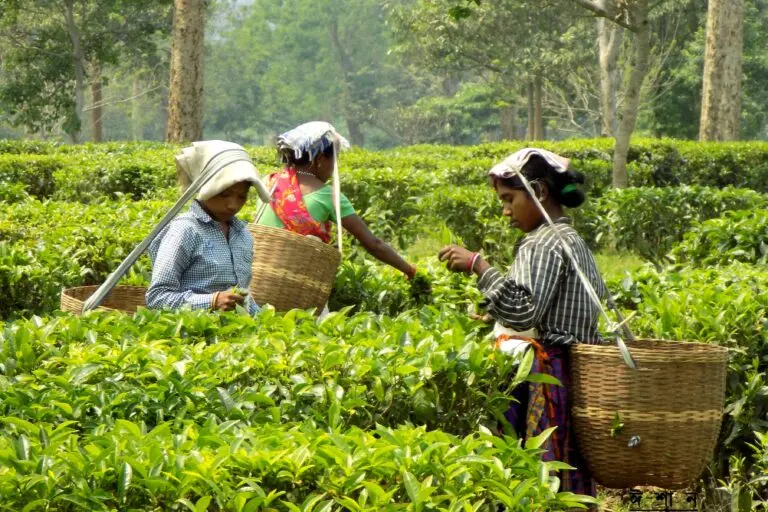
As the mercury climbs across the Indian subcontinent each summer, the national discourse typically centers on the searing, arid heat of Rajasthan or the blistering pavements of Delhi. In these regions, the India Meteorological Department (IMD) frequently issues "heatwave" alerts as temperatures soar past 45°C. However, a different and arguably more insidious climate crisis is unfolding in the northeastern state of Assam.
Despite recording temperatures that consistently push the limits of human endurance, Assam rarely qualifies for an official heatwave status under national criteria. This "definitional blind spot" masks a growing public health emergency driven by a combination of rising temperatures, extreme humidity, and rapid, unplanned urbanization.
Main Facts: The Invisible Heat Crisis
The primary challenge facing Assam is a discrepancy between recorded air temperature and the physiological "feels-like" temperature. While Central India faces "dry heat," Assam grapples with "humid heat." Under current IMD protocols, a heatwave in the plains is declared only when the maximum temperature reaches at least 40°C and departs from the normal by 4.5°C to 6.4°C for two consecutive days.
Because Assam’s base temperatures are historically lower than the northern plains, and because its humidity is significantly higher, the state often suffers through extreme heat stress that fails to trigger official warnings. Environmental scientists and public health experts warn that this lack of formal recognition has led to a systemic lack of preparedness, leaving the state without a dedicated Heat Action Plan (HAP) even as its major cities become increasingly uninhabitable during peak months.
The Role of Humidity and Wet-Bulb Temperature
The human body cools itself primarily through the evaporation of sweat. In Assam, where relative humidity during the pre-monsoon and monsoon months fluctuates between 75% and 95%, this natural cooling mechanism is severely compromised.

Partha Jyoti Das, an environmental scientist and Professor of Practice at Gauhati University, notes that the "Dry-Bulb Temperature" (DBT)—the standard measure used by the IMD—does not account for this moisture. Instead, experts point to "Wet-Bulb Temperature" (WBT) as a more accurate metric for Assam. WBT measures the lowest temperature achievable through evaporative cooling. When WBT reaches 35°C, even healthy humans in the shade can no longer regulate their body temperature, leading to heatstroke or death. Das argues that in Assam, a recorded temperature of 35°C with 80% humidity can create physiological stress equivalent to much higher temperatures in drier climates.
Chronology: A Record-Breaking Decade
The last several years have seen an unprecedented shift in Assam’s thermal landscape. Long-term data from the Assam State Action Plan on Climate Change 2.0 (ASAPCC 2.0) reveals a consistent warming trend between 1990 and 2019, with the annual average maximum temperature increasing by 0.049°C per year.
2023: The September Surge
In September 2023, the state witnessed a late-season heat spike that defied historical norms. Guwahati recorded 38.2°C, a staggering 6.4°C above the seasonal average. Silchar went further, hitting 39.4°C, which was 7.4°C above normal. These figures were early indicators that the traditional "cooling" months were shrinking.
2024: Breaking the 40°C Barrier
On May 25, 2024, Guwahati officially crossed the 40.1°C mark, at least 8°C above the normal for that time of year. While this met the numerical threshold for a heatwave, the accompanying humidity—ranging from 40% to 100%—pushed the "feels-like" temperature to a lethal 52°C. Later that year, September 2024 saw the city break its all-time record for the month with 39.3°C and an apparent temperature peaking at 53°C.
2025–2026: The New Normal
Recent data from July 2026 indicates that the trend is accelerating. Guwahati recorded a maximum of 36°C, but with humidity levels hitting 100%, the heat index again reached 52°C. These recurring episodes have forced the IMD to issue rare "yellow alerts" for cities like Dibrugarh, Tezpur, and Dhubri, signaling a shift in how the department views the region’s climate risk.

Supporting Data: Urban Heat Islands and Climate Vulnerability
The warming of Assam is not uniform; it is being intensified by local environmental degradation. Urban heat assessments conducted by the Directorate of Town and Country Planning between 2020 and 2025 highlight a grim transformation of the state’s three major urban centers.
Expanding Heat Corridors
- Guwahati: The state’s largest city is seeing its "heat islands"—pockets of the city significantly warmer than surrounding rural areas—expand into massive "heat corridors." This is driven by the loss of greenery and the shrinking of water bodies like the Deepor Beel, which historically acted as a thermal sink.
- Dibrugarh: The core of this Upper Assam city is experiencing intensifying heat due to densely built concrete structures that trap radiation during the day and release it slowly at night.
- Silchar: Emerging as the fastest-warming urban center in the state, Silchar is seeing a sharp rise in "critical heat-risk zones," where unplanned development has eliminated natural ventilation.
The Human Toll on the Next Generation
A 2026 study underscores the generational impact of this crisis. Researchers found that human-induced climate change has added nine to ten additional heat-stress days annually for children under the age of 10. In Assam, this is particularly dangerous. Madhulika Jonathan, UNICEF Chief of Field Office for Assam and Northeast States, explains that children are physiologically less capable of regulating their body temperature than adults.
"Heat exposure affects them through several channels at once," Jonathan says. "It impacts health, nutrition, and school attendance. In Assam, this vulnerability is compounded by recurring floods. We are seeing a situation where families in relief camps are simultaneously battling rising waters and life-threatening heat."
Official Responses: Moving Toward a Heat Action Plan
For years, the absence of a "heatwave" designation meant that Assam did not consider heat a primary disaster risk. This is beginning to change. While more than 250 cities in 23 other Indian states have operational Heat Action Plans (HAPs), Assam is only now laying the groundwork for its own.
The Heat Action Alliance
UNICEF, the Assam State Disaster Management Authority (ASDMA), and the Assam Climate Change Management Society (ACCMS) are currently exploring the establishment of a government-anchored "Heat Action Alliance." This proposed body aims to move away from a "one-size-fits-all" approach and instead develop localized strategies.

Rizwan Uz Zaman, a technical consultant at ACCMS, notes that the plan will be developed through extensive stakeholder consultation. "Assam has six distinct agro-climatic zones," Zaman explains. "We need a multi-criteria index that assesses heat risk across these zones specifically, rather than relying on national averages that don’t apply to our geography."
Policy and Financing Shifts
A significant breakthrough occurred recently when the Sixteenth Finance Commission recommended adding heatwaves to India’s national list of notified natural calamities. This policy shift is a game-changer for Assam. It creates a formal financing route for heat-related relief and allows the state to tap into the State Disaster Response Fund (SDRF) and National Disaster Response Fund (NDRF) for heat-mitigation projects.
Implications: A Paradigm Shift in Disaster Management
The emerging heat crisis in Assam necessitates a fundamental rethink of how India defines and responds to extreme weather.
Redefining Thresholds
There is a growing consensus among experts that the IMD must incorporate the Heat Index or Wet-Bulb Temperature into its official criteria for declaring heatwaves. For humid states like Assam, air temperature alone is a deceptive metric. Publicly disseminating "feels-like" temperatures alongside conventional readings could be a life-saving intervention, allowing citizens to understand the true level of risk.
Urban Planning as Climate Mitigation
The data from Guwahati and Silchar suggests that "heat-proofing" cities must become a priority. This includes:

- Restoring Wetlands: Reviving urban water bodies to provide natural cooling.
- Green Infrastructure: Implementing "cool roofs" and increasing the urban tree canopy to break up heat corridors.
- Revised Building Codes: Ensuring that new developments allow for natural airflow and use materials that do not retain excessive heat.
The Compounding Disaster Effect
Finally, Assam’s unique challenge lies in the intersection of heat and floods. Disaster management protocols must now account for "cascading risks." When a heatwave hits during a flood, the traditional response of moving people to crowded relief camps can become a death trap if those camps are not designed for thermal comfort.
As Assam navigates this new climatic reality, the shift from post-event relief to anticipatory action will be critical. The establishment of a state-level Heat Action Plan is no longer just a policy recommendation; it is a vital necessity for the survival of the region’s most vulnerable populations. The "definitional blind spot" has been identified; the task now is to ensure that policy catches up to the thermometer—and the hygrometer—before the next record-breaking summer arrives.
