

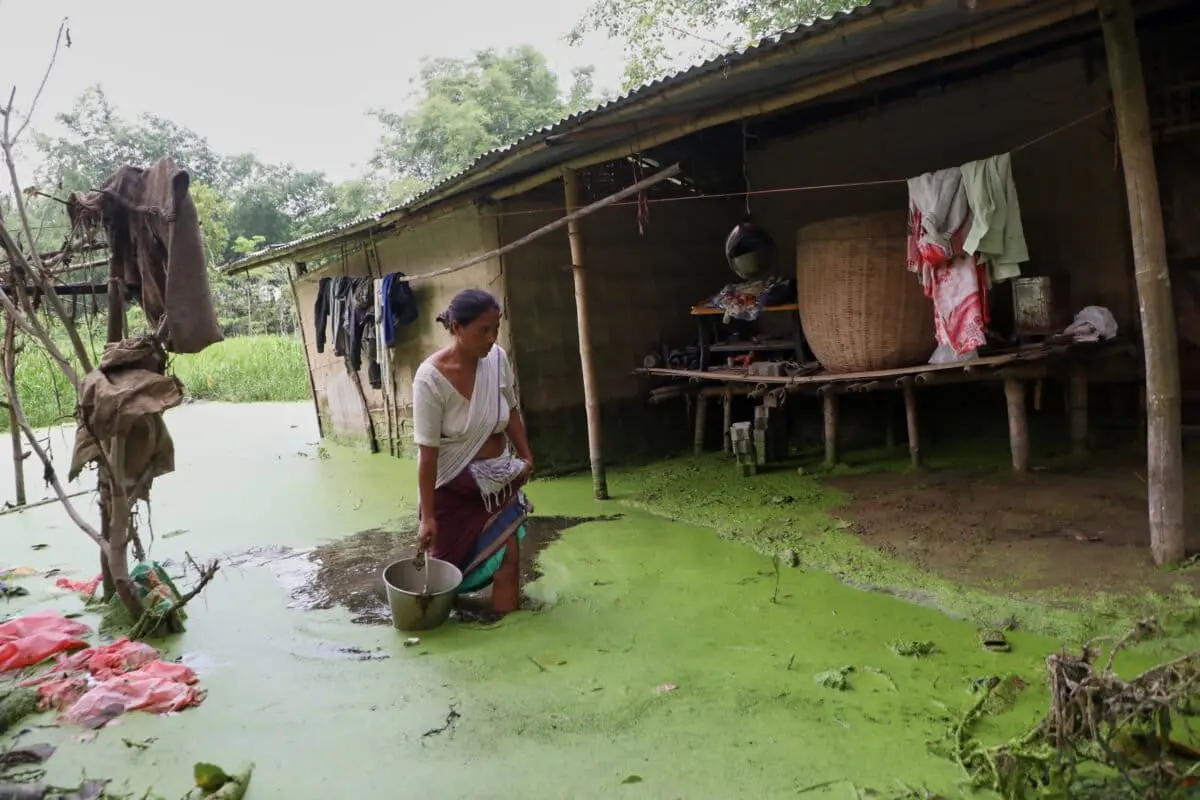
When extreme weather events strike the Indian subcontinent, the immediate devastation is quantified in the language of civil engineering and disaster management: collapsed bridges, breached embankments, flooded highways, and the tragic toll of human displacement. However, as the floodwaters recede and the heatwaves subside, a more insidious and enduring threat emerges. Beyond the visible debris lies a transformed biological landscape—a "rewired" ecology of infectious diseases that is catching the nation’s healthcare infrastructure off guard.
Climate change is no longer just a meteorological phenomenon in India; it has become a primary driver of public health volatility. By altering the survival rates of pathogens, shifting the habitats of disease-carrying vectors, and forcing closer contact between humans and wildlife, extreme weather is creating a new frontier of epidemiological risk.
Main Facts: The Intersection of Climate and Pathogens
The relationship between climate and disease is complex and multi-layered. According to the latest assessment report by the Intergovernmental Panel on Climate Change (IPCC), the frequency and intensity of heatwaves and extreme rainfall are projected to escalate significantly. In India, a 2025 study by international development consultancy IPE Global and GIS mapping firm Esri India suggests a grim trajectory: by 2030, heatwaves in major urban centers could double, while extreme rainfall events are expected to surge by 43% nationwide.
These shifts do more than just cause discomfort; they fundamentally reshape how diseases move through the environment.
- Pathogen Longevity: Warmer temperatures and higher humidity can extend the life cycles of various bacteria and viruses.
- Vector Distribution: Insects like mosquitoes, which were once restricted by altitude or temperature, are migrating into new territories, such as the Himalayan foothills.
- Zoonotic Spillover: Floods and droughts displace animals—ranging from rodents to livestock—bringing them into cramped proximity with human populations and increasing the likelihood of "spillover" infections.
Health experts argue that the traditional reactive model of medicine—treating outbreaks after they occur—is insufficient in the face of these climate-driven shifts. Instead, the focus must move toward "climate-adaptive" healthcare.

Chronology: From Seasonal Patterns to Year-Round Risks
Historically, infectious diseases in India followed a predictable, seasonal cadence. Cholera and other diarrheal diseases typically peaked during the high temperatures of the pre-monsoon summer, while vector-borne diseases like malaria and dengue rose following the rains.
However, data over the last two decades suggests this predictability is dissolving. A 21-year longitudinal study from Kolkata (1999–2019) identified a shifting biannual pattern in cholera, where peaks now align more aggressively with both rising summer temperatures and the volatile onset of the monsoon.
Dr. Surya Prasad, a consultant physician at Manipal Hospital, Bengaluru, notes that the window of infection is widening. "Earlier, cases of Hepatitis A, Hepatitis E, and cholera were largely confined to specific seasons. Over the past decade, we have seen these infections appearing more frequently and throughout the entire year," Prasad explains.
This chronology of change suggests that the "off-season" for many tropical diseases is disappearing. In 2024, for instance, Pune witnessed a surge in Zika virus cases immediately following heavy monsoon flooding, illustrating how rapidly a climate event can trigger a viral spike in an urban setting.
Supporting Data: The Dual Threat of Deluge and Drought
The threat to public health manifests through two hydrological extremes: too much water and too little.

1. The Deluge: Floods and Waterborne Contamination
When heavy rainfall overwhelms urban drainage, the result is a toxic cocktail. Floodwaters frequently mix with overflowing sewage systems, carrying human and animal waste into drinking water sources.
- Gastrointestinal Impact: A study in Chennai revealed that the risk of hospitalization for gastrointestinal illnesses jumped by 60% in the 15 days following an extreme rainfall event.
- Leptospirosis: This zoonotic disease, caused by the Leptospira bacteria, is perhaps the most direct link between flooding and animal-human transmission. Rats, the primary hosts, are driven out of sewers and burrows by rising water, entering homes and shelters. Their urine contaminates the water and surfaces. Following the 2018 Kerala floods, the state recorded 1,318 cases and 53 deaths from leptospirosis alone.
2. The Drought: Concentration and Contamination
Paradoxically, droughts can be just as dangerous as floods. As water sources shrink, humans, livestock, and wildlife are forced to congregate around the same limited pools of water.
- The Concentration Effect: A 2023 study found that this congregation significantly increases the chances of pathogen transmission between species.
- Unsafe Storage: In water-stressed regions, communities often rely on tankers or communal taps, storing water in large, open containers for long periods. These containers become ideal breeding grounds for Aedes aegypti mosquitoes, the primary vectors for dengue and chikungunya.
3. Vectors on the Move
Temperature shifts are also redrawing the map for malaria. In the Himalayan foothills, rising temperatures are allowing the Anopheles mosquito to survive at elevations previously considered too cold for its survival. This "altitudinal migration" puts previously unexposed populations at risk, often in areas where the local healthcare system has no experience managing malaria.
Official Responses: Infrastructure and Policy Gaps
The crisis is exacerbated by a significant "infrastructure deficit." Much of India’s urban planning is based on historical rainfall data that no longer reflects current climate realities.
The Drainage Crisis
The Central Public Health and Environmental Engineering Organisation (CPHEEO) previously designed stormwater drains to handle rainfall intensities of roughly 25 mm per hour. However, cities like Bengaluru, Delhi, and Mumbai now regularly experience "cloudburst-like" events, receiving over 100 mm of rain in 24 hours.

- Archaic Systems: A 2022 report by the Comptroller and Auditor General (CAG) of India highlighted that many municipal authorities lack updated maps of their underground drainage networks. In Kolkata and Mumbai, portions of these systems are over a century old, predating modern urban density and climate volatility.
- Assam’s Embankments: In the Northeast, where floods are an annual occurrence, over 60% of the state’s 4,800 kilometers of embankments are in urgent need of repair, leaving rural populations vulnerable to groundwater contamination from pit latrines during breaches.
National Action Plans
In 2018, the Indian government launched the National Action Plan for Climate Change and Human Health (NAPCCHH). The plan aims to:
- Strengthen disease surveillance.
- Establish early-warning systems.
- Build climate-resilient healthcare infrastructure.
Upasona Ghosh, an associate professor at the Public Health Foundation of India, notes that while all states have established district-level teams, the program has yet to achieve its full potential. "The health workforce and policymakers need a much deeper understanding of the complex pathways through which climate change impacts public health," Ghosh states.
Implications: Moving Toward Predictive Public Health
The future of India’s health security depends on its ability to move from a "firefighting" mode to a predictive one. This requires the integration of disparate data streams.
Integrated Surveillance
Currently, health data, weather data, and environmental data are often siloed. Gautam Menon, a professor at Ashoka University, emphasizes that the fundamental gap is surveillance. "Integration between health data and environmental data is not well-developed," he notes.
If health authorities could overlay rainfall predictions with known mosquito breeding patterns and local population density, they could deploy preventive measures—such as larvicide treatment or public awareness campaigns—weeks before an outbreak occurs.
Regional Modeling
Success stories are beginning to emerge. In 2025, a study by the Indian Institute of Tropical Meteorology developed a predictive model for Pune that could forecast dengue outbreaks more than two months in advance. The model identified specific climate "thresholds"—temperatures above 27°C and humidity between 60% and 78%—that serve as early warning signs.

The "One Health" Approach
Finally, the shifting ecology of disease necessitates a "One Health" approach—a strategy that recognizes the health of people is closely connected to the health of animals and our shared environment. As climate change forces species to migrate and habitats to overlap, the barriers between human medicine and veterinary science must dissolve.
Conclusion
The rising tide of climate-sensitive diseases in India is a silent emergency. While the country has made significant strides in disaster response, the biological aftermath of these disasters remains a critical vulnerability. As the IPCC warns of a future defined by extremes, India’s task is clear: it must rebuild its infrastructure not just to withstand the weight of water, but to block the path of the pathogens that travel within it. The goal is no longer just to survive the storm, but to ensure that the aftermath does not become a second, more deadly disaster.
