

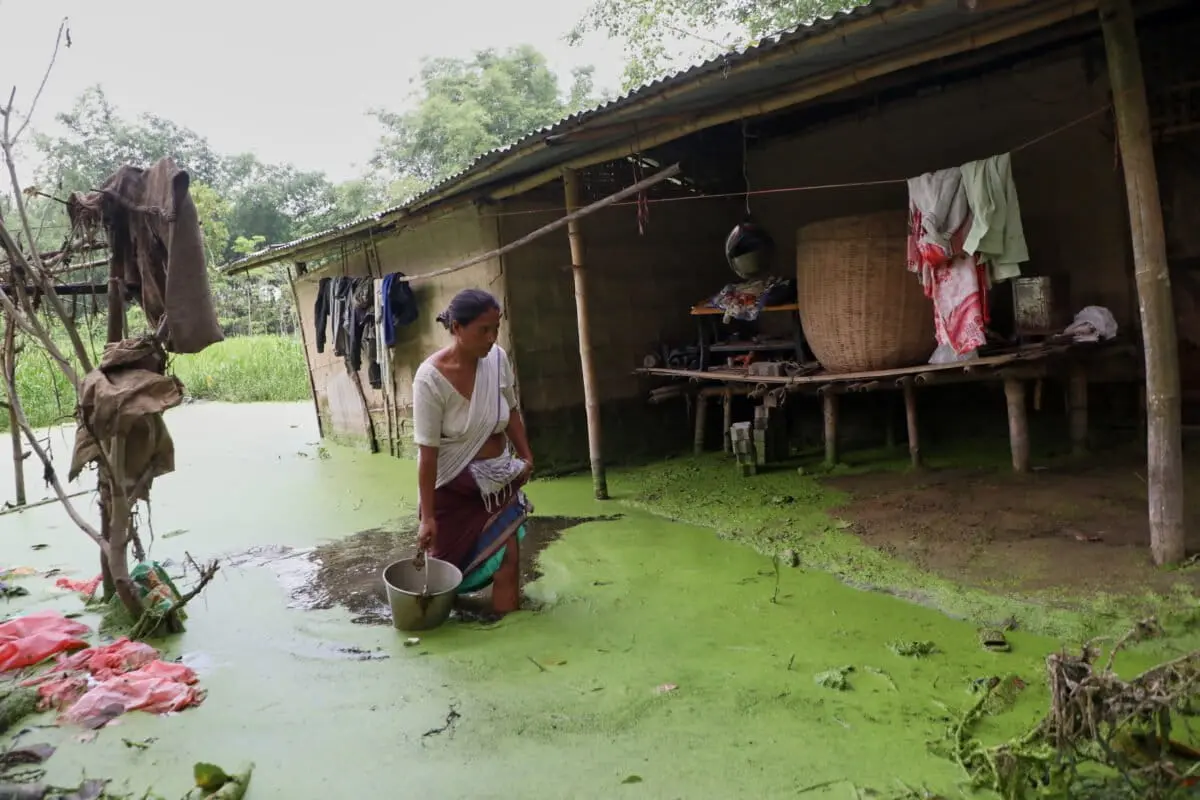
When extreme weather events strike the Indian subcontinent, the immediate devastation is usually tallied in the visible wreckage: collapsed bridges, inundated highways, and the tragic loss of property. However, as the floodwaters recede and the heatwaves subside, a more insidious and enduring threat emerges. Beyond the physical destruction lies a radical reshaping of disease ecology—a silent transformation that is bringing pathogens, animals, and humans into unprecedented and dangerous proximity.
In recent years, the intersection of meteorology and microbiology has become a primary concern for public health experts. Heatwaves, erratic monsoons, and flash floods are no longer just environmental crises; they are biological catalysts. As climate change accelerates, India is facing a future where the seasonal "rhythm" of disease is being replaced by a year-round state of vulnerability, challenging a healthcare infrastructure already stretched to its limits.
Main Facts: The Intersection of Climate and Pathogen Evolution
The fundamental threat of climate change to public health lies in its ability to alter the environment in which pathogens and their vectors—such as mosquitoes, ticks, and rodents—thrive. According to the latest assessment report by the Intergovernmental Panel on Climate Change (IPCC), the frequency and intensity of extreme weather events are projected to rise sharply.
In the Indian context, a landmark 2025 study by IPE Global and Esri India highlights a grim trajectory: by 2030, heatwaves are projected to double in major urban centers, while extreme rainfall events are expected to surge by 43% across the country. These are not merely weather statistics; they represent a massive expansion of the "incubation chamber" for infectious diseases.
Climate change influences disease in three primary ways:

- Survival Persistence: Warmer temperatures can extend the life cycles of bacteria and viruses in the environment.
- Vector Distribution: Rising temperatures allow disease-carrying insects to migrate to higher altitudes and latitudes that were previously too cold for them.
- Contact Dynamics: Both floods and droughts force humans and animals into closer contact, often around contaminated or limited water sources, facilitating "spillover" events where animal diseases jump to humans.
Chronology of a Changing Landscape: From Seasonal to Perennial
Historically, infectious diseases in India followed a predictable, seasonal calendar. Cholera and heat-related ailments peaked in the pre-monsoon summer, while dengue and malaria surged during and after the rains. However, data from the last two decades suggests this calendar is being torn up.
The Shift in Waterborne Pathogens
A 21-year longitudinal study from Kolkata (1999–2019) revealed a biannual pattern in cholera cases, with peaks traditionally coinciding with the summer heat and the monsoon’s arrival. Yet, health experts like Dr. Surya Prasad of Manipal Hospital, Bengaluru, observe that these windows are blurring. In the last decade, infections like Hepatitis A, Hepatitis E, and cholera are appearing with higher frequency and throughout the year, rather than in isolated seasonal bursts.
The Surge of Zoonotic Crises
The 2018 Kerala floods served as a watershed moment for climate-related zoonosis. Following the catastrophic flooding, the state witnessed a massive spike in leptospirosis, recording over 1,300 cases and dozens of deaths. This was not an anomaly but a preview of a new reality. In 2024, Pune reported a significant surge in Zika virus infections following heavy monsoon rains, proving that even "new" or less common threats are finding a foothold in the wake of extreme weather.
The High-Altitude Migration
Perhaps the most alarming chronological shift is the movement of malaria into the Himalayan foothills. Areas that were historically protected by their cooler climate are now seeing the persistence of Anopheles mosquitoes as temperatures rise and rainfall patterns shift, exposing populations with little to no prior immunity to the disease.
Supporting Data: Quantifying the Risk
The link between weather extremes and health outcomes is increasingly supported by rigorous statistical modeling.

- Hospitalization Spikes: A study conducted in Chennai found that the risk of hospitalization for gastrointestinal illnesses surged by 60% in the 15 days following an extreme rainfall event. This lag time highlights the period during which contaminated water infiltrates the domestic supply.
- The Leptospirosis Connection: Data from the Integrated Disease Surveillance Project (IDSP) confirms that more than 85% of annual leptospirosis cases in India occur during or immediately after the monsoon. The bacteria, spread through animal urine (primarily rats), can survive for months in the moist, warm soil and stagnant water left behind by floods.
- Drought and Crowding: It is a mistake to view disease only through the lens of excess water. A 2023 study highlighted that during droughts, the scarcity of water leads to "pathogen crowding." When humans, livestock, and wildlife are forced to share the same dwindling water holes, the probability of zoonotic transmission increases exponentially. Furthermore, the storage of water in large open containers during shortages creates ideal breeding grounds for Aedes aegypti mosquitoes, the primary vectors for dengue and chikungunya.
Infrastructure Gaps: A Multiplier of Disease
The biological threat of climate change is compounded by India’s aging and inadequate physical infrastructure. Extreme weather does not create disease in a vacuum; it exploits the weaknesses in urban planning and sanitation.
The Drainage Crisis
Most of India’s stormwater infrastructure was designed based on historical rainfall data that is no longer relevant. Guidelines from the Central Public Health and Environmental Engineering Organisation (CPHEEO) traditionally designed drains to handle rainfall intensities of 25 mm per hour. In contrast, cities like Bengaluru, Delhi, and Mumbai have recently experienced deluges exceeding 100 mm in 24 hours. When these systems fail, sewage mixes with floodwaters, turning city streets into conduits for enteric pathogens.
Obsolete Mapping and Maintenance
A 2022 report by the Comptroller and Auditor General (CAG) of India revealed a startling lack of preparedness: many municipal authorities lack updated maps of their underground drainage networks. In colonial-era cities like Mumbai and Kolkata, parts of the network are over a century old. This "blindness" to the state of underground infrastructure makes it nearly impossible to prevent cross-contamination between sewage lines and drinking water pipes during floods.
Rural Vulnerability
In rural India, the challenge is even more acute. Sitara S.R. Ajjampur of Christian Medical College, Vellore, points out that runoff from pit latrines during heavy rains frequently contaminates groundwater. In states like Assam, where 60% of the 4,800 kilometers of river embankments are in need of repair, the breach of a single levee can displace thousands into relief camps where maintaining hygiene and safe water supply is a logistical nightmare.
Official Responses and the Move Toward Anticipation
The Indian government and scientific community have recognized that "reactive" healthcare is no longer sufficient. The strategy is shifting toward "predictive" and "adaptive" health management.

National Action Plans
In 2018, the government launched the National Action Plan for Climate Change and Human Health (NAPCCHH). This framework aims to move beyond disaster response by building climate-resilient healthcare facilities and establishing early-warning systems. Upasona Ghosh of the Public Health Foundation of India notes that while state and district teams are now in place, the program still faces the challenge of integrating deep-rooted climate data into daily medical practice.
Predictive Modeling
Innovation is emerging from India’s premier research institutes. In 2025, the Indian Institute of Tropical Meteorology (IITM) developed a model for Pune that can predict dengue outbreaks two months in advance. By analyzing climate thresholds—specifically identifying that risk peaks when temperatures exceed 27°C and humidity reaches 60-78%—health authorities can now initiate mosquito control measures before the first case is reported.
Surveillance Integration
The National Centre for Disease Control (NCDC) is currently working on district-level risk assessments. These assessments require local authorities to merge daily health surveillance data with meteorological information. The goal is to establish "heat-health thresholds" and "flood-health alerts" that are specific to the micro-climates of different Indian regions.
Implications: The Road Ahead
The implications of this climate-disease nexus are profound. India’s exposure to climate-sensitive diseases is among the highest in the world due to the endemic presence of malaria, dengue, cholera, and kala-azar.
As Gautam Menon, Professor at Ashoka University, argues, the fundamental gap remains the "siloed" nature of data. Health departments and meteorological departments have historically operated independently. To survive the coming decades, these two fields must merge.

The future of public health in India will depend on:
- Integrated Data Systems: Real-time tracking of weather patterns alongside hospital admission data to spot emerging outbreaks before they become epidemics.
- Urban Renewal: Moving away from "gray" concrete infrastructure to "green" infrastructure that allows for natural drainage and reduces the "urban heat island" effect that fuels vector breeding.
- One Health Approach: Recognizing that human health is inextricably linked to animal health and the environment. This includes better management of livestock and urban pest populations (like rodents) to prevent the next zoonotic spillover.
The ultimate goal is a paradigm shift: viewing climate-related disease not as an "act of God" or a series of unfortunate accidents, but as a predictable consequence of environmental change that can be mitigated through science, infrastructure, and foresight. As the 2030 projections loom, the race to fortify India’s health defenses against a warming world has never been more urgent.
