

The roar of a high-revving V12 has, for over seven decades, been the heartbeat of Maranello. It is a sound that defines a brand, a legacy, and an entire culture of automotive passion. However, in a historic reveal in Rome, Ferrari has signaled that its future may be silent—or at least, fundamentally different. The unveiling of the Ferrari Luce, the brand’s first-ever fully electric vehicle (EV), represents more than just a new model; it is a seismic shift in the identity of the world’s most famous supercar manufacturer.
The Luce arrives as a five-seat, four-door grand tourer, a configuration that already challenges the traditional Ferrari silhouette. But the controversy surrounding the vehicle goes far deeper than its door count. By abandoning internal combustion in favor of a bespoke electric architecture and a design language spearheaded by former Apple creatives, Ferrari has entered uncharted territory.
Main Facts: A New Breed of Prancing Horse
The Ferrari Luce is a technical powerhouse that seeks to translate the "Ferrari DNA" into the language of electrons and software. Unlike many competitors who have adapted existing platforms for their initial electric offerings, Ferrari has built the Luce on a ground-up, bespoke EV architecture.
Key Specifications:
- Powertrain: Four independent electric motors (one per wheel).
- Total Output: 1,050 horsepower.
- Acceleration: 0-100 km/h in 2.5 seconds; 0-200 km/h in 6.8 seconds.
- Top Speed: In excess of 310 km/h.
- Battery Capacity: 122 kWh integrated vehicle-to-chassis battery.
- Range: Over 530 kilometers (WLTP estimated).
- Charging: 350 kW fast-charging capability (adding 70 kWh in approximately 20 minutes).
- Weight: 2,260 kilograms.
The Luce is not intended to replace the iconic mid-engined supercars or the front-engined V12s that have defined the brand’s recent history. Instead, Ferrari positions the Luce as an "expansion of the ecosystem." It is a vehicle designed for a new era of performance luxury—one where sustainability, digital integration, and architectural purity take center stage.
Chronology: The Road to Rome
The journey to the Luce did not happen overnight. Ferrari’s transition toward electrification has been a calculated, multi-year process characterized by a "multi-energy strategy."
- 2013 – The Hybrid Seed: Ferrari introduced the LaFerrari, its first hybrid, using a KERS (Kinetic Energy Recovery System) derived from Formula 1. This proved that electrification could enhance, rather than dilute, performance.
- 2019 – The Plug-in Evolution: The launch of the SF90 Stradale marked Ferrari’s first series-production plug-in hybrid (PHEV). It became the brand’s flagship, demonstrating that a V8 paired with three electric motors could outperform a traditional V12.
- 2021 – The LoveFrom Partnership: Ferrari announced a long-term creative partnership with LoveFrom, the design collective led by Sir Jony Ive and Marc Newson. This was the first hint that Ferrari’s future design direction would move away from aggressive aerodynamics toward a more "minimalist" and "technological" aesthetic.
- 2023 – The e-Building: Ferrari inaugurated its "e-building" in Maranello, a dedicated facility for the production of electric motors, battery packs, and power inverters, ensuring that the core "soul" of the EV remains an in-house creation.
- Present Day: The unveiling of the Luce in Rome, marking the official entry of Ferrari into the battery-electric vehicle (BEV) market.
Supporting Data: Engineering Emotion Without Combustion
The primary challenge facing Ferrari engineers was how to maintain the "emotional" connection between driver and machine in the absence of an engine’s mechanical symphony. To solve this, the Luce introduces several industry-first technologies.
The Sound of Science
Ferrari has avoided the use of "fake" synthesized engine noises. Instead, the Luce features an "authentic sound philosophy." Sensors mounted on the electric motors and axles capture the real-time mechanical vibrations and frequencies produced by the drivetrain. These are then amplified and channeled into the cabin. As the load on the motors increases, the frequency shifts, providing a natural, tactile feedback loop that informs the driver of the car’s speed and effort.
Dynamics and Weight Management
At 2,260 kg, the Luce is significantly heavier than a traditional Ferrari. To combat the laws of physics, Maranello has deployed its most advanced chassis control suite to date. By utilizing four independent motors, the car achieves infinite torque vectoring. Unlike a mechanical differential, which has inherent latency, the Luce can adjust the torque to each individual wheel in milliseconds, allowing the heavy GT to rotate into corners with the agility of a much lighter sports car.

The LoveFrom Influence
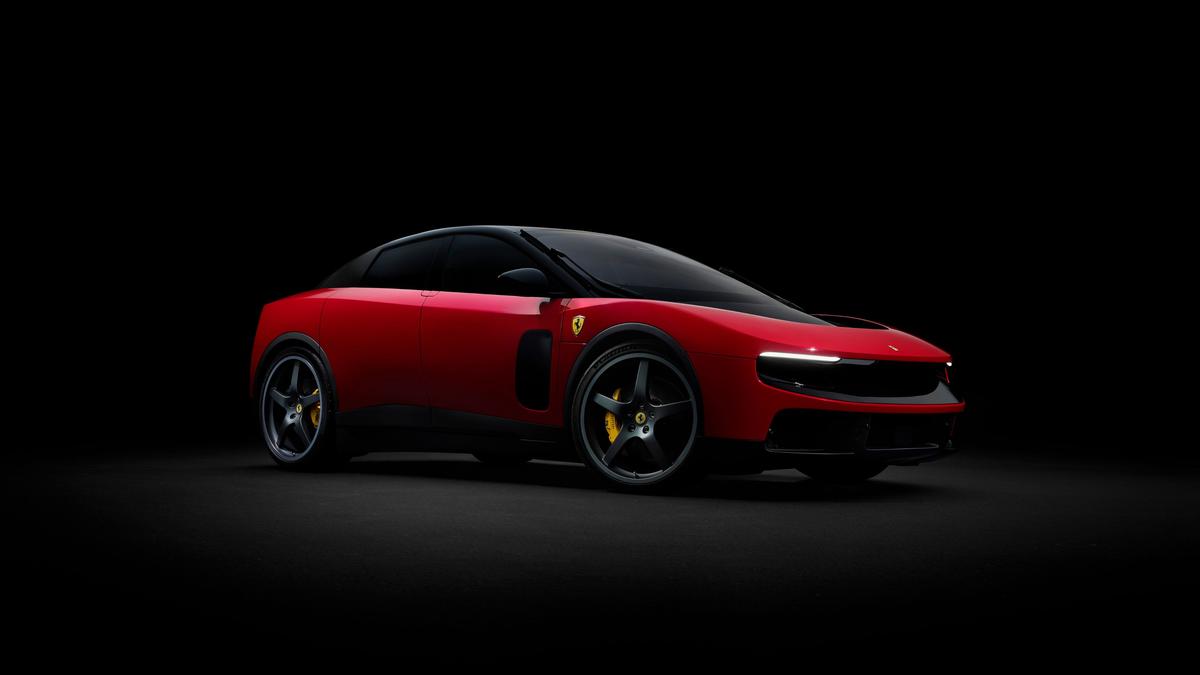
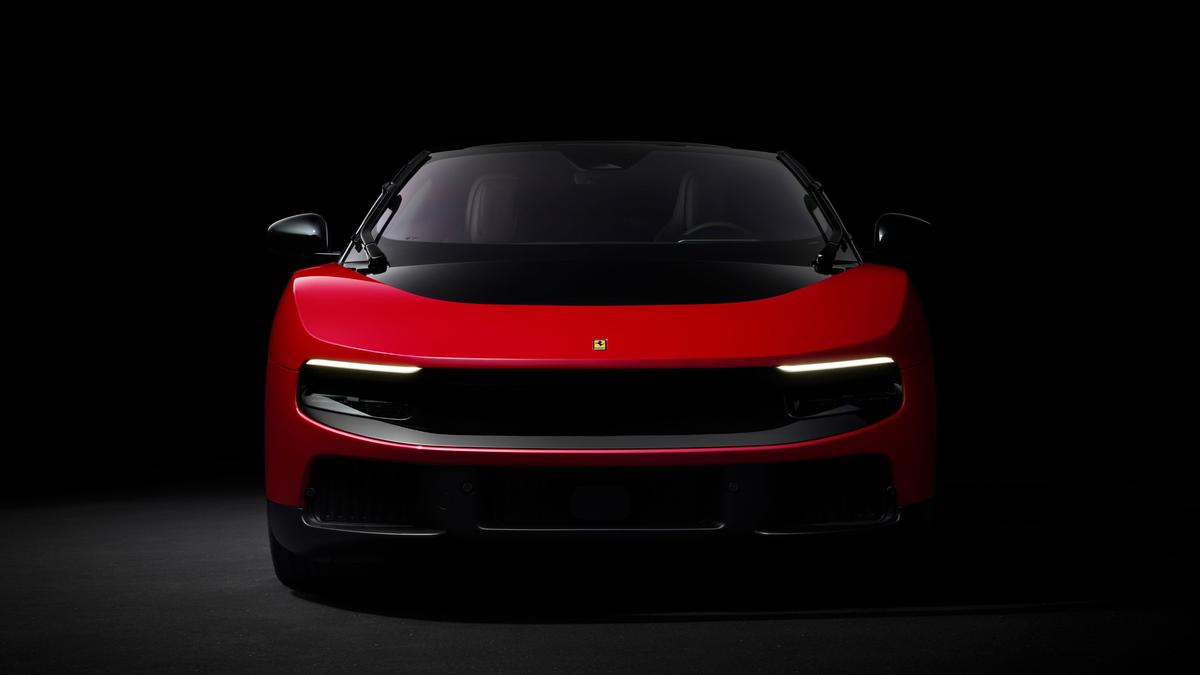
The design of the Luce is perhaps its most polarizing feature. Sir Jony Ive and Marc Newson have brought a "consumer technology" ethos to the exterior. The surfaces are smooth, "shell-like," and largely devoid of the aggressive wings and vents that define the current 12Cilindri or SF90. This minimalist approach focuses on "purity of form," utilizing active aerodynamics hidden within the bodywork to provide downforce only when necessary.
Official Responses: Defending the Vision
The reaction to the Luce has been a mixture of awe and skepticism. Immediately following the reveal, Ferrari’s stock (RACE) reportedly saw a dip of nearly seven percent. This market volatility reflects a broader anxiety among investors and "Tifosi" (Ferrari loyalists) regarding the brand’s ability to maintain its premium pricing power in an era where electric performance is becoming commoditized.
In response to the backlash, Ferrari leadership has remained steadfast. A company spokesperson emphasized that the Luce is a "new chapter, not a replacement for the old book." Ferrari asserts that its customers are not a monolith; while some will always demand the V12, a new generation of buyers—often referred to as "digital natives"—prizes innovation, sustainability, and avant-garde design above all else.
Ferrari’s Chief Research and Development Officer noted during the launch: "We have not built an electric car. We have built a Ferrari that happens to be electric. The difference lies in the way the car communicates with the driver, the way it manages its power, and the way it makes you feel at the limit."
Implications: A High-Stakes Gamble on Brand Identity
The Luce is arguably the biggest gamble in the history of the Prancing Horse. By moving away from the "theatrical" and "aggressive" styling that has sustained the brand for decades, Ferrari risks alienating its core base. The comparisons to luxury tech products are not accidental; the Luce feels like a vehicle designed for the Silicon Valley elite as much as the Monte Carlo elite.
Market Disruption
The Luce enters a market that is increasingly crowded with high-performance EVs from Porsche, Rimac, and Lucid. However, Ferrari’s entry at a price point of approximately €500,000 (roughly ₹5 crore+ in India before taxes) places it in a stratosphere of its own. Ferrari is betting that its brand equity—the "mythology of Maranello"—is strong enough to command a massive premium even without the internal combustion engine that built that mythology.
The Luxury Paradigm Shift
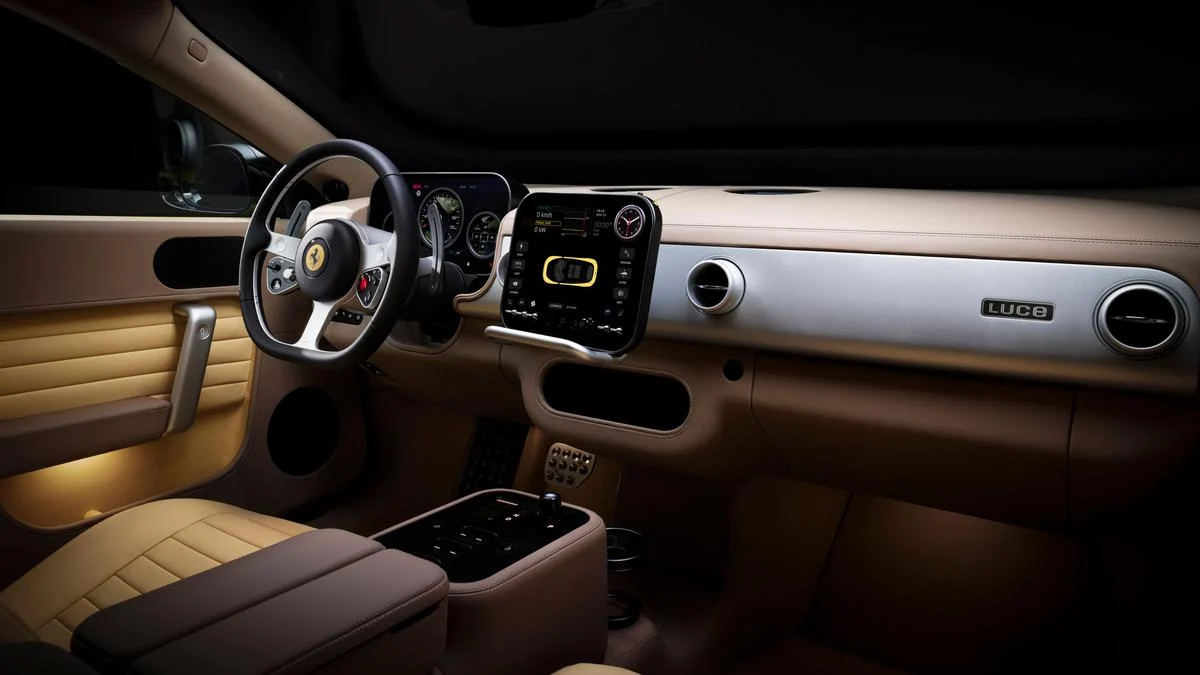
The interior of the Luce suggests a shift in what "luxury" means for Ferrari. The cabin is a masterclass in material science, featuring:
- OLED Integration: Developed with Samsung, the displays are seamlessly integrated into the dashboard.
- Tactile Feedback: Despite the high-tech look, Ferrari has retained physical aluminum switches for critical driving functions, acknowledging that total reliance on touchscreens (a common EV trope) is antithetical to a performance driving experience.
- Sustainability: The use of recycled fabrics and "eco-leather" signals a move toward the ESG (Environmental, Social, and Governance) goals that modern ultra-high-net-worth individuals increasingly demand.
Conclusion: Landmark or Outlier?
Whether the Luce will be remembered as the car that saved Ferrari for the 21st century or the car that diluted its soul remains to be seen. In the short term, it has certainly succeeded in its goal of disrupting the status quo.
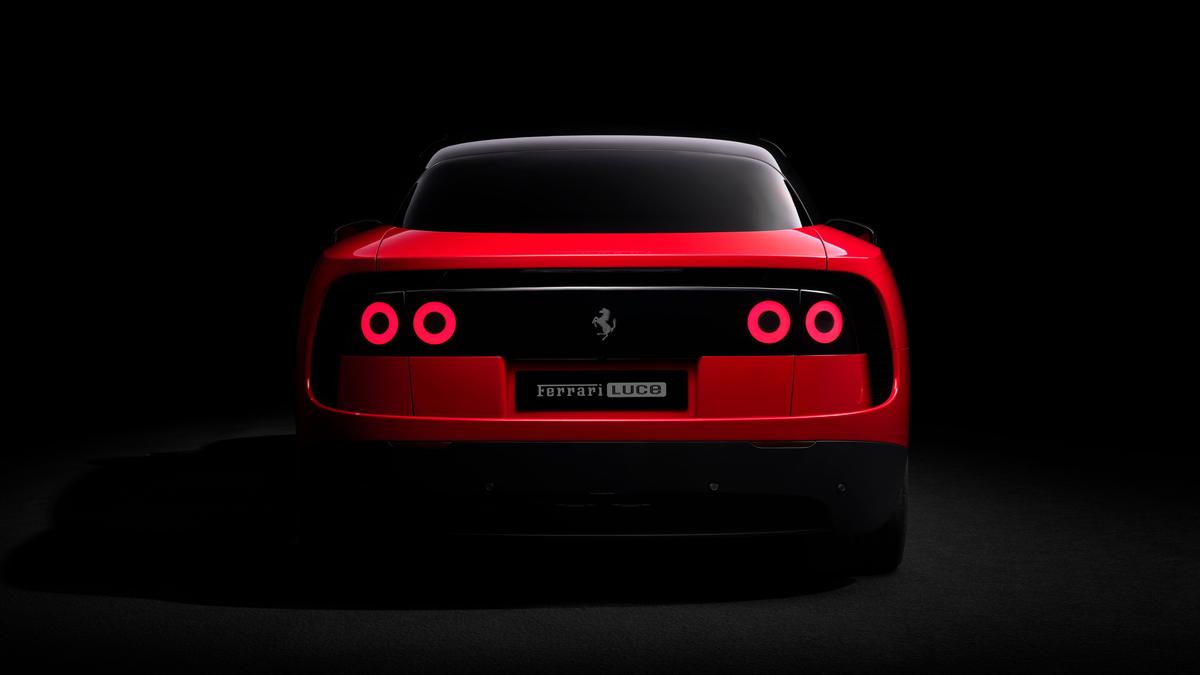
Ferrari has never been a company that follows trends; it creates them. With the Luce, they are attempting to define what "electric passion" looks like. It is a car that values clinical precision and futuristic elegance over raw, unbridled noise. For the traditionalist, it may feel like a betrayal. For the futurist, it is the most exciting development in automotive history since the first engine roared to life in Enzo Ferrari’s workshop.
As the Luce prepares for its global rollout, one thing is certain: the conversation in Maranello has changed forever. The Prancing Horse is no longer just a master of fire and steel; it is now a master of the electron.
Ferrari is expected to begin deliveries of the Luce in late 2025. In India, with import duties and customization, the landed price is expected to comfortably exceed ₹8 crore, making it one of the most exclusive EVs on the subcontinent.
