

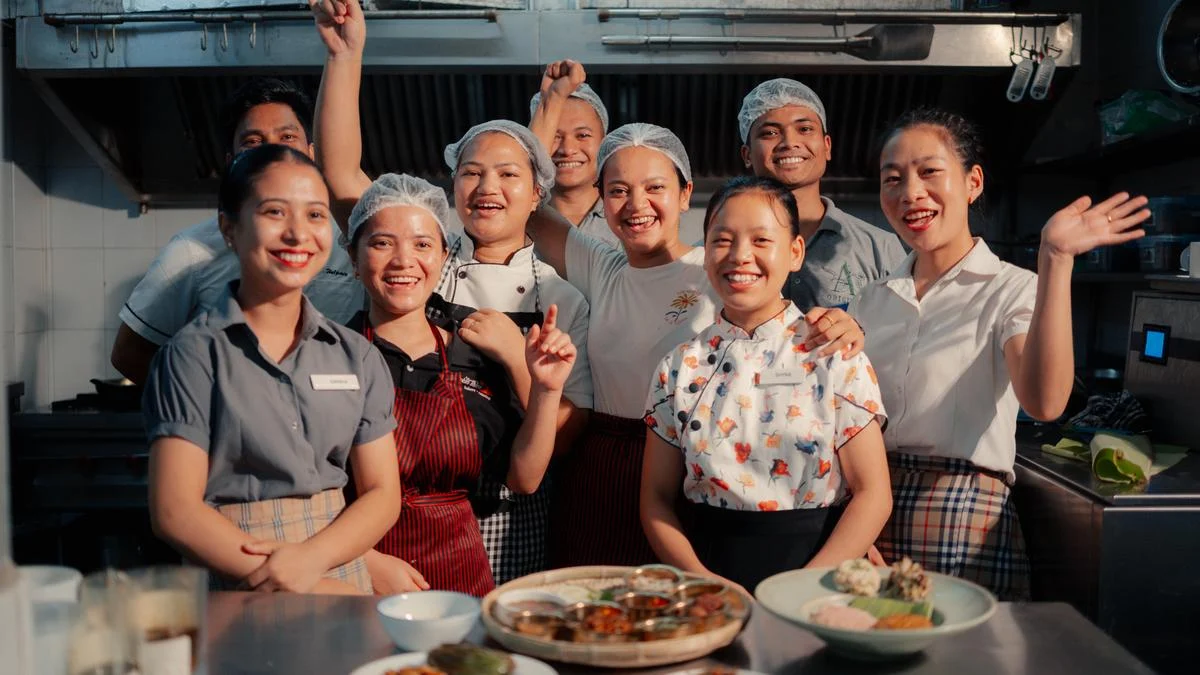
In the professional kitchens of Manipal University, several years ago, a young culinary student named Ahmedaki Laloo found herself at a cultural crossroads. While her peers from across India celebrated the pungent aroma of ghee or the sharp crackle of curry leaves, Laloo felt a hesitant reserve regarding the flavors of her home state, Meghalaya. She would often ask her mother to send parcels from Shillong—fermented bamboo shoots, fish chutney, and assorted pickles—yet these treasures were often enjoyed in private. The fear of being mocked for "stinky" food was a common anxiety among students from India’s Northeast, a region whose diverse culinary traditions were frequently misunderstood or dismissed by the mainland.
Today, that narrative has been decisively overturned. Laloo, now a celebrated chef and the founder of the culinary enterprise A’Origins, recently showcased her heritage in Chennai as part of the "Zhouyu Hosts" pop-up series. Her journey from a self-conscious student to a vanguard of Meghalayan cuisine mirrors a broader movement within the state. A new generation of chefs and entrepreneurs is returning to their roots, reclaiming their ancestral flavors, and positioning Meghalaya as a premier destination for produce-forward, indigenous gastronomy.

Main Facts: A Shift in the Gastronomic Paradigm
The culinary landscape of Meghalaya, particularly its capital Shillong, is undergoing a profound transformation. What was once a food scene dominated by "Momo and Chow" (a shorthand for the generic Indo-Chinese fare often associated with the region) is now being redefined by high-end, indigenous-focused dining experiences.
Central to this shift are several key figures:

- Ahmedaki Laloo (A’Origins): A chef dedicated to storytelling through food, focusing on the elevation of traditional Khasi, Jaintia, and Garo flavors.
- Reuben Sooting (Lady Aiko): The founder of India’s first integrated hotpot and Korean barbecue experience, who emphasizes the integration of local influences into modern dining formats.
- Hammarsing Kharhmar and Riyaki Jana (Rynsan): Founders of a restaurant that prioritizes hyper-local produce and contemporary articulation of tribal identity.
This "Culinary Renaissance" is characterized by a move away from the "monolithic" view of Northeastern food. Instead of being lumped into a single category, the distinct nuances of Meghalaya’s various tribes are being celebrated. This movement is not merely about preservation; it is about evolution—taking classic ingredients and techniques, such as smoking and fermentation, and applying them to modern culinary standards.
Chronology: The Evolution of Meghalayan Identity
The Era of Marginalization (Pre-2010s)
For decades, the culinary identity of Meghalaya was largely invisible to the rest of India. Students and professionals moving to the mainland often faced prejudice regarding their diet. Ingredients like Tungrymbai (fermented soybeans) or Doh-nei-iong (pork with black sesame) were viewed as exotic at best and "stinky" at worst. Within Shillong itself, the restaurant scene was stagnant, with few establishments focusing on the elevation of local home-cooked meals for a commercial audience.

The Turning Point (2010–2019)
A shift began as young Northeasterners started to observe the pride with which other Indian states flaunted their regional cuisines. Ahmedaki Laloo recalls a moment of realization: "If I could have ghee and curry leaves, why couldn’t you eat our food?" This period saw the beginning of a "reverse brain drain," where culinary professionals trained in top-tier institutions and global kitchens began looking toward home with fresh eyes.
The Pandemic Catalyst and the Return (2020–Present)
The winter of 2020 served as a pivotal moment for many. The global pandemic forced a homecoming for several chefs, including Laloo, who returned to Shillong to establish A’Origins. During this time, the state government began to pivot its tourism strategy, recognizing that "experiential tourism"—where food is as much a draw as the landscape—was the future. The emergence of restaurants like Rynsan and Lady Aiko in the post-pandemic years solidified Shillong’s reputation as a rising culinary capital.

Supporting Data: The Anatomy of Meghalayan Cuisine
The richness of Meghalaya’s food culture is rooted in its unique ecological and agricultural systems. Unlike many mainland cuisines that rely heavily on oils and dairy, Meghalayan food is "produce-forward" and relies on sophisticated preservation techniques.
Key Ingredients and Techniques
- Fermentation: This is the soul of the region’s pantry. Beyond bamboo shoots, fermentation is used for soybeans (Tungrymbai) and fish, providing a deep umami profile that defines many dishes.
- Smoking: A traditional method used primarily for meats and fish, smoking is deeply rooted in the region’s history of living in harmony with the hills, where open hearths were the center of the home.
- Foraged Produce: The state’s biodiversity allows for a wide array of foraged greens, wild mushrooms, and local fruits like Soh-phlang (a crunchy tuber) and Soh-pieng (wild mango).
- The Trinity of Flavors: Most dishes are built on a foundation of ginger, garlic, and local onions, often accented by the world-famous Lakadong turmeric and the heat of the Bird’s Eye chili.
The Tribal Nuance
Meghalaya is home to three main tribes: the Khasi, the Jaintia, and the Garo. While they share some similarities, their cuisines are distinct. For instance, Garo cuisine often utilizes Karchi (a type of alkali made from filtered wood ash), which gives their stews a unique texture and flavor profile, distinct from the black sesame-heavy dishes of the Khasi.

Official Responses: Government Policy and the Seeti Movement
The growth of this culinary sector has not happened in a vacuum. It is the result of a concerted effort by both the public and private sectors to reposition Meghalaya on the global map.
Government Strategy
Chef Reuben Sooting notes that the Meghalaya government has become "heavily focused on tourism, which includes our food." State policies have shifted to support local entrepreneurs through grants, tourism festivals, and infrastructure development. By increasing the annual footfall of tourists, the government has provided a steady customer base for high-end indigenous restaurants that might have struggled a decade ago.

The Seeti Movement
The "Seeti Movement," which recently held its second edition in Shillong, has played a crucial role in this cultural reclamation. As a platform that highlights diverse voices from the region, it has helped bridge the gap between local producers and global audiences. By inviting food writers, journalists, and chefs from across India to experience the "clean air and produce-forward culture" of Meghalaya, the movement has helped dismantle long-standing stereotypes.
Expert Perspectives
Damini Ralleigh, former journalist and co-founder of Indicā, observes that the shift is part of a global trend toward regionality. She compares the work being done in Shillong to that of Peruvian chef Virgilio Martínez or Italian chef Massimo Bottura—restaurateurs who took "peasant" or classic local food and elevated it to the level of fine art.

"For a very long time, cuisines have been looked at zonally," Ralleigh says. "The Northeast flattens an entire region’s cultural history into a monolithic identity. This new movement allows these communities to reclaim their own narrative. They are no longer represented by an outsider’s lens."
Implications: Reclaiming the Narrative and Economic Growth
The implications of this culinary shift extend far beyond the kitchen. They touch upon identity, economics, and the decolonization of the Indian palate.

Socio-Cultural Reclamation
For chefs like Ahmedaki Laloo, the ability to serve fermented bamboo shoots in a fine-dining setting is an act of justice. "We have always been under the shadow," she notes, "and it is our responsibility to do justice to what our ancestors have been passing down." This pride is infectious, encouraging the younger generation to see their heritage as an asset rather than something to be hidden.
Economic Impact
The rise of "food tourism" provides a direct boost to the local economy. When a restaurant like Rynsan emphasizes hyper-local produce, it creates a value chain that benefits local farmers, foragers, and artisans. The demand for high-quality, organic ingredients—long a staple of Meghalayan life—now has a commercial outlet that pays a premium.

Breaking the Monolith
Perhaps the most significant implication is the breaking of the "Northeast" stereotype. As diners in Chennai, Delhi, and Mumbai begin to distinguish between a Garo meal and a Naga meal, or a Khasi Jadoh and a Manipuri Eromba, the cultural borders of India become more porous and better understood.
The Future of Meghalayan Gastronomy
As tourists continue to flock to Meghalaya, not just for the "beautiful hills and waterfalls" but for the opportunity to eat at places like A’Origins or Lady Aiko, the state is poised to become a global culinary destination. The challenge moving forward will be to maintain the authenticity of these indigenous traditions while continuing to innovate.

For Hammarsing Kharhmar, the trend is clear: people are finally recognizing that Shillong is not just a place for "momo-chow," but a sophisticated hub of produce-forward culture. This shift is filtering down, leading to a proliferation of new cafes and restaurants that are proud to tell their own stories. The "stinky" food of the past has become the sought-after delicacy of the present, marking a new chapter in the history of Indian gastronomy.
