

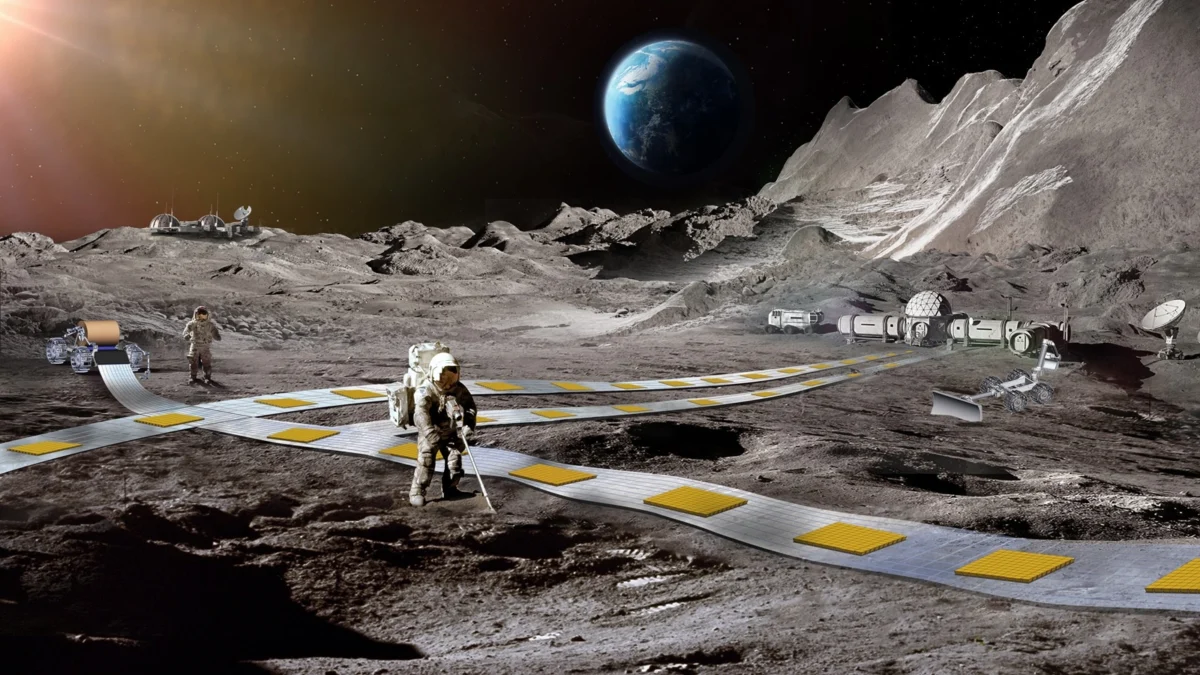
For the first time in over half a century, the lunar surface is no longer a distant relic of the Cold War, but the finish line of a high-stakes commercial sprint. NASA’s Artemis program, the spiritual and technological successor to the Apollo missions, has reached a critical juncture. The agency’s ambitious goal to return humans to the Moon by 2028 now rests on a "dual-source" strategy, pitting Elon Musk’s SpaceX against Jeff Bezos’s Blue Origin.
As NASA shifts its roadmap to accommodate technical complexities, the mission has evolved from a government-led directive into a competitive proving ground for private industry. With Artemis 4 now designated as the primary landing mission, the question is no longer just if we will return, but who will provide the chariot for the next "giant leap."
Main Facts: A Revised Roadmap for the Lunar South Pole
NASA’s strategy for returning to the Moon has recently undergone a significant tactical shift. While the agency celebrated the successful completion of Artemis 2—a crewed flyby that proved the Orion capsule’s life-support capabilities—the path to the surface has been recalibrated.
The Shift from Artemis 3 to Artemis 4
Originally, Artemis 3 was intended to be the historic return-to-surface mission. However, citing the need for rigorous testing of docking procedures and orbital maneuvers, NASA has revised the plan. Artemis 3, now targeted for late 2027, will focus on a crewed Earth-orbit rendezvous. This mission will serve as a dress rehearsal, testing how the Orion spacecraft interacts with the complex Human Landing Systems (HLS) in a high-earth orbit environment. Consequently, the actual touchdown on the lunar South Pole is now slated for Artemis 4 in late 2028.
The Commercial Partners
To ensure redundancy and foster competition, NASA has awarded contracts to two distinct providers:
- SpaceX: Utilizing a modified version of its "Starship" vehicle, SpaceX offers a high-capacity, fully reusable system designed for massive payload delivery.
- Blue Origin: Leading the "National Team," Blue Origin is developing the "Blue Moon" lander, a more traditional but technologically advanced craft designed for precision landings in the rugged lunar terrain.
NASA has adopted a "readiness-first" policy. While SpaceX currently holds the contract for the initial landing attempts, NASA Administrator Bill Nelson has indicated that the agency remains flexible. If Blue Origin hits its milestones faster than SpaceX, the order of operations could shift.
Chronology: The Evolution of the Artemis Program
The journey to the 2028 landing has been marked by shifting political priorities, budget fluctuations, and technological breakthroughs.
- December 2017: Space Policy Directive 1 is signed, formally directing NASA to return humans to the Moon as a stepping stone to Mars.
- May 2019: NASA announces the "Artemis" name for the program, honoring the twin sister of Apollo.
- April 2021: In a surprise move, NASA selects SpaceX as the sole provider for the first HLS contract, worth $2.9 billion. This leads to legal challenges from competitors, which are eventually dismissed.
- November 2022: Artemis 1 launches successfully. The uncrewed SLS rocket and Orion capsule complete a 25-day mission around the Moon, proving the heat shield’s integrity during a high-speed reentry.
- May 2023: NASA awards a second HLS contract to Blue Origin (worth roughly $3.4 billion) to ensure "competition and redundancy" for the Artemis 5 mission and beyond.
- Late 2023 – Early 2024: Artemis 2 crew is announced and training begins. However, NASA officials begin signaling that the 2025 landing goal for Artemis 3 is "optimistic" due to HLS development timelines.
- Present Day (2024): NASA officially moves the crewed landing to Artemis 4 (2028), prioritizing orbital docking tests for Artemis 3 in 2027.
Supporting Data: Comparing the Two Titans
The technological philosophies of SpaceX and Blue Origin represent two different eras of aerospace engineering: the "Fail Fast" iterative model versus the "Step-by-Step" precision model.
SpaceX’s Starship HLS: The Heavyweight Contender
The Starship HLS is a variant of the massive rocket currently being tested in Boca Chica, Texas. It is unprecedented in scale.
- Height: Approximately 50 meters (164 feet) for the lander alone.
- Propulsion: Powered by Raptor engines utilizing Liquid Oxygen (LOX) and Liquid Methane.
- The Refueling Hurdle: This is the most significant technical challenge. To reach the Moon, a Starship HLS must be refueled in Earth orbit. Estimates suggest it may require between 8 to 14 "tanker" flights to fill a single HLS with enough propellant for the lunar transit.
- Payload Capacity: Designed to carry over 100 tons to the lunar surface, far exceeding any previous craft.
Blue Origin’s Blue Moon Mark 2: The Precision Mariner
Blue Origin’s approach is more incremental, focusing on the Blue Moon Mark 1 (cargo) before the Mark 2 (crewed).
- Propulsion: Uses the BE-7 engine, which burns Liquid Hydrogen and Liquid Oxygen. This is more efficient but notoriously difficult to store for long periods due to "boil-off" issues.
- Testing Milestones: The "Endurance" (Mark 1) cargo lander recently completed grueling thermal vacuum chamber tests at NASA’s Johnson Space Center, simulating the extreme temperature swings of the lunar environment.
- Launch Vehicle: Blue Moon relies on the New Glenn rocket, which features a reusable first stage and is designed to compete directly with SpaceX’s Falcon Heavy and Starship.
Comparative Development Status
| Feature | SpaceX Starship HLS | Blue Origin Blue Moon |
|---|---|---|
| Current Stage | Integrated Flight Testing (IFT) | Ground Testing & Component Qualification |
| Key Innovation | Rapid Reusability & Massive Scale | Precision Landing & Cryogenic Management |
| Primary Risk | Orbital Refueling Complexity | Rocket (New Glenn) Readiness |
| Crew Capacity | Up to 20+ (Potential) | 4 Astronauts |
Official Responses: NASA and Industry Perspectives
The narrative surrounding Artemis is one of cautious optimism tempered by the realities of deep-space engineering.
NASA’s Stance:
NASA Administrator Bill Nelson has been vocal about the importance of the commercial partnership model. "We are not going back to the Moon the way we did 50 years ago," Nelson stated in a recent press briefing. "We are going back with commercial partners who share the costs and the risks. This competition is what will drive innovation and keep us on schedule."
The SpaceX Perspective:
Elon Musk has maintained a characteristically aggressive timeline, frequently posting updates on Starship’s progress. SpaceX officials have emphasized that "Flight 3 and Flight 4 of Starship are about learning how to manage propellants in space." They argue that the sheer volume of Starship launches will eventually make orbital refueling a routine operation.
The Blue Origin Perspective:
Blue Origin, under the leadership of CEO Dave Limp, has pivoted toward a "get to the pad" mentality. After a launch anomaly with the New Glenn’s second stage production, the company has doubled down on quality control. "Our focus is on the Blue Moon Mark 1 cargo mission," a company spokesperson noted. "By landing cargo first, we prove the sensors and the engines before we ever put a human life on the line."
Implications: Why the 2028 Deadline Matters
The race between SpaceX and Blue Origin is about more than just corporate pride; it has profound implications for the future of humanity in space.
1. The Geopolitical Race
The United States is not the only nation eyeing the lunar South Pole. China’s space agency (CNSA) has announced plans to land taikonauts on the Moon by 2030. If NASA’s commercial partners face significant delays, the U.S. risks losing its lead in establishing international norms for lunar resource extraction and "safety zones."
2. The Lunar Economy
The 2028 landing is intended to be the start of a "sustained presence." Both landers are designed to carry scientific equipment that will scout for water ice in permanently shadowed craters. Water ice is the "gold" of the solar system; it can be processed into breathable oxygen and hydrogen fuel. A successful landing by either company validates the commercial viability of mining and manufacturing in space.
3. The Gateway to Mars
NASA views the Moon as a "testbed" for Mars. The technologies being developed by SpaceX and Blue Origin—autonomous docking, long-term cryogenic storage, and high-mass planetary landing—are the exact technologies required to land humans on the Red Planet in the 2030s or 2040s.
4. A Paradigm Shift in Procurement
If these privately developed landers succeed, it will permanently change how NASA operates. Moving away from "cost-plus" contracts (where the government pays for all development plus a fee) to "firm-fixed-price" contracts (where the company bears the cost of overruns) could save taxpayers billions of dollars and accelerate the pace of exploration.
Conclusion
As 2027 and 2028 approach, the lunar surface beckons as the ultimate laboratory. Whether it is the gleaming silver tower of SpaceX’s Starship or the intricate, high-tech frame of Blue Origin’s Blue Moon that touches down first, the result will be the same: the end of the "Apollo era" and the beginning of the "Artemis age." The coming months of orbital tests and engine burns will determine which company writes the next chapter of human history.
