

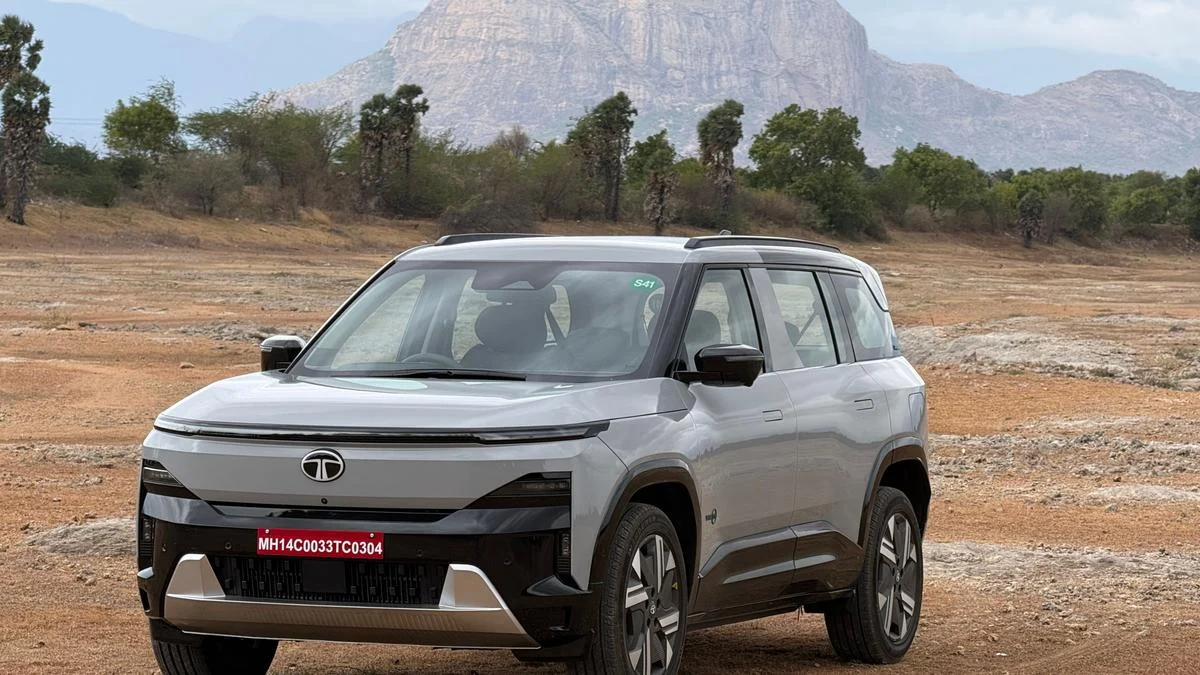
The automotive industry is often defined by cycles of nostalgia and innovation. Occasionally, a manufacturer manages to strike a perfect balance between the two. With the launch of the Sierra.ev, Tata Motors has not only resurrected one of India’s most iconic nameplates but has also established a new benchmark for what a homegrown electric vehicle (EV) can achieve. After an exhaustive day of testing across the diverse terrains of Coimbatore—ranging from congested city arteries and high-speed highways to a technical test track and a grueling off-road course—it is clear that the Sierra.ev is more than a mere marketing exercise in heritage. It is arguably the most complete and sophisticated vehicle Tata Motors has ever produced.
Main Facts: A New Benchmark in the Electric SUV Segment
The Tata Sierra.ev enters the market as a flagship offering, positioned to compete in the increasingly crowded mid-size electric SUV space. Built on Tata’s dedicated Acti.ev architecture, the vehicle is designed from the ground up to maximize the benefits of electrification, rather than being a converted internal combustion engine (ICE) platform.
Powertrain and Performance
The Sierra.ev is offered in two distinct battery configurations to cater to different consumer needs. Our test focused on the flagship 75 kWh variant, which features a sophisticated dual-motor Quad Wheel Drive (QWD) system. This setup employs a 234 bhp motor on the rear axle and a 138 bhp motor at the front, delivering a combined torque output of 504 Nm. Tata claims a 0 to 100 km/h sprint time of just 5.8 seconds, placing it among the quickest mass-market vehicles available in India.
For those prioritizing efficiency and urban utility over raw performance, a 63 kWh variant is also available. This version utilizes a single rear-mounted motor, providing a more traditional rear-wheel-drive experience while maintaining the premium character of the Sierra brand.
Range and Charging
Range anxiety, the perennial hurdle for EV adoption, is addressed through substantial battery density and optimized energy management. The 75 kWh battery carries a claimed MIDC range of 665 kilometers. In real-world, mixed-driving conditions, our initial assessments suggest a highly usable range of 450 to 500 kilometers. Furthermore, the vehicle supports high-speed DC charging, capable of adding approximately 263 kilometers of range in a mere 15 minutes, provided a compatible charger is available.

Pricing
The Sierra.ev is competitively priced within the premium bracket, with an ex-showroom range of INR 18.79 Lakh to 24.79 Lakh. This positioning places it directly against the Hyundai Creta Electric, the MG ZS EV, and the upcoming Mahindra BE 6.
Chronology: A Day in the Life of the Sierra.ev
To truly understand the capabilities of the Sierra.ev, we subjected the vehicle to a rigorous four-stage evaluation process designed to mimic every possible scenario an Indian owner might encounter.
Phase 1: The Urban Commute (Coimbatore City)
Our day began in the heart of Coimbatore. In the stop-and-go traffic of the morning rush, the Sierra.ev immediately demonstrated its refinement. The steering, calibrated for ease of use, felt light and effortless, allowing for easy maneuvering through tight lanes.
The standout feature during this phase was the Frequency Dependent Damping (FDD) suspension. Indian city roads are notorious for unexpected potholes and uneven expansion joints. The Sierra.ev handled these with a level of composure usually reserved for luxury European marques. The suspension doesn’t just absorb impacts; it rounds them off, ensuring that the cabin remains isolated from the harshness of the road surface.
Phase 2: High-Speed Highway Dynamics
Leaving the city limits, we pushed the Sierra.ev onto the open highway. As speeds climbed, the steering gained a reassuring weight, losing the lightness of city mode to provide better feedback. The low center of gravity—a natural byproduct of the floor-mounted battery pack—ensured that the SUV felt planted.

Even at triple-digit speeds, the vehicle tracked "arrow straight." The stability was particularly impressive during lane changes, where body roll was kept strictly in check by the rigid chassis. It was here, however, that we noticed one of the few chinks in the armor: wind noise. At cruising speeds, there is a noticeable whistle around the A-pillars, a contrast to the otherwise silent electric powertrain.
Phase 3: The Test Track (Performance and Braking)
At the test track, we explored the limits of the 234 bhp rear and 138 bhp front motor combination. The acceleration is linear and sophisticated. Unlike some EVs that deliver an "on-off" neck-snapping jolt, the Sierra.ev builds momentum progressively, making the 5.8-second 0-100 km/h run feel refined rather than violent.
Braking exercises revealed a well-tuned system. The transition between regenerative braking (which captures energy) and traditional friction braking is seamless. Even under repeated hard stops, the brakes showed no sign of fade, and the vehicle maintained its line without any nervous squirming.
Phase 4: Off-Road Capabilities
The final test was a demanding off-road course. While most owners may never take their Sierra.ev beyond a gravel driveway, the Quad Wheel Drive system proved it is more than capable of handling rocky trails and steep inclines. The electronic torque vectoring allows the car to send power precisely to the wheels with the most grip, allowing the SUV to crawl over obstacles that would leave two-wheel-drive competitors stranded.
Supporting Data: Technology and Interior Sophistication
The Sierra.ev is not just a triumph of mechanical engineering; it is a showcase for Tata’s leap forward in cabin technology and material quality.

The Digital Cockpit
The dashboard is dominated by a three-screen layout that feels futuristic without being cluttered.
- Driver’s Display: A high-resolution unit providing navigation, energy flow, and ADAS alerts.
- Central Infotainment: A responsive touchscreen housing the primary controls.
- The "Third Display": This screen features AirConsole integration, allowing passengers to play multiplayer games using their smartphones as controllers—a clever way to pass the time during charging stops.
Immersive Audio and Comfort
Tata has partnered with JBL to provide a Dolby Atmos-enabled Black audio system. The soundstage is expansive, with a depth of clarity that rivals systems found in vehicles twice its price.
Comfort features are equally prioritized:
- Panoramic Sunroof: Enhances the sense of airiness in the cabin.
- Climate Control: Specifically tuned for Indian summers, the AC unit cooled the cabin from 38°C to a comfortable 22°C in record time.
- Driver Aids: The suite includes Auto Park Assist, Summon Mode (allowing the car to move in/out of tight spots via a remote), and an Augmented Reality (AR) Head-Up Display.
Build Quality
One of the most significant improvements is the fit and finish. In our test car, panel gaps were consistent, and the interior materials—ranging from soft-touch plastics to premium upholstery—felt durable and high-end. There was a distinct absence of the "cost-cutting" feel that sometimes plagued earlier Tata models.
Official Responses and Strategic Positioning
While Tata Motors executives have remained tight-lipped about specific sales targets, the company’s broader strategy with the Sierra.ev is clear. It serves as the "Halo" product for the .ev sub-brand.

According to internal product literature, the Sierra.ev is designed to appeal to two demographics: the "nostalgic loyalist" who remembers the original 1990s Sierra, and the "tech-forward professional" looking for a sustainable yet uncompromising luxury SUV.
Tata’s engineering team emphasized that the Acti.ev platform used here will be the foundation for several upcoming models. By focusing on "Frequency Dependent Damping" and a "Progressive Acceleration" curve, Tata is officially moving away from the "EVs as gadgets" philosophy toward a "Vehicle-first, EV-second" approach, prioritizing driving dynamics and ride comfort.
Implications: A Shift in the Indian EV Landscape
The arrival of the Tata Sierra.ev carries significant implications for the Indian automotive market and the global perception of Indian engineering.
1. The End of the "Compromise" Era
For years, buying an EV in India meant compromising on long-distance travel or interior luxury. With a realistic 450+ km range and a cabin that rivals premium ICE SUVs, the Sierra.ev removes the "penalty" of going electric.
2. Pressure on Global Competitors
Hyundai and MG now face a formidable local rival. The Sierra.ev offers a level of "road presence" and specific tuning for Indian conditions (ground clearance and suspension) that global platforms often struggle to match perfectly.

3. Sustainability Meets Heritage
By successfully reviving the Sierra name, Tata has shown that the transition to electric power does not have to mean the death of automotive soul. This success may prompt other manufacturers to look into their back catalogs to electrify classic nameplates.
4. Technical Maturity
The inclusion of features like Quad Wheel Drive and high-speed charging capabilities signifies that Tata Motors is no longer just playing catch-up; they are now innovating at the forefront of the segment.
Conclusion
The Tata Sierra.ev is a rare achievement. It manages to be a sentimental tribute to the past while serving as a bold blueprint for the future. While minor issues like high-speed wind noise and window switch consistency remain to be polished, they do little to diminish the overall package. For the consumer looking for a vehicle that is equally at home in the city, on the highway, or off the beaten path, the Sierra.ev isn’t just a great electric car—it is a great car, period. If this is the future of Indian motoring, the future looks exceptionally bright.
