

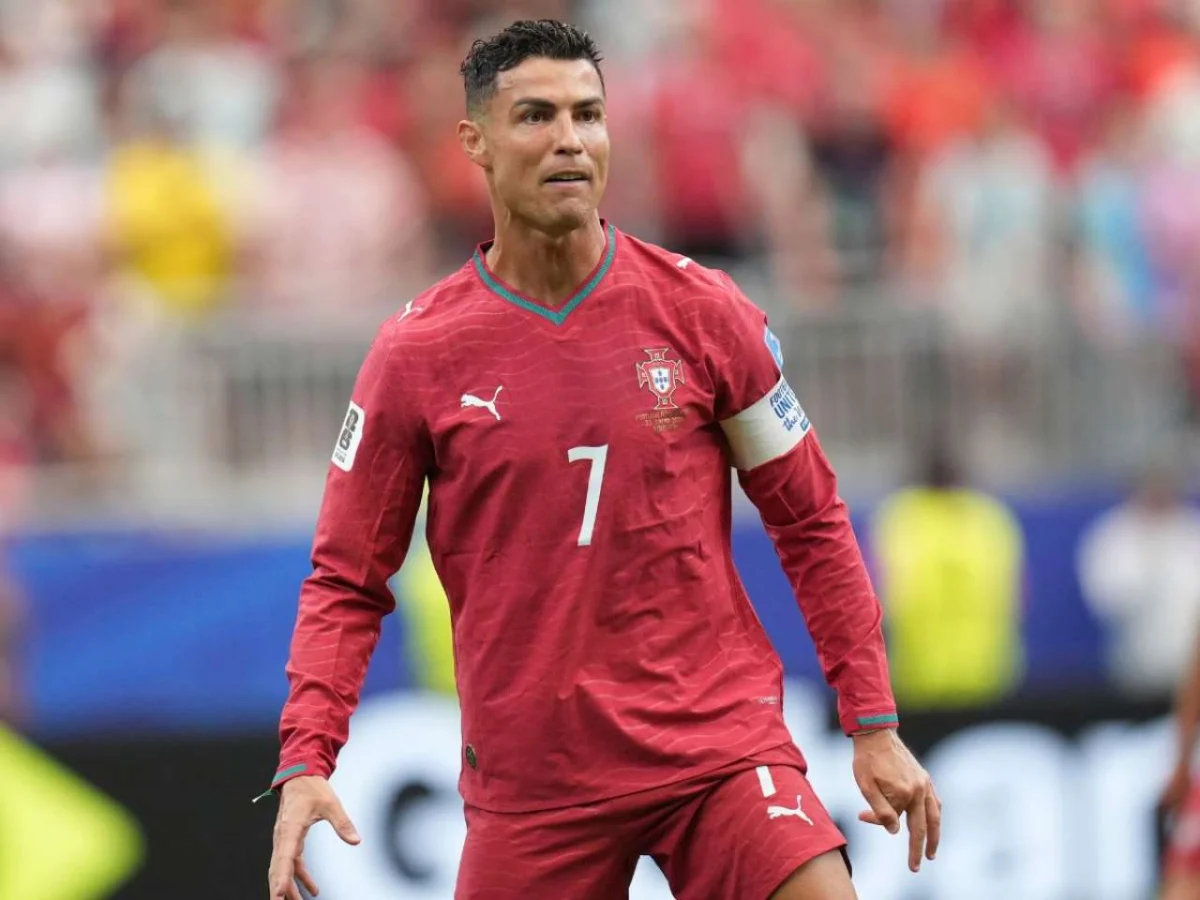
LISBON, Portugal – July 1, 2026 – As Portugal prepares for a critical Round of 32 clash against Croatia in the FIFA World Cup 2026, a fierce debate has erupted over manager Roberto Martínez’s unwavering reliance on veteran forward Cristiano Ronaldo. Former England striker and prominent pundit Chris Sutton has ignited the discussion, launching a scathing criticism of Martínez, labeling his team selection as "embarrassing" and asserting that Portugal’s formidable squad is being "held back" by the 41-year-old superstar’s consistent inclusion in the starting XI.
The controversy comes at a pivotal moment for the Portuguese national team, who entered the tournament as one of the favorites, boasting an enviable depth of talent across every position. Yet, despite their star-studded roster, their group stage performances have been less than convincing, raising questions about tactical rigidity and the optimal deployment of their attacking prowess. Martínez, meanwhile, has steadfastly defended his decisions, emphasizing Ronaldo’s unique attributes and the importance of squad rotation, albeit with the five-time Ballon d’Or winner seemingly immune to such rotation in the starting lineup.
Main Facts: The Core of the Contention
At the heart of the burgeoning controversy is the stark contrast between Portugal’s perceived squad strength and their actual output in the group stages, compounded by the central role afforded to Cristiano Ronaldo. Chris Sutton’s pointed remarks have crystallized a sentiment brewing among many football observers: that a nation brimming with dynamic, world-class attacking options is failing to unlock its full potential due to a perceived obligation to its most decorated player.
Sutton’s primary contention revolves around Ronaldo’s age and the implications for a high-intensity tournament like the World Cup. At 41, Ronaldo is undeniably defying conventional wisdom about athletic longevity, yet the demands of leading the line for a World Cup contender are immense. Sutton argues that starting Ronaldo in every minute of every game, regardless of performance or opponent, stifles the team’s tactical flexibility, reduces their collective pressing intensity, and denies invaluable minutes to younger, equally talented forwards who could offer different dimensions to Portugal’s attack.
)
Roberto Martínez, in turn, maintains that his selection strategy is justified. He has consistently highlighted Ronaldo’s positional intelligence, goal-scoring instinct, and leadership qualities as indispensable assets. Furthermore, Martínez has pointed to his overall squad management, claiming that minutes are distributed across the 21 outfield players used, implying a broader strategy that accommodates Ronaldo’s unique status without compromising team cohesion or fitness levels across the entire squad. However, the fact remains that Ronaldo has started every single group stage match, playing the full 90 minutes, which directly contradicts the spirit of Sutton’s critique regarding his unwavering inclusion.
Chronology of the Debate: From Group Stage Struggles to Pundit Firestorm
The debate surrounding Ronaldo’s role has been a simmering undertone throughout Portugal’s FIFA World Cup 2026 campaign, escalating into a full-blown media firestorm following their somewhat uninspired group stage performances.

June 14, 2026: Portugal vs. Uzbekistan – A Promising Start, But With Caveats
Portugal kicked off their World Cup journey against Uzbekistan. The match saw a dominant performance from the Seleção, culminating in a comfortable victory. Cristiano Ronaldo found the net twice, seemingly silencing early critics and reaffirming his goal-scoring prowess. However, even in this victory, whispers began regarding the overall pace of Portugal’s attack and their ability to break down more organized defenses, with some analysts suggesting that Ronaldo’s contributions were more opportunistic than integral to a fluid, high-tempo attacking system.
June 19, 2026: Portugal vs. Democratic Republic of Congo – An Unexpected Stumble
The second group stage fixture brought an unexpected challenge as Portugal faced the Democratic Republic of Congo. Despite being heavy favorites, Portugal struggled to assert their dominance, ultimately ending in a frustrating 1-1 draw. Ronaldo, despite playing the full match, failed to register a goal, and his impact on open play was noticeably limited. This result was the first significant red flag, highlighting potential issues with the team’s ability to consistently convert possession into clear-cut chances, especially when their star forward wasn’t delivering. The draw also intensified scrutiny on Martínez’s tactical setup and the team’s overall dynamism.
)
June 24, 2026: Portugal vs. Colombia – A Goalless Deadlock
The final group stage encounter against Colombia proved to be another test of patience and effectiveness. In a tense, tactical battle, Portugal again failed to find the back of the net, resulting in a goalless draw. Ronaldo once more played the entirety of the match but was unable to break the deadlock. This second consecutive draw meant Portugal progressed to the Round of 32 but without the commanding group stage performance expected of a team with their caliber. The lack of goals and the perceived struggle to create consistent attacking threats against resolute defenses fueled the growing narrative that something was amiss within the Portuguese attacking framework.
June 30, 2026: Chris Sutton’s Incendiary Remarks
It was in the immediate aftermath of these group stage struggles, and on the eve of Portugal’s crucial Round of 32 fixture against Croatia, that Chris Sutton delivered his blunt assessment. Speaking on BBC Sport, Sutton did not mince words, directly targeting Roberto Martínez’s management style: "I think it is shameful for Roberto Martinez that Cristiano Ronaldo, who is forty-one, has already played every minute for Portugal. He is the most indulgent manager I’ve ever seen. Even though Ronaldo was once a fantastic player, keeping him on the field all the time as their centre-forward is holding Portugal back." Sutton’s use of the word "embarrassing" resonated widely, capturing the frustration of many who believe Portugal’s potential is being squandered.
)
Supporting Data and Analysis: Unpacking Sutton’s Critique and Portugal’s Depth
Sutton’s criticism, while harsh, is underpinned by several compelling arguments rooted in modern football’s tactical evolution and Portugal’s unique squad composition.
The Age Factor and Modern Football’s Demands:
At 41, Cristiano Ronaldo’s longevity is unprecedented, a testament to his professionalism and dedication. However, the FIFA World Cup demands an incredibly high work rate, both offensively and defensively. Modern centre-forwards are often expected to lead the press, drop deep to link play, and offer relentless movement across the attacking third. While Ronaldo’s positional intelligence and finishing remain elite, his ability to consistently perform these high-intensity tasks for 90 minutes, match after match, is naturally diminished. Data from the group stages, though not explicitly detailed in the original article, would likely show a reduced number of sprints, defensive pressures, and touches outside the penalty area compared to his younger counterparts. This reduced mobility, as Sutton implies, can force the team to adapt its defensive structure and pressing schemes, potentially compromising the overall team’s effectiveness.
)
Portugal’s Embarrassment of Riches:
Perhaps the most potent aspect of Sutton’s argument is the sheer depth of attacking talent at Martínez’s disposal. Portugal boasts an array of forwards and attacking midfielders who are at their peak or entering it, playing for top clubs across Europe. Players like Gonçalo Ramos, who famously scored a hat-trick when replacing Ronaldo in the 2022 World Cup, offers a more traditional No. 9 profile with relentless pressing and strong aerial ability. João Félix provides creative flair, dribbling, and intelligent movement from various attacking positions. Rafael Leão offers blistering pace and directness from the left wing, capable of stretching defenses. Even Diogo Jota, when fit, presents a versatile and clinical option.
By consistently starting Ronaldo, Martínez is, by extension, benching or limiting the minutes of these players. This not only impacts their individual development and morale but also limits Martínez’s tactical options. Against different opponents, a more mobile, pressing, or creative forward might be a more suitable choice. The perception, therefore, is that Martínez is sacrificing tactical flexibility and the potential impact of other world-class players to accommodate a legend whose peak years are behind him.
)
The "Indulgent Manager" Accusation:
Sutton’s branding of Martínez as the "most indulgent manager" is a direct challenge to the coach’s authority and decision-making. It suggests that Martínez is prioritizing sentiment and star power over pure meritocracy and optimal team performance. This accusation carries significant weight in professional football, where tough decisions are often necessary, even when involving legendary figures. Sutton implies that Martínez is failing to make those difficult choices, to the detriment of the national team’s World Cup aspirations.
Official Responses: Martínez Defends His Strategy
In the face of mounting criticism, Roberto Martínez has remained steadfast in his defense of Cristiano Ronaldo’s role and his overall team selection philosophy. His responses have sought to contextualize his decisions, emphasizing internal strategy and Ronaldo’s unique contributions.
)
"We don’t evaluate ourselves against guys on other clubs."
Martínez’s retort to comparisons with other teams or players is a classic coaching maneuver designed to deflect external pressure and maintain focus within the squad. He states, "We don’t evaluate ourselves against guys on other clubs. That would be immature." This statement suggests that Martínez is not concerned with how other nations manage their aging stars or how Portugal’s setup might appear to outside observers. Instead, his focus is solely on what he believes works best for his specific group of players, within their defined system. This implies a deeply ingrained tactical plan where Ronaldo’s role is specifically carved out, regardless of how other teams might operate.
"Cristiano is used to being in the right place at the right time."
This is Martínez’s primary tactical justification for Ronaldo’s continued inclusion. He elaborated, "Cristiano is used to being in the right place at the right time," adding that Ronaldo’s positioning and attacking structure are still highly effective. This highlights Ronaldo’s enduring ability as a pure goal-scorer – his instinct to be in the penalty box, anticipate crosses, and capitalize on defensive errors. While his all-around game might have diminished, his predatory instincts remain. Martínez is banking on Ronaldo’s unique ability to score crucial goals, even if his general play is less influential. This strategy, however, places immense pressure on the rest of the team to create those "right place at the right time" opportunities for him.
)
"We do share the minutes because we have used 21 outfield players."
Martínez also addressed the broader issue of squad management and player welfare. He clarified, "We do share the minutes because we have used 21 outfield players," adding that adjustments are still possible based on the needs of the game. This statement aims to counter the narrative that he is overly reliant on a fixed XI. By highlighting the rotation of other players, Martínez suggests that fitness and workload are being managed across the entire squad. However, the critical point for Sutton and other critics is that this rotation seemingly excludes Ronaldo from the starting lineup, particularly in high-stakes group games where a fresher, more dynamic option might have been tactically beneficial. The argument here is not necessarily about minutes for the entire squad, but specifically about the starting centre-forward position.
Furthermore, Martínez implicitly relies on Ronaldo’s intangible qualities: his immense experience, winning mentality, and presence in the dressing room. As a captain and a global icon, Ronaldo’s leadership, even if less vocal on the pitch, can be a significant factor for a team navigating the pressures of a World Cup. Martínez likely views these contributions as invaluable, perhaps outweighing some of the physical limitations.
)
Implications: World Cup Hopes, Legacy, and Managerial Scrutiny
The debate surrounding Cristiano Ronaldo’s role carries significant implications for Portugal’s FIFA World Cup 2026 campaign, Ronaldo’s personal legacy, and Roberto Martínez’s future as national team coach.
For Portugal’s World Cup Campaign:
The immediate implication is for Portugal’s chances against Croatia in the Round of 32. Croatia, known for their resilient midfield and tactical discipline, will present a formidable challenge. If Portugal continues to appear tactically rigid or lacking in dynamic movement upfront, they risk being eliminated prematurely. The unresolved debate could also create an underlying tension within the squad, potentially affecting team cohesion. While Ronaldo’s presence can inspire, a perception of favoritism could also breed resentment among other talented players eager for their chance. For Portugal to go deep in the tournament, they will likely need a more fluid, unpredictable attack, and Martínez must find a way to balance Ronaldo’s contributions with the strengths of his other world-class forwards. Failure to adapt could see one of the most talented Portuguese generations fall short of their potential.
)
For Cristiano Ronaldo’s Legacy:
This World Cup is almost certainly Ronaldo’s last. How this tournament unfolds, and specifically his role within it, will indelibly shape the final chapters of his illustrious international career. If Portugal achieves success with him as a central figure, it will be hailed as a testament to his unparalleled longevity and impact. However, if Portugal falters and critics continue to point to his inclusion as a hindrance, it risks casting a shadow over what should be a celebratory swansong. The desire to go out at the very top is understandable, but the debate highlights the difficult balance between individual greatness and collective team success, particularly in the twilight of a player’s career. His legacy is already cemented, but this tournament offers a chance to refine or redefine his final narrative.
For Roberto Martínez’s Coaching Tenure:
The pressure on Roberto Martínez is immense. His tenure with Portugal, following a largely unsuccessful stint with Belgium’s ‘golden generation,’ is under intense scrutiny. His perceived "indulgence" of Ronaldo could be his undoing if Portugal fails to meet expectations. Coaches are ultimately judged on results, and if his tactical choices, particularly regarding Ronaldo, lead to an early exit, he will face severe criticism and potentially calls for his dismissal. Conversely, if he manages to navigate these challenges and lead Portugal to success, his conviction in Ronaldo will be vindicated, and his reputation as a shrewd, albeit unconventional, manager will be enhanced. The World Cup will be the ultimate test of his tactical acumen and man-management skills.
)
Broader Football Debate:
Beyond the immediate implications, this situation fuels a perennial debate in football: how to manage aging legends. The challenge of integrating players past their physical peak but still possessing immense experience and star power is a complex one. Clubs and national teams worldwide grapple with this, weighing emotional attachment and marketing value against tactical necessity and the development of future talent. Portugal’s journey in the FIFA World Cup 2026, and how Martínez resolves (or fails to resolve) the Ronaldo conundrum, will serve as a high-profile case study for this enduring managerial dilemma. The outcome will be watched keenly by football strategists and fans alike, offering valuable insights into the delicate art of team building at the highest level.
