

Colombo, Sri Lanka – August 15, 2026 – As India celebrates its 80th Independence Day with customary fervor and patriotic zeal, a different kind of anticipation, laced with a familiar pang of memory, grips the nation’s ardent cricket fans. Today marks not just a milestone in India’s journey as a sovereign republic, but also the commencement of a much-anticipated Test series against Sri Lanka on their home soil – a red-ball contest rekindling a rivalry that has seen India assert a formidable dominance in recent years. Yet, for many, this auspicious date in Sri Lanka evokes a specific, painful chapter in Indian cricket history: the heartbreaking Test defeat in Galle on August 15, 2015.
Eleven years ago, on India’s 69th Independence Day, what was meant to be a day of national jubilation turned into a profound disappointment for cricket enthusiasts as the Indian team suffered a crushing 63-run loss to Sri Lanka in the first Test at the Galle International Stadium. That day, a promising position rapidly unravelled, leaving an indelible scar on the collective cricketing psyche. As the new-look Indian squad, under the leadership of Shubman Gill, steps onto Sri Lankan pitches for the first time in nearly a decade, the echoes of that dramatic collapse loom large, shaping the narrative and adding an extra layer of intensity to this much-anticipated series.
The Galle Debacle: A Chronicle of Hopes Dashed on Independence Day 2015
The year 2015 represented a significant transition for Indian Test cricket. The legendary M.S. Dhoni had retired from the longest format just months prior, paving the way for the dynamic Virat Kohli to assume full-time captaincy. The tour to Sri Lanka, a three-match Test series, was his first major assignment as the permanent leader, carrying the weight of expectation for a new era of aggressive, fearless cricket.
Setting the Stage: A Rollercoaster Ride to Day Four
)
The first Test in Galle, beginning on August 12, 2015, had already been a gripping affair, swinging wildly between the two sides.
-
Sri Lanka’s First Innings: The hosts, batting first, found themselves in early trouble against a disciplined Indian attack. Ravichandran Ashwin, already a proven match-winner in subcontinent conditions, delivered a masterclass in off-spin bowling. His mesmerising spell saw him bag six wickets for just 46 runs, dismantling the Sri Lankan batting lineup and restricting them to a paltry 183 runs. This performance set a confident tone for India, seemingly putting them in a commanding position.

-
India’s First Innings: A Position of Strength: In response, India capitalized on Ashwin’s heroics. Openers Shikhar Dhawan and captain Virat Kohli led from the front, both notching up magnificent centuries. Dhawan scored a fluent 134, while Kohli contributed a gritty 103, showcasing his intent as a leader. Their substantial contributions, coupled with other valuable partnerships, propelled India to a formidable total of 375, securing a hefty first-innings lead of 192 runs. At this juncture, with a substantial lead and two full days of cricket ahead, an Indian victory seemed all but inevitable. The mood in the Indian dressing room and among the touring fans was buoyant.
-
Sri Lanka’s Second Innings: The Chandimal Counter-Attack: Cricket, however, is a game of glorious uncertainties, and Sri Lanka, despite being on the ropes, refused to surrender. Their second innings saw a remarkable resurgence, primarily engineered by the gritty Dinesh Chandimal. Facing a daunting deficit and the threat of an innings defeat, Chandimal played an innings of extraordinary courage and skill. Coming in at a precarious 35 for 3, and later watching his team reel at 95 for 5, he stitched together crucial partnerships and launched a stunning counter-attack. His unbeaten 162 off just 169 balls, studded with 14 fours and 4 sixes, was a masterclass in temperament and aggression. Supported by lower-order contributions, Chandimal’s heroics single-handedly pulled Sri Lanka from the brink, allowing them to post a challenging total of 367. This incredible turnaround meant India, instead of enforcing a follow-on, now faced a chase of 176 runs to win the Test. While seemingly straightforward on paper, especially with two full days remaining, the momentum had visibly shifted.
)
The Nightmare Unfolds: Independence Day, August 15, 2015
Day four, August 15th, India’s Independence Day, began with India needing 152 runs with nine wickets in hand, having finished day three at 23 for 1. The target of 176 was considered highly achievable for a batting lineup featuring established stars and promising talents. The expectation was a smooth run chase, culminating in a celebratory victory on a day of national pride.
)
What transpired, however, was a cricketing nightmare that sent shockwaves through the Indian camp and left millions of fans utterly dejected. The Indian batting order, boasting heavyweights like Virat Kohli, Shikhar Dhawan, Rohit Sharma, KL Rahul, and Ajinkya Rahane, simply crumbled under pressure.
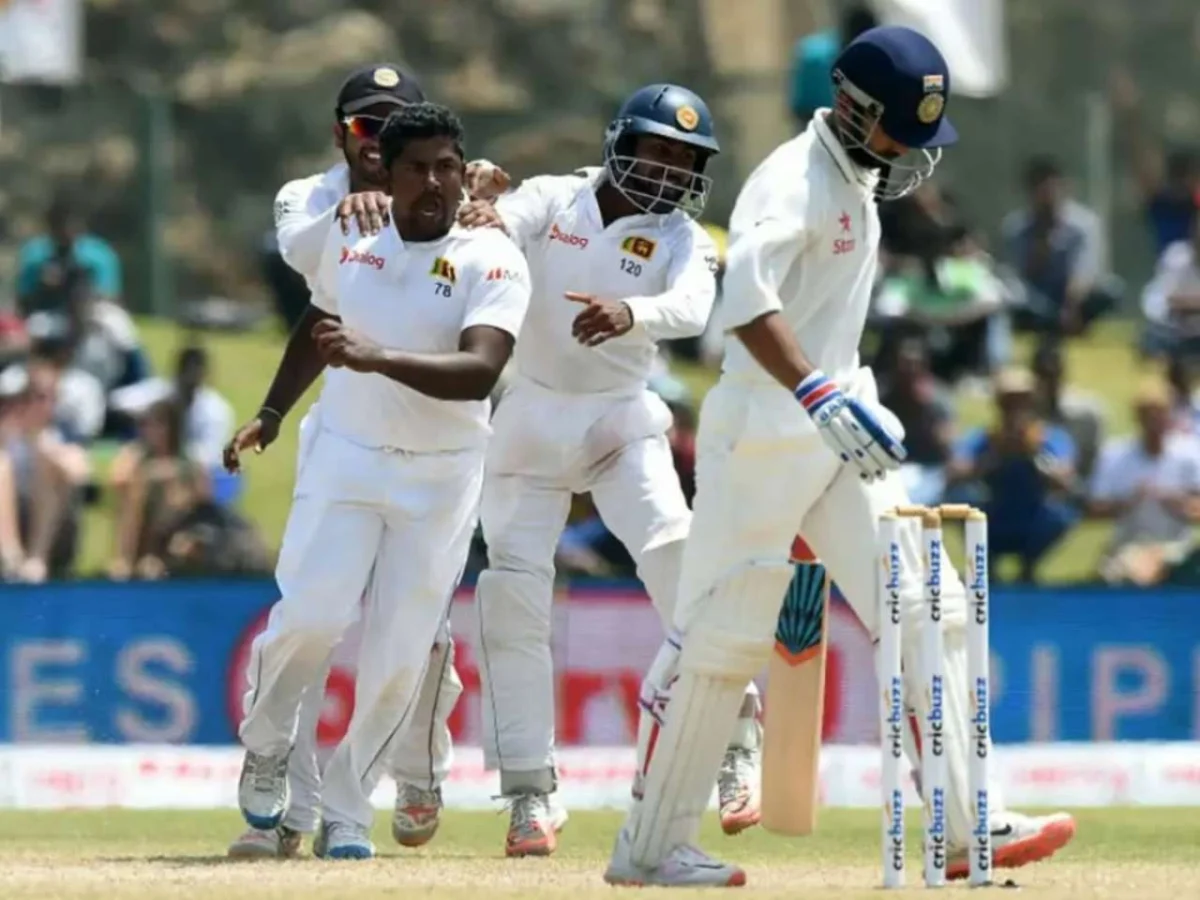
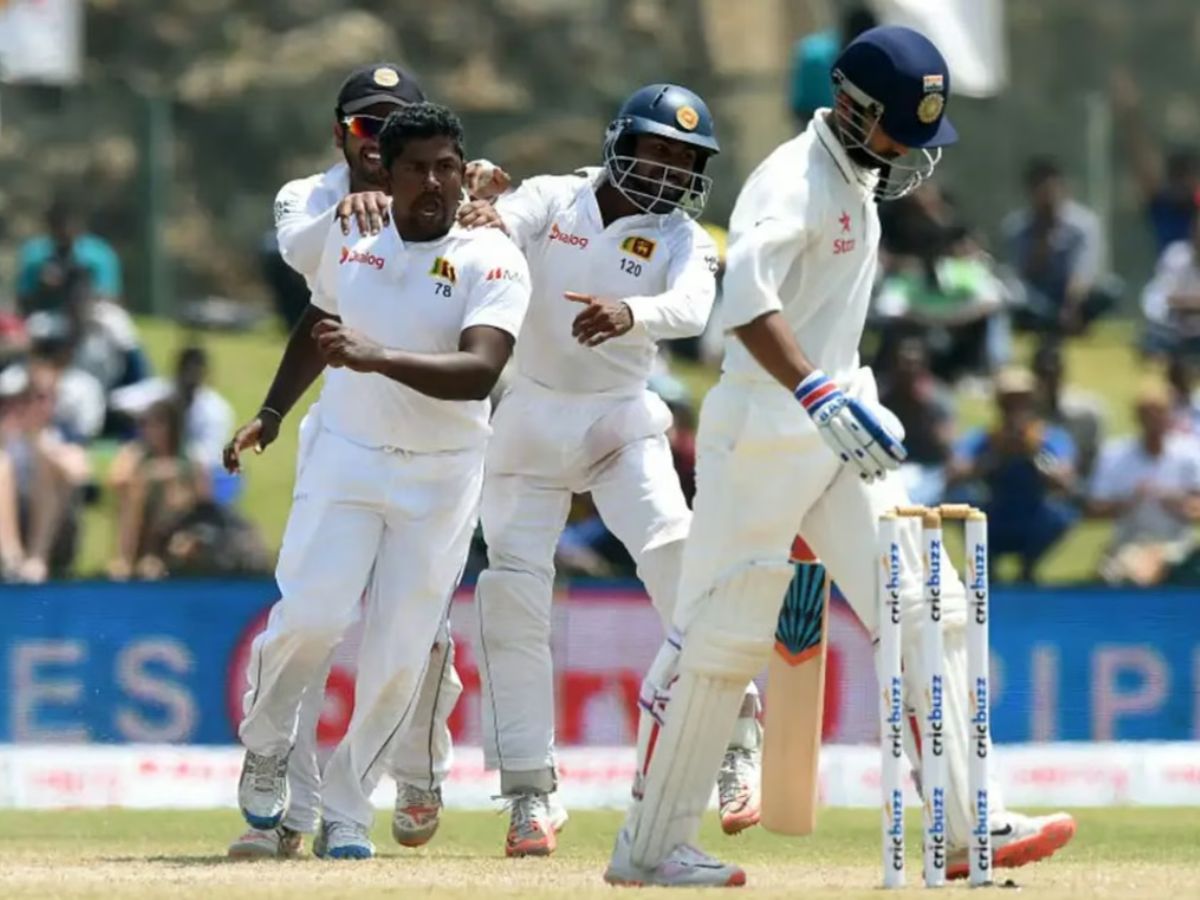
The chief architect of India’s downfall was Sri Lankan left-arm spinner Rangana Herath. Bowling with immaculate control, subtle variations, and an almost telepathic understanding of the Galle pitch, Herath exploited the crumbling surface and the Indian batsmen’s fragile nerves. He ran riot, weaving a web of deception that proved impossible to escape. Wicket after wicket tumbled in quick succession, creating a palpable sense of panic. The pitch, which had seemed manageable for Chandimal, now appeared to possess demons for the Indian batsmen. Each dismissal was met with a collective gasp from the dwindling crowd and a growing sense of dread among Indian supporters watching worldwide.
)
Herath’s final figures of 7 wickets for just 48 runs were a testament to his sheer brilliance. India, who had started the day with high hopes, capitulated for a paltry 112 runs. Sri Lanka, against all odds, snatched victory by 63 runs, taking a 1-0 lead in the three-match series. The joy of Independence Day was overshadowed by the bitter taste of a defeat that felt both unexpected and profoundly disappointing, especially given the dominant position India had held earlier in the match. The image of crestfallen Indian players leaving the field remains etched in the memory of those who witnessed it.
The Emotional Aftermath and Official Responses
The immediate aftermath of the Galle defeat was one of widespread disbelief and introspection. For a team under a new, dynamic captain, suffering such a collapse on a significant national holiday was a bitter pill to swallow.
)
Public and Media Reaction: The Indian media was quick to dissect the loss, with headlines lamenting the "Galle Ghost" and the "Independence Day Disaster." Social media, still nascent in its current form but growing rapidly, buzzed with disappointment and criticism. Fans questioned the temperament of the batting lineup, the tactical decisions, and the ability of the team to close out matches from winning positions. The sting of losing to an underdog Sri Lankan side, especially after holding such a commanding lead, amplified the disappointment.
Echoes from the Dressing Room: While direct official responses in the heat of the moment might have been guarded, the defeat undoubtedly sparked intense discussions within the Indian dressing room. Virat Kohli, known for his fierce competitiveness, would have been particularly affected. The loss likely served as a brutal, yet invaluable, learning experience for the young captain and his relatively inexperienced side. It highlighted the need for greater mental fortitude, the ability to absorb pressure, and the importance of resilience even when facing seemingly straightforward tasks. The coaching staff, led by Director Ravi Shastri, would have had to work overtime to restore confidence and analyze the systemic issues that led to such a dramatic capitulation. It was a moment that forced self-reflection and a re-evaluation of strategies.
)
A Defining Moment: Forging a New Era of Dominance
Paradoxically, what appeared to be a significant setback at the time proved to be a pivotal turning point for Indian Test cricket, particularly under Virat Kohli’s captaincy. Instead of derailing the team’s ambitions, the Galle defeat seemed to galvanize them, instilling a newfound resolve and a steely determination to overcome adversity.
The Immediate Bounce-Back: The true measure of a team’s character often lies in its response to defeat. India, to their credit, bounced back with remarkable strength. They did not allow the Galle loss to define their series.
)
- Colombo (PSS) Test: In the very next match, at the P. Sara Oval in Colombo, India delivered a dominant performance, securing a comprehensive 278-run victory. Virat Kohli led from the front with a century, and Ashwin once again proved instrumental.
- Colombo (SSC) Test: The third and final Test at the Sinhalese Sports Club (SSC) saw India complete a memorable comeback, winning by 117 runs. This victory sealed the series 2-1 in India’s favour, a remarkable feat given the demoralizing start. This immediate reversal of fortunes demonstrated the team’s resilience and their captain’s burgeoning leadership qualities.
The Kohli Era: Unprecedented Dominance in Sri Lanka:
The Galle defeat, therefore, became less about the loss itself and more about the catalyst it provided. It sharpened Kohli’s resolve, cementing his belief in aggressive, result-oriented Test cricket. It instilled in his team a "never say die" attitude and a ruthless streak that would come to define their era.
)
The statistical evidence of this transformation is compelling:
- 2017 Tour: The Whitewash: Two years after the Galle scare, India returned to Sri Lanka under Kohli’s captaincy and exacted comprehensive revenge. They steamrolled the hosts, completing an unprecedented 3-0 whitewash in the Test series. This dominant display underscored India’s growth and their firm grip on the rivalry. Every match was won convincingly, showcasing the team’s all-round strength and strategic superiority.
- Home Series Victories: India continued their dominance against Sri Lanka in subsequent encounters at home. They won the Test series 1-0 when Sri Lanka toured India in 2017 and followed it up with a commanding 2-0 victory in 2022.
- The Unbroken Streak: Since that infamous August 15, 2015, defeat in Galle, India has not lost a single Test match to Sri Lanka, particularly on Sri Lankan soil. They have racked up an incredible five consecutive Test victories in Sri Lanka, all under the inspiring leadership of Virat Kohli. This streak stands as a powerful testament to how a painful loss can be transformed into a foundation for sustained success. The Galle defeat, in retrospect, was less a wound and more a scar that served as a constant reminder of the level of intensity and focus required at the highest level.
The Present and the Future: Independence Day 2026 and the New Guard
Fast forward to August 15, 2026. The cricketing landscape has once again shifted. The stalwarts who defined the previous era have, for the most part, moved on. Rohit Sharma, Virat Kohli, and Ravichandran Ashwin, pillars of India’s Test success for over a decade, are no longer part of the touring squad, marking a generational change. This series is a true litmus test for India’s "next generation."
)
Shubman Gill: Inheriting a Legacy: The captain’s armband now rests on the shoulders of Shubman Gill, a prodigious talent who has steadily risen through the ranks. Gill inherits a team that has not lost a Test series to Sri Lanka since 2008. The pressure on him is immense: not only to maintain India’s formidable streak against their island neighbours but also to lead a relatively young side in a challenging away series. His captaincy will be under intense scrutiny, particularly how he manages his resources and adapts to subcontinent conditions. This series offers Gill an early opportunity to carve his own leadership identity, distinct from the formidable shadow of Kohli.
The Remaining Veterans: While many familiar faces are absent, a few seasoned campaigners from the Kohli era remain, providing crucial experience and continuity. KL Rahul, Kuldeep Yadav, and Ravindra Jadeja are the key figures who were part of the 2017 squad that swept Sri Lanka 3-0. Their insights into playing in Sri Lankan conditions, their understanding of the local challenges, and their ability to perform under pressure will be invaluable to Gill’s young brigade. Jadeja, in particular, as a seasoned all-rounder, will be expected to play a crucial role with both bat and ball, drawing upon his vast experience.
)
Sri Lanka’s Opportunity: For Sri Lanka, this series represents a golden opportunity. Facing a new-look Indian side without some of their most iconic match-winners, they will be eager to break India’s long-standing dominance on their home turf. The home advantage, coupled with India’s relative inexperience in key positions, might just provide the opening they need to register a series victory against India after nearly two decades. The current Sri Lankan team, likely under new leadership since 2015, will be keen to prove their mettle and restore pride in their Test cricket. They will undoubtedly be targeting the young Indian batting lineup and aiming to exploit any signs of vulnerability.
Historical Context and Broader Implications
The India-Sri Lanka cricketing rivalry, though often overshadowed by more intense contests like the Ashes or India-Pakistan clashes, has a rich history filled with memorable encounters. While India has largely held the upper hand in Test cricket, especially in recent times, Sri Lanka has always posed a unique challenge on their home pitches, with their spin-friendly conditions and passionate crowds.
)
The 2015 Galle defeat, therefore, stands out not just as a statistical anomaly but as a psychological turning point. It was a harsh lesson that even the most dominant teams can stumble, especially when complacency sets in or when faced with an inspired individual performance. Its long-term implication was the forging of a more resilient, tactically astute, and mentally tough Indian Test team that would go on to achieve unprecedented success, including stints as the number one ranked Test team in the world.
For the 2026 series, the shadow of Galle is not one of fear, but perhaps a quiet reminder. It’s a reminder of the fragility of a strong position, the importance of fighting until the very last ball, and the emotional weight that comes with representing a nation on its most significant day.
)
Conclusion: A New Chapter Awaits
As India celebrates its 80th Independence Day, the cricket community awaits the unfolding of this new Test series. Will Shubman Gill’s India continue the legacy of dominance established by Kohli, extending the remarkable streak of wins against Sri Lanka? Or will the new-look Sri Lankan side finally manage to break the shackles and inflict a rare home defeat on India, perhaps even drawing inspiration from the upset of 2015?
The answer will begin to emerge by August 27, when the series concludes. Regardless of the outcome, this series is more than just a contest of bat and ball; it’s a narrative woven with history, national pride, and the enduring memory of a painful yet ultimately transformative defeat from eleven years ago. The ghost of Galle may still linger, but it now serves less as a haunting presence and more as a poignant historical marker, underscoring the journey of resilience and growth that Indian cricket has undertaken.
