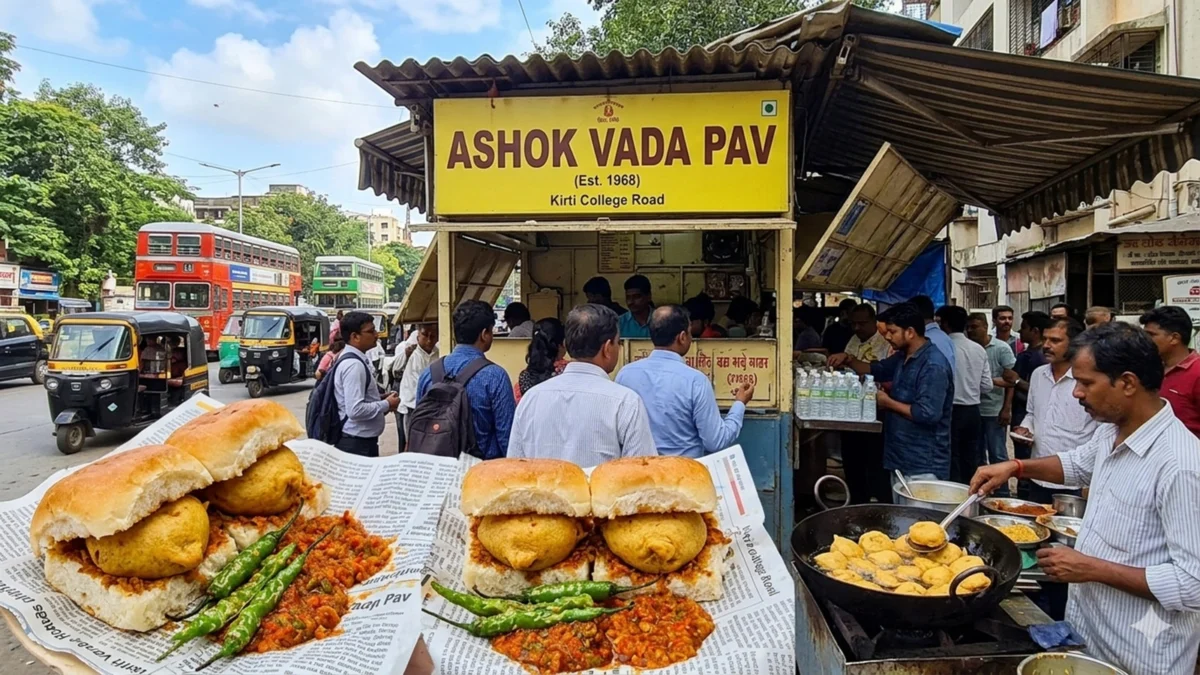
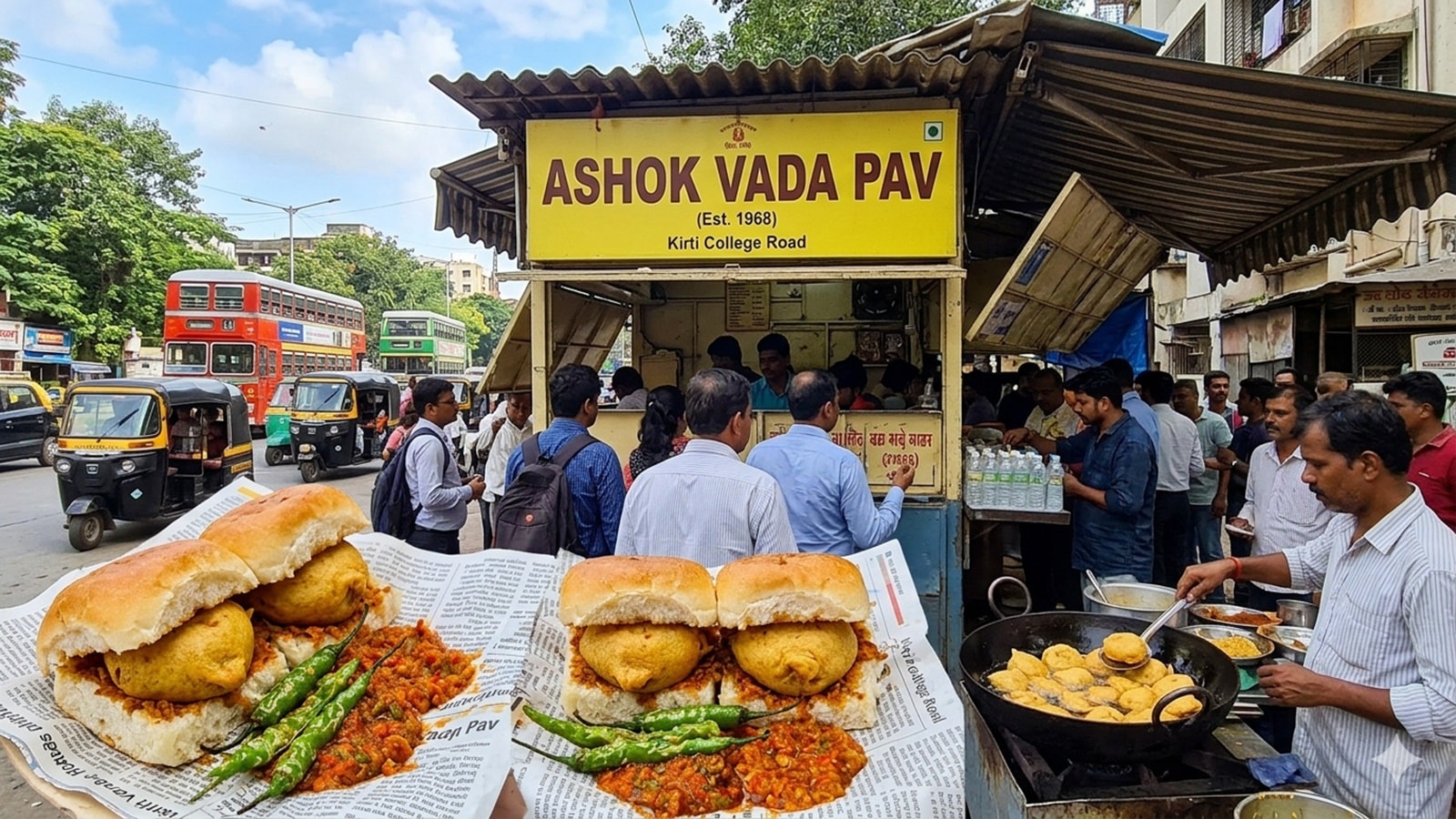
MUMBAI – In a significant nod to India’s vibrant street food culture, Mumbai’s legendary Ashok Vada Pav has been ranked 25th on the prestigious TasteAtlas list of the "World’s Most Iconic Sandwiches." The recognition places this humble potato-based snack alongside global heavyweights like the Vietnamese Banh Mi, the American Reuben, and the Italian Panino, cementing its status as a culinary masterpiece born out of necessity and elevated by tradition.
Located in the bustling neighborhood of Dadar, right next to the Kirti M. Doongursee College of Arts, Science and Commerce, Ashok Vada Pav—often referred to locally as "Kirti College Vada Pav"—has been a fixture of the city’s gastronomic landscape since 1966. For nearly six decades, this modest stall has served a cross-section of society, from struggling students and daily commuters to Bollywood celebrities and global food critics.
Main Facts: A Global Accolade for a Local Legend
The ranking by TasteAtlas, an experiential travel guide for traditional food that collates authentic recipes, food critic reviews, and research articles about popular ingredients and dishes, has brought international spotlight to a snack that Mumbaikars have long considered the city’s lifeline.
The Vada Pav, often colloquially termed the "Indian Burger," consists of a deep-fried potato dumpling (batata vada) placed inside a sliced bread roll (pav). What sets Ashok Vada Pav apart from thousands of other vendors in the city is its secret batter recipe and the inclusion of "choora"—the crunchy, deep-fried bits of batter that add an extra layer of texture to the sandwich.
According to the TasteAtlas report, the ranking is determined by a combination of audience ratings and expert evaluations. Ashok Vada Pav’s inclusion at the 25th spot is a testament to its consistency. Despite the influx of international fast-food chains and the "gourmet-ification" of Indian street food, the stall has remained true to its original flavors, refusing to compromise on the quality of its chutneys or the spice profile of its potato filling.
Chronology: From a Railway Platform to Global Fame
The history of the Vada Pav is inextricably linked to the socio-economic evolution of Mumbai in the mid-20th century.
1966: The Genesis
The story began when Ashok Vaidya, a street vendor, set up a small stall outside Dadar Railway Station. At the time, Mumbai (then Bombay) was the industrial heart of India, home to hundreds of textile mills. The workforce required a snack that was filling, inexpensive, and easy to consume while standing or commuting. Vaidya’s innovation was simple yet revolutionary: he took the traditional Maharashtrian batata vada and placed it inside a pav, a bread roll introduced to India by the Portuguese.
1970s–1980s: Political Patronage and Proliferation
The popularity of the dish skyrocketed during the 1970s and 80s, a period marked by industrial unrest and the rise of the Shiv Sena. The political party, founded by Bal Thackeray, actively promoted the Vada Pav as a symbol of "Marathi Manoos" (the Marathi person) pride. They encouraged local youth to set up Vada Pav stalls as a means of self-employment. This political backing transformed the snack from a mere food item into a cultural and political emblem.
The 1990s: Survival Against Globalization
When multinational fast-food giants like McDonald’s and Burger King entered the Indian market in the mid-90s, many predicted the demise of local street food. However, the Vada Pav proved resilient. Its affordability—costing a fraction of a branded burger—and its superior spice profile ensured it remained the preferred choice for the masses.
2020s: The Digital and Global Era
In the age of social media, Ashok Vada Pav became a viral sensation. Food bloggers and YouTubers from across the globe began trekking to Dadar to witness the "Vada Pav King" in action. The recent TasteAtlas ranking is the culmination of this decades-long journey from a roadside stall to a globally recognized brand.
Supporting Data: The Anatomy of a Masterpiece
What makes Ashok Vada Pav statistically and sensorially superior? To understand its 25th-place ranking, one must look at the components that define the experience.
- The Batata Vada: The filling is a mash of boiled potatoes seasoned with green chilies, ginger, garlic, mustard seeds, and turmeric. It is then dipped in a gram flour (besan) batter and deep-fried. At Ashok’s, the oil temperature is meticulously monitored to ensure the vada is golden-brown and crisp on the outside while remaining fluffy inside.
- The Chutneys: The sandwich is defined by three distinct sauces: a fiery red dry garlic chutney, a tangy tamarind-date chutney, and a sharp green chili-coriander chutney. The balance of these three provides the "umami" that global critics have lauded.
- The Pav: Unlike the sweetened brioche buns used in Western burgers, the pav is a neutral, fermented bread. Its soft texture is designed to absorb the moisture of the chutneys without falling apart.
- The "Choora": This is Ashok’s signature. By sprinkling the leftover fried batter bits into the pav, they create a textural contrast that has become a benchmark for Vada Pav enthusiasts.
Economically, the Vada Pav remains a marvel of frugal engineering. Even with inflation, it remains one of the most calorie-dense and affordable meals available in an urban metropolis, making it a vital component of Mumbai’s food security for the working class.
Official Responses: Expert Insights on the Ranking
Culinary experts and industry veterans have reacted with enthusiasm to the news, noting that such recognition is long overdue for Indian street food.
Celebrity chef Ananya Banerjee, speaking to The Indian Express, emphasized the cultural weight of the dish. "Vada pav is more than a snack—it’s a cultural emblem of Mumbai. Its simplicity, affordability, and connection to the city’s industrious spirit have turned it into an iconic street food loved across India," she stated. Banerjee noted that Ashok Vaidya’s genius lay in his ability to understand the rhythm of the city.
Tarveen Kaur, a prominent head chef and restaurant consultant, highlighted the historical fusion that created the dish. "The pav, a fluffy bread roll, was first introduced to India by the Portuguese. The result was a culinary revelation: an affordable snack that could be eaten on the go, packed with flavor and sustenance," Kaur explained. She further noted that while upscale versions now play with cheese, schezwan sauce, and fusion flavors, the "essence of vada pav remains the same—a snack that represents Mumbai’s spirit: quick, bold, and unforgettable."
A spokesperson for TasteAtlas noted that the inclusion of Ashok Vada Pav was driven by the "sheer volume of positive sentiment" and the "historical authenticity" of the establishment. "Iconic status isn’t just about taste; it’s about the story the food tells. Ashok Vada Pav tells the story of Mumbai," the guide stated.
Implications: Beyond the Plate
The ranking of Ashok Vada Pav has broader implications for Indian tourism, the local economy, and the global perception of "sandwiches."
1. Culinary Tourism
The recognition is expected to drive a surge in "food pilgrims" to Dadar. Much like how tourists visit Jiro Ono’s sushi restaurant in Tokyo or Katz’s Delicatessen in New York, Ashok Vada Pav is now positioned as a "must-visit" destination on the global food map. This boost in culinary tourism benefits not just the stall but the surrounding local businesses.
2. The Redefinition of the "Sandwich"
For decades, the global definition of a sandwich was dominated by Western iterations. The inclusion of Vada Pav (alongside other non-Western items) signifies a shift toward a more decolonized and inclusive culinary world view. It acknowledges that a fried potato dumpling in a bun is as much a "sandwich" as a club sandwich or a baguette.
3. Formalizing the Informal Sector
The success of Ashok Vada Pav serves as a case study for the formalization and branding of street food. It proves that street vendors, if they maintain quality and heritage, can achieve global brand equity without massive marketing budgets. This could lead to better support systems and recognition for street vendors from municipal authorities, who have historically viewed them through a lens of regulation rather than cultural promotion.
4. The Challenge of Consistency
As global fame grows, the challenge for Ashok Vada Pav will be maintaining the qualities that earned it the ranking. With increased footfall comes the pressure to scale, but the charm of the stall lies in its artisanal, small-batch approach. Maintaining the "soul" of the 1966 recipe amidst 2024 demand will be the establishment’s next great hurdle.
Conclusion
The 25th-place ranking of Ashok Vada Pav on the World’s Most Iconic Sandwiches list is a victory for the "common man" of Mumbai. It is a celebration of a dish that was born in the shadows of textile mills and grew to become the heartbeat of a megacity.
As the sun sets over the Arabian Sea and thousands of Mumbaikars head toward Dadar station, the familiar aroma of frying gram flour and tempering mustard seeds continues to waft through the air. For the regulars, Ashok’s Vada Pav was always the best in the world. Now, the rest of the world finally agrees. In the words of Chef Tarveen Kaur, it remains "deeply tied to its roots," proving that in the world of global gastronomy, sometimes the simplest innovations are the most enduring.