

GURGAON – For Priya Thakkar, a 45-year-old investment advisor accustomed to analyzing hard data and market volatility, the purchase of her first home in Gurgaon was expected to be a triumph of logic. She had scrutinized the floor plans, negotiated the price per square foot, and verified the legal titles. Yet, as the moving boxes were unpacked, a realization set in: the spreadsheets had failed to capture the essence of her daily life.
"I had all the data points, but I didn’t have the ‘feel’ of the place," Thakkar recalls. "Nobody could give me a straight answer about the community culture. Is it a quiet neighborhood? Do people interact? Is there a shared sense of responsibility? I spent months browsing properties, but I realized too late that the data alone wasn’t going to answer the questions that actually mattered for my peace of mind."
Thakkar’s experience is no longer an outlier; it has become the focal point of a significant shift in the Indian real estate landscape. As we move through 2026, the industry is witnessing a transition where "neighborhood compatibility" is rivaling "location" as the primary driver of long-term residential satisfaction.
Main Facts: Defining the "Culture Gap" in Real Estate
In the traditional home-buying journey, the focus has historically been on the "hard" assets: square footage, amenities, and appreciation potential. However, a "Culture Gap" has emerged—a disconnect between the physical structure of a home and the social fabric of the neighborhood it resides in.
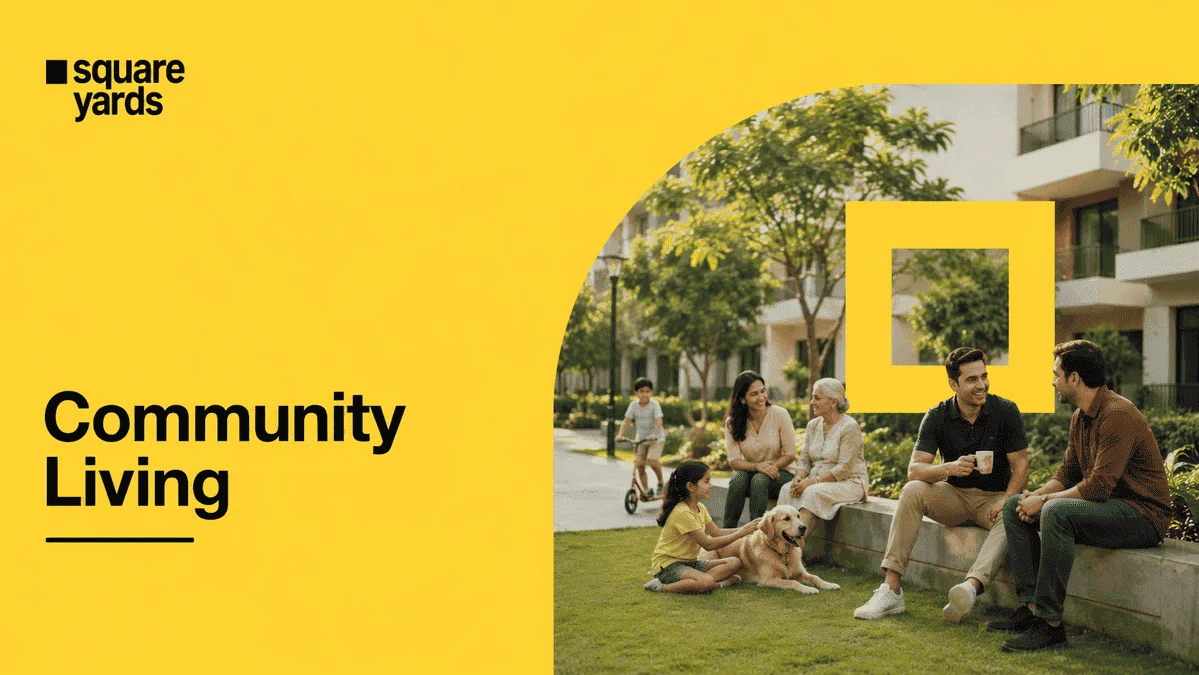
Community culture, in a real estate context, refers to the shared norms, lifestyle rhythms, and social dynamics of a residential area. It is the informal social fabric—the difference between a neighborhood that is family-focused and active versus one that is professional-centric and quiet.
According to market analysts at Square Yards, property decisions are increasingly being viewed through the lens of "Lifestyle Alignment." This involves assessing how well an individual’s personal values and daily habits fit the dominant character of an area. In 2026, getting this right is no longer considered a "soft" luxury; it is a critical factor in protecting the financial and emotional value of the investment.
Chronology: The Evolution of the Indian Homebuyer’s Priority Stack
To understand why community culture has moved to the forefront, one must look at the evolution of the urban Indian housing market over the last decade.
- The Pre-2020 Era: The Commute-Centric Model. Neighborhood selection was almost entirely dictated by proximity to employment hubs. If a home was within 30 minutes of an IT park or a financial district, the "culture" of the neighborhood was secondary.
- 2020–2023: The Pandemic Pivot. The global shift to remote work forced residents to spend 24 hours a day within their communities. The lack of social infrastructure and poor neighborhood compatibility became glaring issues, leading to a surge in demand for gated communities with self-contained ecosystems.
- 2024–2025: The Hybrid Stabilization. As hybrid work models became permanent for urban professionals, the neighborhood effectively became an extension of the workplace. The demand for "livability" began to outweigh "connectivity."
- 2026: The Era of Informed Compatibility. Today’s buyers, like Lakshmi Subramanian, a 37-year-old doctor from Chennai, are taking significantly longer to commit. They are moving from a reactive stance—evaluating culture after shortlisting—to a proactive stance—researching culture before even looking at a floor plan.
Supporting Data: The Hidden Costs of Incompatibility
The financial implications of ignoring neighborhood culture are significant. While they rarely appear on a standard closing statement, these "hidden costs" compound over time, affecting both the homeowner’s wealth and well-being.
1. The Cost of Lifestyle Friction
Daily irritations—ranging from noise levels and parking disputes to mismatched social expectations—wear down the resident. For families with elderly members or young children, a lack of community support or appropriate social spaces can lead to isolation, eventually forcing a premature and costly relocation.
2. Resale Drag and Liquidity Risks
Data from 2025–26 indicates that properties in communities with "fragmented" cultures or poor governance take 30–40% longer to sell. "A property might be physically perfect, but if the community has a reputation for friction or poor maintenance, the pool of compatible buyers shrinks," says a Square Yards advisory lead. This "resale drag" can cost sellers millions in potential appreciation.
3. The Short-Hold Penalty
Relocating within 24 to 36 months of a purchase is a financial disaster in the Indian context. Between stamp duty, registration fees, brokerage, and moving expenses, a buyer typically loses 8–12% of the property value just by walking through the door. If the community fit is poor, the "exit cost" wipes out any equity gained during the short tenure.
4. Micro-Market Divergence
In 2026, cities with active metro and expressway investments are seeing varied appreciation. Micro-markets within 2–3 km of transit hubs are repricing faster, but only if they maintain a high standard of "social infrastructure." Managed clubhouses, co-working spaces, and landscaped community zones are no longer "add-ons"—they are baseline expectations that command a 15–20% premium.
Expert Framework: The 4-Layer Compatibility Check
To assist buyers in navigating this complex landscape, industry experts have developed a structured "Compatibility Framework." This allows buyers to move beyond developer brochures and into reality-based decision-making.
Layer 1: Lifestyle Alignment
Does the community’s pace match yours? A young professional couple buying into a senior-dominated retirement community—or vice versa—will experience immediate friction. Assessment requires visiting the site at multiple times of day: 7:00 AM to see the morning rush, 2:00 PM to gauge quietness, and 8:00 PM to observe social activity.
Layer 2: Infrastructure Proximity
This layer evaluates the "15-minute city" concept. How accessible are non-negotiable anchors like hospitals, schools, and markets? For 2026 homebuyers, the proximity to transit is being weighed against the noise and congestion that transit brings.
Layer 3: Social Infrastructure
This goes beyond having a gym. It looks at the Resident Welfare Association (RWA) activity, community events, and the usage of shared spaces. Strong social infrastructure correlates directly with community cohesion and long-term desirability.
Layer 4: Governance and Maintenance
The quality of a community is often determined by the effectiveness of its RWA. Are rules enforced consistently? Is the common property maintained? Poor governance erodes property value faster than market downturns.
Official Responses and Industry Support
Real estate platforms are evolving to meet this need for qualitative data. Square Yards, for instance, has integrated verified market data with on-ground advisory services to help buyers like Lakshmi Subramanian.
"Having access to verified data and structured timelines meant I could make decisions with confidence rather than guesswork," Subramanian noted after her Chennai purchase. The shift in the industry is toward providing a "clearer, more confident path" that includes property valuation tools to benchmark decisions against real-time data.
Furthermore, NRI (Non-Resident Indian) buyers are increasingly utilizing these digital tools to perform "remote culture checks." Knowing they cannot easily course-correct from abroad, they are prioritizing communities with proven governance records and high "social capital."
Implications: The Future of Urban Living
The rise of neighborhood compatibility as a primary metric suggests a maturing Indian real estate market. In 2026, the "home" is no longer just the area within the four walls; it is the entire ecosystem.
For Developers: The implication is clear—building a structure is not enough. To maintain premium pricing, developers must curate communities, foster social infrastructure, and ensure long-term maintenance standards.
For Buyers: The proactive approach is the only way to safeguard an investment. By prioritizing "culture fit" first and "price negotiation" second, buyers can avoid the emotional and financial drain of a mismatched home.
For the Market: We are likely to see a "flight to quality" where well-governed, culturally cohesive neighborhoods see sustained price growth, while poorly managed areas—regardless of their physical luxury—struggle with stagnation.
As Priya Thakkar reflects on her journey in Gurgaon, her advice to new buyers is simple: "Don’t just look at the floor plan. Look at the people in the elevator. Look at the notices on the community board. The data tells you if the deal is good, but the culture tells you if the life will be good."
Frequently Asked Questions
1. What does community culture mean in real estate?
It refers to the shared lifestyle, social norms, and resident dynamics of a neighborhood—the informal character that shapes the daily living experience beyond the property itself.
2. How do I assess neighborhood compatibility before buying?
Experts recommend visiting the site at multiple times of the day, speaking with existing residents, checking RWA (Resident Welfare Association) activity, and reviewing independent community platforms or social media groups.
3. Why does neighborhood compatibility matter for property value?
Communities with strong social cohesion, active governance, and well-maintained infrastructure tend to hold their value better and attract higher-quality buyers or tenants, ensuring better liquidity.
4. What is the biggest mistake buyers make when evaluating community fit?
The most common error is skipping the community assessment entirely and relying solely on developer marketing or "asking price" as a proxy for value. The social fabric is rarely visible in a brochure.
5. How is community living different in 2026 compared to the past?
The permanence of hybrid work has made neighborhood character more vital. Buyers are spending significantly more time on livability research and less time on pure price negotiation than they did five years ago.
