

MUMBAI — Mumbai’s infrastructure-led transformation is entering a decisive new phase. As the city moves toward the latter half of 2026, the Sewri-Worli Elevated Corridor (SWEC) is emerging as more than just a feat of civil engineering; it is becoming the most influential catalyst in reshaping the residential geography of India’s financial capital.
Historically, Mumbai has been defined by its north-south linearity, a geographic constraint that has dictated property prices and commute patterns for decades. However, the SWEC is designed to shatter this paradigm. By creating a high-speed mobility spine that stitches together the Mumbai Trans Harbour Link (Atal Setu) on the eastern waterfront with the Bandra-Worli Sea Link and the Coastal Road on the western seafront, the project is effectively unifying the city’s disparate edges into a single, cohesive economic zone.
Main Facts: The Architecture of Connectivity
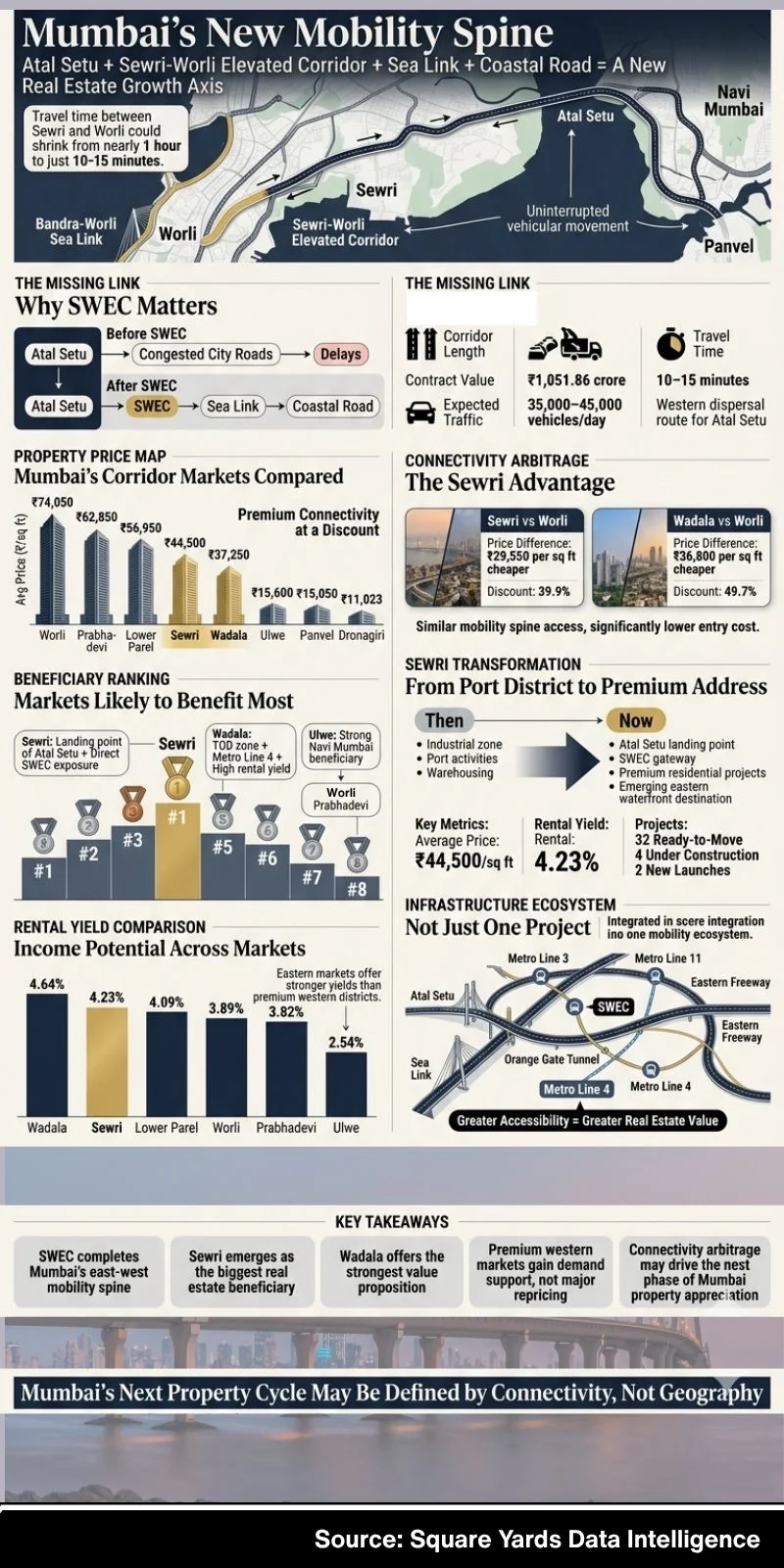
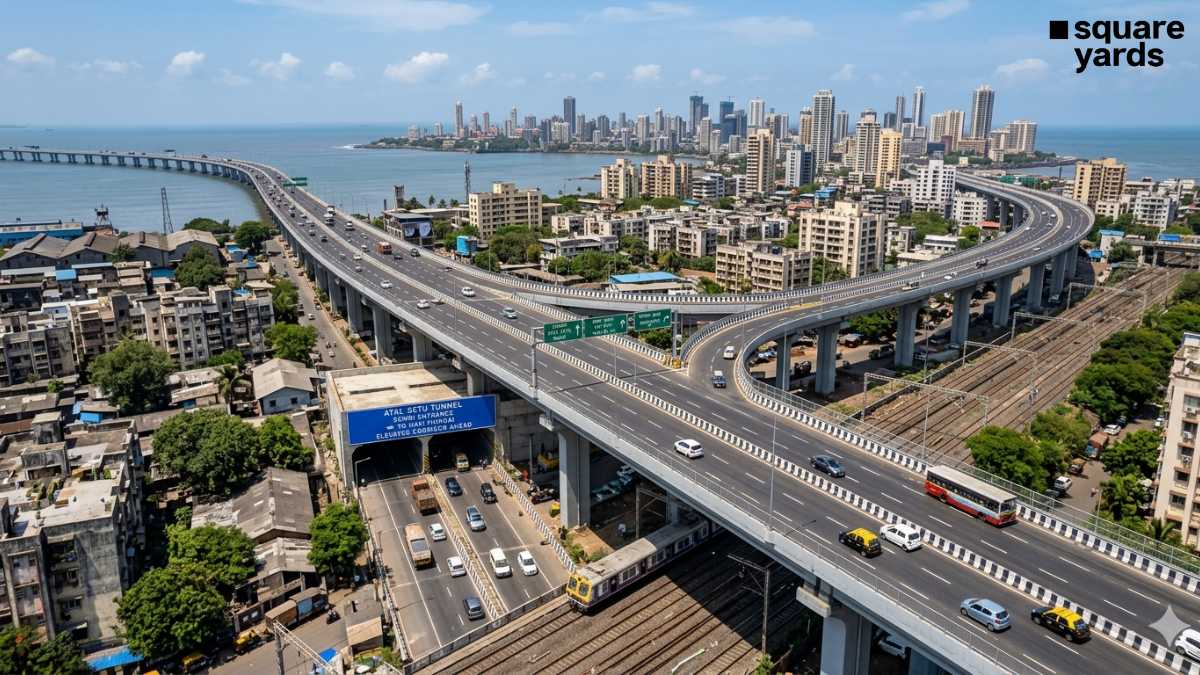
The Sewri-Worli Elevated Corridor is a Rs 1,052-crore infrastructure marvel designed as a four-lane elevated highway. Spanning approximately 4.5 kilometers, the project is a masterpiece of urban density management, featuring nearly 2.9 kilometers of ramps and sophisticated interchanges.
The corridor serves as the critical "missing link" in Mumbai’s grand dispersal system. While the 21.8-km Atal Setu has already revolutionized the connection between Mumbai and Navi Mumbai, its full utility has been hampered by the "bottleneck" effect at the Sewri landing point. The SWEC solves this by providing a direct, high-speed conduit to the western suburbs and the business districts of South Central Mumbai.
Key Project Highlights:
- Total Investment: Rs 1,052 Crore.
- Length: 4.5 km of elevated roadway.
- Time Savings: Reduction of travel time between Sewri and Worli from 60 minutes to approximately 10–15 minutes.
- Strategic Integration: Connects the Eastern Freeway and Atal Setu to the Coastal Road and Bandra-Worli Sea Link.
Chronology: A Multi-Decade Vision Realized
The journey toward this "mobility spine" has been several years in the making, following a phased approach to de-congesting the island city.
- The Eastern Expansion (2014–2024): The completion of the Eastern Freeway initially opened up the eastern corridor, followed by the landmark inauguration of the Atal Setu. These projects shifted the focus toward Mumbai’s long-neglected eastern docks and the burgeoning landscape of Navi Mumbai.
- The Western Renaissance (2023–2025): The phased opening of the Mumbai Coastal Road and the expansion of the Bandra-Worli Sea Link focused on streamlining the western periphery, significantly cutting travel times between South Mumbai and the airport.
- The Integration Phase (2025–2026): As of mid-2026, the construction of the SWEC has reached its final stages. With a projected completion date by the end of the year, the focus has shifted from "building roads" to "linking networks."
- The Real Estate Re-Rating (March 2026–Present): Data from early 2026 indicates that the market has already begun to price in the "connectivity dividend," with transaction volumes in Sewri and Wadala hitting record highs ahead of the corridor’s operational debut.
Supporting Data: The "Connectivity Arbitrage"
According to Square Yards Data Intelligence (March 2026), the pricing dynamics along the corridor reveal a phenomenon known as "connectivity arbitrage." This occurs when infrastructure bridges the gap between high-value established markets and emerging lower-cost hubs.
The Pricing Gap (Average Residential Values psf):
- Worli: Rs 74,050
- Prabhadevi: Rs 62,850
- Lower Parel: Rs 56,950
- Sewri: Rs 44,500
- Wadala: Rs 37,250
The data highlights a stark contrast: Worli remains the city’s luxury flagship, yet Sewri offers a 40% discount despite being only 15 minutes away once the SWEC is operational. Wadala, trading at a nearly 50% discount compared to Worli, presents an even more aggressive entry point for investors.
Rental Yields and Investment Potential:
While capital appreciation is a major draw, the rental market is providing the most compelling evidence of the corridor’s impact.
- Wadala: Boasts a rental yield of 4.64%, the highest among the core corridor markets.
- Sewri: Follows closely with a yield of 4.23%.
These figures outperform many premium western markets, suggesting that a new class of professional tenants—those working in Worli or BKC but seeking modern, accessible housing—is already gravitating toward the eastern anchor of the corridor.
Official Perspectives and Planning Vision
While official statements from the Mumbai Metropolitan Region Development Authority (MMRDA) emphasize the technical achievements, urban planners view the SWEC as a tool for social and economic rebalancing.
"The Sewri-Worli Elevated Corridor is not merely a road; it is an instrument of urban renewal," says a senior consultant associated with the city’s planning department. "By reducing the friction of distance, we are allowing the eastern waterfront to breathe and evolve. This corridor ensures that the massive investment made in the Atal Setu pays off by distributing traffic efficiently across the city’s internal arteries."
City officials have also noted that the SWEC is a critical component of the Transit-Oriented Development (TOD) policy. The proximity of the corridor to the upcoming Metro Line-4 and the existing monorail network creates a multi-modal hub that encourages high-density, high-quality residential growth.
Strategic Implications: Reshaping the Micro-Markets
The ripple effects of the SWEC are being felt differently across various neighborhoods, creating a tiered impact on the real estate landscape.
1. Sewri: The Transformation of the Port District
Once characterized by warehouses and industrial units, Sewri is undergoing a metamorphosis. Its position as the "eastern anchor" of the SWEC, combined with its role as the landing point for Atal Setu, makes it one of the most strategic patches of land in Mumbai. Analysts expect Sewri to eventually mirror the luxury trajectory of Parel, but with the added benefit of sea views and better-planned infrastructure.
2. Wadala: The New Connectivity Hub
Wadala is benefiting from a "double-whammy" of infrastructure. Beyond the SWEC, it is a primary beneficiary of the Eastern Freeway and the planned Metro connectivity. With the highest rental yields in the study, Wadala is attracting both first-time homebuyers and institutional investors looking for stable, long-term returns.
3. Worli and Lower Parel: Deepening the Luxury Pool
For the established premium markets of the west, the SWEC acts as a "value enhancer." Lower Parel remains the most active market, with over 1,300 annual transactions and gross sales exceeding Rs 3,000 crore. The corridor expands the catchment area for these districts, making them accessible to high-net-worth individuals residing in Navi Mumbai or the eastern suburbs who previously found the commute prohibitive.
4. The Navi Mumbai Connection: Ulwe and Panvel
The influence of the SWEC extends across the Thane Creek. Ulwe, with average residential values of Rs 15,600 psf, is perhaps the clearest beneficiary of the Atal Setu-SWEC synergy. The ability to travel from the heart of Navi Mumbai to the premium business districts of Worli in under 45 minutes transforms Ulwe from a distant suburb into a viable residential alternative for Mumbai’s workforce. Panvel, meanwhile, continues to see massive supply pipelines as it prepares for the operationalization of the Navi Mumbai International Airport, further bolstered by this high-speed link.
Conclusion: A City Without Borders
As the Sewri-Worli Elevated Corridor nears completion in late 2026, the traditional definitions of "prime" and "peripheral" Mumbai are being rewritten. The project is a testament to the fact that in a modern metropolis, time—not distance—is the true currency of real estate.
By bridging the gap between the historic wealth of the western seafront and the untapped potential of the eastern harbor, the SWEC is creating a more balanced, efficient, and integrated Mumbai. For investors, the "connectivity arbitrage" remains a window of opportunity that may soon close as prices in Sewri and Wadala begin to converge with their western counterparts. For the average Mumbaikar, the corridor represents something even more valuable: the return of hours once lost to traffic, now reclaimed by a city that finally moves as fast as its ambitions.
