

Executive Summary: A New Contender Emerges from the Shadows
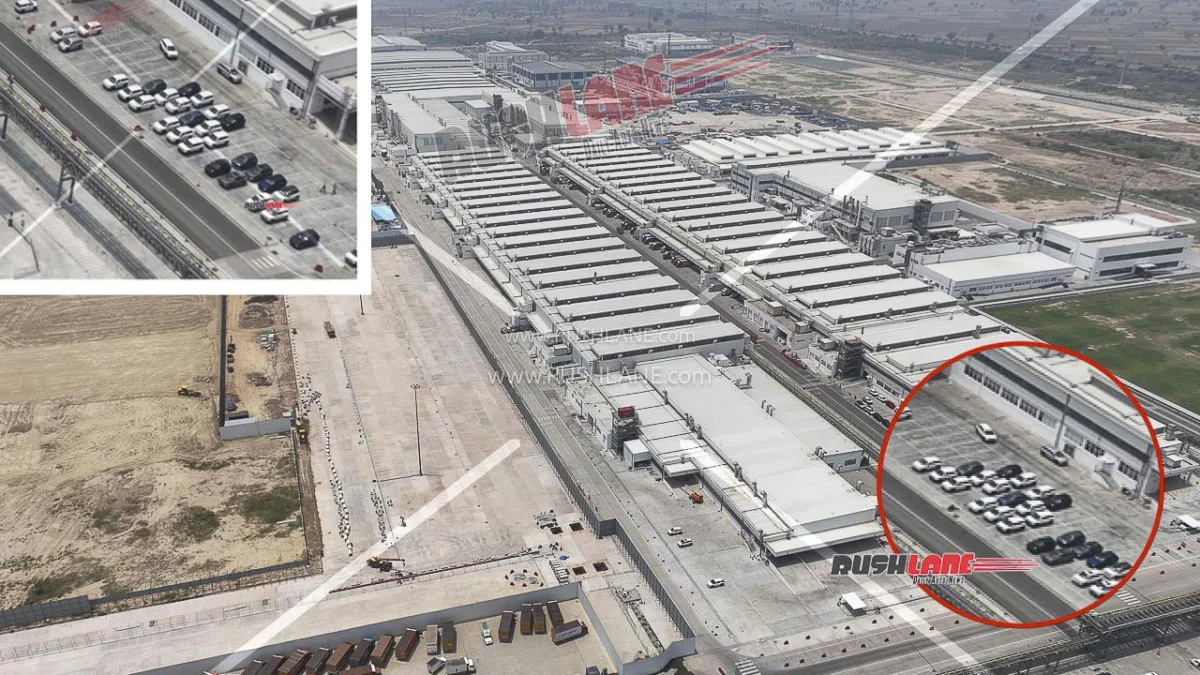
In the high-stakes arena of the Indian automotive industry, few things remain hidden for long. However, it is rare for a market leader to inadvertently pull back the curtain on its own future roadmap. Maruti Suzuki, India’s largest carmaker, recently appears to have done just that. Through a series of high-resolution aerial photographs intended to showcase the commencement of commercial production at its state-of-the-art Kharkhoda facility in Haryana, the company seemingly revealed the first glimpses of its most anticipated project: the Y43 micro-SUV.
Codenamed Y43, this upcoming vehicle is designed with a singular, formidable objective: to dethrone the Tata Punch. For years, Maruti Suzuki has dominated the hatchback and mid-size SUV segments, yet the "micro-SUV" or "entry-SUV" space—a segment that has seen exponential growth—remained a conspicuous void in its portfolio. The accidental reveal of these engineering units suggests that Maruti is finally ready to bridge this gap, signaling a tectonic shift in the entry-level passenger vehicle market.
1. Main Facts: Decoding the Kharkhoda "Leak"
The revelation occurred not through a traditional spy shot from a roadside enthusiast, but via official corporate communication. In May 2024, Maruti Suzuki released a gallery of images celebrating the operational status of its second plant at Kharkhoda. While the primary focus was on the vast rows of Brezza and Grand Vitara models ready for dispatch, eagle-eyed analysts and enthusiasts discovered something anomalous upon zooming into the high-definition frames.
Visual Evidence and Distinguishing Features
Tucked away in specific sections of the parking yard were several compact vehicles that did not conform to any existing Maruti Suzuki silhouette. Several key identifiers distinguish these units (the Y43) from the surrounding Brezza fleet:

- Dimensionality: The vehicles appear noticeably shorter and narrower than the Brezza, which sits at the 3,995mm limit. The Y43 is estimated to be approximately 3.8 meters in length, aligning it perfectly with the Tata Punch.
- C-Pillar Architecture: Unlike the Brezza, which features a prominent rear quarter glass to enhance the greenhouse area, these mystery SUVs sport a thick, robust C-pillar. This design choice is a hallmark of micro-SUVs, aiming for a "tougher" and more upright aesthetic.
- Front-End Masking: Many of these units featured white protective masking on the hood and fascia, a standard practice for pre-production or validation units undergoing final testing phases.
- Upright Stance: The vehicles exhibit a high ground clearance and a boxy, tall-boy silhouette, moving away from the "crossover" look of the Maruti Fronx toward a more traditional SUV profile.
The presence of multiple units suggests that these are not mere prototypes but "Validation Protocol" units, indicating that the project has moved past the design phase and is nearing the final stages of production readiness.
2. Chronology: The Rise of the Micro-SUV and Maruti’s Response
To understand the significance of the Y43, one must look at the evolution of the Indian entry-level car market over the last decade.
2016–2020: The Experimental Phase
The concept of a "micro-SUV" was initially explored by Mahindra with the KUV100 and later by Maruti Suzuki with the S-Presso. While the S-Presso found success as a "mini-SUV" styled hatchback, it lacked the size, feature set, and aspirational value required to compete in a higher price bracket.
October 2021: The Tata Punch Revolution
The landscape changed irrevocably with the launch of the Tata Punch. Tata Motors identified a "sweet spot" between the premium hatchback (like the Swift) and the sub-4-meter SUV (like the Brezza). The Punch offered 5-star safety, high ground clearance, and an imposing road presence at an accessible price point.

2022–2024: The Gap Widens
As the Tata Punch began clocking 15,000 to 20,000 units monthly, Maruti Suzuki focused on its "SUV-centric" strategy by launching the New Brezza, the Grand Vitara, the Jimny, and the Fronx. While the Fronx (a Baleno-based crossover) captured significant market share, it did not directly challenge the Punch’s boxy, rugged appeal.
May 2024–Present: The Kharkhoda Reveal
The "accidental" leak at the Kharkhoda plant marks the beginning of the final countdown. Industry insiders suggest that the Y43 has been in development for over 24 months, with Maruti Suzuki meticulously benchmarking it against the Punch and the Hyundai Exter.
3. Supporting Data: Why the Y43 is a Financial Necessity
The data surrounding the micro-SUV segment explains why Maruti Suzuki is willing to invest thousands of crores into the Y43 project.
The Tata Punch Phenomenon
Earlier this month, the Tata Punch achieved a milestone of 8 lakh sales in less than five years. To put this in perspective:

- Last 12 Months Sales: Approximately 2,18,754 units.
- Average Monthly Volume: 18,229 units.
- Peak Performance: Monthly sales have recently breached the 20,000-unit mark, frequently making it the #1 best-selling car in India, occasionally even overtaking the Maruti WagonR and Swift.
Maruti’s Portfolio Vacuum
Currently, Maruti’s entry-level SUV hierarchy is as follows:
- S-Presso: Price range ₹4.2L – ₹6.1L (Mini-SUV/Hatchback)
- Ignis: Price range ₹5.8L – ₹8.1L (Hatchback with SUV cues)
- Fronx: Price range ₹7.5L – ₹13L (Compact Crossover)
- Brezza: Price range ₹8.3L – ₹14L (Sub-compact SUV)
The ₹6.5L to ₹9L bracket is where the Tata Punch and Hyundai Exter thrive. By lacking a dedicated product here, Maruti Suzuki is essentially ceding nearly 30,000 potential monthly sales to its competitors. For a company aiming to regain a 50% market share in India, this gap is untenable.
4. Technical Expectations: What Will the Y43 Offer?
While technical specifications remain under wraps, automotive analysts have extrapolated the likely configuration of the Y43 based on Maruti’s current modular platforms and engine family.
Platform and Safety
The Y43 is almost certain to be based on the HEARTECT platform, which underpins the Baleno, Swift, and Fronx. However, following the recent push for higher safety ratings in India, Maruti is expected to reinforce the chassis to target a 4 or 5-star Global NCAP rating—a critical requirement to compete with the Tata Punch.

Powertrain
The vehicle is expected to debut with the new 1.2-litre Z-Series 3-cylinder petrol engine recently introduced in the 2024 Swift.
- Estimated Power: 82 PS
- Estimated Torque: 112 Nm
- Transmission: 5-speed Manual and 5-speed AMT.
- Fuel Efficiency: Maruti’s hallmark. Expect a class-leading mileage of 24–25 km/l, potentially including a CNG variant from day one.
Features and Interior
To match the Hyundai Exter, Maruti will likely equip the Y43 with:
- A 9-inch SmartPlay Pro+ touchscreen infotainment system.
- Wireless Android Auto and Apple CarPlay.
- Automatic climate control and rear AC vents.
- Six airbags as standard (to comply with evolving safety trends).
- A 360-degree camera in the top-spec variants.
5. Official Responses and Manufacturing Strategy
As is customary, Maruti Suzuki has declined to comment specifically on the "leaked" images or the existence of the Y43 project. However, the company’s broader corporate strategy provides ample clues.
The Role of the Kharkhoda Plant
The Kharkhoda facility is central to "Maruti Suzuki 3.0," a vision to double turnover and reach a production capacity of 4 million units by 2030. The first phase of this plant has a capacity of 2.5 lakh units per annum. The fact that Y43 validation units were spotted here suggests that Kharkhoda will be the primary manufacturing hub for this model, allowing for high-volume production to meet anticipated demand.

Executive Commentary
During recent earnings calls, Maruti Suzuki leadership has consistently emphasized that "the SUV-ification of the Indian market is not a trend, but a structural shift." While they have not named the Y43, they have confirmed that multiple new models are in the pipeline to ensure Maruti has an SUV for every price point.
6. Implications: A Market Under Siege
The entry of the Y43 will have profound implications for the Indian automotive landscape.
For Tata Motors and Hyundai
The Tata Punch has enjoyed a relatively unchallenged run, with the Hyundai Exter being its only significant modern rival. Maruti’s entry brings the advantage of the world’s largest dealer network and the highest resale value in India. The Punch will likely need a mid-cycle refresh or more aggressive pricing to maintain its lead.
For the Hatchback Segment
The Y43 may inadvertently cannibalize sales of Maruti’s own hatchbacks, such as the Swift and Ignis. Consumers are increasingly willing to pay a premium of ₹50,000 to ₹1,00,000 for the "commanding seating position" and "rugged looks" of an SUV.

For the Indian Consumer
The arrival of the Y43 means more choice, better safety features, and more competitive pricing in the sub-₹10 lakh segment. It forces all players to innovate, particularly in the areas of fuel efficiency and technology.
Conclusion: The Giant Awakens
The accidental reveal at the Kharkhoda plant is a reminder that even in an era of strict corporate NDAs, the physical reality of manufacturing 20,000 cars a month is hard to hide. The Y43 represents more than just a new model; it is Maruti Suzuki’s admission that the micro-SUV is the new "people’s car" of India. When it eventually hits showrooms—likely in late 2025 or early 2026—the Y43 will not just be a new car; it will be a declaration of war in the segment that Tata built.
