

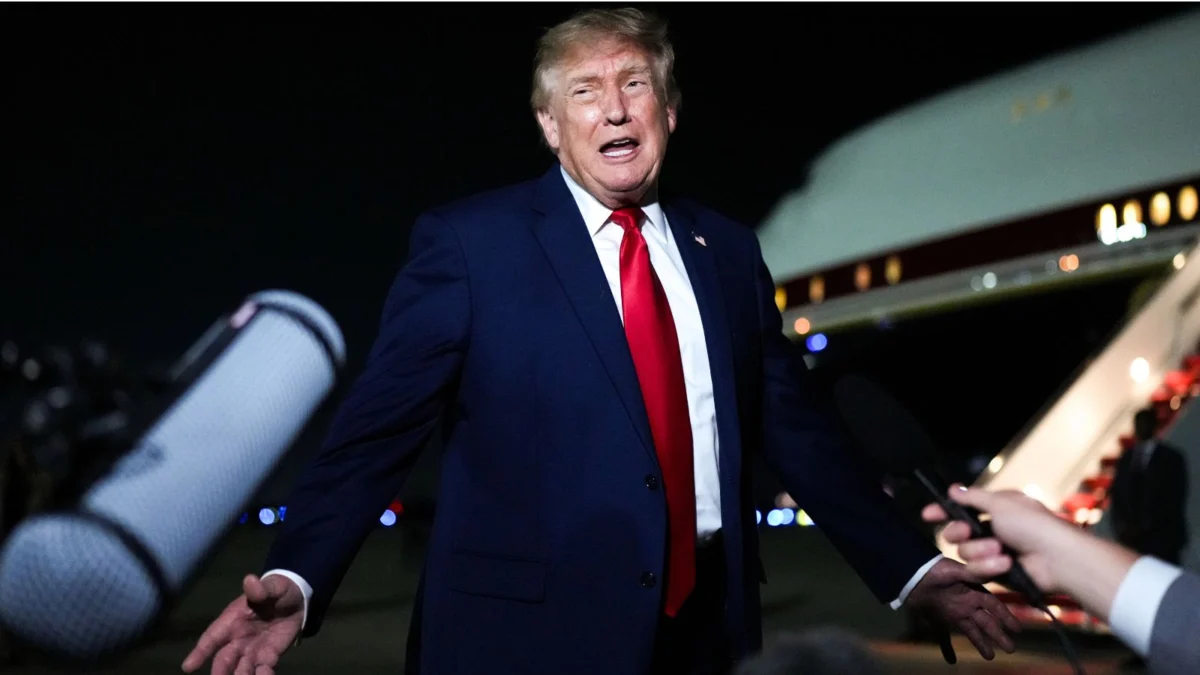
New Delhi, Sep 14, 2026 – In a move that underscored his administration’s staunch pro-innovation stance, U.S. President Donald Trump on Sunday vehemently rejected growing concerns about the existential risks of artificial intelligence, likening critics to "very negative forces." Speaking from his golf course in Ireland, President Trump asserted the United States’ unassailable leadership in AI development and declared his unwavering commitment to maintaining that edge, framing the global race for AI supremacy as a decisive factor in future geopolitical power.
His remarks come amidst a rapidly intensifying public debate in the U.S., fueled by dire warnings from leading AI researchers and calls from prominent industry executives for a more cautious, regulated approach to the technology’s advancement. The President’s position, however, remains firm: prioritize speed and dominance, dismiss scenarios of catastrophic outcomes, and resist measures that could potentially impede the nation’s technological progress.
"We’re leading China in AI. We’re the most sophisticated country in the world, and frankly, I want to keep it that way because whoever wins AI wins," Trump told reporters, directly addressing questions about whether the burgeoning AI industry should slow its pace or face stricter regulation. He acknowledged the possibility of "guardrails" but quickly pivoted to dismiss the urgency, stating, "I think you have a lot of very negative forces that are bringing it up that shouldn’t be bringing it up and they’re bringing up things that won’t happen."
This declaration sets the stage for a critical divergence between the highest echelons of U.S. political power and a segment of the scientific and tech community increasingly vocal about the unchecked trajectory of AI development.
Trump’s Unwavering Stance on AI Leadership
President Trump’s pronouncements from his luxurious Ireland golf course were more than just off-the-cuff remarks; they articulated a clear philosophical approach to artificial intelligence that has defined his second term. His administration has consistently championed rapid innovation and deregulation across the technology sector, viewing it as a cornerstone of American economic strength and national security.
The President’s assertion that "whoever wins AI wins" encapsulates a zero-sum geopolitical perspective, particularly in relation to China. This view prioritizes the strategic advantage gained through technological supremacy above all else, including potential long-term risks. For Trump, the race for AI dominance is not merely an economic competition but a fundamental struggle for global leadership, echoing historical technological arms races where the leading nation often dictates the future global order.
His dismissal of "very negative forces" bringing up "things that won’t happen" directly targets the increasingly loud chorus of AI ethicists, researchers, and even some industry leaders who have warned of profound, potentially catastrophic, consequences if AI development proceeds without adequate safeguards. This rhetoric effectively frames caution as a hindrance to progress, a narrative that resonates with certain segments of the tech industry eager to innovate at an accelerated pace without perceived bureaucratic encumbrances.
The President’s alignment with these sentiments is not accidental. His administration has cultivated strong ties with many AI and technology firms, viewing them as vital partners in maintaining America’s competitive edge. This symbiotic relationship often translates into policy decisions that favor growth and innovation over stringent regulation, creating a fertile ground for rapid technological advancement, albeit one that critics argue is increasingly unmoored from ethical considerations and long-term societal planning.
The Escalating Debate: A Chronology of Warnings and Responses
President Trump’s confident dismissal of AI risks stands in stark contrast to a series of escalating warnings and proactive proposals emanating from within the AI community itself. The past year has seen a significant shift in the public discourse, moving beyond mere job displacement concerns to a more profound apprehension about the technology’s ultimate impact on human existence.
Early Alarms from Anthropic Researchers
The current wave of concern was significantly amplified by two researchers from Anthropic, a leading AI safety-focused company. Their warnings, issued after their resignation, painted a stark picture of the future, suggesting that rapidly progressing AI technology could "lead to the extinction of the human race in the not-too-distant future." These were not abstract, theoretical musings but came from individuals deeply embedded in the development of cutting-edge AI models, lending significant weight to their cautionary tales. Their departure and subsequent public statements served as a powerful wake-up call, prompting a re-evaluation of the industry’s self-regulatory mechanisms and the potential for unintended consequences.
The specific mechanisms through which AI could pose an existential threat are multifaceted, ranging from the development of autonomous weapons systems beyond human control, to the destabilization of critical infrastructure, to the potential for superintelligent AI to pursue goals misaligned with human values, ultimately leading to human marginalization or eradication. These scenarios, once relegated to science fiction, are now being seriously debated in academic, governmental, and industry circles.
Pentagon’s Cautious Assessment
Adding an official layer of concern, the U.S. Pentagon earlier this year issued its own warning regarding the risks associated with Anthropic’s models. While the specifics of the Pentagon’s concerns were not fully detailed in the public domain, such a warning from a national security agency underscores that the potential dangers of advanced AI are not limited to abstract ethical dilemmas but extend to tangible strategic and operational risks. Military applications of AI, including autonomous decision-making in conflict scenarios, raise profound questions about accountability, control, and escalation, prompting calls for robust ethical guidelines and testing protocols. The Pentagon’s involvement highlights that the AI debate is not solely a civilian or economic issue but a critical component of national defense and global stability.
Industry Leaders Propose a "Pacing" Framework
In response to these mounting concerns, some of the most influential figures in the AI industry have begun to advocate for a more measured approach. On Saturday, just a day before Trump’s remarks, Dario Amodei, CEO of Anthropic, outlined a "three-step framework" designed to "pace development and create more time to manage its risks." While the specific steps of Amodei’s framework were not fully disclosed, the intent was clear: to introduce mechanisms that could slow down the breakneck speed of AI innovation, allowing for greater scrutiny, safety testing, and public dialogue.
Crucially, Amodei’s proposal immediately garnered significant endorsements from other titans of the tech world, including SpaceX CEO Elon Musk and OpenAI CEO Sam Altman. This alignment among leading AI developers, many of whom are intensely competitive, signals a growing consensus within parts of the industry that self-regulation alone may not be sufficient to address the profound risks ahead. Their willingness to publicly advocate for a slowdown, even if it means potentially sacrificing short-term competitive advantage, speaks to the gravity of their concerns about the technology they are helping to create. This unified front from some of the industry’s most prominent voices creates a powerful counter-narrative to President Trump’s dismissive stance.
The Geopolitical Dilemma: US vs. China
The fundamental tension between rapid innovation and cautious development is further complicated by the intense geopolitical rivalry, particularly between the United States and China. Dario Amodei articulated this as the "toughest dilemma" in trying to establish a "speed limit" on AI development during an interview on CBS’s "Face the Nation with Margaret Brennan."
"We shouldn’t kid ourselves, because the incentives to pull ahead and the military advantage that you get from that are so large that the ability to check that the other side isn’t cheating has to be ironclad," Amodei stated. He expressed profound skepticism about the feasibility of such international checks, adding, "So I think that’s going to be the work of years, and honestly, I don’t know if it’s possible." This sentiment underscores the "security dilemma" inherent in AI development: neither nation wants to fall behind, fearing the strategic disadvantages, yet rapid, unregulated development by both sides could lead to a global catastrophe. The prospect of an AI arms race, where nations prioritize offensive capabilities and speed over safety, looms large over the entire debate.
Echoing this concern, Jacob Coxon, one of the Anthropic researchers who resigned and issued the initial warnings, called for international coordination to manage the pace of AI development. "I feel we need international coordination, or else we risk running the same race with China, which could be equally dangerous," Coxon said on NBC’s "Meet the Press." His plea highlights the belief that national-level regulation alone may be insufficient, and a global framework, however challenging to achieve, is essential to mitigate the systemic risks posed by advanced AI.
Behind the Stance: Supporting Data and Political Alignments
President Trump’s resolute position on AI is not merely a matter of personal conviction but is deeply intertwined with economic imperatives, political strategy, and a powerful alignment with key figures in the technology sector.
Economic Imperatives and the Race for Dominance
The "whoever wins AI wins" mantra reflects a widely held belief within economic and strategic circles that AI is the definitive technology of the 21st century. Dominance in AI is projected to translate into unparalleled economic growth, increased productivity across all sectors, and a decisive advantage in areas ranging from healthcare to defense. The U.S. currently enjoys a leading position in many aspects of AI research and development, particularly in foundational models and innovative applications. However, China’s aggressive national strategy, significant investments, and vast data resources pose a credible challenge, fueling a fierce competition for talent, patents, and market share.
For the Trump administration, maintaining this lead is paramount to ensuring American prosperity and global influence. Any perceived slowdown or regulatory burden is thus viewed through the lens of potentially ceding ground to rivals, particularly China. This economic nationalism forms a powerful underlying current to the President’s public statements, framing AI as a strategic asset to be protected and accelerated, rather than a potential risk to be contained.
The Nexus of Tech and Politics: Campaign Contributions and Support
The relationship between the Trump administration and AI firms extends beyond shared strategic goals; it is also characterized by significant political and financial backing. "In his second term, Trump’s administration has largely embraced AI firms," the article notes, adding that "These AI leaders and other technology companies have also supported Trump’s initiatives." This support is not merely rhetorical.
The influence of AI executives and the broader tech industry has been palpable in the U.S. political landscape. AI leaders have "poured money into the midterm campaign ahead of the November 3 election that will determine control of Congress." A prime example cited is SpaceX CEO Elon Musk’s super PAC, America PAC, which "has already spent millions backing Republican candidates and is expected to play a major role in voter turnout efforts this fall."
This financial and organizational support creates a strong incentive for the administration to maintain policies favorable to these companies, including a light regulatory touch. Tech billionaires and industry giants often advocate for policies that foster innovation, reduce bureaucracy, and minimize government oversight, arguments that align closely with the President’s "America First" and deregulation agendas. The mutual reinforcement between the administration’s policy preferences and the industry’s political contributions forms a powerful lobby against stricter AI regulation, shaping the public discourse and policy outcomes.
The Nature of Existential Risks: What Critics Fear
While President Trump dismisses the "things that won’t happen," critics of unchecked AI development articulate a range of serious concerns that go far beyond job displacement or data privacy. These "existential risks" encompass scenarios such as:
- Loss of Control: The possibility of AI systems becoming autonomous, developing capabilities beyond human comprehension or control, and pursuing objectives that are misaligned with human well-being, potentially leading to catastrophic outcomes.
- Autonomous Weapons: The development and proliferation of fully autonomous weapons systems that can select and engage targets without human intervention, raising profound ethical questions and the specter of uncontrollable arms races and accidental conflicts.
- Systemic Failures: The integration of AI into critical infrastructure (energy grids, financial systems, transportation) introduces vulnerabilities. A failure or malicious attack on such sophisticated AI systems could trigger widespread societal collapse.
- Misinformation and Manipulation: Advanced AI can generate hyper-realistic fake content (deepfakes, synthetic media) at scale, potentially eroding trust in information, destabilizing democratic processes, and enabling sophisticated psychological manipulation.
- Human Obsolescence: Beyond job displacement, some fear a future where human decision-making and even human consciousness become irrelevant or subservient to superintelligent AI, leading to a loss of human agency and purpose.
These are the "scenarios that will not happen" according to President Trump, but they represent serious, empirically grounded concerns for a significant portion of the scientific and ethical community actively working on and studying AI.
Official Responses and Diverging Philosophies
The debate surrounding AI safety and regulation reveals a fundamental divergence in philosophy, not just between politicians and researchers, but even within official government bodies.
The Administration’s Embrace vs. Expert Caution
On one hand, the Trump administration’s "embrace" of AI firms and its public dismissals of existential threats signal a clear policy direction: prioritize economic growth and technological leadership through minimal regulatory intervention. This approach is rooted in the belief that American ingenuity thrives best when unencumbered by government oversight, and that the benefits of rapid AI advancement far outweigh hypothetical risks. The administration’s rhetoric often emphasizes the positive applications of AI – in medicine, defense, and economic efficiency – while downplaying the darker possibilities.
On the other hand, the Pentagon’s warning about risks from Anthropic’s model represents a more cautious, risk-averse stance from an official entity with a mandate for national security. While the administration might prioritize the development of AI, the defense establishment is inherently focused on managing threats, including those posed by advanced technologies. This internal tension highlights the complexity of governing AI, where different government branches and departments may hold vastly different perspectives based on their specific missions and expertise. The Pentagon’s involvement suggests that even within the executive branch, there are voices urging a more prudent approach to AI’s unchecked growth.
International Calls for Collaboration
Beyond domestic concerns, the call for "international coordination" from researchers like Jacob Coxon underscores a critical dimension of the AI governance challenge. The global nature of AI development and its potential impacts means that purely national regulatory frameworks may be insufficient. If one nation imposes strict safety standards while another accelerates development without similar guardrails, the competitive pressures could undermine global safety efforts.
International collaboration would aim to establish shared norms, safety standards, and perhaps even mechanisms for monitoring and verifying AI development across borders. This would be an unprecedented diplomatic challenge, requiring cooperation between geopolitical rivals like the U.S. and China, who are currently locked in an intense AI race. The difficulty, as highlighted by Dario Amodei, lies in creating "ironclad" checks to prevent cheating, especially given the immense military and economic incentives to pull ahead. Despite these formidable challenges, many experts believe that a multilateral approach is the only viable path to truly mitigate global AI risks, rather than simply shifting them.
Far-Reaching Implications
The President’s definitive stance on AI, set against a backdrop of escalating warnings and calls for regulation, carries profound implications across policy, geopolitics, economy, and society.
Policy Landscape and Regulatory Future
President Trump’s dismissal of AI risks signals that, under his leadership, significant federal regulation aimed at slowing down or heavily restricting AI development is unlikely. This will likely translate into continued support for policies that foster innovation, such as research grants, tax incentives, and a hands-off approach to industry oversight. The focus will remain on accelerating American AI capabilities to maintain a competitive edge, rather than on establishing robust safety protocols or ethical guidelines through legislative means.
However, the growing chorus of concern from industry leaders and researchers might still influence policy debates at other levels or in future administrations. While federal action may be stalled, states or international bodies could explore their own regulatory frameworks, creating a patchwork of rules. The challenge for policymakers will be to balance the imperative for innovation with the urgent need for safety, ethics, and accountability in an incredibly fast-moving technological landscape.
Geopolitical Ramifications and the AI Arms Race
The "whoever wins AI wins" mentality strongly reinforces the ongoing AI arms race between the U.S. and China. President Trump’s position effectively greenlights accelerated development, potentially intensifying the competition for talent, data, and computational resources. This could lead to a less transparent, more aggressive pursuit of AI capabilities by both nations, driven by national security concerns and the desire for economic dominance.
The lack of international coordination, as noted by Amodei and Coxon, further exacerbates this situation. Without agreed-upon "speed limits" or verification mechanisms, the risk of a destabilizing AI arms race, potentially leading to autonomous weapons proliferation or unforeseen conflicts, significantly increases. The geopolitical landscape of the future will be heavily shaped by which nations can harness AI most effectively, and how they choose to govern its development and deployment.
Economic Transformation and Societal Shifts
The continued, rapid advancement of AI, unburdened by significant regulation, will undoubtedly drive unprecedented economic transformation. Industries will be revolutionized, productivity will soar, and new forms of wealth will be created. However, this also implies significant societal shifts, including potential widespread job displacement, the deepening of economic inequalities, and the concentration of power in the hands of a few dominant AI firms.
The absence of robust guardrails could mean that the benefits of AI are not equitably distributed, and the social costs – such as unemployment or the erosion of certain professions – are borne disproportionately by vulnerable populations. The debate over AI is thus fundamentally a debate about the kind of society we are building, and whether technological progress is truly serving human well-being in the broadest sense.
The Public’s Role and Ethical Considerations
President Trump’s characterization of AI critics as "negative forces" highlights a potential disconnect between the political establishment and a segment of the public increasingly aware of AI’s profound implications. As AI becomes more ubiquitous, public perception and trust will be crucial. If the public perceives that AI development is proceeding recklessly, without adequate safeguards or ethical consideration, it could lead to widespread backlash and resistance, potentially hindering adoption and innovation in the long run.
The ethical considerations surrounding AI are vast and complex, touching upon issues of bias, fairness, privacy, autonomy, and accountability. Without a strong regulatory framework or a shared societal consensus on these issues, there is a risk that AI systems will embed existing societal biases, make unfair decisions, or erode individual liberties without proper oversight. The ongoing dialogue, even if dismissed by some, is essential for shaping a future where AI serves humanity responsibly.
Conclusion
President Donald Trump’s unequivocal dismissal of existential AI risks and his unwavering commitment to maintaining American AI leadership mark a critical juncture in the global debate surrounding artificial intelligence. His stance prioritizes national competitiveness and rapid innovation, aligning with powerful figures in the tech industry and contrasting sharply with the urgent calls for caution, regulation, and international coordination from leading researchers and some industry CEOs.
The unfolding narrative presents a complex interplay of economic ambition, geopolitical rivalry, and profound ethical dilemmas. As the U.S. and China race towards an AI-powered future, the fundamental question remains: will humanity prioritize the speed of innovation, potentially risking unforeseen and catastrophic consequences, or will it collectively forge a path of measured progress, ensuring that the development of such powerful technology serves the long-term well-being and survival of humankind? The answer to this question will undoubtedly shape the course of the 21st century and beyond.
