

Main Facts
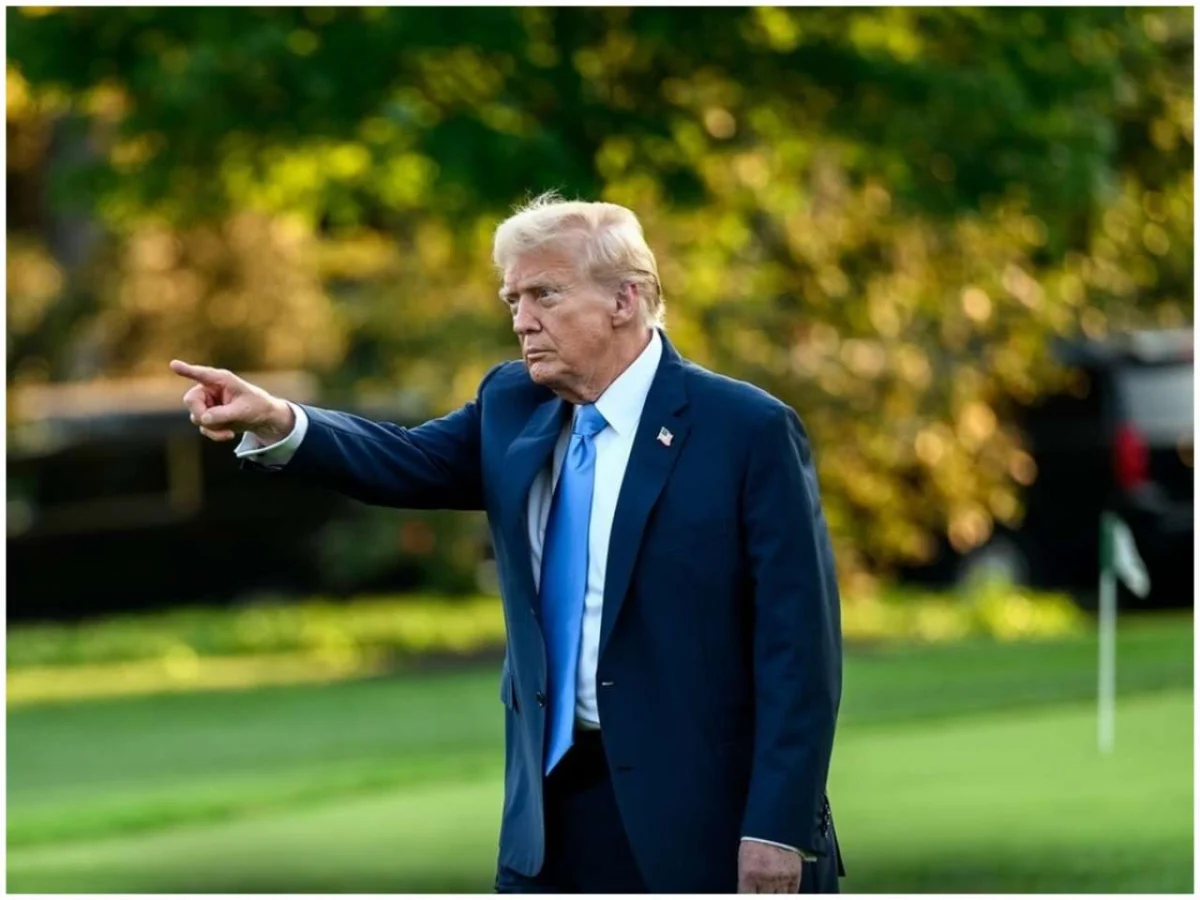
In a significant intervention into the intricate world of international football governance, former US President Donald Trump has unequivocally endorsed FIFA President Gianni Infantino, asserting that his removal would constitute a "terrible mistake." Trump, leveraging his social media platform, Truth Social, declared Infantino "fantastic" and credited him with presiding over the "most successful World Cup, by four times, ever presented." He further cautioned that without Infantino, FIFA’s future success and profitability would be jeopardized, specifically mentioning the implications for the upcoming 2026 World Cup, which the United States is co-hosting. This vocal backing comes at a critical juncture for Infantino, who has faced persistent scrutiny and growing pressure from powerful regional football confederations following a series of controversial proposals and allegations of authoritarian leadership. The former President’s support not only injects a potent political dimension into FIFA’s internal dynamics but also reignites debates about the independence of sports organizations and the influence of global political figures.
Trump’s pronouncement arrived amidst a backdrop of simmering discontent within the football fraternity regarding Infantino’s leadership style and strategic vision. The most prominent flashpoint has been his now-withdrawn proposal to sell significant stakes in FIFA’s flagship competitions—the World Cup and a revamped Club World Cup—to private investors. This audacious plan, reportedly valued at an estimated USD 20 billion, drew fierce opposition from key confederations, including UEFA (Europe), CONCACAF (North, Central America, and Caribbean), and the AFC (Asia), who accused Infantino of attempting to centralize power and bypass established governance structures. While the proposal was eventually shelved, the controversy exposed deep fissures within FIFA’s executive ranks and led to public apologies from Infantino and FIFA General Secretary Mattias Grafstrom, who conceded "errors" in their approach. The ongoing tension, coupled with Trump’s unexpected endorsement, sets the stage for a potentially tumultuous period in global football politics.
Chronology: A Timeline of Controversy and Connections
The saga surrounding Gianni Infantino’s leadership and his evolving relationship with Donald Trump is punctuated by several key events, illustrating both the internal pressures within FIFA and the external political influences at play.
Infantino’s Ascent Amidst Scandal
Gianni Infantino’s journey to the helm of world football began in 2016, following the seismic "FIFAgate" corruption scandal that brought down his predecessor, Sepp Blatter. Elected on a platform of reform, transparency, and restoring FIFA’s tarnished image, Infantino initially garnered support as a fresh face promising a new era. His early promises included expanding the World Cup, increasing football development funds, and cleaning up the organization’s governance. However, as his tenure progressed, some critics began to argue that his leadership style increasingly mirrored the centralized power dynamics he had vowed to dismantle.
)
The "New Global Football" Project and the $20 Billion Proposal (2018-2019)
The most significant challenge to Infantino’s authority emerged with his ambitious—and highly secretive—plan to create two new global competitions: an expanded, quadrennial Club World Cup and a new Global Nations League. To fund these ventures, FIFA proposed selling commercial rights for both competitions to a consortium of private investors, reportedly led by Japan’s SoftBank Vision Fund, for an astonishing sum of approximately USD 20 billion over 12 years.
This proposal, dubbed the "New Global Football" project, was initially presented to the FIFA Council in March 2018. The secrecy surrounding the deal, the lack of transparency regarding the investors, and the perceived attempt to bypass traditional decision-making processes immediately ignited a firestorm of opposition. UEFA, under President Aleksander Čeferin, became the most vocal opponent, accusing Infantino of attempting a "power grab" and of jeopardizing the integrity of the sport by prioritizing commercial interests over football’s sporting values. Čeferin famously stated that the deal "would be very risky for football, without a single positive element for the federations." CONCACAF and the Asian Football Confederation (AFC) soon joined UEFA in expressing strong reservations, issuing a joint statement that condemned the proposal for its "lack of transparency" and for creating a "climate of distrust." Critics argued that such a deal would dilute the World Cup’s prestige, centralize power and revenue generation at FIFA headquarters, and potentially marginalize existing continental competitions.
Despite Infantino’s insistence that the deal would generate unprecedented revenues for football development worldwide, the unified opposition proved too formidable. Faced with a potential rebellion from the most powerful confederations, Infantino announced in May 2019 that FIFA had decided to withdraw the proposal, acknowledging the widespread "distrust and suspicion" it had generated. Both he and General Secretary Mattias Grafstrom issued apologies for the "errors" in their communication and pledged to conduct a thorough review, submitting findings to the FIFA Council. However, the damage to trust within FIFA’s hierarchy was evident, leaving a lingering sense of unease about Infantino’s long-term intentions.

The 2026 World Cup Bid and the Trump-Infantino Alliance (2017-2018)
The seeds of the close relationship between Donald Trump and Gianni Infantino were notably sown during the bidding process for the 2026 FIFA World Cup. The joint North American bid by the United States, Canada, and Mexico faced competition from Morocco. Trump, then President, actively campaigned for the ‘United 2026’ bid, making direct appeals and even issuing veiled threats to nations that might vote against it.
Infantino, seeking to expand FIFA’s global footprint and secure a lucrative World Cup in a major market, found a willing partner in Trump. The two men met on several occasions, including at the White House. Their collaboration was instrumental in securing the hosting rights for the North American bid in June 2018. This shared success undoubtedly cemented a mutual respect and a transactional alliance, with Trump recognizing the geopolitical significance of hosting the world’s largest sporting event and Infantino appreciating Trump’s direct support.
The Folarin Balogun Incident: Allegations of Political Interference (2018)
A particularly controversial episode that highlighted the unusual proximity between Trump and Infantino occurred in 2018, revolving around a young American footballer named Folarin Balogun. Balogun, then playing for Arsenal’s youth team, was representing the US U-18 national team in a friendly tournament in the Netherlands. He received a one-match suspension for a disciplinary infraction.
)
Reports, subsequently confirmed by multiple sources, indicated that after a phone call from President Trump to Gianni Infantino, the FIFA President personally intervened to overturn Balogun’s suspension. This unprecedented intervention sparked widespread outrage and accusations of political interference in sporting justice. Critics argued that such a move fundamentally undermined the independence of FIFA’s disciplinary processes and set a dangerous precedent for political leaders to meddle in routine sporting decisions. Infantino faced intense criticism for succumbing to political pressure, while FIFA’s ethics committee was called upon to investigate the incident, raising serious questions about the integrity of the organization under his leadership. The event served as a stark illustration of the extent of Trump’s perceived influence and Infantino’s willingness to engage with it.
Trump’s Truth Social Endorsement (Recent)
Trump’s latest endorsement of Infantino via Truth Social is not an isolated event but rather a culmination of this established relationship, arriving at a moment when Infantino faces renewed internal pressure. While the immediate trigger for Trump’s statement isn’t explicitly detailed, it aligns with his historical pattern of publicly backing allies and asserting his influence on global stages. The timing suggests a proactive defense of Infantino, potentially in response to ongoing, though perhaps less publicly visible, challenges to his authority or future re-election prospects within FIFA.
Supporting Data
)
The narrative surrounding Gianni Infantino’s leadership is underpinned by both financial performance and a consistent pattern of criticism regarding governance and transparency.
FIFA’s Financial Health Under Infantino
One of Infantino’s primary arguments for his continued leadership, and a point emphasized by Trump, is FIFA’s robust financial performance. The Qatar 2022 World Cup, despite numerous controversies surrounding its host nation, was indeed a significant commercial success. FIFA reported record revenues of USD 7.5 billion for the 2019-2022 cycle, a billion dollars more than budgeted. Profits also surged, reaching USD 3.6 billion. The organization attributed this success to stronger-than-expected commercial deals, including media rights, sponsorships, and ticketing.
Infantino frequently touts these figures as proof of his effective stewardship, highlighting the increased investment in football development programs globally. The expansion of the World Cup to 48 teams starting in 2026, and the proposed expansion of the Club World Cup, are projected to further boost revenues. The 2026 World Cup, co-hosted by the US, Canada, and Mexico, is expected to generate even greater commercial returns due to the sheer size of the North American market, sophisticated infrastructure, and vast fan base. These financial metrics are central to Infantino’s defense against his critics, positioning him as a pragmatic leader focused on the financial well-being of the sport.
)
The Shadow of Controversy: Beyond the Private Investment Deal
While financial success is a clear metric, Infantino’s tenure has been consistently shadowed by allegations of poor governance, a perceived lack of transparency, and a centralizing of power.
- Ethics Committee Scrutiny: Early in his presidency, several key figures in FIFA’s independent ethics committee, including chief investigator Cornel Borbély and adjudicatory chamber chairman Hans-Joachim Eckert, were removed. Critics argued these removals undermined FIFA’s commitment to reform and allowed Infantino to consolidate power by dismantling independent oversight bodies.
- "Power Grab" Accusations: Beyond the private investment deal, Infantino has been accused of attempting to exert greater control over regional confederations and national associations. His proposals for a more centralized FIFA, often presented as efficiency measures, have been met with resistance from those who fear a loss of autonomy.
- Human Rights Concerns and Qatar: Infantino faced significant criticism for his handling of human rights issues related to the 2022 World Cup in Qatar. His pre-tournament speech, where he declared, "Today I feel Qatari, today I feel Arab, today I feel African, today I feel gay, today I feel disabled, today I feel a migrant worker," was widely condemned as tone-deaf and dismissive of genuine human rights concerns, particularly regarding migrant workers.
- Relationship with Public Prosecutors: Infantino has also been investigated in Switzerland regarding his meetings with then-Swiss attorney general Michael Lauber during ongoing FIFA corruption probes. Though no charges were brought against Infantino, the controversy raised questions about the appropriateness of such interactions.
These recurrent criticisms suggest that while FIFA’s balance sheet may be strong, its reputation for transparent and ethical governance under Infantino remains a point of contention for many stakeholders.
Media and Public Opinion
Trump’s endorsement has been met with a mixed, and often skeptical, reaction from football pundits and media outlets globally. Many view it through a political lens, questioning the appropriateness of a former head of state intervening in the affairs of a global sports body, especially one with a history of corruption. There’s an underlying concern that such an endorsement could further politicize football, undermining its universal appeal. Some commentators suggest that Trump’s backing might actually alienate a segment of the football world that is critical of his political legacy, potentially making Infantino’s position more precarious among those who value apolitical sports governance.
)
Conversely, a smaller segment, particularly those aligned with Trump’s political base or those who prioritize financial success above all else, might view the endorsement as a validation of Infantino’s business acumen and leadership. However, the dominant sentiment in mainstream sports media tends to highlight the potential for increased controversy and scrutiny following such a high-profile political intervention.
Official Responses
The official responses to both Gianni Infantino’s controversial proposals and Donald Trump’s recent endorsement reveal the fragmented nature of power and opinion within global football.
)
FIFA’s Official Stance
FIFA itself has largely maintained a stance of cautious neutrality regarding Trump’s endorsement, choosing not to issue a direct statement specifically addressing the former President’s comments. This silence is often interpreted as a strategic move to avoid further entanglement in political debates, particularly given Infantino’s history of navigating complex geopolitical landscapes. Officially, FIFA’s narrative centers on Infantino’s achievements: the record revenues, the expansion of the World Cup, and the increased investment in global football development. They emphasize a commitment to "transparency and good governance," even as critics point to past controversies.
Regarding the withdrawn private investment proposal, FIFA’s official line, as articulated by Infantino and Grafstrom, was one of acknowledging "errors" in communication rather than fundamental flaws in the concept itself. They emphasized a commitment to learning from the experience and ensuring that future proposals would be handled with greater consultation. This suggests that while the specific $20 billion deal was shelved, the underlying ambition to explore new revenue streams and potentially involve private capital in FIFA’s commercial ventures may not be entirely abandoned.
Responses from Dissenting Confederations
The primary dissenting voices against Infantino’s previous initiatives have been UEFA, CONCACAF, and the AFC. While these confederations have not issued a fresh joint statement specifically in response to Trump’s endorsement, their past criticisms remain highly relevant.
)
- UEFA (Europe): Led by Aleksander Čeferin, UEFA has been Infantino’s most consistent and vocal critic. Their concerns have focused on protecting European football’s established club and national team competitions, maintaining sporting integrity, and opposing what they view as FIFA’s attempts to centralize power and commercialize the sport excessively. While UEFA has not directly commented on Trump’s statement, their historical opposition to Infantino’s more radical proposals suggests that any external political endorsement would likely be viewed with skepticism, potentially reinforcing their resolve to safeguard their autonomy.
- CONCACAF (North, Central America, and Caribbean) and AFC (Asia): These confederations, while often less confrontational than UEFA, also expressed strong reservations about the private investment deal. Their joint statement with UEFA condemning Infantino for "breaking trust through deception" was a powerful indicator of widespread discontent. While they have largely remained silent on Trump’s latest remarks, the memory of the past controversies likely influences their internal assessment of Infantino’s leadership. For CONCACAF, as a co-host of the 2026 World Cup, navigating the political dynamics around Trump’s involvement adds another layer of complexity.
Other Football Stakeholders
Reactions from other stakeholders are varied:
- National Federations: Many national federations, especially those from smaller nations, tend to be more reliant on FIFA funding and are thus less likely to openly criticize Infantino. Trump’s endorsement might be seen by some as a powerful external validation, while others might privately express unease about the politicization of FIFA.
- Player Unions (e.g., FIFPRO): Player unions typically focus on player welfare, rights, and fair competition. While not directly involved in the governance disputes, they often advocate for transparency and ethical leadership within football bodies. Their response to Trump’s statement would likely be cautious, emphasizing the need for independent governance.
- Fan Groups: Fan groups generally prioritize the integrity of the game and democratic governance. Many would likely view Trump’s intervention with suspicion, concerned about the potential for political influence to compromise the sport’s values.
In essence, while FIFA maintains a diplomatic silence, the major confederations, particularly UEFA, continue to represent a significant counterbalance to Infantino’s power, and Trump’s endorsement, rather than universally consolidating support, may further entrench existing divisions.
Implications
)
Donald Trump’s endorsement of Gianni Infantino carries significant implications across various dimensions of global football, ranging from FIFA’s internal dynamics to the broader geopolitical landscape of sport.
For Infantino’s Leadership and FIFA’s Governance
Trump’s vocal backing could be a double-edged sword for Gianni Infantino. On one hand, it provides a powerful, high-profile external validation of his leadership, particularly from a figure who successfully navigated complex international bids (like the 2026 World Cup). This could potentially deter some internal critics, especially those who might be swayed by perceived political strength. For Infantino, who has often sought to project an image of a decisive, business-savvy leader, the endorsement from a former US President reinforces that narrative.
However, the endorsement also risks further alienating a significant portion of the football world, particularly those who are critical of Trump’s political legacy and style. Many in Europe and other regions view such political interference in sports with deep suspicion, fearing that it compromises the independence and integrity of governing bodies. It could embolden confederations like UEFA to intensify their scrutiny of Infantino, viewing the endorsement as further evidence of politicization. This could exacerbate internal divisions within FIFA, making it harder for Infantino to build consensus on future initiatives and potentially complicate his re-election prospects, should he seek another term. Questions about FIFA’s autonomy and its susceptibility to external political pressures are likely to intensify.
)
For the 2026 FIFA World Cup
The 2026 World Cup, co-hosted by the United States, Canada, and Mexico, stands as a monumental event, poised to be the largest in FIFA’s history. Trump’s endorsement, while seemingly aimed at bolstering Infantino, also serves as a subtle assertion of his continued interest and potential influence over the event, particularly in the US.
The close relationship between Trump and Infantino, as evidenced by the Balogun incident and the 2026 bid process, suggests a degree of political alignment that could impact the planning and execution of the tournament. While the organizational committees are well-established, any perception of political meddling or favoritism could lead to controversy. Furthermore, if Trump were to return to office, his existing rapport with Infantino could translate into direct engagement with the World Cup’s preparations, potentially adding a layer of political complexity that host nations typically try to avoid for such a globally unifying event. The economic success of the 2026 World Cup is paramount for FIFA, and Trump’s comments explicitly tie Infantino’s leadership to that success, placing additional pressure on the tournament’s outcomes.
Broader Political and Geopolitical Implications
Trump’s intervention extends beyond football, touching upon broader themes of global influence and the blurred lines between politics and sport. His endorsement demonstrates his continued intent to project influence on international stages, even out of office. It highlights how sports, particularly events of the World Cup’s magnitude, are increasingly viewed as geopolitical assets.
)
For FIFA, this endorsement raises critical questions about its desired image. Does it want to be seen as an apolitical global sports body, or is it willing to embrace partnerships with powerful political figures, even controversial ones, if it serves commercial or strategic interests? The move could set a precedent, encouraging other political leaders to weigh in on FIFA’s internal affairs, further complicating its mission to govern a global sport equitably. It also underscores the potential for future US administrations, regardless of party, to leverage the 2026 World Cup for political and diplomatic ends, turning a sporting spectacle into a platform for national projection.
Future of FIFA’s Commercial Strategy
The underlying tension around Infantino’s leadership stems largely from his ambitious commercial vision, particularly the idea of selling stakes in core FIFA assets to private investors. While the $20 billion proposal was withdrawn, Trump’s emphasis on Infantino’s ability to deliver "successful or profitable" events suggests that a similar commercial strategy might resurface.
If Infantino feels politically secure, buoyed by powerful endorsements, he might be more inclined to revisit such proposals, perhaps in a modified form. However, the strong opposition from confederations like UEFA serves as a powerful deterrent. The challenge for FIFA will be to balance its pursuit of increased revenue with maintaining the trust and cooperation of its member associations and confederations, who are wary of excessive commercialization and centralization of power. Trump’s backing, by focusing on profitability, inadvertently reinforces the commercial aspect of Infantino’s vision, which has been a primary source of friction.
)
In conclusion, Donald Trump’s endorsement of Gianni Infantino is more than just a passing comment; it is a calculated political move with far-reaching consequences. It underscores the high stakes in FIFA’s governance, the ongoing power struggles within global football, and the increasing interplay between international politics and the world’s most popular sport. The reverberations of this endorsement will likely be felt throughout FIFA’s executive corridors and across the global football landscape for months to come.
