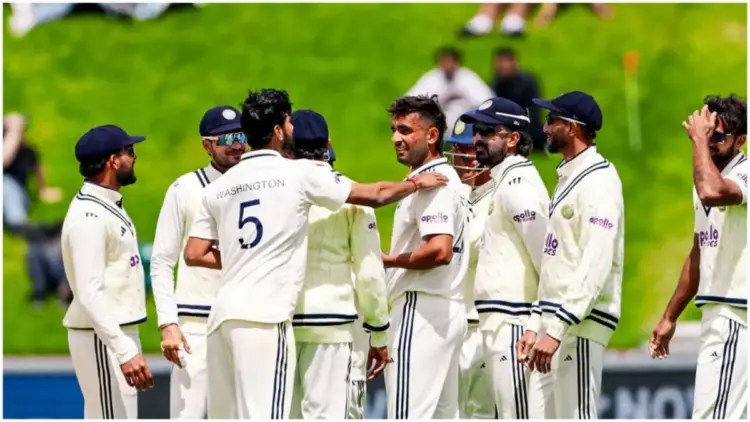
Wellington, New Zealand – November 23, 2026 – In a gripping conclusion to what promised to be a decisive encounter, the first Test between India and New Zealand at the historic Basin Reserve ended in a draw, a result that will feel like a victory for the resilient Blackcaps and a missed opportunity for the dominant Indian side. Despite holding a commanding position and needing just eight wickets on the final day, India’s formidable bowling attack ultimately failed to break the indomitable spirit of New Zealand’s lower-middle order, who batted out 75 overs to secure an improbable draw.
The stalemate, which unfolded amidst rising tension and tactical battles, means both teams walk away with four crucial World Test Championship (WTC) points, a significant reduction from the 12 points India had within their grasp. This outcome sends ripples through the WTC standings, impacting India’s push for a top-two finish.
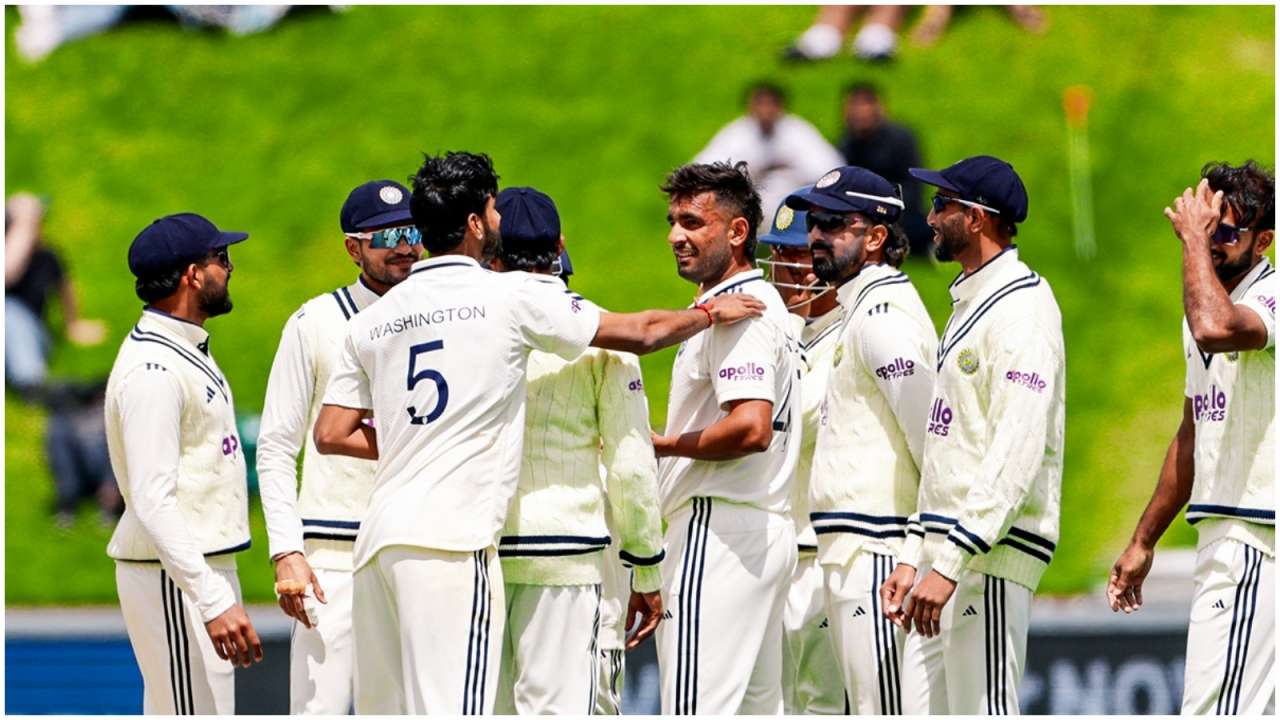
A Test of Endurance: New Zealand’s Great Escape
The final day in Wellington was a testament to the enduring allure and unpredictable nature of Test cricket. India, under the leadership of Shubman Gill, entered Day 5 with the weight of expectation and a clear path to victory. Having amassed a colossal first-innings total of 720/9 declared and then bundling out New Zealand for 368, the visitors held a significant lead, forcing the Blackcaps to follow on or bat again. With New Zealand teetering at 70/5 in their second innings at the close of play on Day 4, the writing appeared to be on the wall. The stage was set for India to sweep to an emphatic win and gain a vital advantage in the two-match series.
However, the hosts, renowned for their fighting spirit on home soil, had other ideas. What transpired was a magnificent display of grit and determination, primarily orchestrated by the unwavering partnership of Glenn Phillips and Daryl Mitchell, who defied India’s best efforts for the better part of two sessions.
Chronology of a Nail-Biting Finale
The match began with India asserting their dominance from the outset.
Day 1 & 2: India’s Batting Extravaganza
The initial two days of the Wellington Test were a masterclass in aggressive, yet disciplined, Test match batting from the Indian contingent. Winning the toss and electing to bat, the visitors capitalized on a placid Basin Reserve pitch that offered little assistance to the New Zealand bowlers. Centuries from multiple Indian batsmen, spearheaded by powerful performances from the top order and a late flourish from the middle, saw India declare their first innings at a monumental 720/9. The innings was characterized by brisk scoring and a relentless assault on the New Zealand attack, leaving the Blackcaps with a mountain to climb. The pitch, initially green, flattened out considerably under the Wellington sun, promising a batting feast.

Day 3: New Zealand’s Struggle and India’s Control
Responding to India’s mammoth total, New Zealand’s first innings never truly gained traction. The Indian pace battery, complemented by astute spin, bowled with precision and discipline, exploiting any hint of movement and consistently asking tough questions. While a few New Zealand batsmen showed flashes of resilience, they struggled to build substantial partnerships. Wickets fell at regular intervals, and the Blackcaps were eventually bundled out for 368, conceding a colossal first-innings lead of 352 runs. With the option to enforce the follow-on, India’s captain Shubman Gill chose to bat again, aiming to set an insurmountable target and give his bowlers ample time to secure 20 wickets.
Day 4: Setting the Trap and Early Breakthroughs
India’s second innings was brief and brisk. With an eye on the clock and the weather forecast, the Indian batsmen scored quickly, adding valuable runs before declaring. This left New Zealand needing an improbable target for victory, but more importantly, tasked them with surviving well over a day’s play against a confident Indian bowling unit. New Zealand’s second innings began precariously. India’s bowlers, invigorated by their first-innings success, made early inroads, picking up key wickets before stumps. By the close of Day 4, New Zealand found themselves in dire straits at 70/5, effectively leaving them with the daunting task of batting out the entire final day with only five wickets in hand. The atmosphere in the Indian dressing room was one of quiet confidence, while the New Zealand camp knew they faced an uphill battle for survival.

Day 5: The Unfolding Drama – A Battle of Wills
The final day dawned with an electric atmosphere at the Basin Reserve. Indian fans, both local and international, filled the stands, anticipating a swift victory. New Zealand’s faithful, though fewer in number, hoped for a miracle.

-
Morning Session: India’s Early Strikes
The day began precisely as India would have hoped. Within the first hour, the visitors picked up three crucial wickets, amplifying the pressure on the New Zealand batting lineup. The first to fall was Devon Conway, who had shown glimpses of defiance on Day 4. Indian off-spinner Washington Sundar, bowling with control and guile, found a way through Conway’s defenses, sending him back to the pavilion early. The breakthrough sent a jolt of energy through the Indian fielders. Shortly after, the pace and bounce of Prasidh Krishna accounted for Rachin Ravindra, who had been tasked with holding one end. His dismissal further dented New Zealand’s hopes, bringing the hosts closer to an inevitable defeat. The fifth and final wicket that India managed to pick up on Day 5 came courtesy of young fast-bowler Anshul Kamboj, who removed Tom Blundell. At this point, with New Zealand 70/5 overnight and then losing three more quickly, the hosts were reeling at a precarious 110/8. The Indian team celebrated each dismissal with gusto, believing victory was just a matter of time. Only two wickets remained, and the clock was ticking in India’s favour. The sense of an impending Indian triumph was palpable. -
Post-Lunch & Afternoon Session: The Unbreakable Wall
However, the narrative shifted dramatically after Blundell’s dismissal. Enter Glenn Phillips and Daryl Mitchell, two players known for their aggressive batting but who, on this occasion, embodied defensive solidity. Faced with the monumental task of batting out nearly two full sessions, they embarked on an extraordinary partnership that systematically blunted India’s attack. Mitchell, adopting a staunchly defensive approach, left the ball judiciously and played with soft hands, nullifying the threat of both pace and spin. Phillips, equally resolute, offered unwavering support, occasionally punishing loose deliveries but primarily focusing on occupying the crease.
The Indian bowlers, initially buoyed by their early success, found themselves increasingly frustrated. Captain Shubman Gill rotated his bowlers, trying different combinations and field placements, but the New Zealand duo remained unyielding. The pitch, now completely flat, offered little assistance, and the ball grew old, losing its shine and bite. The tension in the stadium was immense; every dot ball was met with groans from Indian supporters and cheers from the Kiwi faithful.
-
Tea Break: Hope vs. Desperation
At the tea break, the scoreline told a story of remarkable resilience. Mitchell and Phillips had batted through the entire post-lunch session, adding crucial runs and, more importantly, consuming vital overs. India still needed two wickets, but the energy and intensity that characterized the morning had begun to wane slightly. The Blackcaps, meanwhile, sensed a genuine opportunity to pull off one of their most memorable draws. -
Evening Session: Holding the Fort
The final session was a masterclass in defensive Test match batting. Mitchell, unfazed by the growing pressure, continued his marathon vigil, eventually finishing unbeaten on a heroic 49 runs from a remarkable 186 deliveries. His innings, though not flamboyant, was invaluable, characterized by deep concentration and an iron will. Glenn Phillips, his partner in defiance, provided equally steadfast support, remaining unbeaten on 26 runs off 126 balls. Together, they forged an unbroken partnership that saw New Zealand safely to the end of play. As the umpires called stumps, signalling the end of the match and confirming the draw, a wave of relief washed over the New Zealand team and their supporters, while the Indian camp was left to rue what might have been. The final score for New Zealand’s second innings stood at 190/8, having survived 75 overs on the day.
Supporting Data: A Statistical Overview of Resilience
The numbers underscore the epic struggle:
- India 1st Innings: 720/9 declared (overs not specified, but implies significant time at crease)
- New Zealand 1st Innings: 368 all out (overs not specified)
- New Zealand 2nd Innings: 190/8 (120 overs overall, 75 overs on Day 5)
- Daryl Mitchell: 49* (186 balls)
- Glenn Phillips: 26* (126 balls)
- Washington Sundar: 1/45 (from X overs)
- Prasidh Krishna: 1/38 (from Y overs)
- Anshul Kamboj: 1/29 (from Z overs)
The sheer number of deliveries faced by Mitchell and Phillips – 312 balls combined – highlights their unwavering focus and commitment to saving the match. Their partnership was not about scoring runs quickly, but about denying India the precious wickets they desperately craved. The Indian bowling attack, despite its formidable reputation, found itself unable to conjure the magic required to break this defensive wall on a Day 5 pitch that had flattened out significantly.

Missed Opportunity: India’s WTC Campaign Hit
The draw has significant implications for India’s World Test Championship campaign. Entering the final day, India was poised to earn 12 valuable WTC points, which would have significantly boosted their winning percentage. Instead, both teams walked away with just four points each.
Currently, India stands at No. 4 in the WTC standings with 72 points and a 50 PCT (Percentage of Points Contested). A victory would have propelled them closer to the top two, intensifying their bid for a spot in the WTC Final. This missed opportunity means India will now need to perform exceptionally well in their remaining matches to maintain a strong position. The competition for the top two spots is fierce, with teams like Australia, England, and South Africa also vying for supremacy. Dropping eight potential points in a match they largely dominated will undoubtedly be a source of frustration for the team management and fans alike.

For New Zealand, while four points are still valuable, the emotional victory of a hard-fought draw will provide a significant morale boost, perhaps even more than the points themselves. It demonstrates their ability to withstand immense pressure against one of the world’s best Test teams.
Official Responses and Expert Analysis
Post-match reactions reflected the contrasting emotions of the two camps.

Shubman Gill, India Captain (in a post-match press conference): "Naturally, we’re disappointed. We put in a massive effort in the first three days, scoring big and then bowling them out. We had them on the ropes on Day 5, needing just two wickets for a long time. Credit to Mitchell and Phillips, they showed incredible resilience. They defended superbly and really earned that draw. We need to look at our execution in those crucial periods, perhaps we didn’t create enough wicket-taking opportunities when the ball got old. It’s a learning curve for us, and we’ll come back stronger in Christchurch." Gill’s tone was one of measured disappointment, acknowledging the opposition’s fight while reflecting on his team’s missed chances.
Tom Latham, New Zealand Captain (if he was leading): "That was an unbelievable effort from the boys, especially Daryl and Glenn. To be 70/5 overnight and then lose three more early, everyone thought it was over. But they just kept fighting, kept believing. It wasn’t pretty cricket, but it was effective, and it showed the character of this team. It feels like a win for us, coming back from such a dire position against a world-class Indian side. This gives us immense confidence heading into the next Test." Latham’s words would likely express immense pride in his team’s tenacity.

Cricket Analyst and Former Player, Mark Richardson (on commentary): "This is why Test cricket remains the pinnacle. India did everything right for four and a half days, but New Zealand’s refusal to yield was magnificent. India will be kicking themselves. They had the lead, the wickets, the time, but they just couldn’t find that final cutting edge. Perhaps their field placements became a little too defensive, or they lacked that one unplayable delivery when it mattered most. It’s a huge psychological win for New Zealand and a harsh lesson for India."
Sources close to the Indian dressing room indicated a mood of frustration mixed with admiration for the Kiwi grit. There was reportedly a sense that despite the early breakthroughs, the bowling attack, particularly the spinners, struggled to extract enough turn or bounce on the docile Day 5 surface to truly challenge the defensive techniques of Mitchell and Phillips.

Implications: Lessons Learned and Future Prospects
The draw in Wellington carries several implications for both teams:
-
India’s Bowling Strategy: While India’s bowling attack is generally lauded, this match exposed a potential vulnerability on extremely flat pitches where the ball gets old. The inability to break a resolute defensive partnership, even when needing only two wickets, raises questions about their wicket-taking options when conditions are not overtly favourable. Captain Gill and the team management will need to review their tactical approaches for such scenarios, perhaps considering more aggressive field settings or different bowling rotations to induce errors. The WTC points dropped will serve as a stark reminder of the importance of converting dominant positions into victories.

-
New Zealand’s Morale Boost: For New Zealand, this draw is more than just four points; it’s a massive psychological triumph. It demonstrates their resilience, character, and ability to perform under extreme pressure. This will undoubtedly infuse the squad with renewed confidence as they head into the second and final Test, knowing they can stand toe-to-toe with a top-ranked team. It also reaffirms the strength of their lower-middle order, often a critical factor in close Test matches.
-
The Beauty of Test Cricket: This match serves as a powerful advertisement for Test cricket. The ebb and flow, the shift in momentum, the individual battles, and the sheer mental and physical endurance required to save a match under such circumstances encapsulate everything that makes the five-day format unique and captivating. It was a reminder that even when one team seems to have an unassailable advantage, a Test match is never truly over until the final ball is bowled.

Looking Ahead: The Christchurch Decider
The series now moves to Hagley Oval in Christchurch for the second and final match, starting November 27. The stakes have been raised significantly. For India, it becomes a must-win encounter to secure a series victory and regain crucial WTC points. For New Zealand, they will be eager to capitalize on their newfound confidence and potentially pull off an upset series win on home soil.
Hagley Oval typically offers a greener, seam-friendly pitch, which might favour India’s pace attack more, but also presents a challenge to their batsmen. Both teams will likely assess their lineups and strategies. India might consider changes to their bowling attack, seeking more penetration or variety. New Zealand will aim to carry forward the defiant spirit shown in Wellington.

The Wellington Test may have ended in a draw, but it has set the stage for a thrilling conclusion to the series, promising another enthralling chapter in the rivalry between these two cricketing nations. The cricketing world eagerly awaits the decider, hopeful for more drama and high-quality Test match action.
Find your daily dose of All Latest News including Sports News, Entertainment News, Lifestyle News, explainers & more. Stay updated, Stay informed- Follow DNA on WhatsApp.