

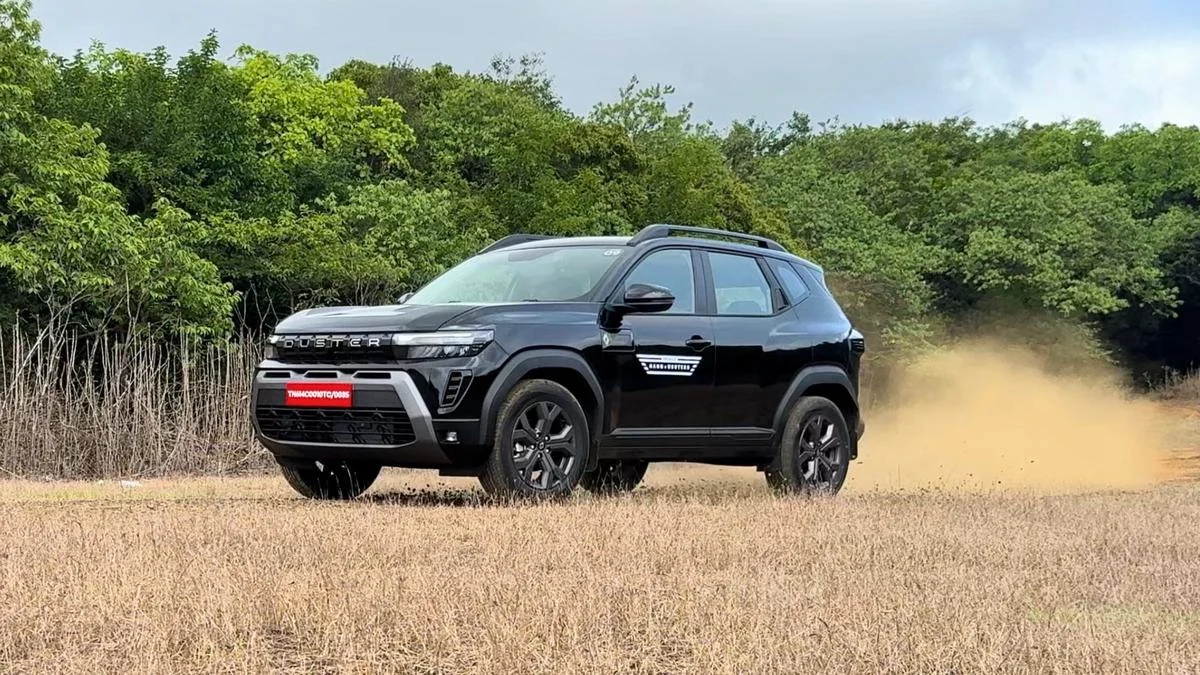
In the contemporary automotive landscape, a persistent skepticism lingers among prospective car buyers regarding small-capacity engines. The prevailing wisdom suggests a linear relationship between cubic capacity and capability: the larger the engine, the more effortless the drive, particularly when tasked with propelling a substantial SUV. However, the Renault Duster TCe 100 has emerged as a significant disruptor to this narrative, proving that engineering finesse and torque calibration can effectively supersede raw displacement.
Main Facts: The Engineering Behind the Efficiency
The Renault Duster TCe 100 occupies a unique position in the Indian market, priced between ₹10.49 lakh and ₹13.49 lakh. On the surface, its specifications might seem modest. Under the hood lies a 999cc, three-cylinder turbocharged petrol engine. This powerplant generates a respectable 100PS of power and 166Nm of peak torque. While these figures may not capture headlines in a market increasingly enamored with "horsepower wars," the real-world application of this power tells a far more sophisticated story.
The TCe 100 is not merely a carryover from Renault’s smaller offerings like the Kiger. While it shares a basic architectural block, the powertrain has undergone extensive re-engineering to align with the Duster’s heavier chassis and more rugged intended use. The result is a vehicle that delivers a broad spread of torque, specifically optimized for mid-range drivability. With 166Nm available from as low as 2,000rpm, the Duster avoids the "peakedness" often associated with small turbo units, providing a linear and predictable surge of power that mimics the behavior of much larger naturally aspirated engines.
Chronology: The Evolution of a Legend and its Downsized Heart
To understand the significance of the TCe 100, one must look at the Duster’s trajectory in the Indian market.

- The Early Years (2012–2019): The Renault Duster originally carved a niche for itself as a rugged, no-nonsense SUV with peerless ride quality. It was the vehicle that essentially kickstarted the mid-size SUV segment in India, relying heavily on its legendary 1.5-litre K9K diesel engine.
- The Transition Era: As emission norms tightened (BS6) and consumer preferences shifted toward petrol, Renault began exploring turbocharged alternatives. The introduction of the 1.3-litre turbo petrol catered to the performance enthusiast, but a gap remained for a value-driven, efficient, yet capable entry-level variant.
- The Development of the TCe 100: Recognizing that the Indian consumer was becoming more discerning about fuel efficiency without wanting to sacrifice the "SUV feel," Renault’s engineers focused on maximizing the utility of the 1.0-litre displacement. The goal was to eliminate turbo lag and provide a "big car" feel through gear ratio optimization.
- The Current Launch: The TCe 100 arrives as the pragmatic "sweet spot" in the Duster lineup. It represents the culmination of Renault’s efforts to democratize turbocharged technology, offering it in a package that prioritizes daily usability and long-distance touring over outright sprint times.
Supporting Data: Performance Metrics and On-Road Dynamics
The efficacy of the Duster TCe 100 is best understood through its performance data across various terrains. During extensive testing, the vehicle demonstrated a level of composure that belied its three-cylinder configuration.
Urban and Highway Tractability
In city environments, the Duster exhibits remarkable flexibility. The 6-speed manual gearbox features well-judged ratios; for instance, the vehicle can pull cleanly from 25–30 km/h in third gear without the engine lugging or protesting. This reduces the cognitive load on the driver, as frequent gear changes are not a prerequisite for smooth progress in stop-and-go traffic.
On the highway, the Duster maintains a mature stride. Even at triple-digit speeds (100 km/h), the engine remains within its comfort zone. A "gentle squeeze" of the throttle at cruising speeds results in a reassuring surge, allowing for confident overtaking maneuvers without the need to downshift aggressively.
Mountain Performance and NVH
The ultimate litmus test for a 1.0-litre engine is a steep mountain incline. Small engines often "run out of breath" in thin air or on high gradients. However, the Duster’s torque delivery ensures it tackles climbs without the driver needing to constantly chase the redline.

Refinement, often a weak point for three-cylinder engines, is a standout feature here. While a slight thrum is audible at idle, the vibrations are exceptionally well-damped once the vehicle is in motion. The Noise, Vibration, and Harshness (NVH) levels are kept at a minimum, contributing to a cabin atmosphere that feels more premium than its price point suggests.
Chassis and Steering Precision
The Duster’s mechanical appeal extends beyond the engine. It retains the "rugged DNA" that made the original model a cult classic.
- Suspension: The setup is slightly firm, providing excellent body discipline at high speeds, yet it retains enough suppleness to soak up broken tarmac and dirt tracks.
- Steering: Unlike many modern SUVs that offer light, "video-game-like" steering, the Duster provides a communicative and naturally weighted rack. This feedback allows the driver to place the car with precision, making it one of the most engaging driver-centric SUVs in its class.
Official Responses: Renault’s Design Philosophy
Renault’s approach to the Duster TCe 100 reflects a shift in philosophy from "budget-centric" to "value-sophisticated." While official statements from the engineering team emphasize the re-calibration of the powertrain, the interior design also speaks volumes about the brand’s intent.
The cabin has been intentionally designed to avoid "visual gimmickry." Instead, Renault has focused on tactile quality. The use of dual-tone finishes and fabric trims across the dashboard and door panels is a deliberate choice to provide warmth and a sense of "upmarket" sophistication. According to Renault’s design ethos for this model, practicality and aesthetic appeal must coexist. This is evidenced by the responsive touchscreen infotainment system, which features seamless Android Auto and Apple CarPlay integration, addressing the connectivity needs of the modern family without overcomplicating the user interface.

Implications: A New Benchmark for the Value-Driven Enthusiast
The arrival of the Duster TCe 100 has several significant implications for the Indian automotive market and the "C-SUV" segment.
1. Challenging the "European" Monopoly
For years, buyers seeking a European driving experience—characterized by solid build quality and engaging dynamics—had to look toward the Volkswagen Taigun or the Skoda Kushaq. The Duster TCe 100 now presents a formidable alternative. It offers a similar level of driver engagement and chassis brilliance but adds a layer of ruggedness and slightly more interior volume, making it a more versatile family vehicle.
2. The Normalization of Downsizing
The success of this 1.0-litre unit serves as a case study for the industry. It proves that the "displacement tax" on driving pleasure is a myth if the turbocharging and gearing are handled correctly. As emission regulations become even stricter, the Duster’s ability to provide a "big engine" feel from a 999cc unit will likely encourage other manufacturers to invest more in calibration rather than simply increasing engine size.
3. The "Sweet Spot" Strategy
While the 1.3-litre turbo variant remains the choice for the "power hungry," the TCe 100 is likely to become the volume driver. By pricing the Techno variant competitively at ₹13.49 lakh, Renault is targeting the heart of the Indian middle class—buyers who want a sophisticated, safe, and engaging SUV but are mindful of both initial purchase price and long-term running costs.

4. Areas for Improvement
Despite its strengths, the Duster is not without its omissions. In a market where "feature-loading" is a primary sales driver, the lack of ventilated front seats or electrically adjustable seating may be felt by some consumers, especially in India’s warmer climates. While the inclusion of a powered tailgate is a luxury touch, the trade-off for seat ventilation is a point of contention for some critics.
Conclusion
The Renault Duster TCe 100 is a testament to the fact that a vehicle’s character is not defined by the numbers on its spec sheet, but by how those numbers are delivered to the tarmac. It manages to honor the Duster legacy of rugged capability while embracing a modern, downsized powertrain that refuses to compromise on performance. For the majority of SUV buyers, this 1.0-litre unit isn’t just a "base" option; it is a refined, capable, and highly engaging "sweet spot" that proves, once and for all, that less can indeed be more.
As the segment continues to evolve, the Duster TCe 100 stands as a reminder that great engineering is about balance—the balance between efficiency and power, between comfort and control, and between price and character.
