

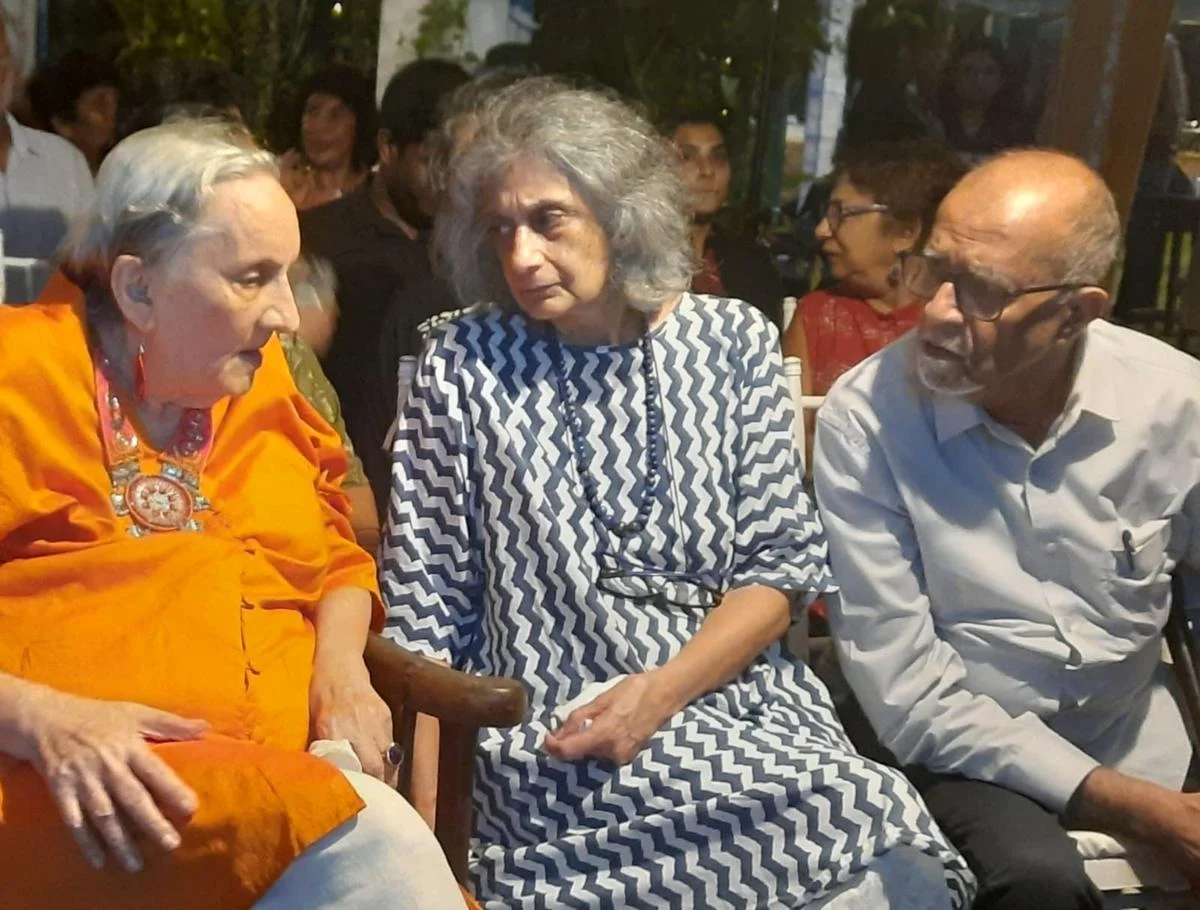
COLOMBO — On June 16, 2026, a significant milestone in South Asian intellectual history was reached as the Social Scientists’ Association (SSA) officially launched the Kumari Jayawardena Feminist Archive. The event, held at the Colombo residence of Dr. Kumari Jayawardena, coincided with her 95th birthday, celebrating a life that has seamlessly woven together rigorous scholarship, grassroots activism, and a relentless pursuit of social justice.
Dr. Jayawardena is widely regarded as one of the most influential feminist scholars in the Global South. Her work has traversed the complex intersections of labor movements, ethnic conflict, nationalism, and gender, providing a framework for understanding how these forces shape the lives of the marginalized. The newly established archive seeks to digitize and preserve this monumental body of work, ensuring that her insights remain accessible to future generations of scholars and activists.
Main Facts: A Digital Sanctuary for Feminist Thought
The Kumari Jayawardena Feminist Archive (accessible at www.feministarc.org) is designed as a living repository. Curated by the SSA—a research institute Dr. Jayawardena co-founded in 1977—the archive currently features over 250 items. These include published monographs, journal articles, policy manifestos, and rare "ephemera" such as pamphlets and handwritten notes that provide a window into the evolution of feminist organizing in Sri Lanka and the broader region.
The project, which began in late 2025, is supported by the Rosa Luxemburg Foundation. According to the curation team, the archive is a "work in progress." The goal is not merely to host a static collection of books but to capture the vibrant, often chaotic process of knowledge production that occurs within activist circles.
"For over five decades, Kumari Jayawardena produced an extraordinary body of work," noted Chulani Kodikara, a member of the archive’s steering committee. "She deployed intersectionality long before the term was even coined, focusing on the subaltern, the unrepresented, and the historically marginalized—from working-class women to ethnic and religious minorities."
The archive launch was attended by a "who’s who" of Sri Lankan political and intellectual life, including Prime Minister Harini Amarasuriya, former President Chandrika Bandaranaike Kumaratunga, and the eminent political scientist Jayadeva Uyangoda. The choice of venue—Dr. Jayawardena’s home—was symbolic; for decades, the residence served as a refuge for dissidents and activists, most notably during the anti-Tamil pogroms of July 1983.
Chronology: A Life Defined by Scholarship and Solidarity
To understand the significance of this archive, one must look at the timeline of Dr. Jayawardena’s career, which mirrors the tumultuous history of post-independence Sri Lanka.
The Formative Years: London in the 1950s
Dr. Jayawardena’s intellectual journey was shaped significantly by her time in London during the mid-1950s. Studying at the London School of Economics (LSE), she was part of a vibrant circle of South Asian intellectuals. It was here that she formed a lifelong friendship with the renowned Indian historian Romila Thapar, who was then studying at the School of Oriental and African Studies (SOAS).
In a recorded message for the 95th birthday celebration, Professor Thapar recalled their days at Canterbury Hall, teasing Jayawardena about her "polluted" economics—referring to the way her economic studies were always deeply intertwined with radical politics. This period established the foundation for Jayawardena’s later work, which refused to separate economic structures from political and social realities.
1977–1983: Building Institutions and Navigating Crisis
In 1977, Jayawardena co-founded the Social Scientists’ Association (SSA). This was a pivotal moment for Sri Lankan academia, as the SSA provided an independent space for critical inquiry outside the state-controlled university system.
The year 1983 marked a turning point. As the island descended into a brutal 26-year civil war following the Black July pogroms, Jayawardena’s commitment to human rights was put to the ultimate test. She opened her home to Tamils fleeing violence, a gesture of solidarity that defined her as an activist who lived her principles.
1986: A Global Intellectual Breakthrough
The publication of Feminism and Nationalism in the Third World in 1986 by Zed Books (London) and Kali for Women (New Delhi) catapulted Jayawardena to international fame. The book challenged the prevailing Eurocentric view that feminism was a "Western import." By documenting the indigenous roots of women’s movements in Asia and the Middle East, Jayawardena provided a powerful tool for Third World feminists to reclaim their own histories.
The 1990s and Beyond: Deepening the Discourse
Throughout the 1990s, Jayawardena continued to publish prolifically. Her 1989 essay with Govind Kelkar for the Economic and Political Weekly was a landmark critique of the Left’s dismissal of autonomous women’s organizing. She also contributed frequently to Frontline magazine, writing on topics ranging from the political power of widows in Sri Lanka ("The Widow’s Might") to the multifaceted life of Annie Besant.

Supporting Data: The Scholarly Pillars of the Archive
The archive is structured to reflect the three primary pillars of Dr. Jayawardena’s academic legacy:
- Labor and Class Struggle: Her early work focused on the rise of the labor movement in Sri Lanka, specifically looking at how class consciousness intersected with colonial structures.
- Ethnicity and Nationalism: Jayawardena was one of the first to provide a feminist critique of how nationalist movements often instrumentalize women, casting them as the "biological reproducers" of the nation while denying them political agency.
- Feminist History: Through her recovery of the "lost" histories of women activists in South Asia, she shifted the focus from elite history to the history of the subaltern and the marginalized.
Crystal Baines of the SSA highlighted that the archive currently contains a curated selection of over 250 items, but the team is actively seeking more. They are looking for letters, diaries, and unpublished manuscripts that could shed light on the collaborative nature of her work. This focus on "process" is vital for understanding how feminist theory is built through collective dialogue rather than isolated academic pursuit.
Official Responses: A "Beacon Across South Asia"
The launch event served as a testament to the regional impact of Jayawardena’s work. Ritu Menon, the co-founder of India’s first feminist press, Kali for Women, traveled to Colombo to honor her long-time collaborator.
"Kumari was a beacon across South Asia," Menon told the gathering. She emphasized that Jayawardena’s work provided a roadmap for transborder solidarity. "She was the initiator and backer, affirming that we could collaborate across borders as feminists. Her 1989 critique of the Left was an indication to us of what was possible—that we didn’t have to choose between our political ideologies and our feminist identities."
Prime Minister Harini Amarasuriya, herself an academic before entering politics, noted the profound influence Jayawardena had on shaping the intellectual landscape for women in leadership. The Prime Minister’s presence underscored the shift in Sri Lankan politics, where feminist scholarship is increasingly being recognized as a vital component of national policy and social cohesion.
Former President Chandrika Bandaranaike Kumaratunga also acknowledged Jayawardena’s role in maintaining a space for dissent during the most restrictive periods of Sri Lankan history. She noted that Jayawardena’s intellectual courage inspired a generation of women to question the status quo.
Implications: Why the Archive Matters Today
The launch of the Kumari Jayawardena Feminist Archive has several far-reaching implications for the future of South Asian studies and feminist activism.
Decolonizing Knowledge
By digitizing Jayawardena’s work, the archive acts as a counter-narrative to the dominance of Western-centric academic databases. It ensures that the specificities of the South Asian feminist experience are preserved and accessible to researchers in the Global North and South alike, furthering the project of decolonizing knowledge.
Intersectionality as a Tool for Peace
In a country still grappling with the scars of a long civil war and ongoing ethnic tensions, Jayawardena’s focus on intersectionality remains more relevant than ever. The archive provides a historical record of how women from different ethnic and religious backgrounds have worked together for peace and justice, offering a blueprint for modern reconciliation efforts.
The "Women’s Question" in the Digital Age
As Dr. Jayawardena herself noted in a 2017 interview with The Hindu: "To discuss the knowledge and status of women today, it is important to know what they have gained and how… the women’s question is always with us."
The archive ensures that this "question" is not answered in a vacuum. By providing historical context, it allows contemporary activists to see that their struggles—whether for labor rights, bodily autonomy, or political representation—are part of a long, continuous lineage of resistance.
Preserving "Fragile" History
Many of the items in the archive, such as mimeographed pamphlets from the 1970s or handwritten notes from clandestine meetings, are physically fragile. Digitization is a critical act of preservation. Without this archive, a significant portion of Sri Lanka’s "dissident history" would be at risk of being lost to time or political suppression.
Conclusion
The Kumari Jayawardena Feminist Archive is more than a tribute to a single scholar; it is a monument to a movement. As Dr. Jayawardena enters her 96th year, her legacy is now secured in a format that invites the world to engage with her ideas. In the digital corridors of the archive, the "women’s question" remains vibrant, demanding answers and inspiring the next generation of "polluted" economists, radical historians, and feminist agitators.
